Table of Contents
- Why Thyme smells so clear and strong
- Traditional use and modern products
- What reviews say about Thyme chemistry
- A bright seasonal diffuser blend
- A woodland version
- A personal inhaler
- Steam and concentrated oil
- Build a supportive seasonal routine
- Shared-space comfort
- When breathing needs professional attention
- The useful takeaway
- Three profiles for three moments
- Context shapes the experience
- Maintain a personal inhaler
- Respect the preparation studied
- Choose the gentlest effective aroma
- A quiet evening variation
- Continue learning about Thyme Essential Oil
- Explore Thyme with confidence
- Frequently Asked Questions
Thyme Essential Oil for respiratory aromatherapy is prized for its clear, warm and penetrating herbal aroma. It can make a seasonal diffuser blend feel open and invigorating, while the broader Thyme research story helps explain why this Mediterranean herb appears so often in traditional respiratory preparations.
Why Thyme smells so clear and strong
Thymol-rich Thyme has a vivid phenolic warmth that registers quickly through the nose. Paired with Eucalyptus, Rosemary or Lemon, it creates the sensory impression of fresh air moving through an herb garden. This aromatic experience is the most direct reason people enjoy Thyme in seasonal diffusion.
Traditional use and modern products
Thyme herb has a long European history in teas, syrups and botanical preparations associated with cough and chest comfort. Modern clinical research has often tested oral thyme-and-ivy extracts rather than inhaled essential oil. Those preparations contain different compounds, concentrations and routes of administration.
This distinction makes the evidence clearer. Human trials of standardized thyme-and-ivy syrups can support those specific products, while essential-oil diffusion is best discussed as an aromatic ritual. Both belong to the Thyme story, but they are not interchangeable.
What reviews say about Thyme chemistry
A major review of thymol and Thyme essential oil discusses antimicrobial, anti-inflammatory and respiratory-related research across laboratory and preclinical systems. Thymol’s membrane interactions and the oil’s aromatic intensity give researchers multiple reasons to investigate it.
Read the review here: Thymol and Thyme Essential Oil—New Insights into Selected Therapeutic Applications.
A bright seasonal diffuser blend
Add 1 drop Thyme, 2 drops Eucalyptus, 2 drops Lemon and 1 drop Lavender to a 100 mL diffuser. The aroma begins crisp and citrusy, opens into clear herbs and finishes softly. Follow equipment directions and use with comfortable airflow.
A woodland version
Add 1 drop Thyme, 2 drops Balsam Fir, 2 drops Cedarwood and 1 drop Frankincense. This blend feels warmer and less sharp, making it inviting for an evening living room or reading space.
A personal inhaler
Add 2 drops Thyme, 5 drops Eucalyptus, 5 drops Lemon and 3 drops Lavender to a blank inhaler wick. Assemble and label it. Take one or two gentle breaths from a comfortable distance whenever you want the scent of fresh herbs without diffusing throughout a shared room.
Steam and concentrated oil
A personal inhaler or room diffuser provides more control than adding strong essential oils to a bowl of steaming water. Thyme’s aromatic power rewards gentle amounts and comfortable distance. The goal is a pleasant sensory experience, not an intensely concentrated cloud.
Build a supportive seasonal routine
Pair the aroma with hydration, a comfortable room temperature and a few quiet minutes. Diffuse while preparing tea, reading or settling into an early evening. Repetition helps the blend become a familiar sign that it is time to slow down and care for yourself.
Shared-space comfort
Use modest amounts, allow fresh air to circulate and give other people and pets the option to leave. A personal inhaler is especially helpful when one household member loves herbal aromas and another prefers an unscented room.
When breathing needs professional attention
New, severe or persistent breathing difficulty deserves prompt medical evaluation. Aromatherapy can remain a pleasant environmental ritual while appropriate care addresses the underlying concern.
The useful takeaway
Thyme’s respiratory reputation includes traditional herb use, standardized oral botanical products and extensive laboratory work. For essential-oil users, the most grounded application is aromatic: one drop blended with softer oils creates a fresh seasonal atmosphere that feels clear, warm and reassuring.
Three profiles for three moments
A bright daytime blend uses Thyme, Lemon and Eucalyptus. A softer evening blend uses Thyme, Lavender and Frankincense. A woodland seasonal blend uses Thyme, Balsam Fir and Cedarwood. Keeping Thyme at one drop lets the companion oils define the mood while the herb provides continuity.
Context shapes the experience
The same aroma can feel energizing at a desk and comforting during evening reading. Light, activity and learned association influence perception. Pair a blend with one repeatable activity so it becomes connected with a useful transition rather than remaining anonymous background fragrance.
Maintain a personal inhaler
Cap it after use, label the formula and store it away from heat. When the scent fades, replace the wick rather than repeatedly adding oil to an old one. A fresh, clearly labeled inhaler keeps the aroma distinct and the routine easy to understand.
Respect the preparation studied
Tea, syrup, dry extract and essential oil contain different profiles and use different doses. Human results from an oral extract should remain attached to that extract. This accuracy lets the essential oil shine in the role it performs beautifully: a measured, enjoyable aroma.
Choose the gentlest effective aroma
Thyme’s strength means more oil does not create a more useful ritual. One drop surrounded by Lemon, Lavender or Balsam Fir gives the nose room to recognize every ingredient. Start the diffuser before settling into the room, then turn it off once the atmosphere feels established. The aroma can remain pleasantly present after active diffusion has ended.
A quiet evening variation
For a less brisk profile, combine one drop Thyme, three drops Lavender, one drop Cedarwood and one drop Frankincense. The aroma remains herbal but feels softer and warmer than an Eucalyptus-forward recipe. Use it while reading or journaling so Thyme becomes connected with an unhurried evening transition.
Continue learning about Thyme Essential Oil
Make this article part of a complete Thyme routine:
- Thyme Essential Oil: Benefits, Uses, Research and Safety
- What Does Thyme Essential Oil Smell Like?
- What Blends Well With Thyme?
- Thyme Diffuser Blends
- Thyme for Hair and Scalp
- Thyme for Skin and Acne Research
- Thyme for Cleaning and Home Aromas
- Thyme Oil for Fleas and Mosquitoes
- Thyme, Thymol and Oral Care
- Thyme vs. Oregano Essential Oil
- Thyme Essential Oil Safety
- How Is Thyme Oil Made?
Explore Thyme with confidence
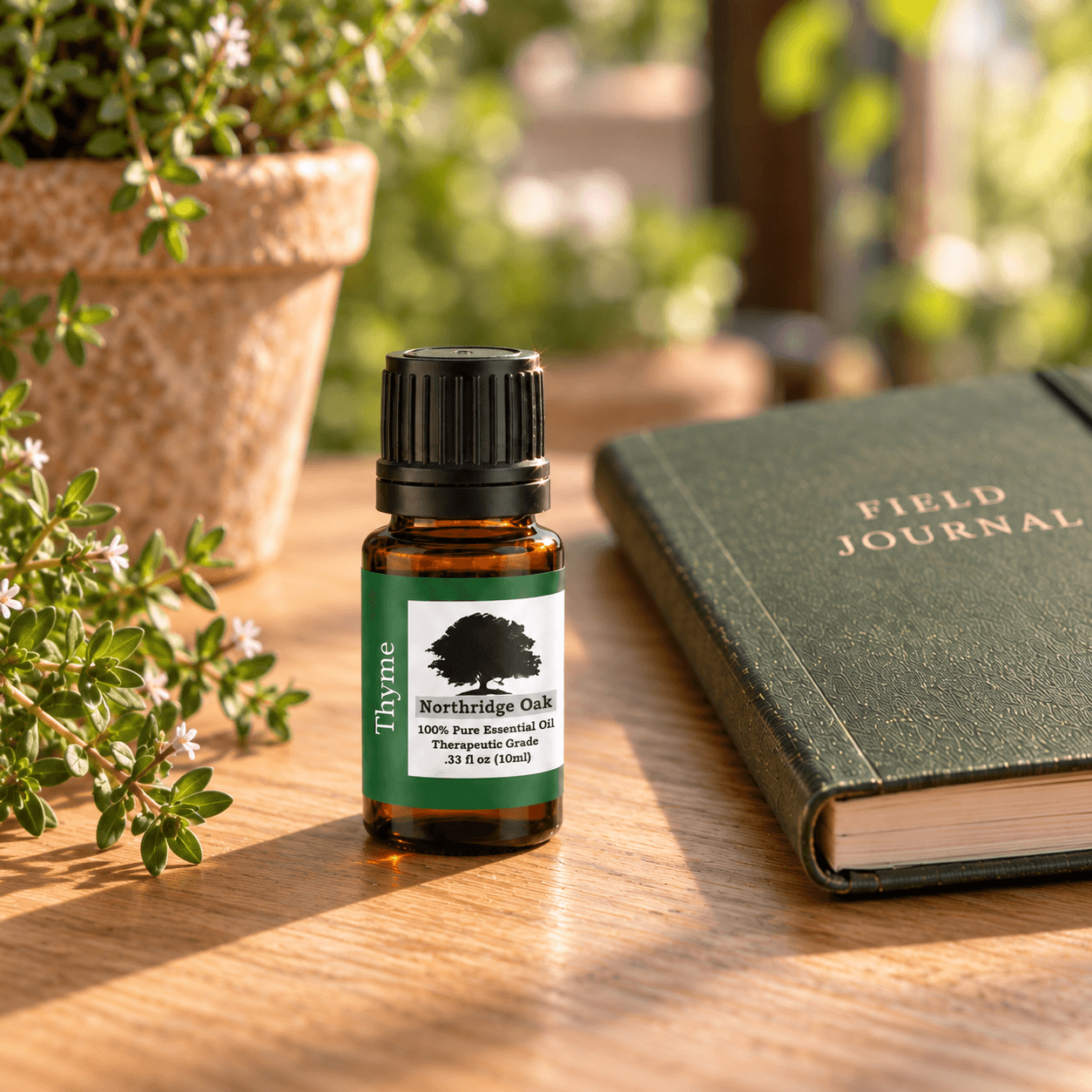
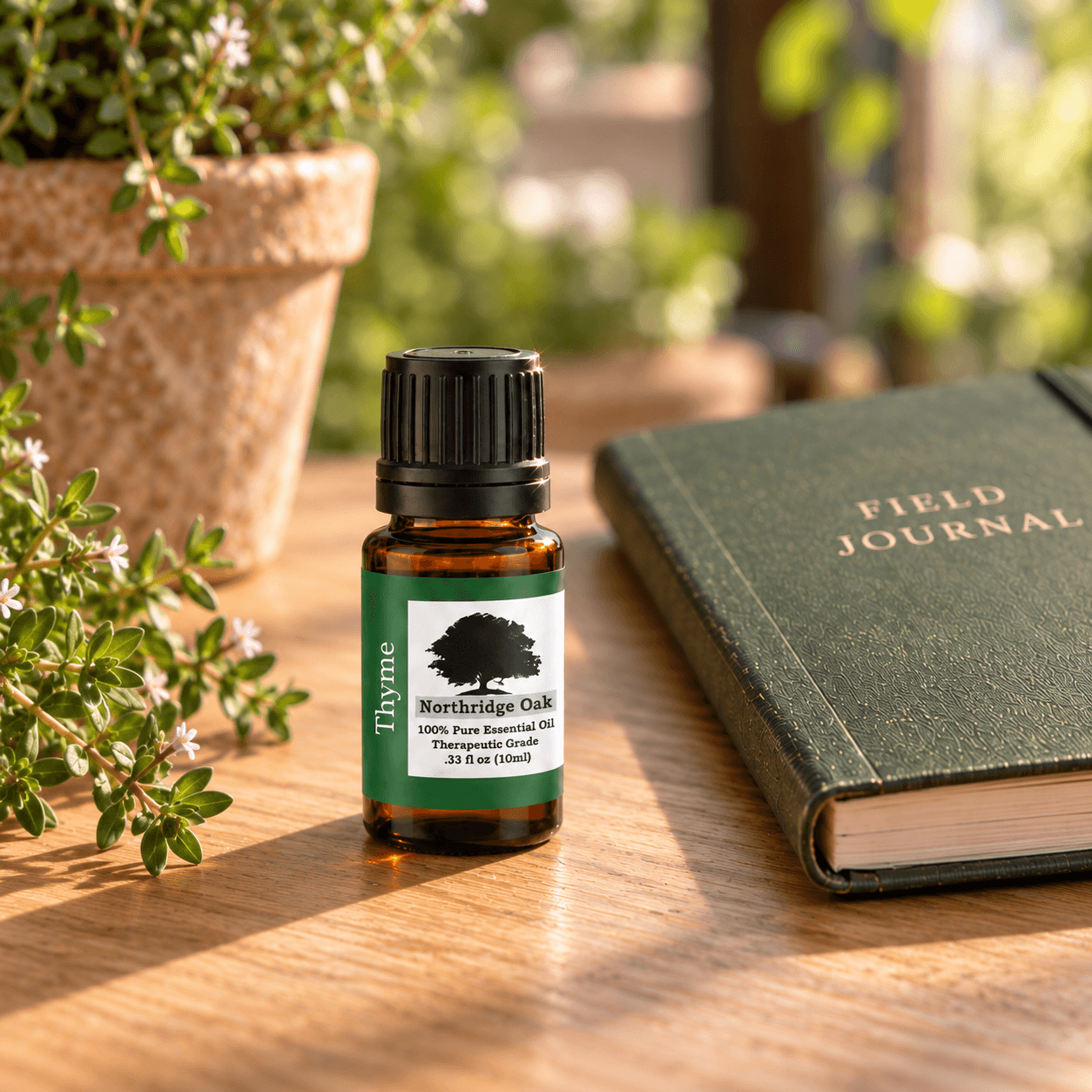
Northridge Oak Thyme Essential Oil is 100% pure, undiluted, bottled in small batches and third-party GC/MS tested. Begin with one drop and let its warm herbal character bring clarity and distinction to the recipe.
These statements have not been evaluated by the Food and Drug Administration. Northridge Oak products are not intended to diagnose, treat, cure or prevent disease.