Table of Contents
- What is thymol?
- Why thymol appears in mouthrinse
- Laboratory research on Thyme oil
- What oral-care research genuinely means
- A safe way to enjoy the association
- A fresh bathroom aroma blend
- The essentials still matter most
- Why water does not dilute essential oil
- Reading labels with new understanding
- The clear takeaway
- How mouthrinses are evaluated
- Thymol’s partners contribute too
- Make the routine sensory without oral exposure
- Useful questions for a dentist
- Why aroma can strengthen a routine
- Celebrate the science without copying the formula
- Continue learning about Thyme Essential Oil
- Explore Thyme with confidence
- Frequently Asked Questions
Thyme Essential Oil and oral care are connected by one famous molecule: thymol. This warm, aromatic compound appears naturally in many Thyme oils and has been used as part of formulated antiseptic mouthrinses for generations. The research story is strongest when we distinguish purified thymol and finished products from homemade essential-oil mixtures.
What is thymol?
Thymol is a phenolic monoterpene associated with the warm, medicinal-spicy aroma of thymol-rich Thyme. Its structure allows it to interact with microbial membranes, which is why it appears frequently in laboratory antibacterial and antifungal research.
Why thymol appears in mouthrinse
Commercial essential-oil mouthrinses commonly combine thymol with eucalyptol, menthol and methyl salicylate in a standardized formula. Clinical studies and systematic reviews have evaluated these finished rinses for plaque and gingival outcomes when used alongside brushing and interdental care.
The evidence belongs to the complete manufactured formulation: specific active ingredients, concentration, solvent system, quality controls and directions. A drop of household essential oil in water is chemically different because oil floats, creating uneven contact and unpredictable concentration.
Laboratory research on Thyme oil
Studies have tested Thymus vulgaris oil against oral microorganisms in vitro, including streptococci and Candida species. These experiments often measure zones of inhibition or minimum inhibitory concentrations, helping researchers compare activity under controlled conditions.
A broad review of Thyme and thymol research summarizes antibacterial and antifungal mechanisms and discusses potential dental applications: Thymol and Thyme Essential Oil—New Insights into Selected Therapeutic Applications.
What oral-care research genuinely means
It shows that Thyme chemistry has value to formulators and that thymol can participate effectively in a well-designed multi-ingredient product. It also shows why concentration and delivery matter. Oral tissues are sensitive, and swallowed material follows a different safety pathway from room diffusion or diluted external use.
A safe way to enjoy the association
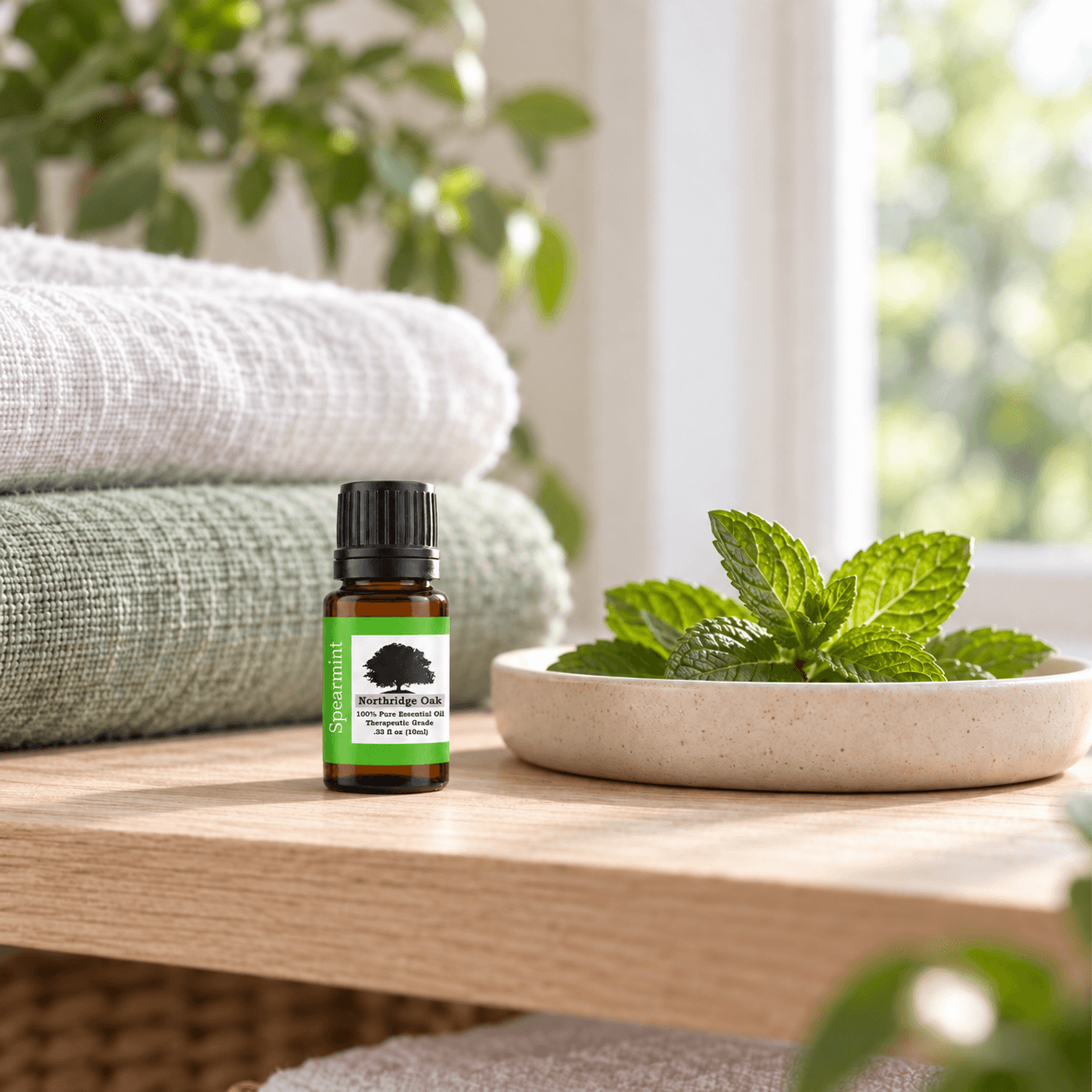
Rather than making a DIY mouthwash, diffuse a bright herb-garden blend while completing your normal oral-care routine. Add 1 drop Thyme, 3 drops Spearmint and 2 drops Lemon to a 100 mL diffuser. Keep the diffuser across the room rather than beside the sink.
A fresh bathroom aroma blend
Try 1 drop Thyme, 2 drops Eucalyptus, 2 drops Spearmint and 1 drop Lavender. The result feels crisp and botanical, echoing familiar oral-care notes without placing concentrated oil in the mouth.
The essentials still matter most
Twice-daily brushing with fluoride toothpaste, cleaning between teeth and regular dental care form the foundation of oral health. A commercially formulated mouthrinse can be chosen according to professional advice and its label. Thyme aromatherapy can make the routine more pleasant and memorable.
Why water does not dilute essential oil
Essential oils are lipophilic and do not dissolve evenly in plain water. Shaking may temporarily scatter droplets, but they quickly regroup. This is a formulation problem, not merely a mixing problem, and it explains why commercial products use carefully selected solvents and emulsifying systems.
Reading labels with new understanding
When thymol appears on a mouthrinse label, it represents a standardized ingredient within a tested formula. Look for directions, age guidance and active-ingredient information. The product’s research cannot automatically be transferred to a different homemade concentration.
The clear takeaway
Thymol gives Thyme an authentic place in oral-care history and research. Laboratory studies support continuing interest in its antimicrobial chemistry, while clinical evidence is tied to finished multi-ingredient mouthrinses. Enjoy Thyme’s fresh herbal aroma around the routine and use oral products exactly as formulated.
How mouthrinses are evaluated
Clinical trials typically use standardized products for weeks or months and measure plaque indices, gingival scores or microbial outcomes. Directions, frequency and participant adherence are documented. This controlled approach is what turns a group of aromatic compounds into interpretable oral-care evidence.
Thymol’s partners contribute too
Eucalyptol supplies a clear eucalyptus note, menthol brings cooling and methyl salicylate adds wintergreen character. Together with thymol they create the recognizable aroma and researched active system. The complete formulation tells us more than one ingredient removed from context.
Make the routine sensory without oral exposure
Keep a personal inhaler separate from oral-care products. Two drops Thyme, seven Spearmint and six Lemon create a fresh cue before brushing. This preserves the botanical association without placing an unformulated essential-oil mixture in the mouth.
Useful questions for a dentist
Ask whether a rinse fits your goals, when to use it relative to brushing and whether a sensitivity-focused or alcohol-free formula is appropriate. Product choice becomes easier when the desired outcome is clear and the finished product can be used exactly as directed.
Why aroma can strengthen a routine
A consistent scent can serve as a reminder to begin an everyday habit. Using the same Thyme–Spearmint inhaler immediately before brushing gives the aroma one clear meaning without placing oil in the mouth. Over time, the sensory cue can make the routine feel more deliberate and enjoyable. Store the inhaler separately and label it clearly so it is never confused with an oral product.
Celebrate the science without copying the formula
Thymol’s presence in well-known mouthrinses gives Thyme a fascinating connection to everyday oral care. The best lesson is formulation discipline: active ingredients work within measured systems. Readers can appreciate that chemistry, choose validated products when desired and keep their pure Thyme Essential Oil for diffusion and external, properly diluted aromatic recipes.
Continue learning about Thyme Essential Oil
Make this article part of a complete Thyme routine:
- Thyme Essential Oil: Benefits, Uses, Research and Safety
- What Does Thyme Essential Oil Smell Like?
- What Blends Well With Thyme?
- Thyme Diffuser Blends
- Thyme for Hair and Scalp
- Thyme for Skin and Acne Research
- Thyme for Cleaning and Home Aromas
- Thyme for Respiratory Aromatherapy
- Thyme Oil for Fleas and Mosquitoes
- Thyme vs. Oregano Essential Oil
- Thyme Essential Oil Safety
- How Is Thyme Oil Made?
Explore Thyme with confidence
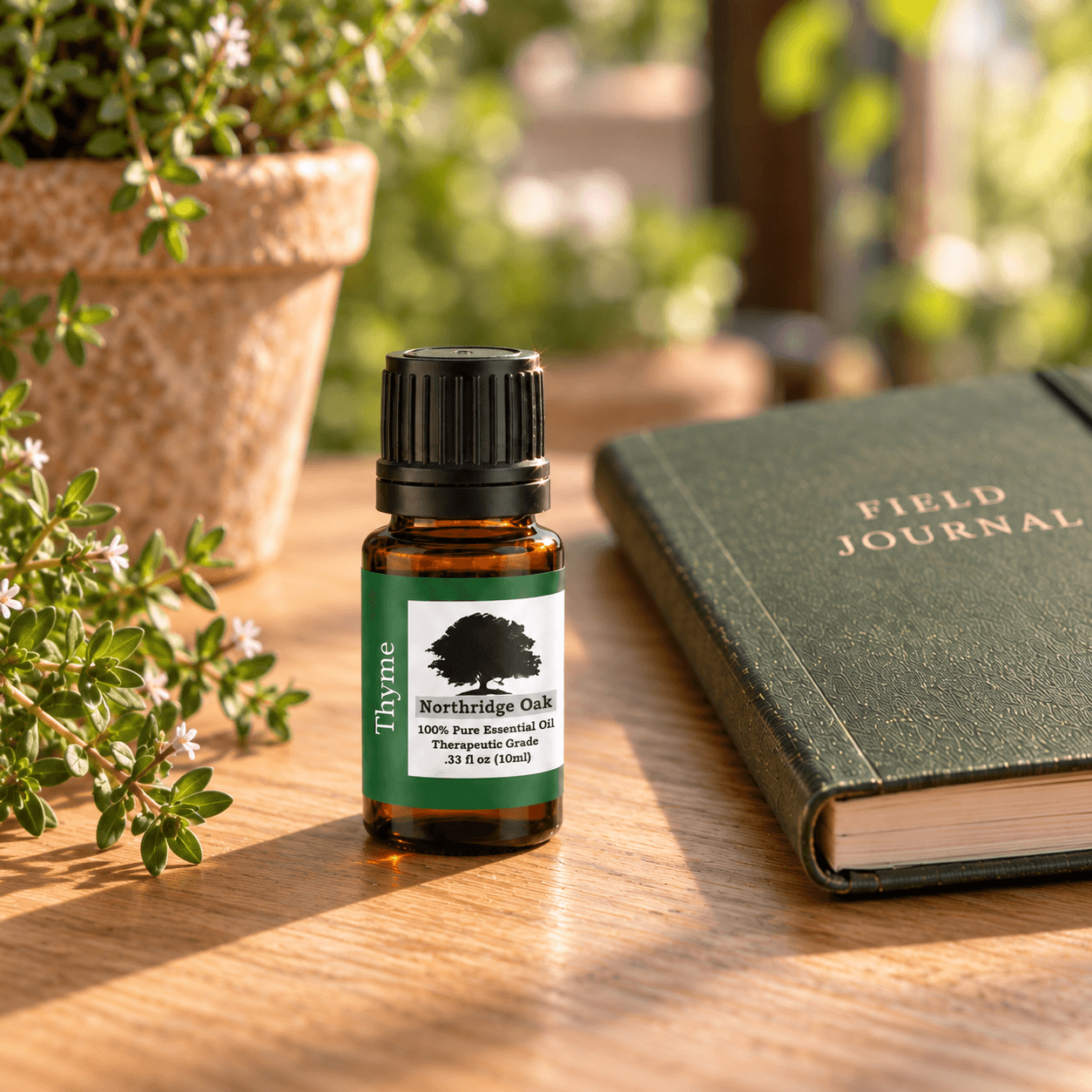
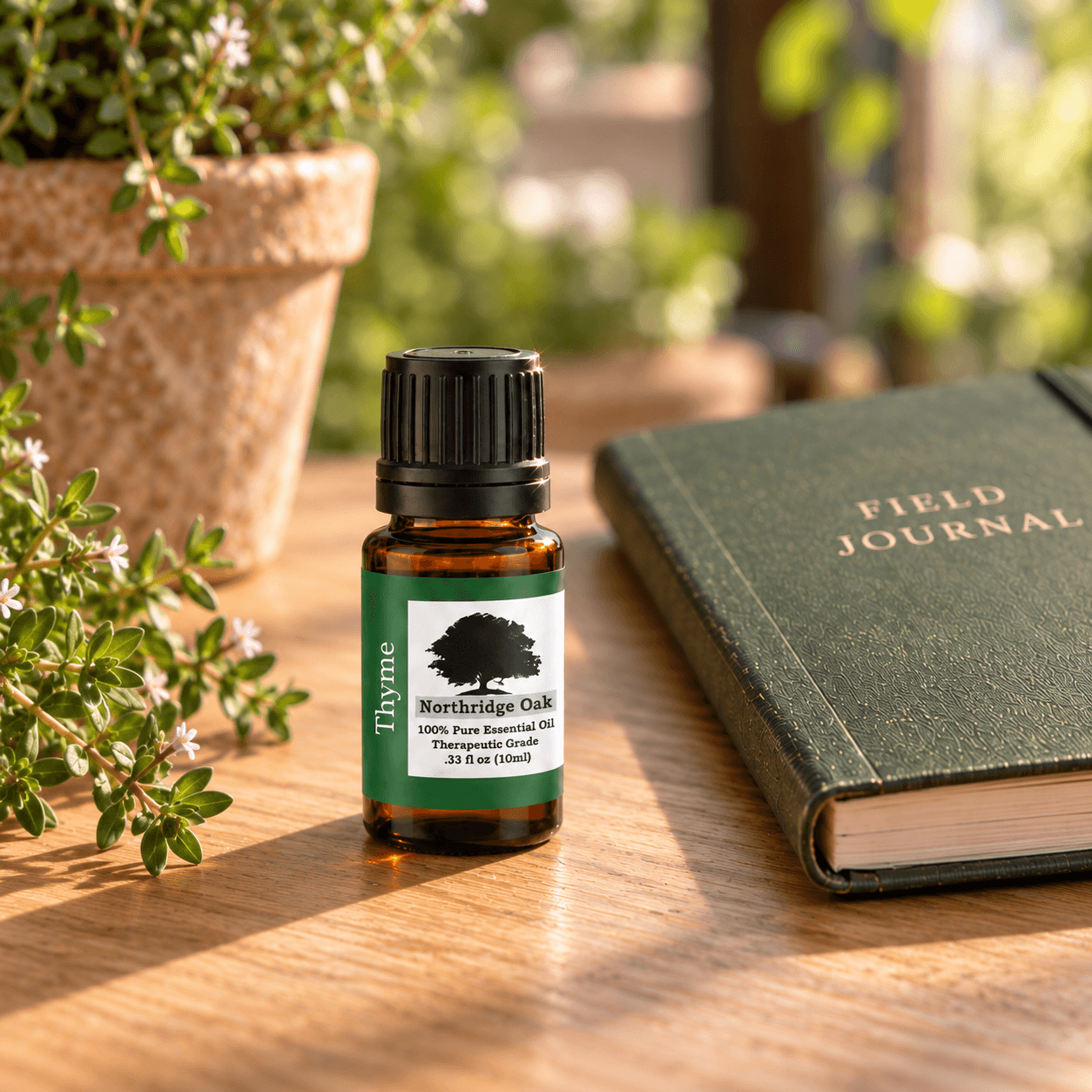
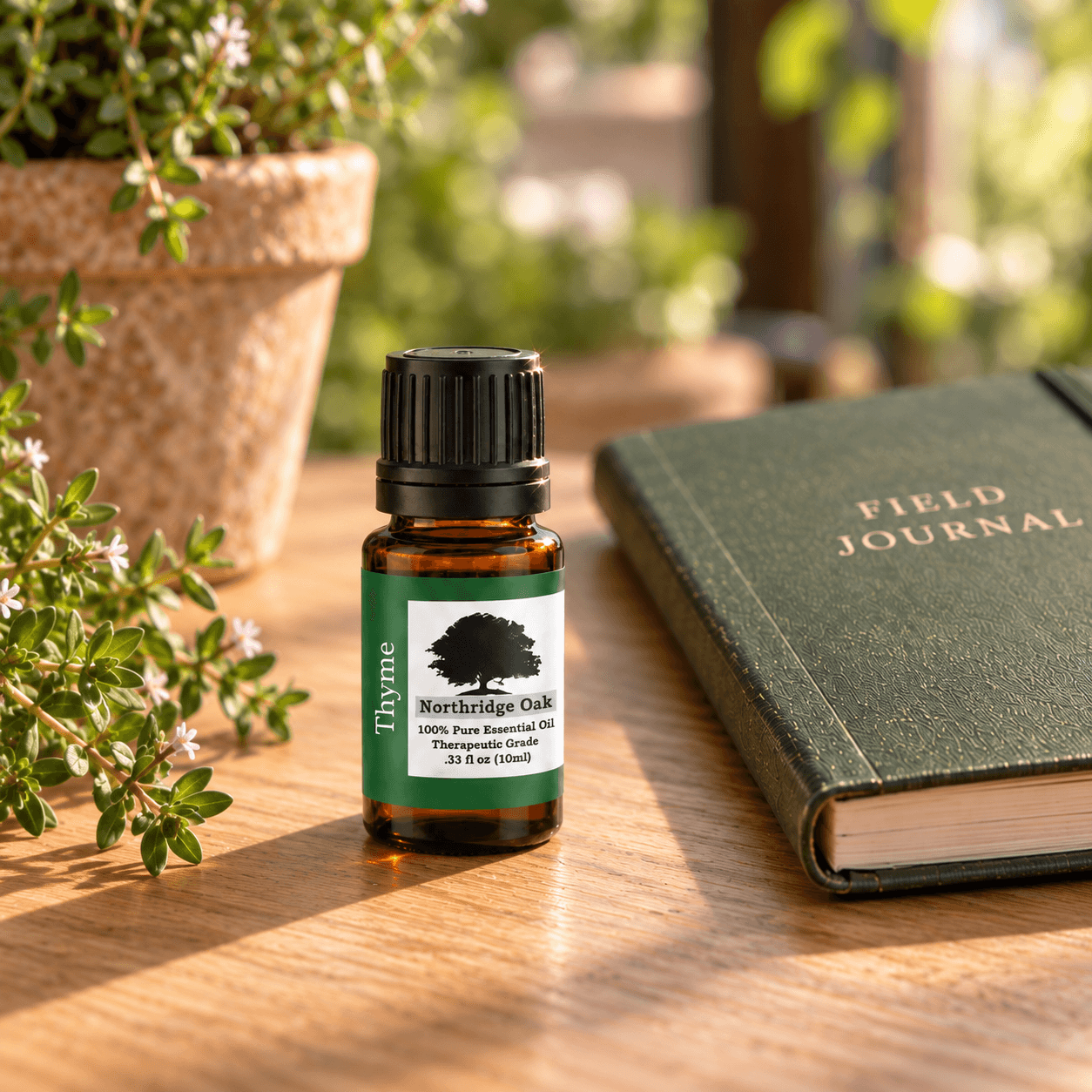
Northridge Oak Thyme Essential Oil is 100% pure, undiluted, bottled in small batches and third-party GC/MS tested. Begin with one drop and let its warm herbal character bring clarity and distinction to the recipe.
These statements have not been evaluated by the Food and Drug Administration. Northridge Oak products are not intended to diagnose, treat, cure or prevent disease.