Table of Contents
- The first impression
- Why two Thyme oils can smell different
- How thymol shapes the aroma
- How to make Thyme smell brighter
- How to make Thyme smell softer
- How to make Thyme smell forest-like
- Where Thyme works best
- Learn the aroma before building a recipe
- The aromatic takeaway
- How the aroma changes over time
- Compare it with neighboring herbs
- Create a signature accord
- Use aroma language that helps you choose
- Continue learning about Thyme Essential Oil
- Bring the warm herbal character of Thyme home
- Frequently Asked Questions
What does Thyme Essential Oil smell like? Imagine rubbing fresh thyme leaves between your fingers, then adding warm spice, dry green stems and a clean aromatic intensity. The result is bold and herbaceous, yet remarkably versatile once it meets the right blending partner.
The first impression
Thyme announces itself quickly. The opening is green, hot and aromatic, with a savory quality that recalls a sun-warmed herb garden. Beneath that first brightness is a warmer, slightly woody body. The dry-down can feel dry, clean and gently smoky rather than sweet.
Smelling from the bottle can make any concentrated oil seem sharper than it will in a finished blend. Place one drop on an aroma strip and revisit it after five, fifteen and thirty minutes. Thyme often becomes rounder as the most volatile notes lift, revealing more warmth and less edge.
Why two Thyme oils can smell different
Thymus vulgaris can produce several chemotypes—plants of the same species whose oils emphasize different constituents. Geography, genetics, climate, harvest and distillation all influence composition. A label that names the botanical is essential; a GC/MS report supplies the deeper chemical portrait.
Thymol-rich Thyme tends to smell strong, warm, medicinal and phenolic. Carvacrol-rich Thyme can feel similarly forceful with a spicy oregano-like edge. Linalool-rich Thyme is often softer, sweeter and more floral. Geraniol and thujanol types bring still other nuances.
How thymol shapes the aroma
Thymol is a phenolic monoterpene found in Thyme and familiar from oral-care and hygiene formulations. It contributes warmth, spice and the clean medicinal association many people notice. Carvacrol is structurally related and also smells warm and phenolic, while linalool contributes a gentler floral-woody quality.
A major review of thymol and Thyme oil describes how these constituents contribute to the plant’s antimicrobial and antioxidant research profile. Chemistry therefore helps explain both what the oil smells like and why scientists study it so often.
How to make Thyme smell brighter
Citrus gives Thyme an immediate lift. Try 1 drop Thyme, 3 drops Lemon and 2 drops Bergamot FCF in a 100 mL diffuser. Lemon emphasizes garden freshness, while Bergamot brings a polished tea-like softness.
Grapefruit and Blood Orange also work well. Their juicy top notes arrive first, while Thyme adds a dry herbal backbone that keeps the blend from feeling sugary.
How to make Thyme smell softer
Lavender is the easiest bridge. Combine 1 drop Thyme with 4 drops Lavender and 1 drop Cedarwood. Lavender surrounds the herbal note with familiar floral comfort, and Cedarwood gives the base a quiet finish.
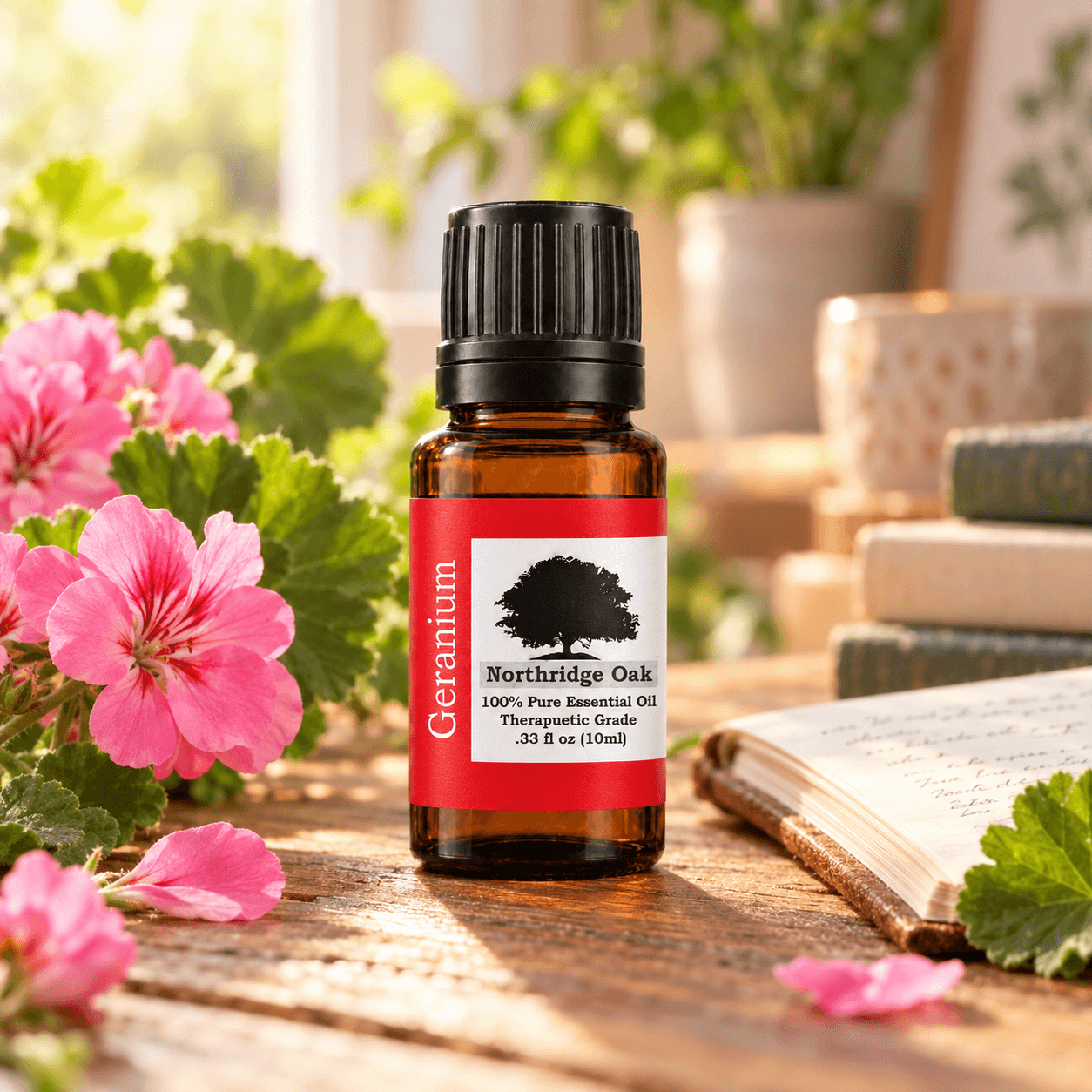
Geranium offers a greener floral approach. One drop Thyme, 2 drops Geranium and 3 drops Bergamot FCF creates a refined botanical aroma suited to an entryway or reading room.
How to make Thyme smell forest-like
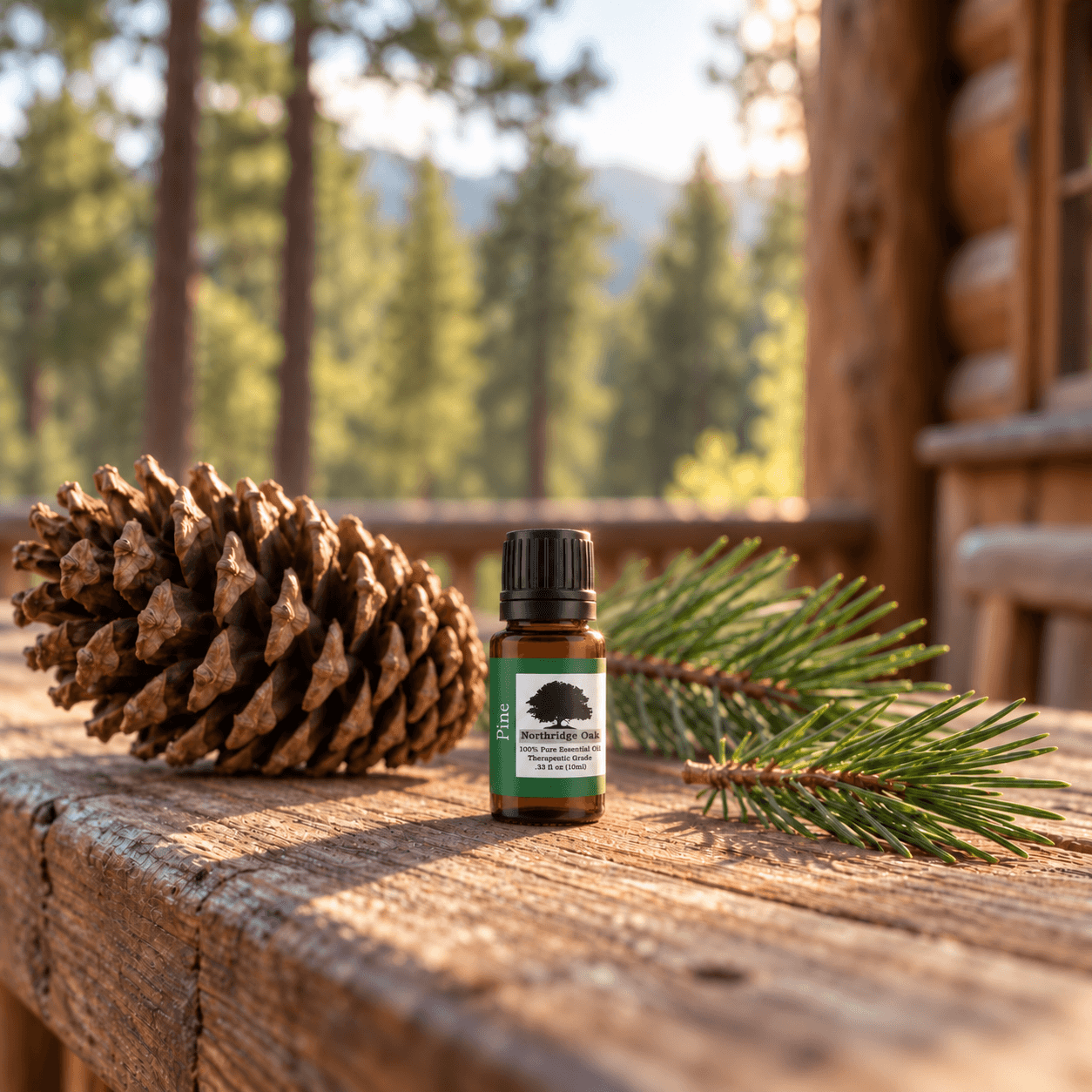
Pair it with Cedarwood, Balsam Fir or Frankincense. Try 1 drop Thyme, 2 drops Cedarwood, 2 drops Balsam Fir and 1 drop Frankincense. The result feels like herbs drying in a woodland cabin—warm, dry and spacious.
Where Thyme works best
Thyme shines in kitchens, workspaces, entryways and rooms where a fresh herbal atmosphere feels natural. It can also add an intelligent savory twist to natural cologne, though its strength rewards patient drop-by-drop blending.
Learn the aroma before building a recipe
Create a simple three-strip exercise: one strip with Thyme, one with Lemon and one with Lavender. Hold Thyme beside each partner and notice how your perception changes. This method teaches balance without wasting oil and makes future blending much more intuitive.
The aromatic takeaway
Thyme is not merely “strong.” It is layered: green at the opening, warmly spicy in the center and dry as it settles. Chemotype explains much of the variation, while thoughtful partners reveal its friendlier side. One drop is often the difference between an ordinary citrus blend and a memorable herb-garden composition.
How the aroma changes over time
In a diffuser blend, citrus is usually noticed first. Thyme then appears through the middle and can remain recognizable after Lemon or Grapefruit softens. Cedarwood and Frankincense last beside it, creating a dry, warm finish. This sequence explains why Thyme smelled directly from the bottle can seem sharper than the same oil in a complete composition.
Compare it with neighboring herbs
Rosemary is cooler and more needle-like; Marjoram is softer and slightly sweet; Oregano is hotter and more overtly savory. Thyme sits between them, combining green garden character with warm spice. Try separate aroma strips and revisit them after thirty minutes to learn the differences.
Create a signature accord
Blend one drop Thyme, three drops Bergamot FCF and two drops Cedarwood. Add one drop Lavender for softness or one drop Grapefruit for brightness. Making a single adjustment at a time teaches balance and turns a strong herb into a polished personal favorite.
Use aroma language that helps you choose
When describing Thyme, move beyond “strong” and ask what kind of strength you perceive. Is it green like crushed stems, warm like spice, dry like wood or familiar from classic oral-care aromas? Specific words make it easier to select partners. Green notes welcome Lemon and Rosemary; warm notes suit Blood Orange; dry notes pair with Cedarwood; phenolic notes become gentler beside Lavender.
Continue learning about Thyme Essential Oil
Make this article part of a complete Thyme routine:
- Thyme Essential Oil: Benefits, Uses, Research and Safety
- What Blends Well With Thyme Essential Oil?
- Thyme Essential Oil Diffuser Blends
- Thyme Essential Oil for Hair and Scalp
- Thyme Essential Oil for Skin and Acne Research
- Thyme Essential Oil for Cleaning and Home Aromas
- Thyme Essential Oil for Respiratory Aromatherapy
- Does Thyme Oil Repel Fleas and Mosquitoes?
- Thyme Essential Oil, Thymol and Oral-Care Research
- Thyme vs. Oregano Essential Oil
- Thyme Essential Oil Safety
- How Is Thyme Oil Made?
Bring the warm herbal character of Thyme home
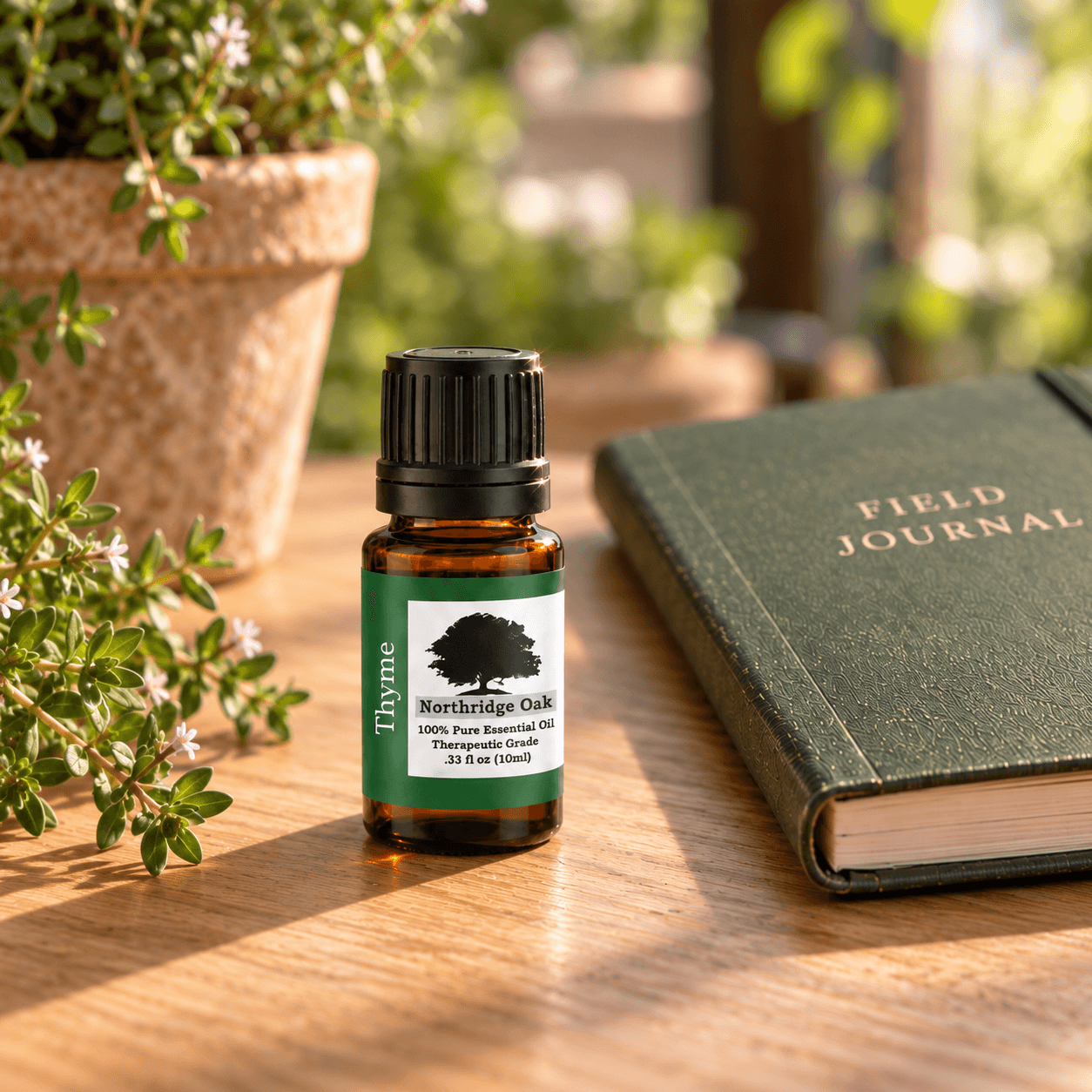
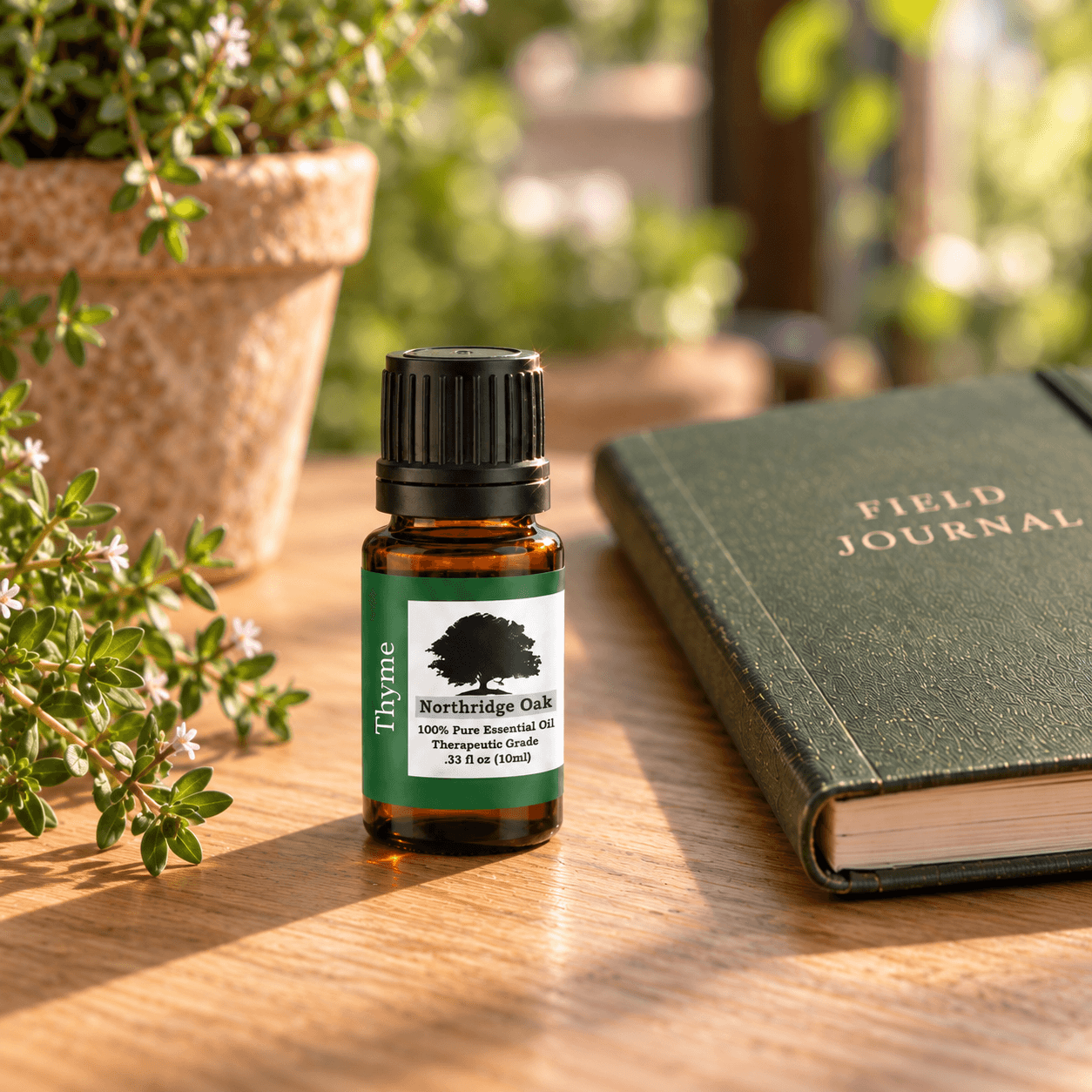
Northridge Oak Thyme Essential Oil is 100% pure, undiluted, bottled in small batches and third-party GC/MS tested. Its confident herbaceous aroma means a single drop can transform a diffuser recipe, cleaning blend or thoughtfully diluted topical formula.
These statements have not been evaluated by the Food and Drug Administration. Northridge Oak products are not intended to diagnose, treat, cure or prevent disease.