Table of Contents
- The 1998 randomized trial
- What the researchers found
- What the study tells us about Thyme
- A home recipe inspired by the research
- Why jojoba works well for scalp recipes
- A pre-shampoo variation
- Thyme’s scalp-focused laboratory story
- Create a routine you can actually repeat
- When professional insight adds value
- The encouraging takeaway
- Why the study design matters
- Make scalp massage comfortable
- Evaluate a routine realistically
- Support the complete routine
- Continue learning about Thyme Essential Oil
- Bring the warm herbal character of Thyme home
- Frequently Asked Questions
Thyme Essential Oil for hair growth has a more credible research story than many readers realize. A landmark randomized clinical trial used Thyme as part of a four-oil scalp blend and reported a meaningful difference in photographic improvement for people with alopecia areata.
The 1998 randomized trial
Researchers Hay and colleagues enrolled 86 people with alopecia areata, a condition that causes distinct areas of hair loss. Participants were randomly assigned to one of two daily scalp-massage routines. The active group used Thyme, Rosemary, Lavender and Cedarwood essential oils diluted in jojoba and grapeseed oils. The comparison group used only the two carrier oils.
The study continued for seven months. Participants massaged the assigned preparation into the scalp for at least two minutes every night and wrapped the head in a warm towel to encourage absorption. Progress was assessed with sequential photographs by two dermatologists who did not know which preparation each participant had used.
What the researchers found
The published report stated that 19 of 43 people in the essential-oil group—44%—showed improvement, compared with 6 of 41 evaluable participants in the carrier-oil group—15%. The difference was statistically significant. The authors concluded that the multi-oil aromatherapy regimen was more effective than carrier oils alone in that study.
Read the original abstract: Randomized trial of aromatherapy: successful treatment for alopecia areata.
What the study tells us about Thyme
Thyme belonged to a formula with three other essential oils, two carriers, massage, warmth and a seven-month routine. The result therefore supports the complete protocol. It does not isolate Thyme as the ingredient responsible for the outcome. That distinction makes the evidence more useful, because it shows readers what was actually studied.
The blend combined strong herbal notes with Lavender’s softness and Cedarwood’s dry base. From a formulation perspective, each oil may have contributed different chemistry and sensory qualities, while massage supported consistent scalp contact.
A home recipe inspired by the research
The research formula used a relatively concentrated professional protocol. For approachable adult home care, begin more gently: add 1 drop Thyme, 2 drops Rosemary, 2 drops Lavender and 1 drop Cedarwood to 30 mL of jojoba oil. This creates a total dilution of approximately 1%, with Thyme representing only one-sixth of the essential-oil portion.
Part the hair, place a small amount on the fingertips and massage lightly into the scalp for two minutes. Patch test first and use a modest amount so the scalp and hair remain comfortable.
Why jojoba works well for scalp recipes
Jojoba is technically a liquid wax with a light, stable feel. It spreads easily and can be used sparingly along the scalp without requiring a heavy coating. Fractionated coconut oil is another smooth option, while grapeseed oil offers a lighter finish.
A pre-shampoo variation
Add 1 drop Thyme, 2 drops Lavender and 1 drop Cedarwood to 20 mL jojoba. Apply a small amount to the adult scalp, massage gently and leave in place for 15 to 30 minutes before shampooing. A consistent once- or twice-weekly ritual is easier to evaluate than frequently changing formulas.
Thyme’s scalp-focused laboratory story
Thyme oil and thymol have demonstrated antimicrobial and antioxidant activity in laboratory studies. That chemistry is relevant to cosmetic research and formulation, although a lab dish is different from the living scalp. The strongest direct human evidence remains the 1998 multi-oil alopecia trial.
Create a routine you can actually repeat
Choose one formula, label it and record the start date. Take photographs under similar lighting once monthly rather than judging day to day. A comfortable scalp, enjoyable aroma and simple schedule make consistency far more likely.
When professional insight adds value
Hair loss has many patterns and causes. A dermatologist can identify the type and help you understand appropriate options. An aromatic scalp ritual can still provide a pleasant, hands-on way to care for the hair and scalp alongside that guidance.
The encouraging takeaway
Thyme’s hair story rests on a real randomized trial with blinded photographic assessment and a seven-month protocol. The research supports a Thyme–Rosemary–Lavender–Cedarwood blend rather than Thyme alone, giving readers a clear, evidence-inspired recipe and an honest reason to explore it.
Why the study design matters
The investigators used sequential photographs assessed by two dermatologists who did not know which treatment participants received. This blinded evaluation reduced the influence of expectation. The seven-month duration also allowed time for visible hair changes to develop and required meaningful consistency from participants.
Make scalp massage comfortable
Use the pads of the fingers rather than the nails and move the scalp gently without vigorous friction. A measured dropper or pump controls the amount. If the hair feels coated, reduce the volume of finished oil rather than increasing shampoo frequency.
Evaluate a routine realistically
Take monthly photographs in similar lighting, from the same angle and with similar styling. Record scalp comfort and how often the formula was used. Hair is slow to change, so consistent monthly observations are more informative than daily mirror checks.
Support the complete routine
Gentle styling, appropriate nutrition and attention to scalp comfort belong alongside an aromatic blend. Professional evaluation can clarify the type of hair loss, while the Thyme–Rosemary–Lavender–Cedarwood ritual provides a pleasant, research-inspired way to care for the scalp.
Continue learning about Thyme Essential Oil
Make this article part of a complete Thyme routine:
- Thyme Essential Oil: Benefits, Uses, Research and Safety
- What Does Thyme Essential Oil Smell Like? Aroma and Chemotypes
- What Blends Well With Thyme Essential Oil?
- Thyme Essential Oil Diffuser Blends
- Thyme Essential Oil for Skin and Acne Research
- Thyme Essential Oil for Cleaning and Home Aromas
- Thyme Essential Oil for Respiratory Aromatherapy
- Does Thyme Oil Repel Fleas and Mosquitoes?
- Thyme Essential Oil, Thymol and Oral-Care Research
- Thyme vs. Oregano Essential Oil
- Thyme Essential Oil Safety
- How Is Thyme Oil Made?
Bring the warm herbal character of Thyme home
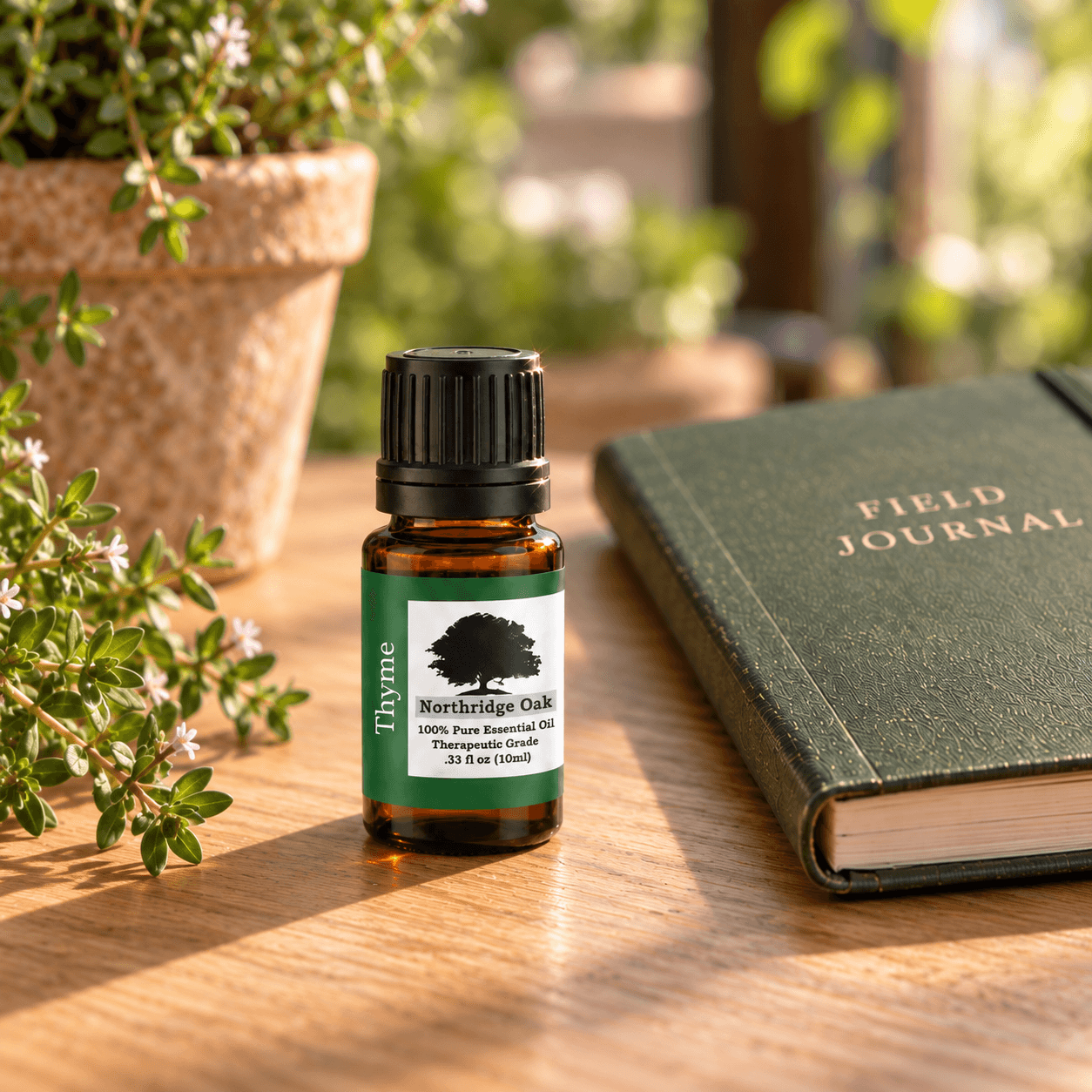
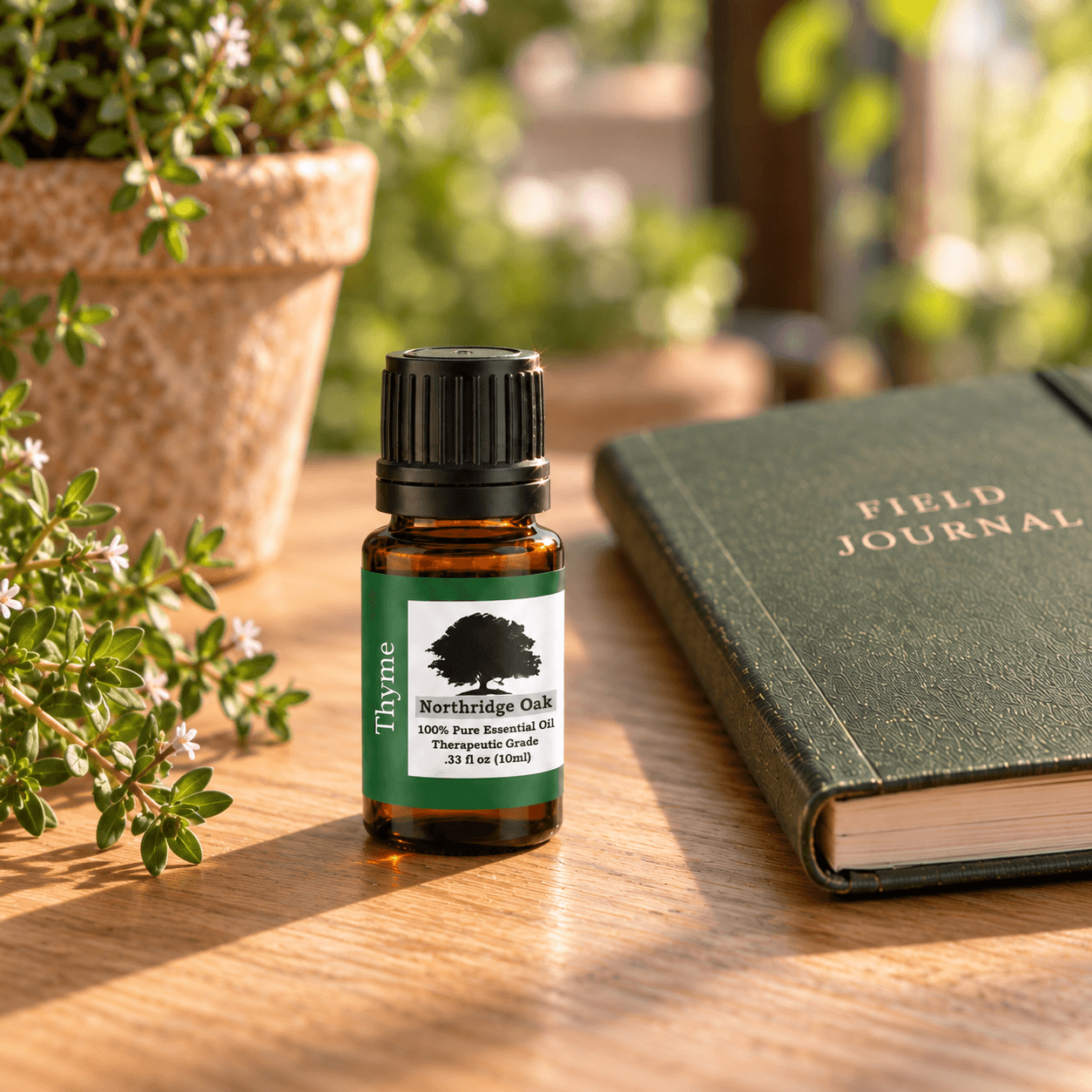
Northridge Oak Thyme Essential Oil is 100% pure, undiluted, bottled in small batches and third-party GC/MS tested. Its confident herbaceous aroma means a single drop can transform a diffuser recipe, cleaning blend or thoughtfully diluted topical formula.
These statements have not been evaluated by the Food and Drug Administration. Northridge Oak products are not intended to diagnose, treat, cure or prevent disease.