Table of Contents
- Why researchers study Thyme for blemish-prone skin
- The 2022 nanoemulsion study
- Why formulation matters
- What the study means for a reader
- A gentle adult facial-oil formula
- A botanical body oil
- Keep the routine simple
- Thyme in natural fragrance
- Quality and oxidation
- Comfortable topical use
- The research-informed takeaway
- Why the experimental model is meaningful
- Low dilution can still feel luxurious
- Keep water-based recipes professionally formulated
- Observe the whole experience
- Pair Thyme with a supportive carrier
- Continue learning about Thyme Essential Oil
- Bring the warm herbal character of Thyme home
- Frequently Asked Questions
Thyme Essential Oil for acne and skin has attracted researchers because thymol-rich oil combines vivid aromatic chemistry with measurable activity in laboratory systems. A 2022 study went further by formulating Thyme oil as a nanoemulsion and testing its antimicrobial and inflammation-related effects in an animal acne model.
Why researchers study Thyme for blemish-prone skin
Thyme oil often contains thymol and carvacrol, phenolic compounds known for strong activity in microbial testing. Acne research frequently focuses on Cutibacterium acnes, skin inflammation and delivery systems that can bring an active ingredient into contact with the target area in a controlled way.
The 2022 nanoemulsion study
Abdelhamed and colleagues prepared a Thyme essential oil nanoemulsion—tiny oil droplets dispersed in water with formulation technology. They evaluated its antibacterial activity and then studied inflammation-related outcomes in an experimental acne model.
The formulation reduced bacterial load and suppressed inflammatory responses in the animal model. The researchers also reported positive effects on acne lesions and tissue findings. Their work is available in Antibacterial and Anti-Inflammatory Activities of Thymus vulgaris Essential Oil Nanoemulsion on Acne.
Why formulation matters
A laboratory nanoemulsion is not the same as adding essential oil to water at home. Essential oil and water naturally separate, while a nanoemulsion uses carefully selected ingredients and processing to create tiny, more stable droplets. The study therefore supports continued cosmetic-formulation research rather than a homemade water spray.
What the study means for a reader
The research gives Thyme a credible cosmetic science story: scientists observed activity against an acne-related bacterium and inflammation-associated changes in an experimental model. Human clinical trials of a finished Thyme skincare product would be the next step for understanding real-world outcomes and tolerability.
A gentle adult facial-oil formula
Thyme is powerful, so facial use should be especially conservative. Add 1 drop Thyme and 3 drops Lavender to 60 mL jojoba. This produces a total essential-oil concentration of roughly 0.33%, with Thyme at about 0.08%. Patch test first, then use one or two drops of the finished oil on intact adult skin.
A botanical body oil
For an adult body oil, add 1 drop Thyme, 3 drops Lavender and 2 drops Geranium to 30 mL jojoba or fractionated coconut oil. The total is approximately 1%. Lavender and Geranium make the aroma softer while Thyme adds a clean herbal thread.
Keep the routine simple
A gentle cleanser, a comfortable moisturizer and daily sun protection provide a stable foundation. Introduce only one new aromatic formula at a time, use a low dilution and observe the skin over several days. This makes it easier to identify what feels pleasant and supportive.
Thyme in natural fragrance
Even when the goal is not blemish care, Thyme can contribute an elegant green note to body products. One drop in a larger batch can make Lavender feel more botanical, brighten Cedarwood or give Bergamot a garden-like dry-down.
Quality and oxidation
Fresh, correctly stored oil supports a better cosmetic experience. Keep the cap closed, store the bottle away from heat and direct light, and replace oil that has changed substantially in aroma or texture. GC/MS testing helps verify that the starting material matches its expected chemical identity.
Comfortable topical use
Use Thyme at low concentration, keep it away from eyes and sensitive tissues, and apply only to intact skin. A patch test adds an easy layer of confidence. For persistent or painful acne, professional dermatology guidance can be combined with a simple aromatic self-care ritual.
The research-informed takeaway
Thyme’s skin appeal is supported by interesting laboratory and animal formulation research, especially the 2022 nanoemulsion study. The most sensible home approach is beautifully modest: a highly diluted, well-labeled blend chosen for its aroma and cosmetic elegance while clinical research continues to develop.
Why the experimental model is meaningful
The researchers combined bacterial testing with an animal acne model and tissue analysis. That design considered both microbial load and inflammation-associated changes, offering more depth than a single petri-dish result. It remains preclinical evidence, but it gives formulators a clear reason to continue toward carefully designed human product studies.
Low dilution can still feel luxurious
Thyme does not need a high percentage to contribute aroma. Lavender can carry the softer botanical character while a trace of Thyme adds definition. The carrier remains the main ingredient, providing slip and helping the finished formula feel elegant rather than intensely fragranced.
Keep water-based recipes professionally formulated
Mists, toners and gels require solubilization, preservation and stability testing. Oil droplets floating in water do not reproduce a nanoemulsion. An anhydrous carrier-oil recipe is easier to measure and understand at home.
Observe the whole experience
Notice aroma, skin feel, ease of application and comfort. A formula you enjoy is easier to use consistently. If Thyme feels too warm, increase the carrier rather than masking it with several additional strong oils.
Pair Thyme with a supportive carrier
Jojoba offers a light, stable feel and works well in facial formulas. Fractionated coconut oil spreads smoothly and remains fluid, making it convenient for body blends. Choose a fresh carrier that suits your skin, label the finished bottle and keep the batch small. The carrier makes up nearly the entire formula, so its quality and feel are as important as the aromatic accent.
Continue learning about Thyme Essential Oil
Make this article part of a complete Thyme routine:
- Thyme Essential Oil: Benefits, Uses, Research and Safety
- What Does Thyme Essential Oil Smell Like? Aroma and Chemotypes
- What Blends Well With Thyme Essential Oil?
- Thyme Essential Oil Diffuser Blends
- Thyme Essential Oil for Hair and Scalp
- Thyme Essential Oil for Cleaning and Home Aromas
- Thyme Essential Oil for Respiratory Aromatherapy
- Does Thyme Oil Repel Fleas and Mosquitoes?
- Thyme Essential Oil, Thymol and Oral-Care Research
- Thyme vs. Oregano Essential Oil
- Thyme Essential Oil Safety
- How Is Thyme Oil Made?
Bring the warm herbal character of Thyme home
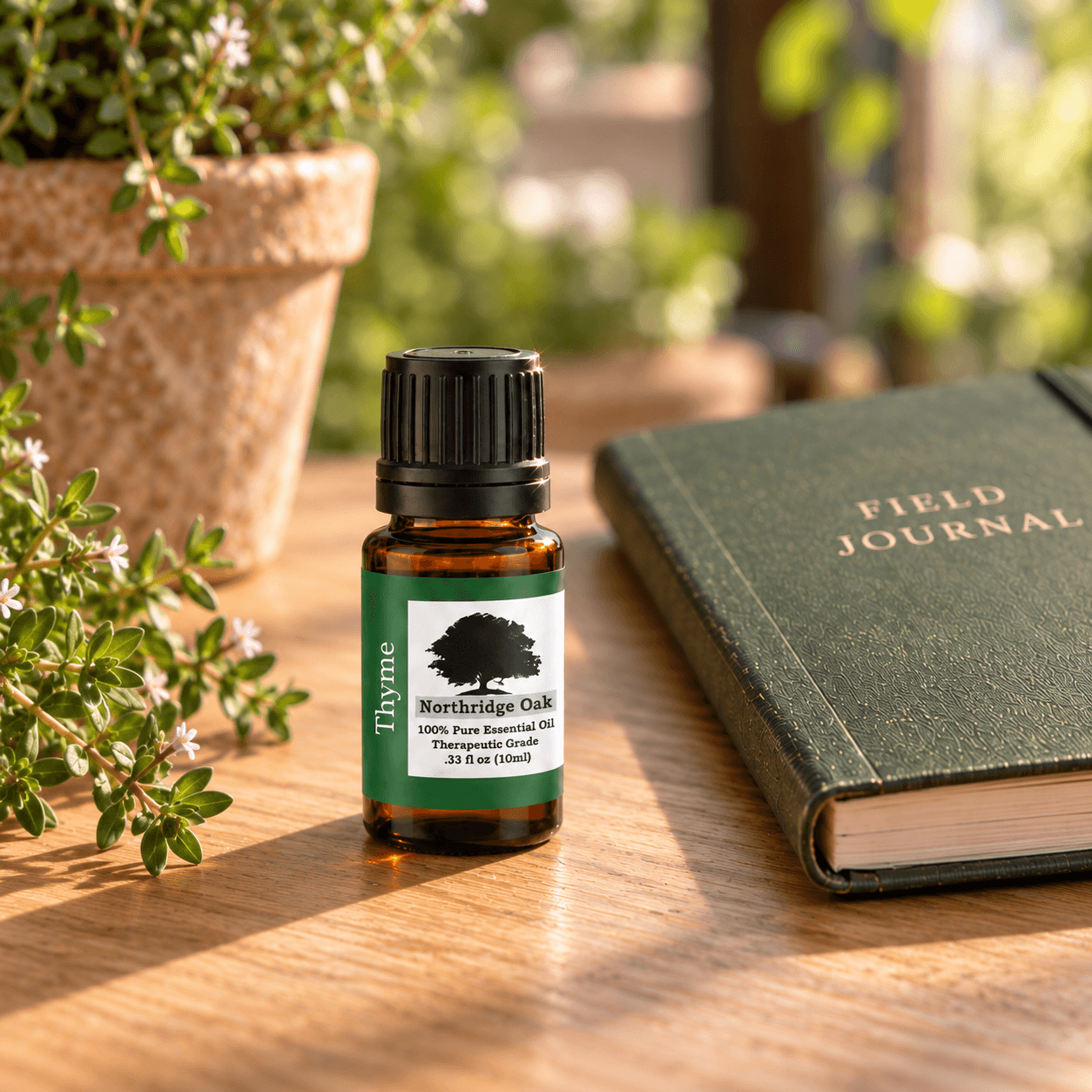
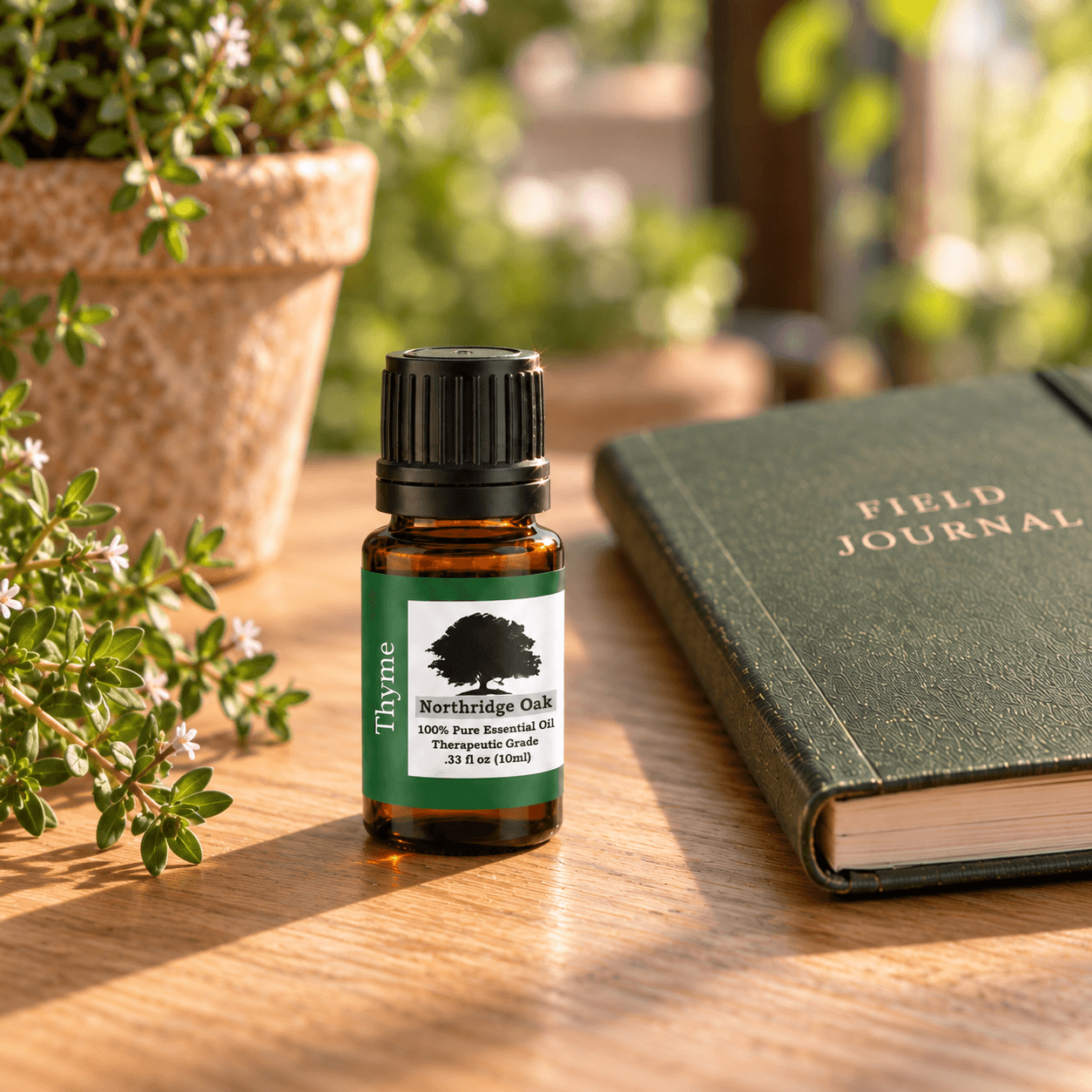
Northridge Oak Thyme Essential Oil is 100% pure, undiluted, bottled in small batches and third-party GC/MS tested. Its confident herbaceous aroma means a single drop can transform a diffuser recipe, cleaning blend or thoughtfully diluted topical formula.
These statements have not been evaluated by the Food and Drug Administration. Northridge Oak products are not intended to diagnose, treat, cure or prevent disease.