Table of Contents
- The easiest blending rule
- Thyme and citrus oils
- Thyme and floral oils
- Thyme and other herbs
- Thyme with woods and resins
- Thyme and eucalyptus
- A portable personal inhaler
- A low-dilution adult roller
- How to rescue a blend that feels too sharp
- Choose partners by mood
- The blending takeaway
- Three ratios worth remembering
- Build with top, middle and base notes
- Keep a blending notebook
- A simple blending practice
- Continue learning about Thyme Essential Oil
- Bring the warm herbal character of Thyme home
- Frequently Asked Questions
What blends well with Thyme Essential Oil? Lemon, Lavender, Rosemary, Cedarwood, Bergamot, Frankincense, Eucalyptus and Balsam Fir all bring out a different side of this bold herb. The secret is simple: let Thyme contribute the character while a softer partner carries most of the blend.
The easiest blending rule
Start with a 1:3 or 1:4 relationship—one drop Thyme for every three or four drops of a partner oil. Thyme has a strong aromatic presence, so this ratio lets it feel intentional without taking over. Once you know the oil, adjust a single drop at a time.
Thyme and citrus oils
Lemon is the most natural first partner. It makes Thyme feel sunny, clean and kitchen-friendly. Bergamot FCF gives it a softer, more sophisticated citrus opening. Grapefruit adds tart brightness, while Blood Orange creates a warmer and rounder composition.
Try Herb Garden Light: 1 drop Thyme, 3 drops Lemon and 2 drops Bergamot FCF in a 100 mL diffuser. For a sweeter version, replace Bergamot with Blood Orange.
Thyme and floral oils
Lavender is Thyme’s best softening partner. Both belong to the mint family, yet Lavender’s floral sweetness smooths Thyme’s warm phenolic edge. Geranium creates a greener botanical blend, and Ylang Ylang adds a small amount of creamy floral richness.
Try Calm Herbal Evening: 1 drop Thyme, 4 drops Lavender and 1 drop Frankincense. The opening feels fresh; the dry-down becomes soft and resinous.
Thyme and other herbs
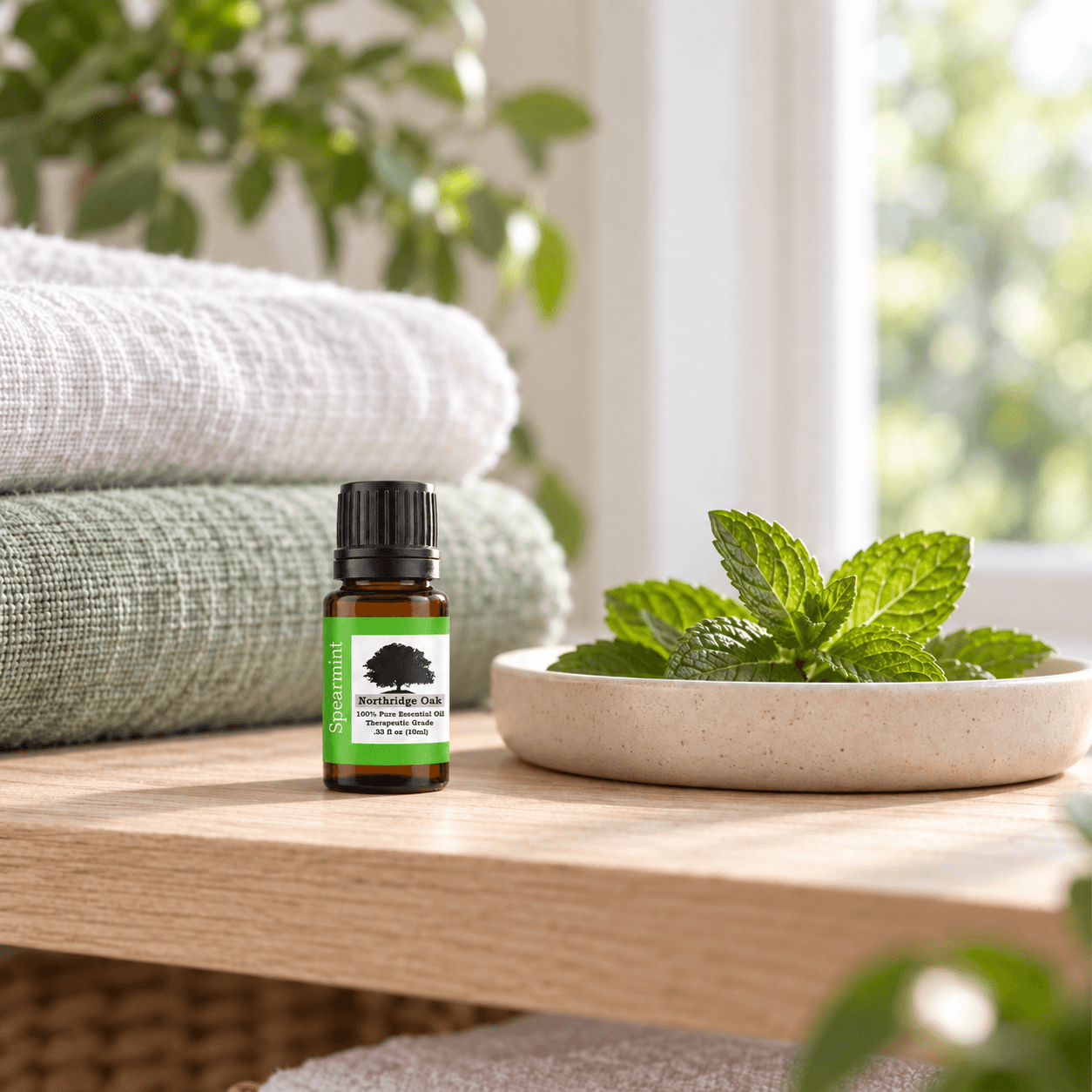
Rosemary makes Thyme feel brisk and purposeful. Marjoram adds soft warmth, while Spearmint brings a sweet green lift. Oregano shares some of Thyme’s warm phenolic character, so the two create a very powerful aroma that is best balanced by plenty of citrus.
Try Fresh Focused Garden: 1 drop Thyme, 2 drops Rosemary, 2 drops Lemon and 1 drop Spearmint.
Thyme with woods and resins
Cedarwood gives Thyme a dry, steady base. Frankincense opens the blend with a smooth resinous airiness. Balsam Fir shifts the composition toward an evergreen forest, while Vetiver can turn one drop of Thyme into a striking natural cologne accord.
Try Woodland Herbs: 1 drop Thyme, 2 drops Cedarwood, 2 drops Balsam Fir and 1 drop Frankincense.
Thyme and eucalyptus
Eucalyptus and Thyme create a clear, penetrating herbal aroma. Rosemary or Peppermint can add further brightness, but keeping Thyme at one drop maintains balance. This pairing is popular in seasonal diffuser rituals because it makes a room smell fresh and open.
Try Clear Morning: 1 drop Thyme, 2 drops Eucalyptus, 2 drops Lemon and 1 drop Lavender.
A portable personal inhaler
Add 2 drops Thyme, 6 drops Lemon, 4 drops Lavender and 3 drops Rosemary to a blank inhaler wick. Assemble and label it. Take a gentle breath from a comfortable distance when you want a vivid herb-garden aroma without scenting an entire room.
A low-dilution adult roller
Add 1 drop Thyme, 2 drops Lavender and 1 drop Frankincense to a 30 mL roller or treatment bottle, then fill with jojoba. This creates a very gentle total dilution suited to Thyme’s potency. Patch test before broader use.
How to rescue a blend that feels too sharp
Add softness rather than simply adding more total oil. Lavender, Cedarwood or Sweet Orange can round the edges. If the blend feels too heavy, add Lemon or Grapefruit. Record every adjustment so the successful version can be recreated.
Choose partners by mood
For bright and clean, choose Lemon. For soft and comforting, choose Lavender. For focused and green, choose Rosemary. For earthy and steady, choose Cedarwood. For refined natural fragrance, choose Bergamot FCF and Frankincense.
The blending takeaway
Thyme becomes approachable when it has a clear supporting role. One drop provides warmth, definition and a garden-fresh signature. Build around it with three to five drops of a gentler oil, and this powerful aromatic becomes one of the most useful accents in the collection.
Three ratios worth remembering
A 1:5 Thyme-to-partner ratio is welcoming for beginners. A 1:3 ratio makes the herbal note more distinct. A 1:1 ratio is useful on aroma strips when learning materials, although it is usually more intense than needed for room diffusion. These ratios provide a starting point while leaving room for personal taste.
Build with top, middle and base notes
Use Lemon or Bergamot for sparkle, Thyme and Lavender for the aromatic center, and Cedarwood or Frankincense for lasting warmth. A complete six-drop formula is two drops Bergamot, one Thyme, two Lavender and one Cedarwood. Every ingredient has a purpose, so the blend feels intentional rather than crowded.
Keep a blending notebook
Write the formula before beginning, then change only one drop at a time. Record the date and batch because natural materials vary subtly. Notes turn pleasant accidents into repeatable recipes and reveal which partner consistently brings out the side of Thyme you enjoy most.
A simple blending practice
Choose one partner family each week. Begin with citrus, move to florals, then explore woods and resins. Keep Thyme fixed at one drop while changing only the partner oils. This reveals how strongly context shapes the same material and prevents every experiment from becoming an unrelated mixture. After four trials, choose the most enjoyable formula and prepare a small master blend.
Continue learning about Thyme Essential Oil
Make this article part of a complete Thyme routine:
- Thyme Essential Oil: Benefits, Uses, Research and Safety
- What Does Thyme Essential Oil Smell Like? Aroma and Chemotypes
- Thyme Essential Oil Diffuser Blends
- Thyme Essential Oil for Hair and Scalp
- Thyme Essential Oil for Skin and Acne Research
- Thyme Essential Oil for Cleaning and Home Aromas
- Thyme Essential Oil for Respiratory Aromatherapy
- Does Thyme Oil Repel Fleas and Mosquitoes?
- Thyme Essential Oil, Thymol and Oral-Care Research
- Thyme vs. Oregano Essential Oil
- Thyme Essential Oil Safety
- How Is Thyme Oil Made?
Bring the warm herbal character of Thyme home
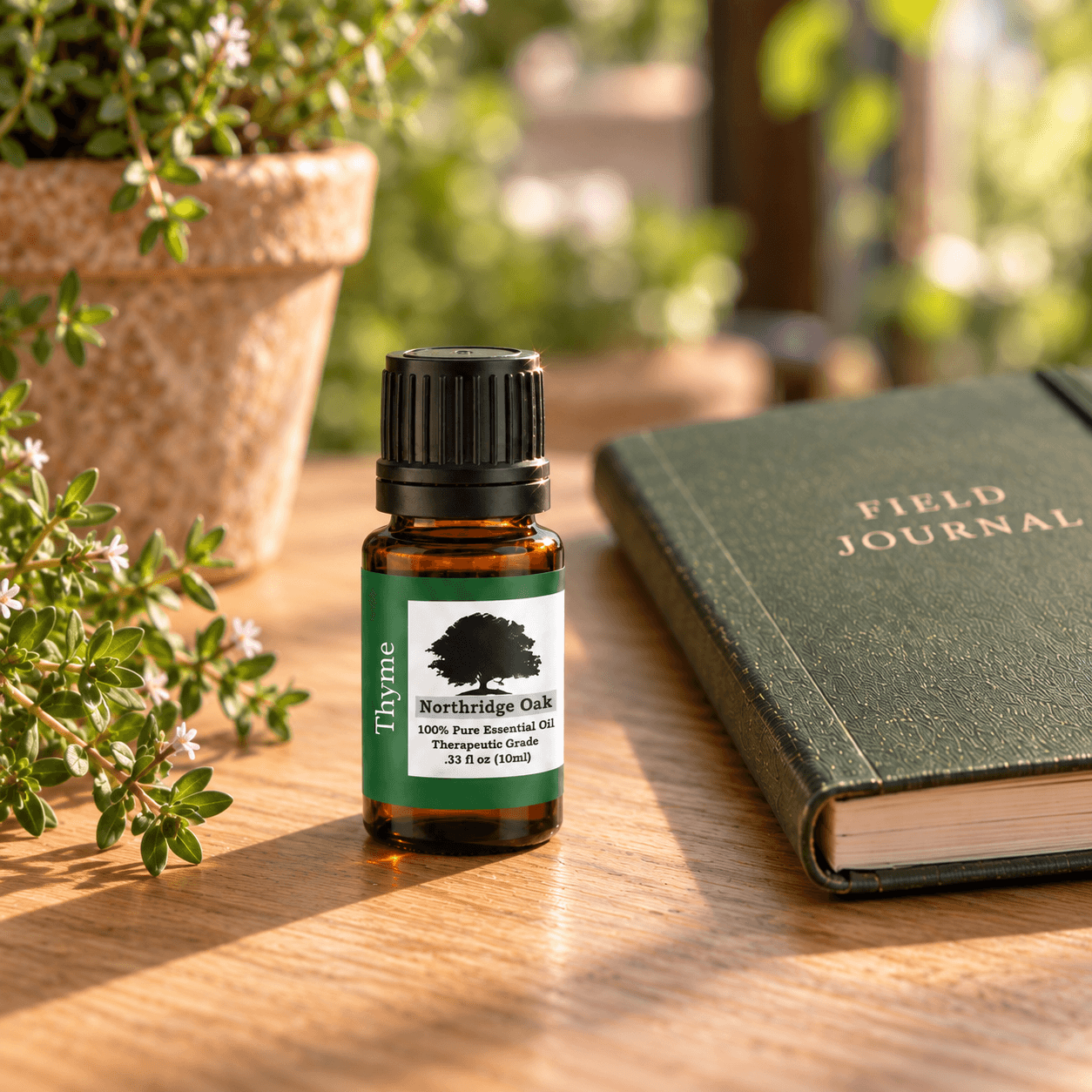
Northridge Oak Thyme Essential Oil is 100% pure, undiluted, bottled in small batches and third-party GC/MS tested. Its confident herbaceous aroma means a single drop can transform a diffuser recipe, cleaning blend or thoughtfully diluted topical formula.
These statements have not been evaluated by the Food and Drug Administration. Northridge Oak products are not intended to diagnose, treat, cure or prevent disease.