Table of Contents
- Why Thyme belongs in a fresh-home collection
- What laboratory research shows
- What the research means at home
- Everyday countertop blend
- Sink and stovetop aroma scrub
- Diffuser blends for a freshly tended home
- Freshen a wastebasket without perfuming the whole room
- Cleaning tools matter too
- Choose complementary oils by room
- A warm, capable kind of clean
- Create a room-by-room scent plan
- A careful floor-cleaning option
- A contained utility-closet aroma
- Keep fragrance and sanitation in their proper roles
- Make the ritual enjoyable
- Let the aroma mark completion
- Continue learning about Thyme Essential Oil
- Explore Thyme with confidence
- Frequently Asked Questions
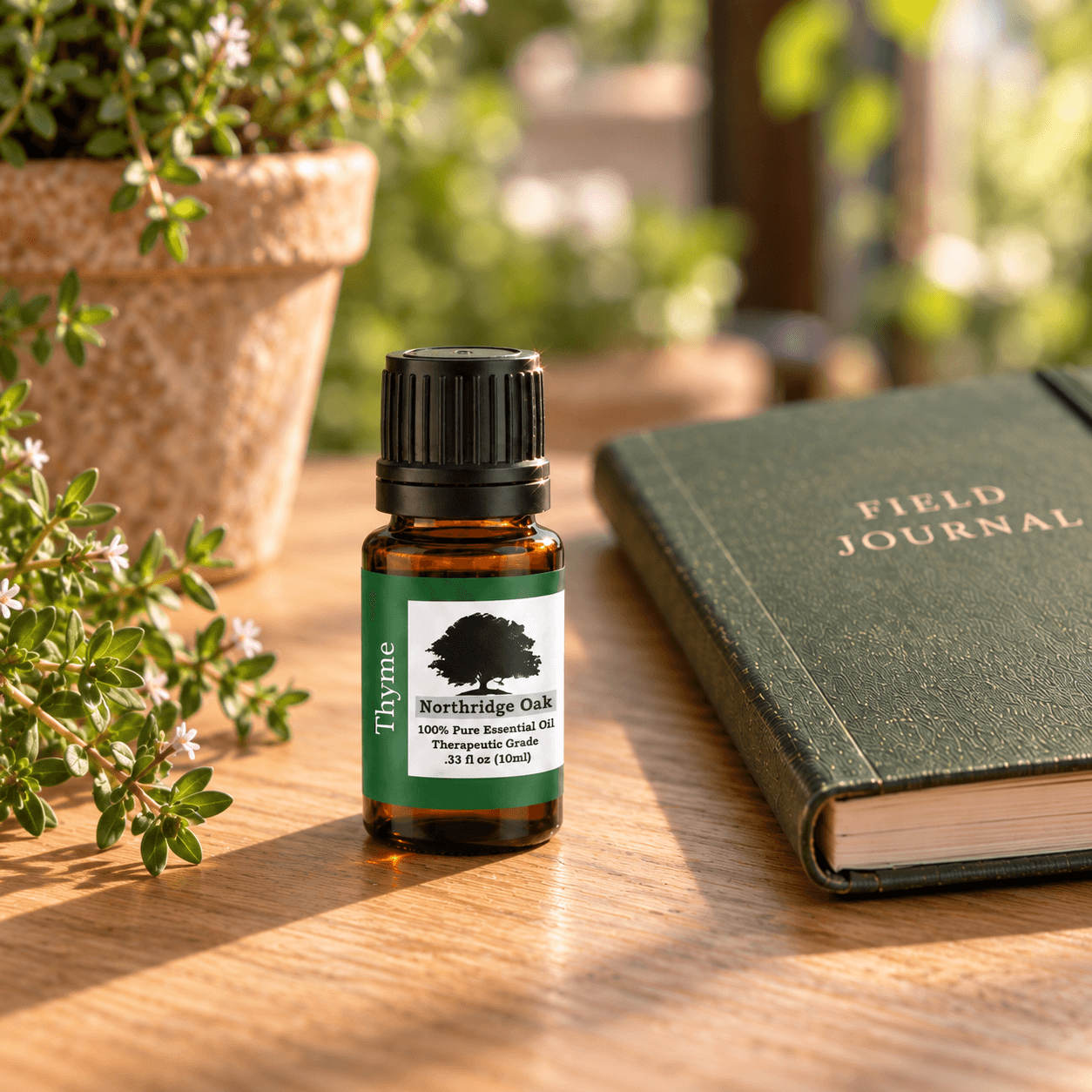
Thyme Essential Oil for cleaning brings a warm herb-garden aroma to the practical rhythms of home care. Its major constituents—often including thymol or carvacrol—have also made Thyme one of the most frequently studied essential oils in laboratory antimicrobial research.
Why Thyme belongs in a fresh-home collection
Thyme smells purposeful: green, warmly spicy and clean without leaning toward synthetic fragrance. One drop pairs naturally with Lemon in a kitchen, with Eucalyptus in a bathroom or with Cedarwood in an entryway. Because the aroma is strong, a bottle lasts through many carefully measured recipes.
What laboratory research shows
Reviews of Thyme oil and thymol describe activity against a broad range of bacteria and fungi in laboratory testing. Researchers have examined how phenolic constituents interact with microbial cell membranes, alter permeability and disrupt normal cellular processes. These findings help explain the oil’s long-standing interest in food, cosmetic and environmental formulations.
The 2020 review Thymol and Thyme Essential Oil—New Insights into Selected Therapeutic Applications summarizes this chemistry and many experimental applications. It is a useful bridge between traditional appreciation and modern formulation science.
What the research means at home
A household recipe is different from a standardized disinfectant test. Contact time, concentration, surface, soil load and formulation all influence performance. The most dependable approach is to let a proven soap or household cleaning base perform the cleaning while Thyme contributes a memorable natural aroma.
Everyday countertop blend
For a 16-ounce spray bottle, begin with an unscented cleaning concentrate specifically labeled for the intended surface and dilute it exactly as directed. Add 2 drops Thyme and 8 drops Lemon only when the base manufacturer allows essential oils. Label the bottle, shake as directed and spot test on an inconspicuous area.
Sink and stovetop aroma scrub
Mix 1/2 cup baking soda with enough unscented liquid soap to form a soft paste. Add 1 drop Thyme and 4 drops Lemon. Apply with a damp cloth to compatible nonporous surfaces, rinse fully and dry. Avoid delicate stone, unfinished wood and surfaces whose manufacturer discourages abrasives.
Diffuser blends for a freshly tended home
Herbal Kitchen: 1 drop Thyme, 4 drops Lemon and 1 drop Rosemary. Open Entryway: 1 drop Thyme, 3 drops Grapefruit and 2 drops Cedarwood. Bright Bathroom: 1 drop Thyme, 2 drops Eucalyptus, 2 drops Lemon and 1 drop Lavender.
Freshen a wastebasket without perfuming the whole room
Place 1 drop Thyme and 2 drops Lemon on a cotton pad, then position it beneath the liner where children and pets cannot reach it. Replace when the aroma fades. This creates a contained scent source and makes the strong oil easy to control.
Cleaning tools matter too
Wash reusable cloths thoroughly and let them dry completely. Rinse spray nozzles, label every homemade preparation with ingredients and date, and prepare modest batches that can be used while fresh. Good cleaning habits and thoughtful fragrance work beautifully together.
Choose complementary oils by room
Lemon and Grapefruit feel natural in kitchens. Eucalyptus and Lavender create a fresh bathroom profile. Cedarwood and Frankincense make an entryway feel warm and grounded. Rosemary reinforces Thyme’s herb-garden identity in a workroom or mudroom.
A warm, capable kind of clean
Thyme’s value in home care comes from both science and sensory character. Laboratory research gives its chemistry a compelling foundation, while one carefully measured drop can make ordinary cleaning feel more botanical and enjoyable. Use it to create a home that smells freshly tended rather than heavily fragranced.
Create a room-by-room scent plan
Use Thyme with Lemon in the kitchen, Eucalyptus in the bathroom, Cedarwood in the entryway and Lavender in the laundry area. Each room receives a distinct aroma while the shared herbal note creates continuity throughout the home.
A careful floor-cleaning option
When a floor-cleaning product specifically permits essential oils, mix one drop Thyme and four drops Lemon into the measured cleaner, then dilute according to its label. Confirm compatibility with the flooring manufacturer. Plain water does not disperse essential oil evenly.
A contained utility-closet aroma
Add one drop Thyme and two drops Cedarwood to an untreated wooden aroma block designed for essential oils. Let it absorb fully, then place it where it cannot contact clothing or be reached by children and pets. The result is dry, herbaceous and warm.
Keep fragrance and sanitation in their proper roles
Soap, detergent and registered disinfectants perform defined tasks when used according to their labels. Thyme makes those routines smell botanical and satisfying. Appreciating each role allows the science to remain accurate while the experience feels genuinely special.
Make the ritual enjoyable
Set out the correct cloth, open a window and choose one measured aroma formula before beginning. These small preparations make cleaning feel calmer and reduce the temptation to add unmeasured oil directly from the bottle. When the room is finished, notice how Thyme changes as the sharper Lemon notes fade. The lingering herbal-wood character is often what makes this blend feel different from an ordinary citrus cleaner.
Let the aroma mark completion
When the practical cleaning is finished, run the diffuser blend for a short period while supplies are put away and cloths are rinsed. This gives Thyme a clear role as the scent that closes the routine. The association can make future cleaning sessions feel more organized and rewarding, while the room settles into a warm garden-fresh atmosphere.
Continue learning about Thyme Essential Oil
Make this article part of a complete Thyme routine:
- Thyme Essential Oil: Benefits, Uses, Research and Safety
- What Does Thyme Essential Oil Smell Like?
- What Blends Well With Thyme?
- Thyme Diffuser Blends
- Thyme for Hair and Scalp
- Thyme for Skin and Acne Research
- Thyme for Respiratory Aromatherapy
- Thyme Oil for Fleas and Mosquitoes
- Thyme, Thymol and Oral Care
- Thyme vs. Oregano Essential Oil
- Thyme Essential Oil Safety
- How Is Thyme Oil Made?
Explore Thyme with confidence
Northridge Oak Thyme Essential Oil is 100% pure, undiluted, bottled in small batches and third-party GC/MS tested. Begin with one drop and let its warm herbal character bring clarity and distinction to the recipe.
These statements have not been evaluated by the Food and Drug Administration. Northridge Oak products are not intended to diagnose, treat, cure or prevent disease.