Table of Contents
- How to use these recipes
- Bright morning blends
- Focused workspace blends
- Fresh kitchen and entryway blends
- Woodland and seasonal blends
- Softer evening blends
- Why one drop is usually enough
- Adjust a recipe without losing its character
- Turn a favorite blend into a routine
- Comfortable diffusion
- Choose by room and season
- Scale recipes thoughtfully
- Prepare a reusable master blend
- Refresh the experience
- Let the room guide the strength
- Continue learning about Thyme Essential Oil
- Bring the warm herbal character of Thyme home
- Frequently Asked Questions
Thyme Essential Oil diffuser blends bring the atmosphere of a sunlit herb garden indoors. Thyme is bold enough that one drop usually does the work, leaving plenty of room for citrus, florals, woods and resins to shape the mood.
How to use these recipes
Each recipe is written for a 100 mL ultrasonic diffuser. Follow your diffuser manufacturer’s instructions and reduce the total for smaller equipment or compact rooms. Add water first, then the essential oils, and enjoy the aroma with comfortable airflow.
Bright morning blends
1. Sunlit Herb Garden: 1 drop Thyme, 3 drops Lemon, 2 drops Bergamot FCF. Bright, polished and green.
2. Citrus Thyme: 1 drop Thyme, 3 drops Blood Orange, 2 drops Grapefruit. Juicy citrus with a savory backbone.
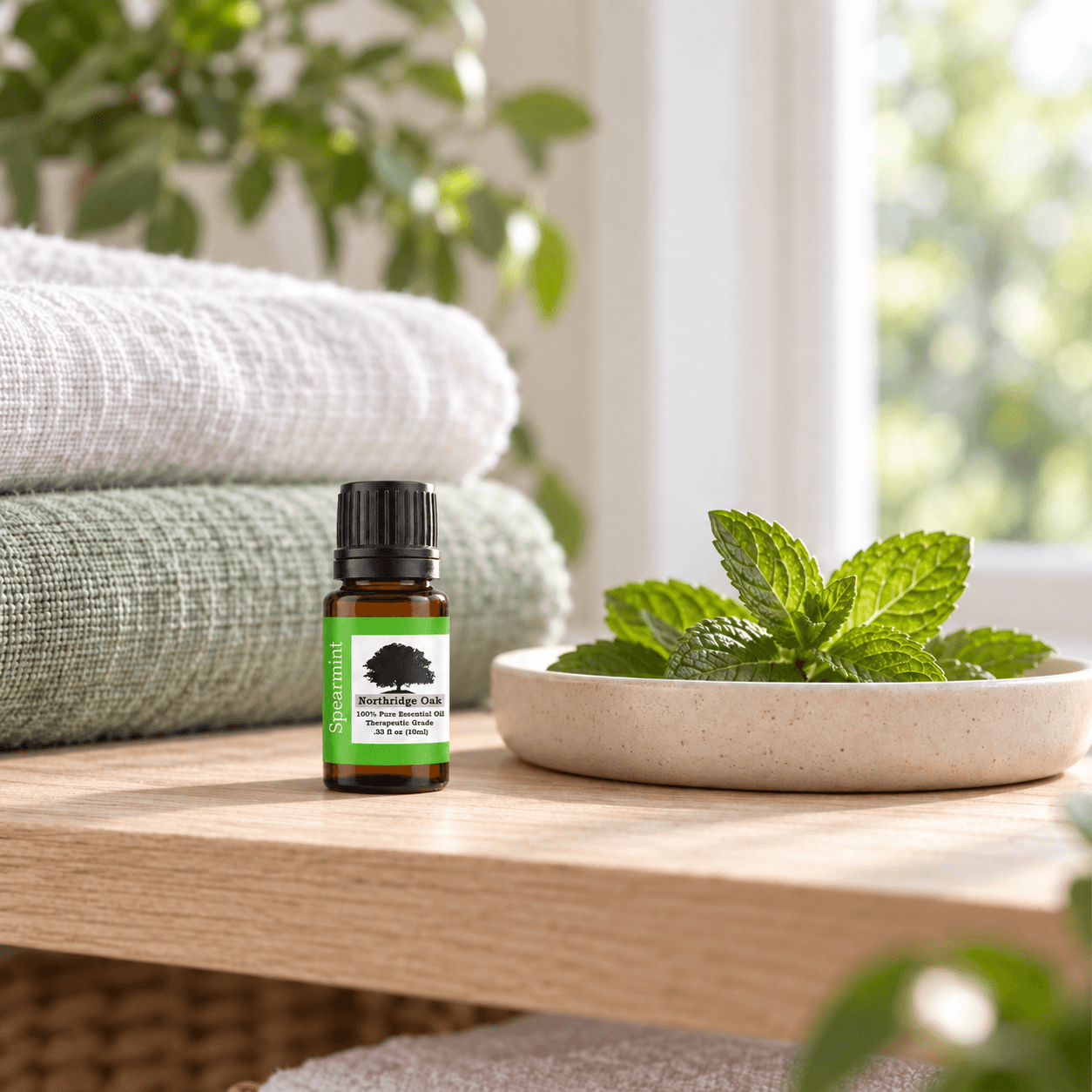
3. Fresh Start: 1 drop Thyme, 2 drops Rosemary, 2 drops Lemon, 1 drop Spearmint. Clear and energetic.
4. Mediterranean Morning: 1 drop Thyme, 2 drops Lemon, 2 drops Lavender, 1 drop Rosemary. Like herbs warming beside a sunny window.
Focused workspace blends
5. Green Focus: 1 drop Thyme, 2 drops Rosemary, 2 drops Bergamot FCF, 1 drop Cedarwood.
6. Clear Desk: 1 drop Thyme, 2 drops Eucalyptus, 2 drops Lemon, 1 drop Lavender.
7. Quiet Momentum: 1 drop Thyme, 3 drops Bergamot FCF, 1 drop Frankincense, 1 drop Cedarwood.
8. Garden Studio: 1 drop Thyme, 2 drops Geranium, 2 drops Grapefruit, 1 drop Frankincense.
Fresh kitchen and entryway blends
9. Clean Kitchen: 1 drop Thyme, 4 drops Lemon, 1 drop Eucalyptus. Crisp and familiar.
10. Welcome Home: 1 drop Thyme, 3 drops Sweet Orange, 2 drops Cedarwood. Warm and inviting.
11. Herbal Linen: 1 drop Thyme, 3 drops Lavender, 2 drops Lemon. Fresh without smelling overly sharp.
12. Open Windows: 1 drop Thyme, 2 drops Grapefruit, 2 drops Eucalyptus, 1 drop Spearmint.
Woodland and seasonal blends
13. Forest Herb: 1 drop Thyme, 2 drops Balsam Fir, 2 drops Cedarwood, 1 drop Frankincense.
14. Autumn Garden: 1 drop Thyme, 2 drops Blood Orange, 2 drops Cedarwood, 1 drop Ginger Root.
15. Winter Greenery: 1 drop Thyme, 3 drops Balsam Fir, 1 drop Frankincense, 1 drop Lemon.
16. Rustic Kitchen: 1 drop Thyme, 2 drops Lemon, 2 drops Sweet Orange, 1 drop Clove. Warm, herbal and gently spiced.
Softer evening blends
17. Lavender Thyme: 1 drop Thyme, 4 drops Lavender, 1 drop Frankincense.
18. Quiet Woodland: 1 drop Thyme, 3 drops Cedarwood, 2 drops Lavender.
19. Botanical Evening: 1 drop Thyme, 2 drops Geranium, 2 drops Lavender, 1 drop Bergamot FCF.
20. Warm Sunset: 1 drop Thyme, 3 drops Blood Orange, 1 drop Ylang Ylang, 1 drop Cedarwood.
Why one drop is usually enough
Thyme contains highly expressive aromatic constituents, often including thymol or related compounds. Its odor threshold is low, so it remains recognizable even when surrounded by several drops of citrus or Lavender. Starting small preserves nuance and makes the blend more comfortable.
Adjust a recipe without losing its character
For more brightness, add one drop of Lemon or Grapefruit. For softness, add Lavender. For a drier base, add Cedarwood. If Thyme feels too prominent, increase only the partner oil rather than adding another strong aromatic.
Turn a favorite blend into a routine
Choose one recipe for a specific moment—starting work, tidying the kitchen or settling into an evening book. Repeating it in the same context helps the aroma become familiar and meaningful rather than simply background fragrance.
Comfortable diffusion
Diffuse for a limited period with airflow, especially in a smaller room. Keep bottles and equipment secure around children and pets, and allow anyone sharing the space to leave freely. Thyme’s strength makes a light touch the most enjoyable approach.
Choose by room and season
Kitchens welcome Lemon, Grapefruit and Rosemary. Workspaces suit Bergamot, Spearmint and Cedarwood. Living rooms often feel best with Lavender, Frankincense and Blood Orange. Spring blends can feature Lemon and Geranium; autumn welcomes Blood Orange and Ginger; winter brings out Thyme’s woodland character with Balsam Fir.
Scale recipes thoughtfully
For a 50 mL diffuser, begin with half the listed recipe and round down. In a large room, try the standard 100 mL formula before doubling it, because airflow and diffuser placement often affect scent more than additional oil. A lighter formula can still travel beautifully through an open space.
Prepare a reusable master blend
Once you love a ratio, combine it in a labeled amber bottle. For Sunlit Herb Garden, mix five drops Thyme, fifteen Lemon and ten Bergamot FCF. Add six drops of the prepared mixture to a 100 mL diffuser. A master blend makes a favorite routine easy to repeat and preserves the intended balance.
Refresh the experience
Alternate between one bright, one woodland and one soft formula rather than using the same recipe continuously. The contrast keeps each aroma distinct and gives Thyme a different role depending on the room, season and time of day.
Let the room guide the strength
A formula that feels delicate in an open living area may feel vivid in a bedroom or office. Begin with fewer drops in compact spaces and place the diffuser away from the face. If the aroma feels faint, allow several minutes before adding oil; Thyme often becomes more noticeable as the room circulation distributes it. Comfortable diffusion is about balance, not maximum intensity.
Continue learning about Thyme Essential Oil
Make this article part of a complete Thyme routine:
- Thyme Essential Oil: Benefits, Uses, Research and Safety
- What Does Thyme Essential Oil Smell Like? Aroma and Chemotypes
- What Blends Well With Thyme Essential Oil?
- Thyme Essential Oil for Hair and Scalp
- Thyme Essential Oil for Skin and Acne Research
- Thyme Essential Oil for Cleaning and Home Aromas
- Thyme Essential Oil for Respiratory Aromatherapy
- Does Thyme Oil Repel Fleas and Mosquitoes?
- Thyme Essential Oil, Thymol and Oral-Care Research
- Thyme vs. Oregano Essential Oil
- Thyme Essential Oil Safety
- How Is Thyme Oil Made?
Bring the warm herbal character of Thyme home
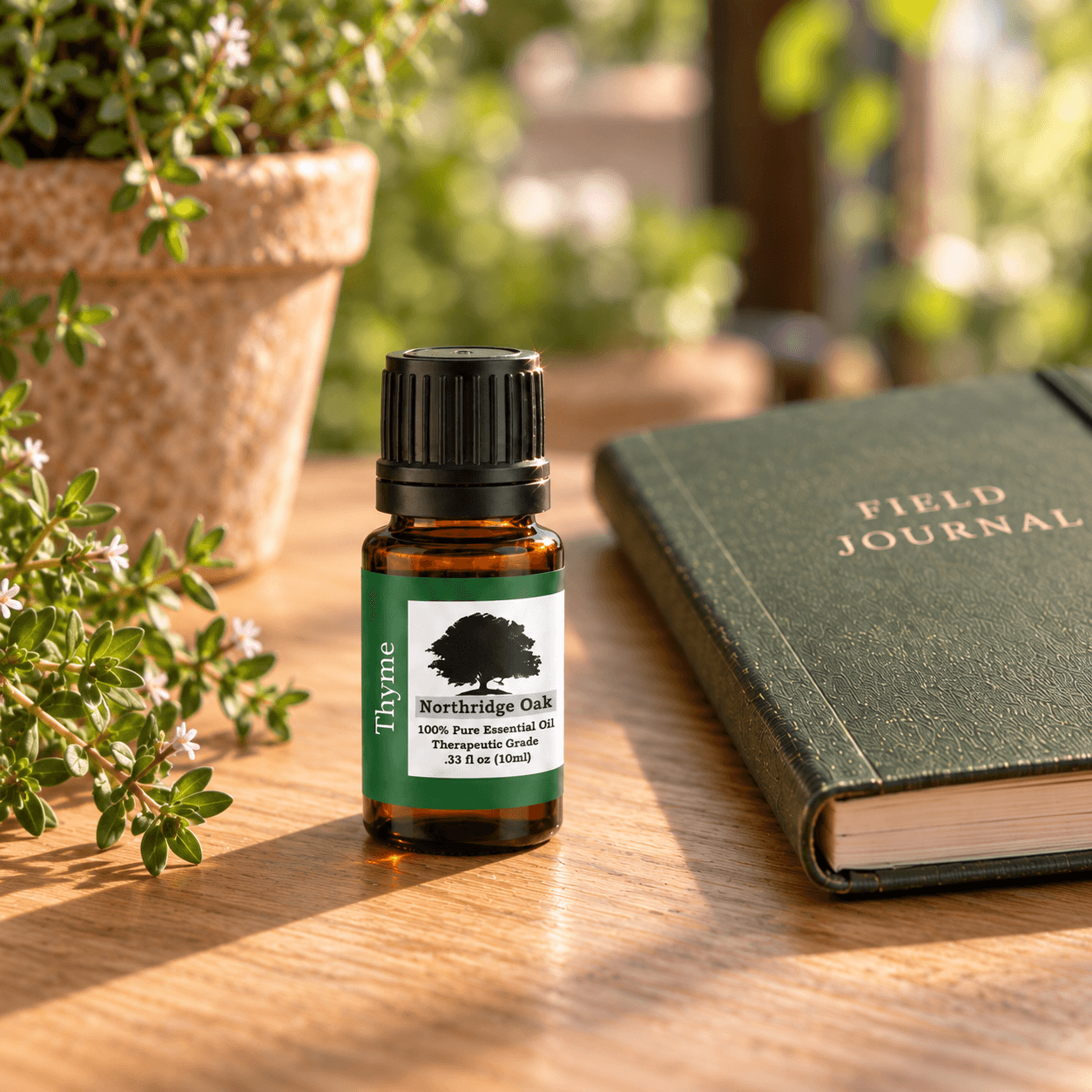
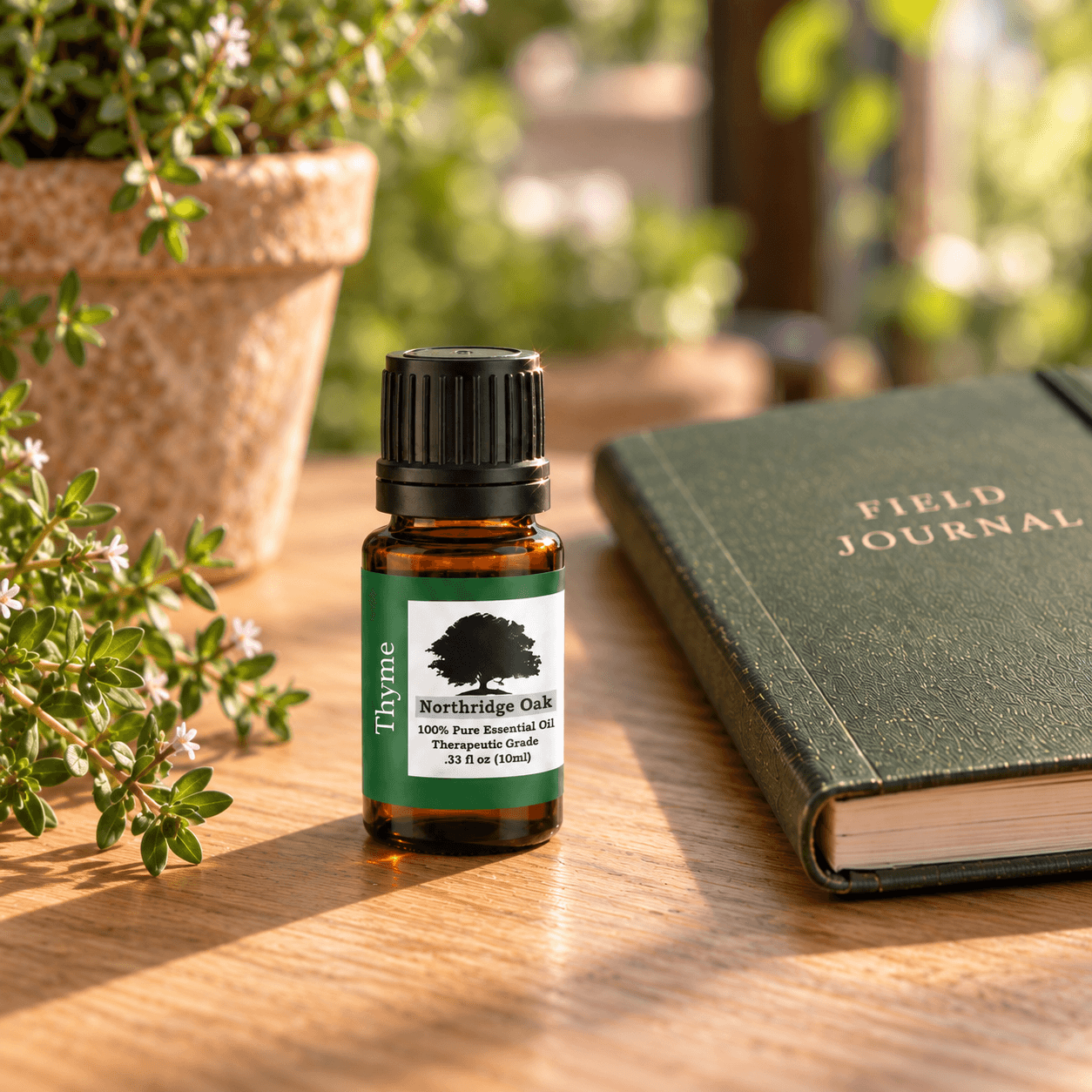
Northridge Oak Thyme Essential Oil is 100% pure, undiluted, bottled in small batches and third-party GC/MS tested. Its confident herbaceous aroma means a single drop can transform a diffuser recipe, cleaning blend or thoughtfully diluted topical formula.
These statements have not been evaluated by the Food and Drug Administration. Northridge Oak products are not intended to diagnose, treat, cure or prevent disease.