Table of Contents
- The short answer: Thyme Essential Oil is distilled
- Steam distillation versus hydrodistillation
- Why the finished oil is so concentrated
- What is a Thyme chemotype?
- Can you make Thyme Essential Oil at home?
- How to make a Thyme-infused oil
- Thyme Essential Oil versus Thyme-infused oil
- How GC/MS testing supports quality
- How harvesting changes the aroma
- How to use professionally distilled Thyme Oil
- How to recognize a well-described bottle
- Continue learning about Thyme Essential Oil
- Experience the finished essential oil
- Frequently Asked Questions
How is Thyme Oil made? True Thyme Essential Oil is captured from aromatic thyme leaves and flowering tops through distillation, a process that carries the plant’s volatile fragrance molecules into a remarkably concentrated oil. A homemade jar of thyme and carrier oil can be useful too, but it is an herbal infusion—not the same ingredient found in a bottle of pure Thyme Essential Oil.
The short answer: Thyme Essential Oil is distilled
Producers harvest the aromatic parts of Thymus vulgaris, usually the leaves and flowering tops, and place the plant material in distillation equipment. Steam moves through the thyme, releasing volatile aromatic molecules. The fragrant vapor travels into a condenser, where it cools back into liquid.
That liquid separates into aromatic water, often called hydrosol, and a much smaller layer of essential oil. The oil is collected, allowed to settle and prepared for quality testing and bottling. The result is highly concentrated: only a small amount is needed to give a diffuser blend its warm, green and spicy center.
Steam distillation versus hydrodistillation
In steam distillation, steam passes through plant material held separately from the boiling water. In hydrodistillation, the botanical material is placed in or directly above water while the mixture is heated. Both methods use heat, water and condensation to separate volatile aromatic compounds from the heavier plant material.
Researchers continue to compare conventional distillation with newer methods designed to improve efficiency or influence composition. A major review of Thyme Essential Oil and thymol explains that composition can vary with species, chemotype, climate, harvest and processing. Extraction is therefore only one part of the oil’s final personality.
Why the finished oil is so concentrated
Fresh thyme contains water, fiber, pigments, minerals and many nonvolatile plant compounds. Distillation selectively carries the smaller volatile molecules that evaporate with steam. These include thymol, carvacrol, p-cymene, gamma-terpinene, linalool and other constituents, with proportions depending on the plant and chemotype.
This concentration explains why one drop of Thyme can shape a six-drop diffuser recipe. It also explains why topical recipes use a carrier oil and measured dilution. The essential oil is not simply liquid thyme leaves; it is a concentrated fraction of the plant’s aromatic chemistry.
What is a Thyme chemotype?
Plants with the same botanical name can emphasize different natural constituents. These chemical patterns are called chemotypes. A thymol-rich Thyme often smells bold, warm and phenolic. A linalool-rich Thyme is usually softer and more floral, while carvacrol-rich oil can feel hotter and more oregano-like.
Genetics, growing conditions, geography, harvest timing and distillation all help shape the final profile. Our guide to what Thyme Oil smells like explores these aromatic differences in more detail.
Can you make Thyme Essential Oil at home?
Producing a true essential oil requires distillation equipment, substantial plant material, careful temperature management and a reliable method for separating the tiny essential-oil layer from the aromatic water. Small home stills exist, but the process is more technical than soaking herbs in oil.
A home distillation experiment can be educational, yet it rarely produces the consistency, yield or testing information expected from a professionally made oil. When you want a predictable bottle for diffuser or topical recipes, a properly distilled and GC/MS-tested Thyme Essential Oil offers a straightforward choice.
How to make a Thyme-infused oil
You can create a gentle botanical infusion by steeping completely dried culinary thyme in a stable carrier oil. Use a clean, dry jar and make sure the herb contains no visible moisture. Cover the thyme fully with jojoba, sunflower or another suitable carrier oil, close the jar and allow it to infuse in a cool, dark place. Strain carefully through a clean filter and label the finished oil with the ingredients and date.
This process transfers oil-soluble plant material into the carrier. It does not create essential oil, and the finished infusion will be far less concentrated. Because moisture can shorten shelf life, dried herb, clean equipment and small batches make the method easier to manage.
Thyme Essential Oil versus Thyme-infused oil
Thyme Essential Oil is distilled, highly aromatic and used by the drop. It contains a concentrated mixture of volatile compounds and is diluted before topical use. Thyme-infused oil is a carrier oil that has held dried thyme. It is milder, contains a different range of constituents and is used in larger amounts.
Neither is a substitute for the other in a carefully written recipe. If a diffuser formula calls for one drop of Thyme Essential Oil, an infused carrier oil will not disperse or evaporate in the same way. If a body-oil recipe calls for an infused oil as its base, replacing the entire amount with essential oil would create an entirely different and overly concentrated product.
How GC/MS testing supports quality
Gas chromatography separates the volatile mixture into individual components, while mass spectrometry helps identify them. Together, GC/MS testing creates a chemical fingerprint of the distilled oil. The report can support botanical identity, reveal the major constituents and show whether the oil’s profile fits expectations.
This is especially helpful with Thyme because chemotypes can vary noticeably. Northridge Oak’s small-batch, third-party GC/MS-tested approach connects the bottle to a documented chemical profile rather than relying on aroma alone.
How harvesting changes the aroma
The stage of growth, weather, location and time of harvest can influence essential-oil yield and composition. Leaves and flowering tops collected at different points may produce oils with different balances of thymol, p-cymene, gamma-terpinene and other compounds. Distillers choose their harvest and process to create the profile they want.
That natural variation is part of the appeal of botanical oils. It is also why the botanical name, country of origin and testing information add meaningful context to every bottle.
How to use professionally distilled Thyme Oil
For an easy first diffuser blend, add 1 drop Thyme, 3 drops Lemon Essential Oil and 2 drops Lavender Essential Oil to a 100 mL diffuser. Lemon brightens the opening, Lavender softens the center and Thyme gives the recipe its garden-fresh identity.
For adult topical use, add 1 drop Thyme and 3 drops Lavender to 30 mL jojoba or fractionated coconut oil. Label the bottle, patch test and use a small amount on intact skin. Visit the complete Thyme Oil Safety Guide for dilution, storage and household guidance.
How to recognize a well-described bottle
Look for the botanical name, plant part, extraction method, country of origin and purity statement. Useful product information should also explain whether the oil is undiluted and how quality is verified. A confident seller makes these details easy to find.
Then let your senses participate. Place one drop on an aroma strip, smell from several inches away and revisit it after fifteen minutes. The aroma should develop from green and spicy toward a warmer, drier finish. Our Thyme blending guide can help you choose the next oil to place beside it.
Continue learning about Thyme Essential Oil
Make this article part of a complete Thyme routine:
- Thyme Oil Benefits, Uses, Research and Safety
- What Does Thyme Oil Smell Like?
- What Blends Well With Thyme Oil?
- Thyme Oil Diffuser Blends
- Thyme Oil for Hair and Scalp
- Thyme Oil for Skin and Acne
- Thyme Oil for Cleaning and Home Aromas
- Thyme Oil for Respiratory Aromatherapy
- Thyme Oil for Fleas and Mosquitoes
- Thyme Oil and Oral-Care Research
- Thyme Oil vs. Oregano Oil
- Thyme Oil Safety
Experience the finished essential oil
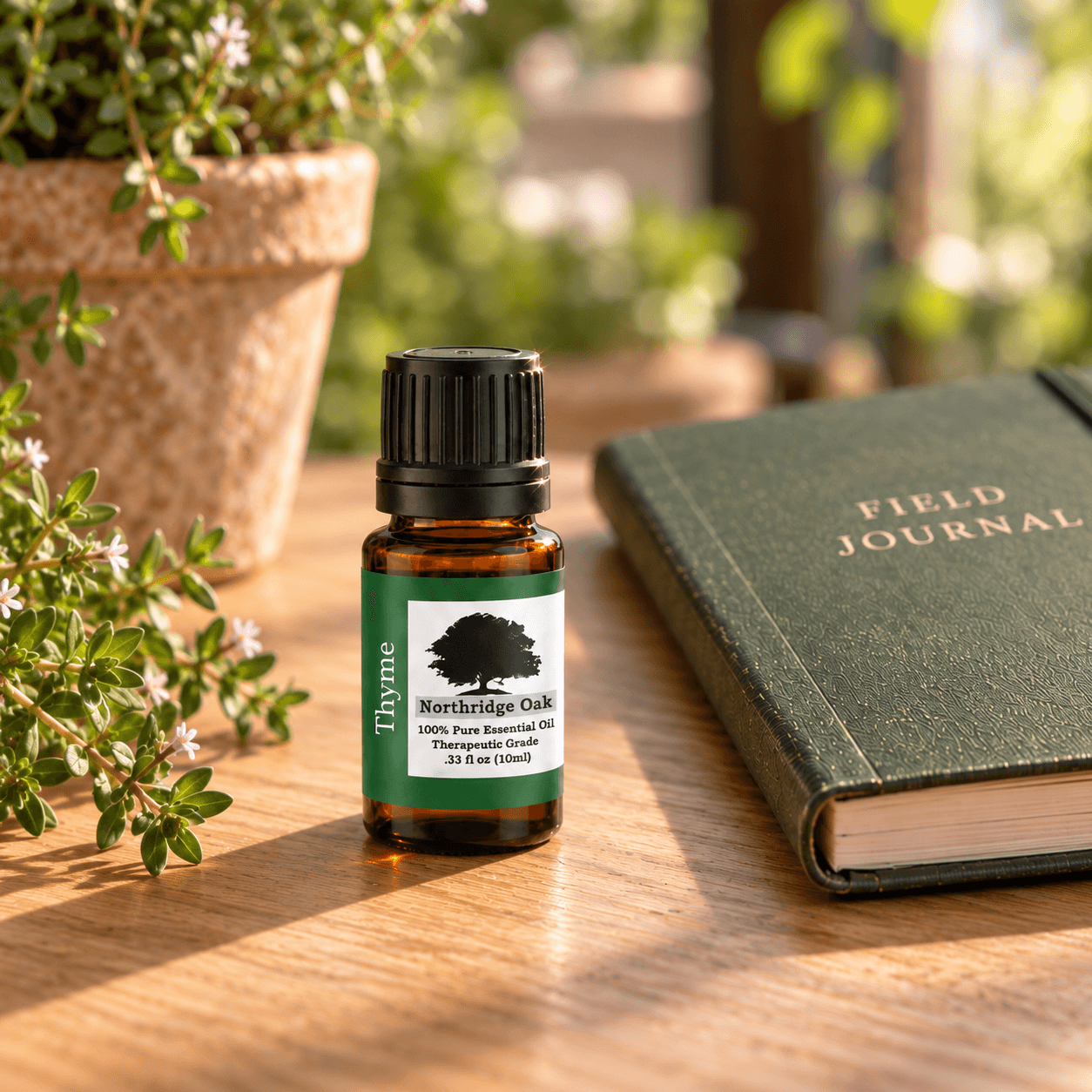
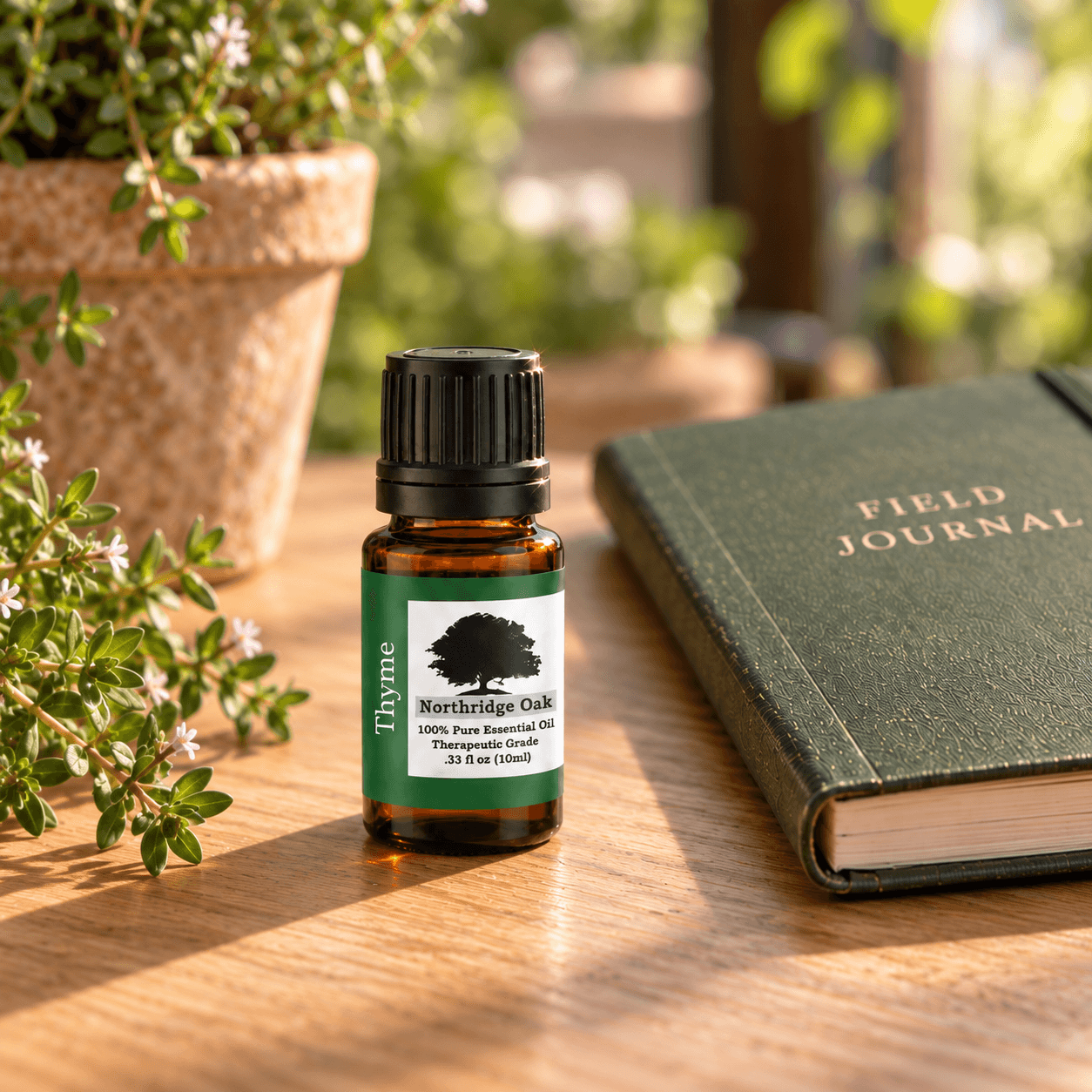
Northridge Oak Thyme Essential Oil is steam-distilled, 100% pure, undiluted, bottled in small batches and third-party GC/MS tested. One measured drop is enough to bring its warm herb-garden character to a complete diffuser or topical recipe.
These statements have not been evaluated by the Food and Drug Administration. Northridge Oak products are not intended to diagnose, treat, cure or prevent disease.