Table of Contents
- One species, many expressions
- Indian Vetiver
- Haitian Vetiver
- Java or Indonesian Vetiver
- Réunion or Bourbon Vetiver
- What chemistry says about regional differences
- Why one “major compound” cannot explain the scent
- How geography changes composition
- Which Vetiver is best for diffusion?
- Which Vetiver is best for perfume?
- How to compare two Vetiver oils
- Why GC/MS testing matters
- Research sources
- Continue learning about Vetiver Essential Oil
- What “khus” means
- How root age affects the oil
- Distillation length and aroma
- Can you blend different Vetiver origins?
- Origin is the beginning of the story
- Frequently Asked Questions
Types of Vetiver Essential Oil are usually described by origin: Indian, Haitian, Java or Indonesian, and Réunion or Bourbon. They all come from Chrysopogon zizanioides roots, yet climate, soil, plant material, harvest, root preparation and distillation can create noticeably different aromas and chemical profiles.
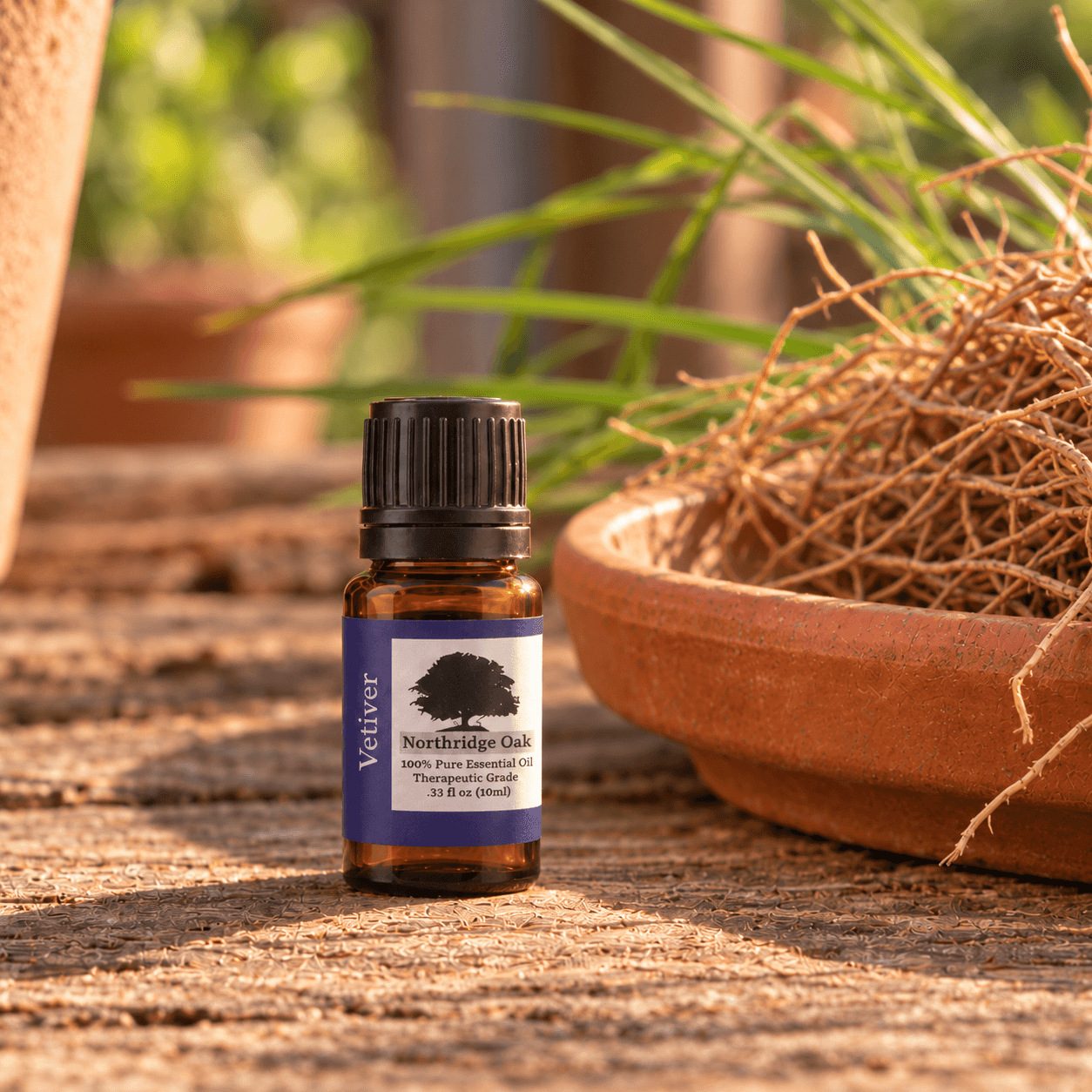
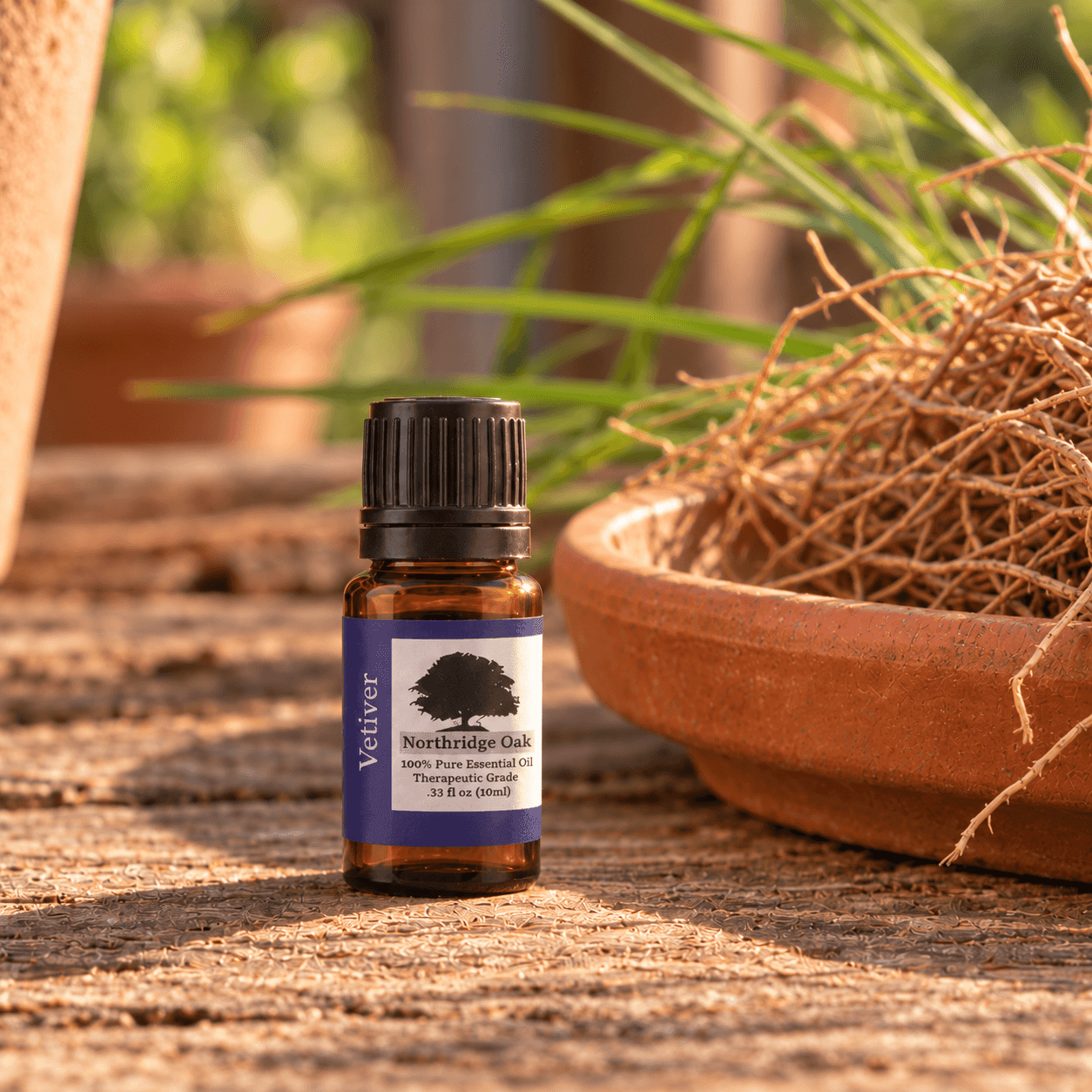
Northridge Oak Vetiver Essential Oil comes from India. It expresses the rich earthy, smoky, woody character that makes Indian Vetiver an excellent base for aromatherapy and natural fragrance.
One species, many expressions
Essential oils are agricultural products, not standardized synthetic fragrances. Even oils from the same country can vary by farm and year. Origin gives a useful expectation, while GC/MS analysis and direct smelling describe the actual batch. This natural variability is one reason Vetiver fascinates perfumers.
Indian Vetiver
India is the historic home of Vetiver and the source of the name “khus.” Indian material is often earthy, smoky, leathery, warm and deeply rooty. Traditional North Indian khus may be associated with greener, cooling facets, while other Indian oils feel dense and woody. Root age and distillation style influence the result.
Haitian Vetiver
Haiti is one of the world’s leading Vetiver producers. Haitian oil is often described as dry, elegant, clean and woody, with grapefruit-peel brightness and a controlled smoky finish. These traits make it a favorite for modern cologne and fragrances that want clarity around the Vetiver base.
Java or Indonesian Vetiver
Java Vetiver commonly carries a darker profile: smoky, leathery, roasted, bitter and sometimes slightly animalic. Perfumers use it when they want dramatic wood, tobacco, leather or charred-earth effects. Citrus can make Java material more approachable, while Patchouli or Myrrh emphasizes its depth.
Réunion or Bourbon Vetiver
Réunion Vetiver has a celebrated perfumery history and may be described as balanced, refined, earthy and softly smoky. A 2017 study of three Réunion oils found meaningful variation even among samples from one origin. A trained perfumer described one as weak and plastic, another as smoky and peanut-like and a third as more characteristic and balanced.
What chemistry says about regional differences
Vetiver contains an intricate mixture of sesquiterpenes, sesquiterpene alcohols, ketones and trace odorants. Frequently discussed components include khusimol, α-vetivone, β-vetivone, vetiselinenol and khusian-related compounds. Their percentages vary, and aroma may depend strongly on constituents present at very low levels.
Why one “major compound” cannot explain the scent
The most abundant constituent is not automatically the most odor-active. A trace material with a very low odor threshold can shape the aroma more than a major component. Researchers studying Vetiver’s smelling principles use fractionation, chromatography, mass spectrometry and human olfactory evaluation to connect chemistry with perception.
How geography changes composition
Soil, rainfall, temperature, plant genetics, harvest age and drying influence the roots before distillation begins. Distillers then make choices about soaking, chopping, still design, water, temperature and duration. Storage and oxidation continue changing the material after production. “Haitian” or “Indian” therefore describes a valuable context, not a fixed chemical recipe.
Which Vetiver is best for diffusion?
Choose by aroma preference. Indian Vetiver suits rich woods and evening blends. Haitian styles fit bright citrus and polished spaces. Java Vetiver appeals to people who love smoke, leather and darker forest aromas. Any origin can be beautiful when the batch is authentic and the formula respects its intensity.
Which Vetiver is best for perfume?
For fresh cologne, begin with a brighter Haitian-style profile. For earthy floral perfume, Indian Vetiver creates warmth beneath Ylang Ylang, Geranium or Lavender. For leather, tobacco and incense concepts, Java material offers drama. These are creative starting points rather than rules.
How to compare two Vetiver oils
Place one drop of each on separate labeled scent strips. Smell immediately, then after 15 minutes, one hour and four hours. Record earth, smoke, wood, green, citrus, leather, sweetness and any unexpected impressions. Repeat at 1% dilution because concentrated vapor can hide subtler differences.
Why GC/MS testing matters
GC/MS separates volatile constituents and creates a batch fingerprint that helps assess identity and composition. It does not grade beauty by itself; a chromatogram and an experienced nose answer different questions. Northridge Oak uses third-party GC/MS testing and clear origin information to support both identity and practical customer understanding.
Research sources
- Réunion Vetiver chemistry and olfactory evaluation
- Study of Vetiver’s smelling principles
- Overview of Vetiver chemistry and biological activity
Continue learning about Vetiver Essential Oil
Choose the next guide that matches what you want to make or understand:
- Vetiver Essential Oil: Benefits, Uses, Research and Safety
- What Does Vetiver Smell Like?
- What Blends Well With Vetiver Essential Oil?
- Vetiver Essential Oil Diffuser Blends
- Vetiver Essential Oil for Sleep
- Vetiver for Stress, Anxiety and Grounding
- Vetiver for Focus and ADHD: Examining the Evidence
- Vetiver Perfume and Cologne Recipes
What “khus” means
Khus is a traditional South Asian name associated with Vetiver roots and their cooling aroma. The term may appear in descriptions of root screens, woven mats, hydrosol-like preparations and Indian perfume materials. In modern commerce, “khus oil” can imply an Indian Vetiver style, yet buyers should still check the botanical name, production method and supplier documentation.
How root age affects the oil
Growers commonly allow Vetiver roots to mature before harvest because development below ground influences yield and aroma. Younger and older root material can produce different profiles, and post-harvest drying adds another variable. These agricultural decisions help explain why origin alone cannot predict every bottle.
Distillation length and aroma
Vetiver is often distilled for an extended period because many valuable constituents are relatively heavy and emerge slowly. Shorter or differently managed distillations may emphasize different fractions. Water quality, still material and heat management also shape the final aroma. Distillation is therefore part of the creative and technical identity of the oil.
Can you blend different Vetiver origins?
Yes. Perfumers may combine a bright Haitian-style oil with a darker Java material or a rich Indian base to create an accord that no single origin provides. Home blenders can test one drop of each on separate scent strips, bring the strips together and adjust their distance before mixing precious material.
Origin is the beginning of the story
The finest comparison combines origin, botanical identity, batch testing and direct aroma evaluation. Together, those details tell you far more than a country name printed alone on a label.
These statements have not been evaluated by the Food and Drug Administration. Northridge Oak products are not intended to diagnose, treat, cure or prevent disease.
Frequently Asked Questions
What is Indian Vetiver like?
It is often rich, earthy, smoky, leathery and warm.
What is Haitian Vetiver like?
It is often drier and cleaner, with elegant woods and grapefruit-like brightness.
What is Java Vetiver like?
It frequently feels darker, smokier, leathery, roasted and dramatic.
What is Bourbon Vetiver?
It refers to Vetiver associated with Réunion Island and its historic perfumery tradition.
What does khus mean?
Khus is a traditional South Asian name for Vetiver roots and related aromatic materials.
Are all oils from one country identical?
No. Farm, season, root age, processing and distillation create batch variation.
Which origin is best for cologne?
Brighter Haitian-style material is popular, though personal preference and batch quality matter most.
Why is GC/MS testing useful?
It creates a chemical fingerprint that supports identity and batch evaluation.