Table of Contents
- Why Vetiver smells different from most essential oils
- The five aroma facets to look for
- Why the bottle smells stronger than the finished blend
- Indian Vetiver aroma
- Haitian Vetiver aroma
- Java Vetiver aroma
- How perfumers use the smell of Vetiver
- Make Vetiver smell brighter
- Make Vetiver smell softer
- Make Vetiver smell woodier or smokier
- Does Vetiver smell masculine?
- A simple way to decide whether you like Vetiver
- Aroma safety
- Sources for Vetiver aroma and chemistry
- Continue learning about Vetiver Essential Oil
- How temperature changes the aroma
- Vetiver compared with Cedarwood, Patchouli and Frankincense
- Frequently Asked Questions
What does Vetiver smell like? Authentic Vetiver is earthy, woody, rooty and smoky, with green grass, dry soil and a restrained sweetness appearing as the aroma settles. It can suggest rain-darkened earth, polished wood, grapefruit peel, leather or a distant fire—yet the exact balance changes with geography, distillation and the person smelling it.
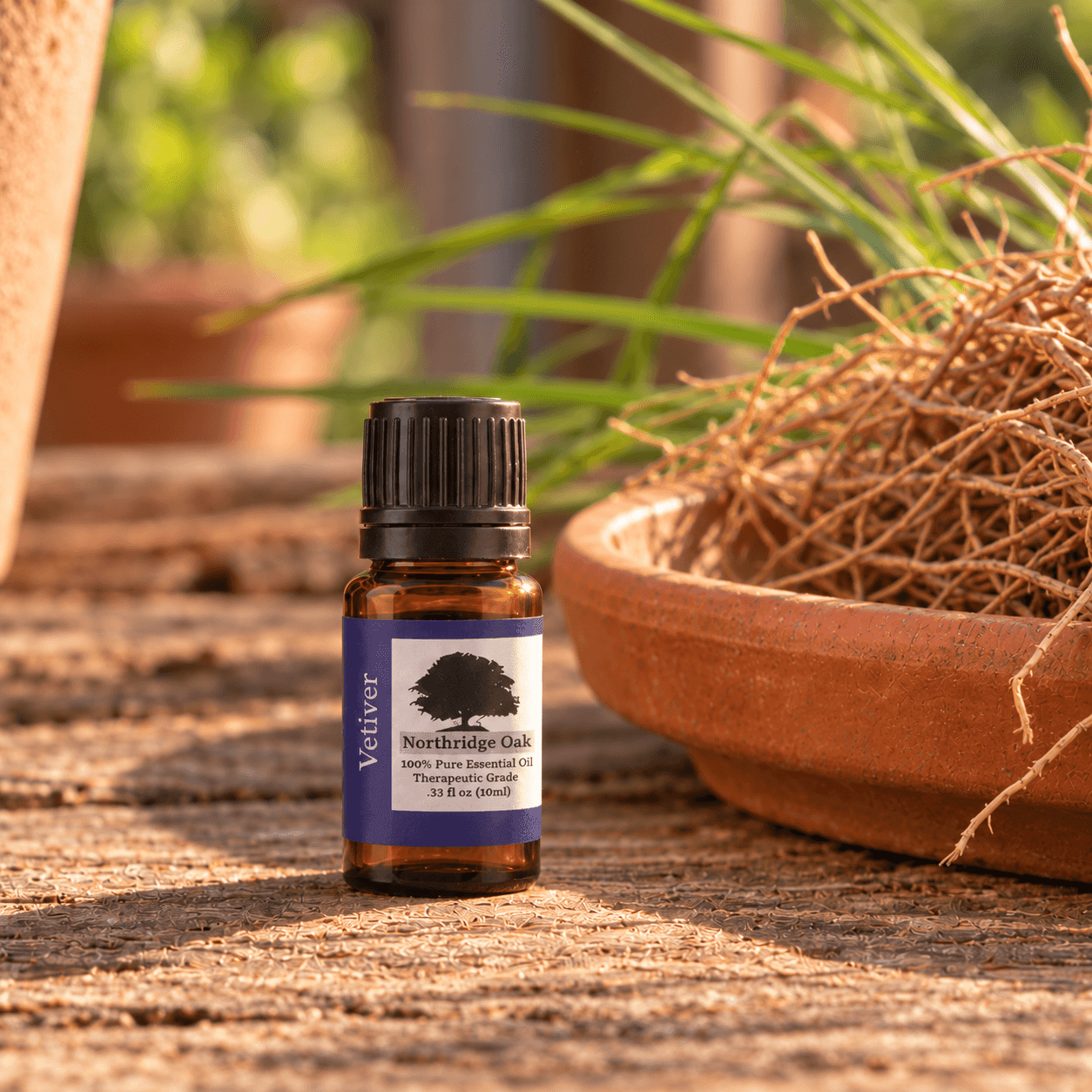
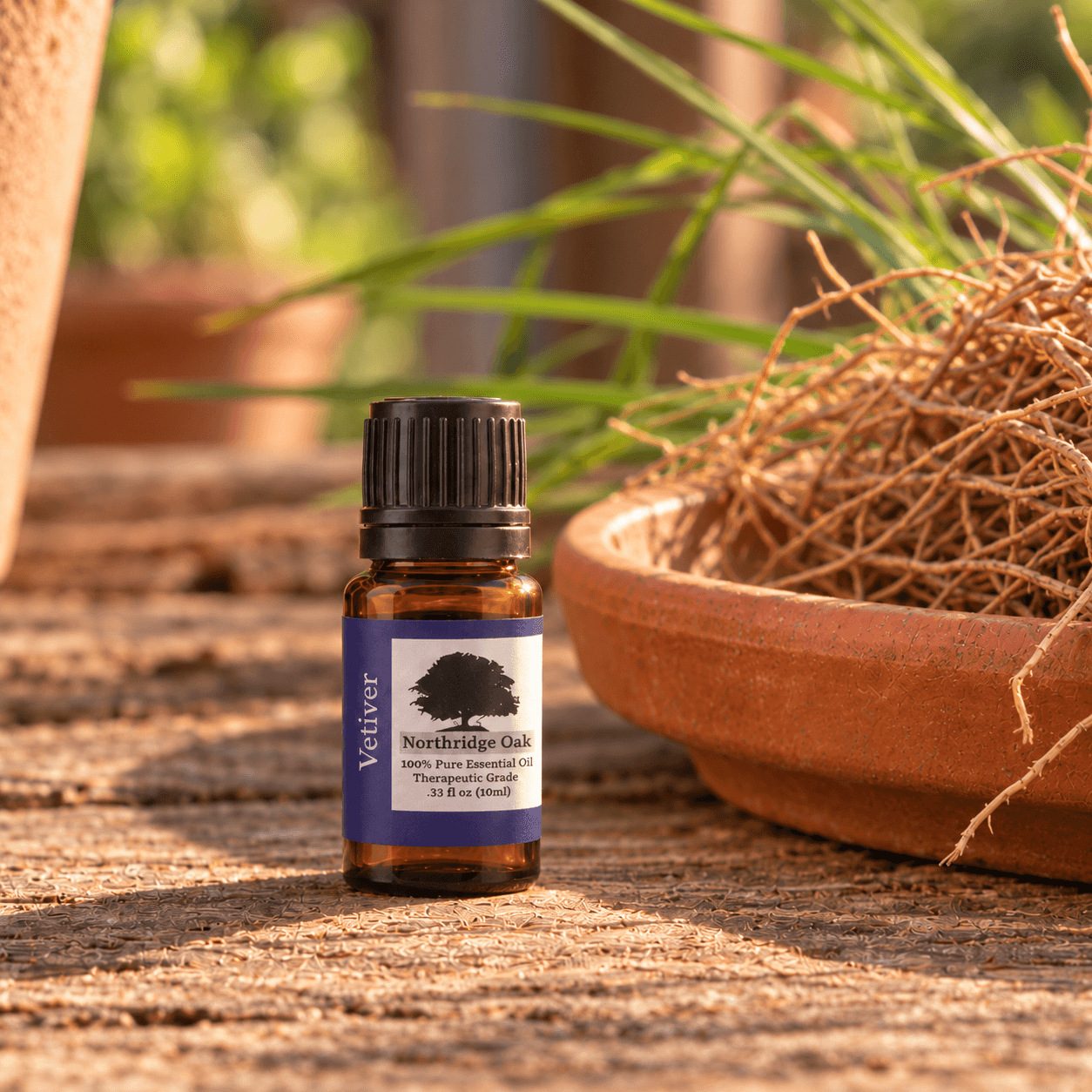
Northridge Oak Vetiver Essential Oil is distilled from Indian Chrysopogon zizanioides roots. Its deep, persistent aroma gives you an excellent example of Vetiver’s classic base-note character.
Why Vetiver smells different from most essential oils
Many familiar oils come from blossoms, leaves or fruit peels. Vetiver comes from a dense aromatic root system. Steam carries volatile molecules from the prepared roots into a condensed oil whose sesquiterpenes, alcohols, ketones and trace compounds create an exceptionally complex odor. Scientific reviews describe more than 150 constituents, and researchers continue working to identify which combinations produce the characteristic smell.
The five aroma facets to look for
Earthy: the first impression may resemble roots, soil or dry ground. Woody: as the aroma opens, it can suggest polished timber or pencil shavings. Smoky: some oils carry a pronounced burnt-wood or guaiac-like quality. Green: grass and faint citrus-peel notes can brighten the top. Softly sweet: the dry-down may become warm, balsamic or gently nutty.
These descriptors are invitations, not a test. Aroma vocabulary grows from memory, and your most useful words are the ones that help you recreate a blend you enjoy.
Why the bottle smells stronger than the finished blend
The neck of an undiluted bottle delivers a concentrated cloud of volatile molecules. Vetiver can therefore feel dense on the first sniff. On a scent strip, in a diffuser or at 1–2% dilution in jojoba, air and time separate the facets. The smoke becomes smoother, green notes become clearer and the base develops an almost creamy warmth.
For a fair evaluation, place one drop on paper, smell from several inches away and revisit it after 15 minutes, one hour and four hours. This reveals Vetiver’s development far better than repeatedly smelling from the bottle.
Indian Vetiver aroma
Indian Vetiver is often described as rich, earthy, smoky, leathery and warm. Some Indian material—especially traditional “khus” styles—can also show green or cooling qualities. Soil, root age and distillation technique influence the result, so origin provides useful context without functioning as a rigid aroma guarantee.
Haitian Vetiver aroma
Haitian Vetiver is widely associated with a cleaner, drier profile that can show grapefruit-like brightness, pale woods and elegant smoke. This makes it especially popular in contemporary cologne. Haiti is also one of the world’s most significant Vetiver-producing regions, with the crop supporting many farming and distilling communities.
Java Vetiver aroma
Java or Indonesian Vetiver is frequently darker, smokier and more leathery, sometimes with roasted, bitter or charred facets. Perfumers may choose it when they want a dramatic woody base. These regional descriptions are tendencies; actual batch chemistry and olfactory evaluation remain more informative than a country name alone.
How perfumers use the smell of Vetiver
Vetiver is a base note, meaning it remains after faster citrus and herbal notes have evaporated. It gives fragrance architecture: Bergamot provides lift, Lavender or Geranium forms the heart, and Vetiver creates the lasting foundation. It is common in masculine cologne, but floral partners can make it soft, sensual and entirely unisex.
Make Vetiver smell brighter
On scent strips, compare 1 drop Vetiver with 3 drops Bergamot. Then try 1 Vetiver with 2 Grapefruit and 1 Lemon. Citrus emphasizes Vetiver’s green, dry qualities and creates an effect that feels tailored and fresh. In a 100 mL diffuser, keep the total around four to six drops.
Make Vetiver smell softer
Lavender creates the easiest bridge between earthy and floral. Try 1 Vetiver, 3 Lavender and 1 Bergamot. Ylang Ylang makes the base creamier; use 1 drop of each with 3 Bergamot. Geranium adds a green rosy heart that makes Vetiver feel botanical and polished.
Make Vetiver smell woodier or smokier
Cedarwood reinforces dryness, Frankincense adds resinous light and Patchouli creates a plush earthy base. A refined woody diffuser recipe uses 1 Vetiver, 2 Cedarwood, 1 Frankincense and 1 Blood Orange. A darker perfume concentrate might pair equal parts Vetiver and Patchouli, then surround them with three parts Bergamot.
Does Vetiver smell masculine?
Fragrance marketing has placed Vetiver in many men’s colognes, but aroma itself is open to everyone. Citrus, woods and black pepper create a classically tailored direction. Ylang Ylang, Geranium, Lavender or Vanilla-like materials create softer interpretations. The formula—not the root—determines the style.
A simple way to decide whether you like Vetiver
Evaluate it alone first, then with one familiar partner. Use scent strips before committing ingredients to a full recipe. If the bottle feels intense, begin with a 1% jojoba dilution. Many people who feel uncertain about concentrated Vetiver enjoy the dry-down or discover that one drop transforms an oil they already love.
Aroma safety
Use gentle, brief inhalation from a comfortable distance and provide airflow during diffusion. Dilute personal fragrance before skin application and patch test the completed formula. Vetiver’s persistence rewards low amounts.
Sources for Vetiver aroma and chemistry
Continue learning about Vetiver Essential Oil
Choose the next guide that matches what you want to make or understand:
- Vetiver Essential Oil: Benefits, Uses, Research and Safety
- What Blends Well With Vetiver Essential Oil?
- Vetiver Essential Oil Diffuser Blends
- Vetiver Essential Oil for Sleep
- Vetiver for Stress, Anxiety and Grounding
- Vetiver for Focus and ADHD: Examining the Evidence
- Vetiver Perfume and Cologne Recipes
- Vetiver Oil for Skin: Cosmetic Research
How temperature changes the aroma
Warmth increases evaporation, so Vetiver may feel more expressive on warm skin or in a sunlit room. Cooler conditions can emphasize dryness and slow the release of softer notes. Compare the same 1% dilution on paper and skin, keeping the scent strip close enough to observe but far enough to avoid concentrated vapor. This reveals why a fragrance that feels austere in the bottle may become smooth and elegant when worn.
Vetiver compared with Cedarwood, Patchouli and Frankincense
Cedarwood is typically drier and more pencil-like. Patchouli is earthy too, but often greener, sweeter and more herbaceous. Frankincense feels brighter, resinous and airy. Vetiver is distinctly rooty, smoky and persistent. Smelling these four side by side helps buyers choose an earthy oil based on genuine preference rather than assuming they are interchangeable.
These statements have not been evaluated by the Food and Drug Administration. Northridge Oak products are not intended to diagnose, treat, cure or prevent disease.
Frequently Asked Questions
Does Vetiver smell smoky?
Many Vetiver oils include a smoky facet alongside earth, dry wood, grass and soft sweetness.
Does Vetiver smell like Patchouli?
Both are earthy base notes, but Vetiver is usually drier and rootier while Patchouli is greener and sweeter.
What does Haitian Vetiver smell like?
It is often described as dry, clean and woody with grapefruit-like brightness.
What does Java Vetiver smell like?
Java material is frequently darker, smokier, more leathery and more roasted.
Is Vetiver a masculine scent?
Vetiver appears often in cologne, yet floral, citrus and wood pairings make it versatile for anyone.
How should I smell Vetiver for the first time?
Use a paper scent strip and revisit it over several hours to experience the complete dry-down.
How can I make Vetiver smell lighter?
Pair one drop with three parts Bergamot or Grapefruit and one part Lavender.
Why does Vetiver last so long?
Many of its aromatic molecules evaporate slowly, giving the oil classic base-note persistence.