Table of Contents
- Why spearmint interests skin-care researchers
- The 2024 randomized acne trial
- What the clinical study shows
- Can you put spearmint oil on your face?
- Simple spearmint facial oil
- A fresh body-oil recipe
- Spearmint oil and facial hair claims
- Build a skin routine around consistency
- Choose a transparent essential oil
- A beautiful reason to try spearmint
- Continue learning about Spearmint Essential Oil
- Read the skin research
- Frequently Asked Questions
Spearmint essential oil can bring a sweet, clean botanical note to a well-diluted body or facial-care routine. Its aroma feels fresh without the sharpness many people associate with mint, and emerging research gives us a thoughtful starting point for discussing acne formulations with both enthusiasm and precision.
The most useful approach is wonderfully simple: understand what the studies tested, keep essential-oil concentration modest, and treat a spearmint formula as a sensory addition to consistent skin care. Here is what the evidence says—and how to translate it into gentle, practical recipes.
Why spearmint interests skin-care researchers
Mentha spicata essential oil is commonly rich in carvone. Laboratory studies and reviews have reported antimicrobial and antioxidant activity in spearmint oils or extracts. Those results help explain why the plant attracts cosmetic-research attention, but laboratory concentrations and isolated organisms are different from a finished product used on living skin.
For readers, laboratory research offers valuable direction by identifying properties and possibilities worthy of deeper study. It suggests promising formulation questions and helps scientists decide what deserves a clinical trial. Human research then tells us much more about how a complete formula performs in real use.
The 2024 randomized acne trial
A randomized controlled clinical trial published in the Journal of Cosmetic Dermatology evaluated a formula combining Berberis integerrima root extract with spearmint essential oil. Participants had mild to moderate facial acne. Thirty people completed the botanical-combination group and 30 completed the comparison group using 1% topical clindamycin.
Participants applied their assigned product twice daily for four weeks. Lesion counts and modified Global Acne Grading System scores improved, and the researchers reported no statistically significant difference between groups at the endpoint. That makes the formula genuinely interesting.
What the clinical study shows
The trial tested a thoughtfully formulated combination of spearmint oil and barberry root extract. The results apply to the combined formula and highlight the potential value of pairing complementary botanical ingredients. A home routine can draw inspiration from that botanical pairing while using skin-friendly cosmetic dilutions and carefully measured ingredients.
What we can say is encouraging and accurate: a spearmint-containing botanical formula performed well enough in a small randomized trial to merit more research. That is a more useful reason for curiosity than an exaggerated promise, because it respects both the plant and the reader.
Can you put spearmint oil on your face?
Yes, spearmint essential oil can be used in a carefully formulated, low-dilution facial product. Because essential oils are concentrated, the carrier is an essential part of a comfortable, well-balanced facial recipe. A 0.25% to 0.5% dilution is a measured starting range for many adult facial applications.
At roughly 0.5%, use 1 drop of spearmint in 2 teaspoons (10 mL) of an unscented facial oil. Because drops and droppers vary, larger professionally weighed batches are more precise. Begin with a patch test, apply with comfortable space around the eyes and lips, and introduce one new formula at a time so you can appreciate how your skin responds.
Simple spearmint facial oil
Combine 1 drop spearmint essential oil with 2 teaspoons jojoba or squalane in a clean amber bottle. Cap and roll gently. After patch testing, press one or two drops of the finished blend onto damp skin in the evening, following the needs of your skin and the rest of your routine.
Jojoba gives the recipe a light, familiar feel, while squalane offers elegant slip. The amount of spearmint stays intentionally small; a refined facial product should whisper rather than announce itself from across the room.
A fresh body-oil recipe
For shoulders, arms or legs, combine 2 drops spearmint, 1 drop lavender and 1 tablespoon (15 mL) jojoba oil. This is about a 1% total essential-oil dilution. Massage a small amount onto the body after bathing, when the skin is still slightly damp.
Lavender softens spearmint’s sweet green aroma and makes the blend feel more complete. If you prefer citrus brightness, substitute one drop of non-phototoxic citrus appropriate for leave-on skin care and follow that oil’s sun-exposure guidance.
Spearmint oil and facial hair claims
Searches for spearmint oil and the face often lead to hormone or facial-hair claims. The best-known human trials used spearmint herbal tea twice daily, offering encouraging human evidence for the plant and a clear path for future topical essential-oil research. In a 30-day randomized study, free and total testosterone decreased and participants reported improvement; the authors noted that the short study period may not fully reflect changes across the natural hair-growth cycle.
That distinction protects the usefulness of both conversations. You can explore spearmint in diluted skin care for its aroma and formulation interest, while reading the spearmint facial hair and PCOS research guide for a clear account of the tea studies.
Build a skin routine around consistency
A gentle cleanser, moisturizer and daily sunscreen do more for the structure of a routine than a long list of changing ingredients. Add a diluted aromatic product because you enjoy the ritual and it fits comfortably with the rest of your care. Give the routine time and keep notes on how your skin feels.
For persistent or scarring acne, a dermatologist can offer evidence-based options and help you combine them sensibly with botanical products. Bringing the ingredient list to an appointment makes that conversation easier.
Choose a transparent essential oil
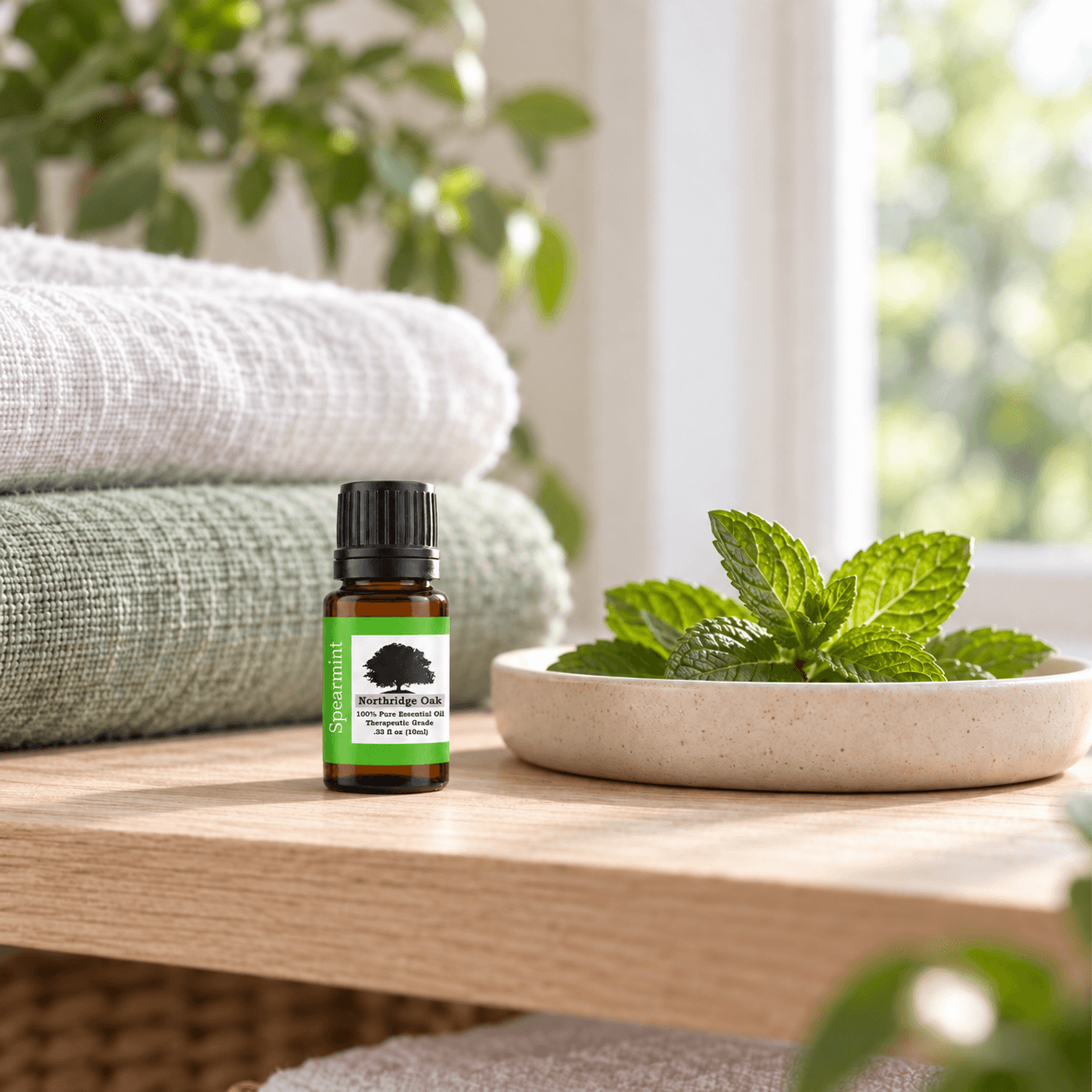
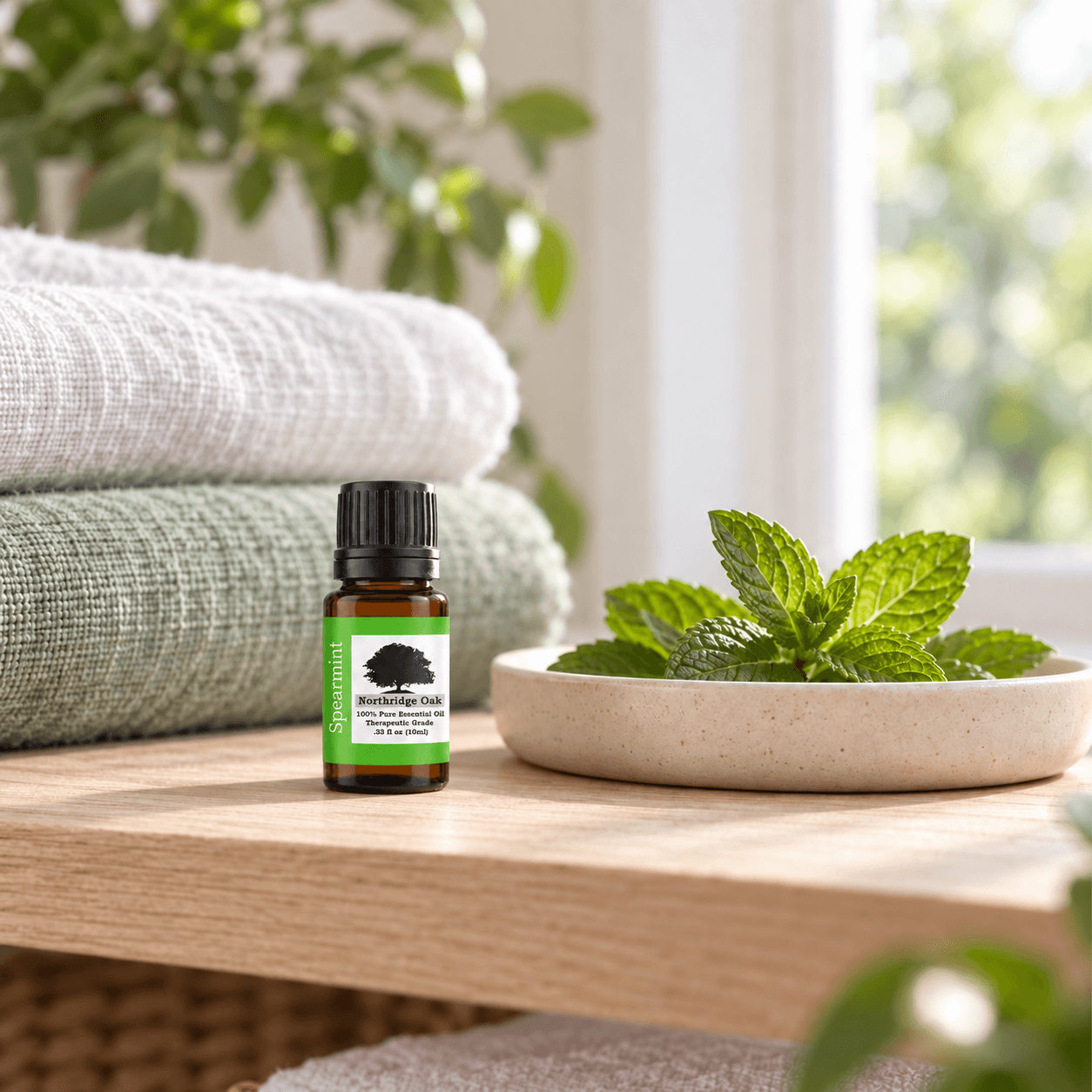
Facial skin deserves a product with a clear botanical identity. Look for Mentha spicata, purity information and third-party testing. Northridge Oak’s Spearmint Essential Oil is 100% pure, undiluted and GC/MS tested, so you can formulate from a known starting point.
A beautiful reason to try spearmint
Spearmint is appealing on its own merits: a sweet green aroma, an elegant sensory experience and a growing body of research that makes it an exciting botanical to follow. It offers a gentle mint aroma, interesting cosmetic research and a fresh sensory experience in a tiny, carefully diluted amount. Make the simple facial oil, patch test patiently and let the pleasure of a thoughtful routine be part of the benefit.
Continue learning about Spearmint Essential Oil
Make this article part of a complete spearmint routine:
- Spearmint Oil Benefits and Uses: Research, Recipes and Safety
- What Does Spearmint Oil Smell Like? Aroma, Carvone and Pairings
- What Blends Well With Spearmint Oil?
- Spearmint Oil Diffuser Blends: 20 Fresh, Sweet Recipes
- Spearmint Oil for Facial Hair and PCOS: What Studies Actually Tested
- Spearmint Oil for Hair and Scalp: Benefits, Research and Recipes
- Spearmint Oil for Nausea and Digestive Aromatherapy
- Spearmint Oil for Oral Care and Fresh-Breath Products
- Spearmint Oil for Cleaning and Fresh Home Aromas
- Spearmint Oil Safety: Dilution, Children, Dogs and Cats
- Peppermint vs. Spearmint Essential Oil: What’s Different?
Read the skin research
The 2024 randomized acne trial and a review of Mentha spicata chemistry and pharmacology let readers verify the preparation, population and outcomes directly.
These statements have not been evaluated by the Food and Drug Administration. Northridge Oak products are not intended to diagnose, treat, cure or prevent disease.