Table of Contents
- Why spearmint appeals in scalp care
- What the research actually supports
- Spearmint versus rosemary for hair
- Fresh Garden pre-shampoo scalp oil
- Soft Mint scalp oil
- A spearmint shower-steam blend
- Can you add spearmint oil to shampoo?
- Spearmint oil and facial-hair searches
- Build a routine you will repeat
- Continue learning about Spearmint Essential Oil
- Research worth reading
- Frequently Asked Questions
Spearmint essential oil can turn an ordinary wash day into a fresh, garden-bright ritual. Its sweet mint aroma feels clean and lively on the scalp, and it blends especially well with rosemary, lavender and cedarwood in simple pre-shampoo oils.
The research story is best told with precision: spearmint has interesting antimicrobial and antioxidant laboratory data, while direct clinical evidence for human hair growth is still limited. That leaves plenty of room for a genuinely useful article built around what spearmint already does beautifully: adding a fresh, uplifting aroma to a comfortable scalp-care routine.
Why spearmint appeals in scalp care
Spearmint’s carvone-rich aroma gives a formula a cool-smelling freshness without relying on the menthol-forward profile of peppermint. In a carrier oil or shampoo base, it creates a clean botanical impression that pairs naturally with the sensory reset of washing and massaging the scalp.
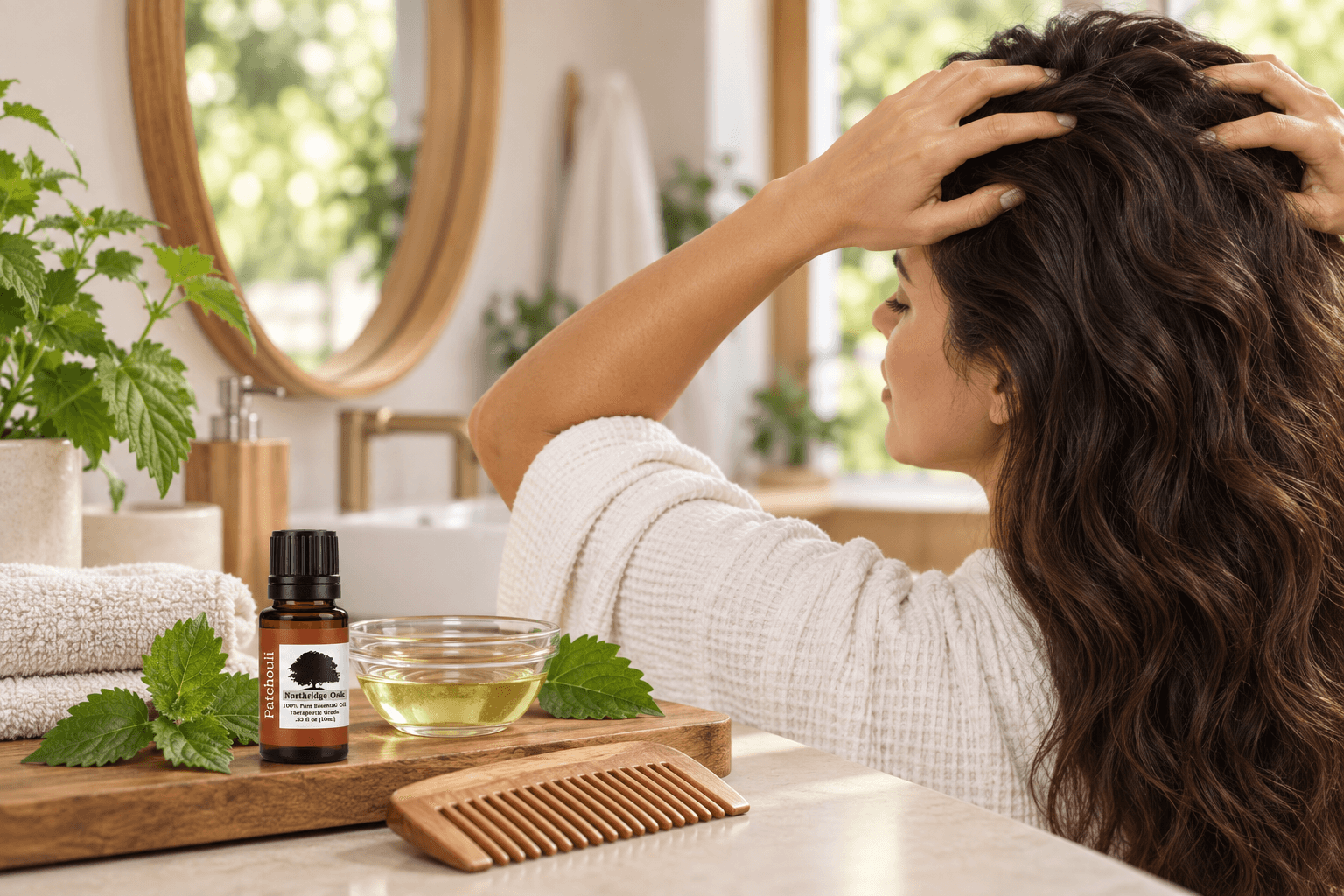
Scalp massage itself is part of the pleasure. Slow fingertip movement helps distribute a pre-shampoo oil and encourages a thoughtful, skin-centered approach to scalp care. Spearmint adds aroma and makes the ritual easy to look forward to.
What the research actually supports
Studies of Mentha spicata essential oil report antimicrobial activity against tested organisms in laboratory settings, and reviews describe antioxidant activity across spearmint preparations. These findings are relevant to cosmetic research and product development.
These findings provide an encouraging scientific starting point for future controlled studies focused specifically on spearmint essential oil and human hair. Searches often blend spearmint with better-known rosemary or peppermint hair studies, or with spearmint tea research involving androgen measurements. Keeping those evidence streams separate gives you a clearer reason for choosing each ingredient.
Spearmint versus rosemary for hair
Rosemary has human clinical research connected with androgenetic alopecia, while spearmint’s direct human hair-growth evidence is sparse. Blending them can make aromatic sense: rosemary contributes a strong herbal profile and its own research history; spearmint sweetens and freshens the experience.
The recipe below pairs spearmint with rosemary so each oil contributes its own distinctive strengths to the experience. If a hair or scalp condition is persistent, sudden or uncomfortable, a dermatologist can help identify its cause and tailor care.
Fresh Garden pre-shampoo scalp oil
Combine 2 drops spearmint, 1 drop Rosemary Essential Oil and 1 tablespoon (15 mL) jojoba oil. This creates about a 1% total essential-oil dilution. Part dry hair in sections and massage a small amount onto the scalp with the pads of your fingers.
Leave it on for 10 to 15 minutes, then shampoo thoroughly. Fine hair may need only a teaspoon of finished blend per use; textured or dense hair may welcome more. Keep the essential-oil concentration consistent and adjust the amount of finished carrier blend to suit your hair.
Soft Mint scalp oil
For a gentler aromatic profile, mix 1 drop spearmint and 2 drops lavender in 1 tablespoon jojoba oil. The sweet mint and herbaceous floral notes settle into a clean, soft aroma that works especially well for an evening wash routine.
Patch test before the first full application. Keep the blend away from the eyes, and apply with clean hands so the bottle remains fresh.
A spearmint shower-steam blend
For an aroma-focused option, enjoy spearmint during the shower with the steam blend below. Add 2 drops spearmint and 2 drops eucalyptus to a damp washcloth and place it away from the direct stream. Warm steam carries the scent while you shampoo with your usual products.
This is a lovely option for hair types that feel best with minimal leave-on ingredients. It also shows how spearmint can enrich a hair-care ritual through aroma, freshness and the pleasure of a thoughtfully prepared botanical blend.
Can you add spearmint oil to shampoo?
It is more consistent to mix one use at a time than to drip essential oil into a full commercial bottle. Place your normal portion of unscented shampoo in your palm or a small cup, add no more than one drop of spearmint, mix thoroughly and use immediately, keeping it away from the eyes.
For sensitive scalps, start with the diluted pre-shampoo oil or shower-aroma method instead. Commercial products have carefully balanced preservative and fragrance systems, so large do-it-yourself additions can change the formula.
Spearmint oil and facial-hair searches
Some “spearmint oil for hair” searches are really questions about unwanted facial hair and PCOS. The best-known human trials used spearmint herbal tea, creating an intriguing research path for the plant and an opportunity for future studies of topical essential-oil preparations. Our facial hair and PCOS research article explains the 30-day randomized trial and its results.
Build a routine you will repeat
Hair care works best when the process fits your texture, schedule and preferences. Choose one recipe, repeat it weekly for several uses and note aroma, scalp feel and ease of shampooing. A simple routine produces more useful personal feedback than changing several ingredients at once.
Northridge Oak’s Spearmint Essential Oil is pure, undiluted and third-party GC/MS tested. Paired with a measured carrier and an honest understanding of the research, it offers a fresh reason to slow down and care for the scalp.
Continue learning about Spearmint Essential Oil
Make this article part of a complete spearmint routine:
- Spearmint Oil Benefits and Uses: Research, Recipes and Safety
- What Does Spearmint Oil Smell Like? Aroma, Carvone and Pairings
- What Blends Well With Spearmint Oil?
- Spearmint Oil Diffuser Blends: 20 Fresh, Sweet Recipes
- Spearmint Oil for Skin and Acne: What Research Shows
- Spearmint Oil for Facial Hair and PCOS: What Studies Actually Tested
- Spearmint Oil for Nausea and Digestive Aromatherapy
- Spearmint Oil for Oral Care and Fresh-Breath Products
- Spearmint Oil for Cleaning and Fresh Home Aromas
- Spearmint Oil Safety: Dilution, Children, Dogs and Cats
- Peppermint vs. Spearmint Essential Oil: What’s Different?
Research worth reading
Begin with the review of Mentha spicata chemistry and pharmacology. Then compare it with the randomized rosemary-oil trial for androgenetic alopecia. The primary sources give spearmint and rosemary positive, distinct roles in a scalp routine and help readers choose each oil for the qualities best supported by current evidence.
These statements have not been evaluated by the Food and Drug Administration. Northridge Oak products are not intended to diagnose, treat, cure or prevent disease.