Table of Contents
- Start with the right bottle
- Simple adult dilution chart
- How to patch test
- Comfortable diffusion
- Using spearmint around children
- Is spearmint oil safe for dogs?
- What about cats?
- Signs that deserve prompt attention
- Pregnancy, medications and health conditions
- Three low-key ways to enjoy spearmint
- Confidence comes from good habits
- Continue learning about Spearmint Essential Oil
- Frequently Asked Questions
Spearmint essential oil can be a delightful part of a home when it is used with measured dilution, fresh air and respect for every person and animal sharing the space. Its sweet mint aroma feels gentle to the nose, while the oil itself remains a concentrated botanical that deserves thoughtful handling.
This guide turns safety into practical choices: how many drops to use, how long to diffuse, where to apply a topical blend and how to create an environment where children, dogs and cats can comfortably move away from an aroma.
Start with the right bottle
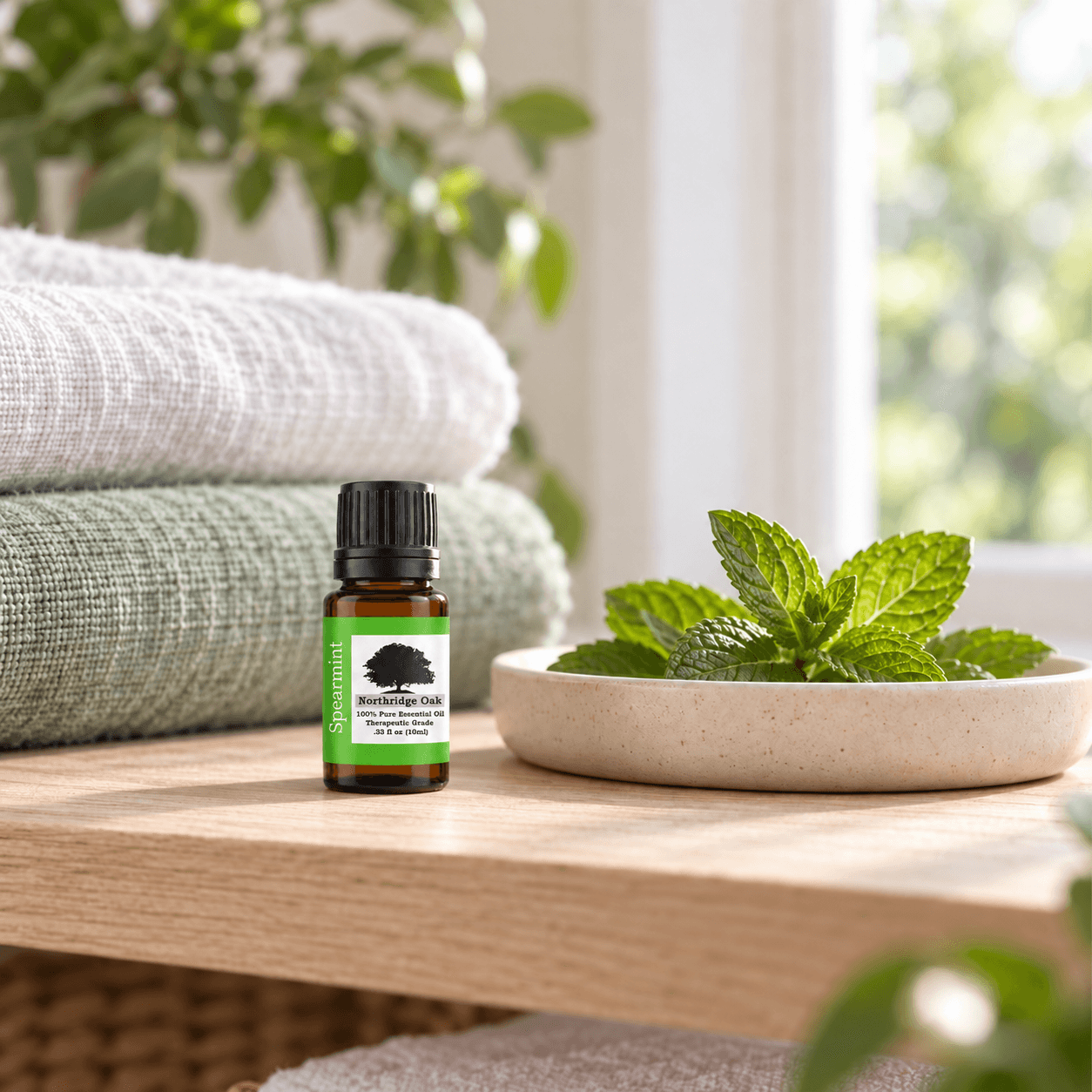
Confirm the botanical name Mentha spicata and choose a pure oil with transparent testing. Spearmint and peppermint are different oils, and a fragrance oil is different again. Northridge Oak’s Spearmint Essential Oil is 100% pure, undiluted and third-party GC/MS tested.
Keep the reducer insert in place, close the cap promptly and store the bottle upright away from heat and direct light. A small bottle contains many uses, so a few drops at a time are enough.
Simple adult dilution chart
For approximately 0.5%, use 1 to 2 drops in 1 tablespoon (15 mL) carrier oil. For approximately 1%, use 3 drops per tablespoon. For approximately 2%, use 6 drops per tablespoon. Drop size varies, so professionally weighed formulas are more precise.
A 0.5% blend suits facial or especially light aromatic use. A 1% blend is a comfortable starting point for routine adult body oils and massage. Lower concentrations often create the most elegant, comfortable and enjoyable formulas.
How to patch test
Apply a small amount of the finished diluted blend to the inner forearm. Leave the area uncovered and observe it over the next day. A patch test gives you a useful preview of how your skin responds before broader application.
Use the blend on intact skin and keep it away from eyes, inner ears and other sensitive areas. Wash hands after blending, and label every homemade bottle with ingredients, dilution and date.
Comfortable diffusion
Follow the diffuser manufacturer’s water and drop guidance. For a 200 mL reservoir, 3 to 6 total drops is often enough to create a pleasant background aroma. Run the diffuser for around 30 minutes, then pause and refresh the room’s air.
Place it where mist can circulate without settling directly onto faces, bedding or pet areas. Aroma should remain an invitation; anyone in the room should be free to move farther away.
Using spearmint around children
Children’s age, size, health and ability to communicate all matter. Choose a low drop count, diffuse briefly in a well-ventilated shared space and keep bottles and diffusers out of reach. For children’s spaces, choose brief daytime or early-evening diffusion followed by plenty of fresh air.
For topical use with a child, consult a qualified pediatric clinician or aromatherapy professional who can consider age and individual circumstances. Adults can still enjoy spearmint by diffusing when children are elsewhere and airing the room before they return.
Is spearmint oil safe for dogs?
A thoughtful dog-friendly approach considers concentration, ventilation, room size and the dog’s freedom to leave. Dogs have powerful noses and individual health needs. If you diffuse, use only a few drops in a large, ventilated room, keep the door open and make sure the dog can leave freely.
For dogs, reserve spearmint for carefully ventilated aromatic use; keep concentrated oil off fur and paws and out of food and water. Ask your veterinarian before intentional topical use, especially for puppies, seniors, pregnant dogs or dogs with medical conditions.
What about cats?
Cats process many aromatic compounds differently from humans and can be especially sensitive to concentrated oils. For cats, the most conservative home approach keeps spearmint oil out of food and litter, off the coat and paws, and limited to spaces with fresh air and an open exit.
Discuss intentional use around a cat with a veterinarian familiar with the animal’s health. Store the bottle and any diffuser securely so curious paws cannot knock them over.
Signs that deserve prompt attention
If a person or pet is uncomfortable around an aroma, stop the exposure, move to fresh air and follow professional guidance. For accidental ingestion, eye exposure or a spill on a pet, contact the appropriate poison-control resource or veterinarian promptly and keep the product bottle available.
In the United States, Poison Control is available at 1-800-222-1222 for people. The ASPCA Animal Poison Control Center and Pet Poison Helpline provide veterinary poison support; fees may apply.
Pregnancy, medications and health conditions
Pregnancy and breastfeeding are good times to review essential-oil use with a qualified clinician. The same is true when managing asthma, seizure disorders, allergies, complex medication regimens or active medical treatment. Personalized guidance makes space for both enjoyment and individual needs.
Northridge Oak recipes focus on aromatic enjoyment and properly diluted topical use. Research may use specialized internal protocols under professional supervision, while home use stays focused on aromatic and properly diluted topical methods.
Three low-key ways to enjoy spearmint
Use one drop on a paper scent strip and smell from a comfortable distance. Diffuse 2 drops spearmint with 2 drops lavender in a ventilated adult space. Or create a 1% adult body oil with 3 drops spearmint in 1 tablespoon jojoba.
These methods give you control over intensity. Aim for one pleasant aromatic moment, balanced with comfortable ventilation and fresh air.
Confidence comes from good habits
Spearmint is easy to love when your routine is equally easy to trust: know the bottle, count the drops, dilute for skin, ventilate for diffusion and consider who shares the room. Those habits let the oil’s sweet green character shine while keeping your home thoughtful and welcoming.
Continue learning about Spearmint Essential Oil
Make this article part of a complete spearmint routine:
- Spearmint Oil Benefits and Uses: Research, Recipes and Safety
- What Does Spearmint Oil Smell Like? Aroma, Carvone and Pairings
- What Blends Well With Spearmint Oil?
- Spearmint Oil Diffuser Blends: 20 Fresh, Sweet Recipes
- Spearmint Oil for Skin and Acne: What Research Shows
- Spearmint Oil for Facial Hair and PCOS: What Studies Actually Tested
- Spearmint Oil for Hair and Scalp: Benefits, Research and Recipes
- Spearmint Oil for Nausea and Digestive Aromatherapy
- Spearmint Oil for Oral Care and Fresh-Breath Products
- Spearmint Oil for Cleaning and Fresh Home Aromas
- Peppermint vs. Spearmint Essential Oil: What’s Different?
These statements have not been evaluated by the Food and Drug Administration. Northridge Oak products are not intended to diagnose, treat, cure or prevent disease.