Table of Contents
- The clinical study at a glance
- Why the study is promising
- Why the protocol matters
- Aromatic ways to enjoy spearmint
- After-Meal Garden diffuser blend
- A comforting abdominal massage ritual
- Spearmint tea is a separate preparation
- How spearmint compares with peppermint
- Choosing and using the oil thoughtfully
- The honest takeaway
- Continue learning about Spearmint Essential Oil
- Read the original clinical paper
- Frequently Asked Questions
Spearmint’s sweet, clean aroma has long felt at home after meals and during unsettled moments, and one randomized clinical study gives that traditional connection a particularly interesting research chapter. The study deserves attention—and a careful reading of exactly how it was conducted.
This guide explains the trial in plain language, distinguishes a supervised medical protocol from everyday home use, and offers gentle aromatic ways to experience Spearmint Essential Oil without turning research into an ingestion recommendation.
The clinical study at a glance
A randomized, double-blind clinical study published in ecancermedicalscience examined spearmint and peppermint volatile oils in chemotherapy-induced nausea and vomiting. Researchers analyzed 50 chemotherapy treatment courses in each group and compared the essential-oil groups with placebo and control conditions.
During the first 24 hours, the intensity and number of vomiting events were significantly lower in the spearmint and peppermint groups than in control. The researchers reported no adverse effects in the study. This is meaningful human research in a setting where nausea can be especially difficult.
Why the study is promising
Randomization and blinding strengthen a clinical trial because they help reduce bias. The comparison groups also provide more context than an informal observation. Spearmint moved beyond traditional mention and into a defined study design with recorded outcomes.
The result supports further research into spearmint’s volatile compounds and nausea. It also gives readers a credible answer to the question, “Has spearmint essential oil ever been studied in humans for this?” Yes, it has.
Why the protocol matters
The participants were receiving chemotherapy and followed a structured protocol alongside medical care. That is very different from casually taking essential oil at home. Essential oils are concentrated, and Northridge Oak Spearmint is intended for aromatic enjoyment and properly diluted topical use.
Someone receiving cancer treatment should discuss complementary products with the oncology team, because individual treatments, symptoms and interactions matter. The most respectful way to use the study is to share what it found without converting it into a do-it-yourself dose.
Aromatic ways to enjoy spearmint
For a simple personal aroma, place one drop spearmint on a paper scent strip and hold it several inches from the nose. Take a gentle breath, set it down and return whenever the aroma continues to feel pleasant. This lets you control distance and intensity.
For room diffusion, add 2 drops spearmint, 2 drops lemon and 1 drop lavender to a 200 mL diffuser. Run it for a short interval in a ventilated room. Aroma preferences are personal, especially during queasy moments, so the best blend is one that feels welcome rather than forceful.
After-Meal Garden diffuser blend
Add 3 drops spearmint, 2 drops sweet orange and 1 drop ginger to a 200 mL diffuser. Spearmint brings sweet freshness, orange makes the blend warm and familiar, and ginger provides a gently spicy accent.
This simple aromatic ritual offers a calm, pleasant way to experience spearmint without consuming it. Place the diffuser away from the dining table and let the scent remain light in the background.
A comforting abdominal massage ritual
For an adult 1% body oil, mix 3 drops spearmint essential oil into 1 tablespoon (15 mL) jojoba or fractionated coconut oil. After patch testing, massage a small amount over the abdomen in slow, comfortable circles, avoiding irritated skin.
The benefit of this home ritual is the combination of touch, aroma and a quiet pause. Persistent or severe symptoms deserve timely medical care, while spearmint can remain a pleasant part of your everyday aromatic routine.
Spearmint tea is a separate preparation
Spearmint tea has its own history and research, including studies involving hormones. Tea is prepared from leaves in water; essential oil is the distilled volatile fraction. Spearmint tea, standardized clinical products and essential oil are distinct preparations, each with its own composition and appropriate method of use.
This distinction comes up throughout spearmint research. It lets each preparation be appreciated for what it actually contains and how it was studied.
How spearmint compares with peppermint
The nausea study included both mint oils. Aromatically, peppermint is typically menthol-rich, sharper and more intensely cool, while spearmint is generally carvone-rich, sweeter and rounder. Someone who finds peppermint too assertive may simply prefer spearmint’s softer aromatic profile.
Our Peppermint vs. Spearmint Essential Oil guide compares chemistry, scent and everyday uses side by side.
Choosing and using the oil thoughtfully
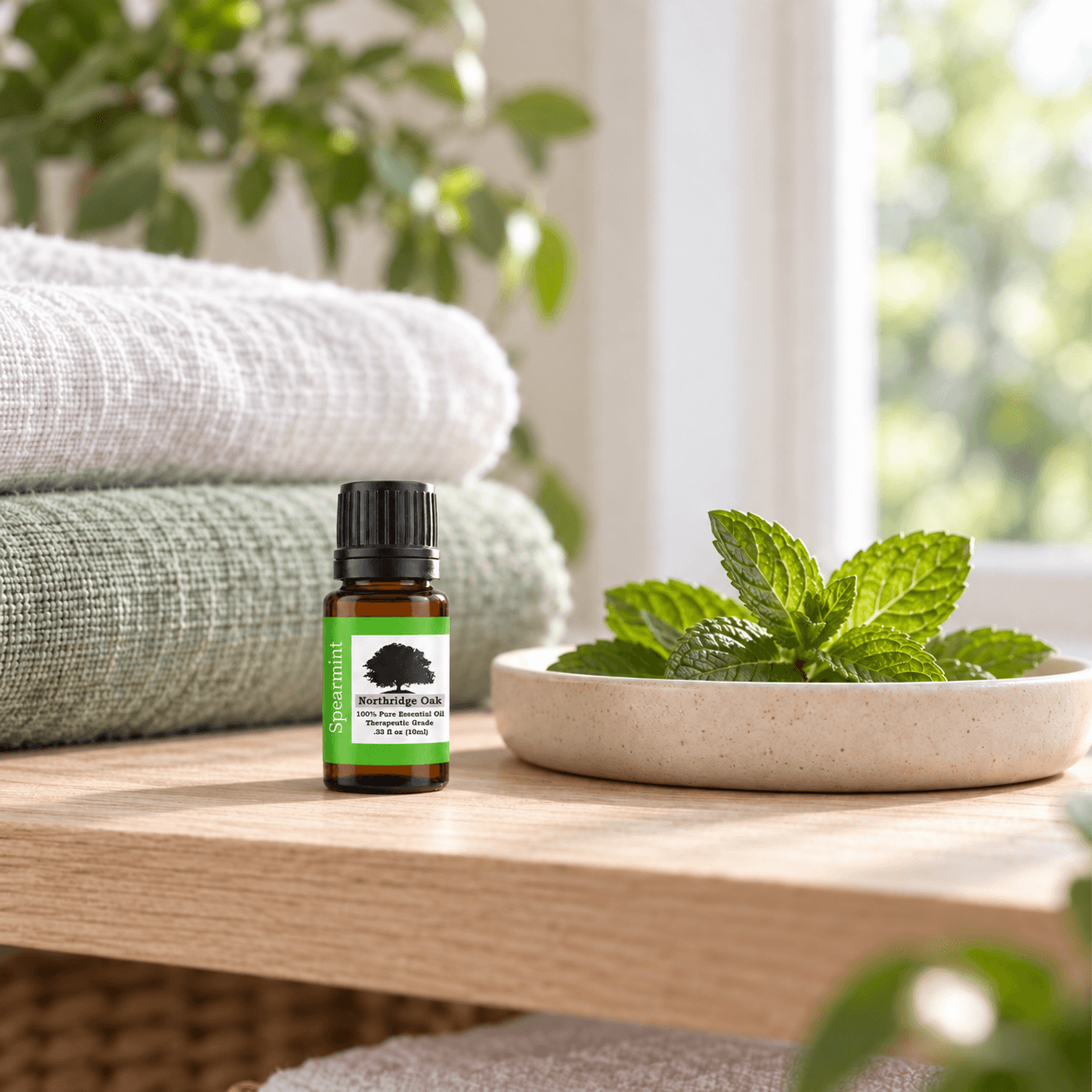
Look for the botanical name Mentha spicata, purity information and third-party testing. Northridge Oak’s Spearmint Essential Oil is pure, undiluted and GC/MS tested. Store it upright, tightly closed and away from heat and light.
If you are pregnant, managing a health condition, taking medication or using aromatherapy during medical treatment, invite a qualified professional into the decision. Thoughtful use allows promising research and personal comfort to coexist.
The honest takeaway
Spearmint has more than a traditional reputation: a randomized, double-blind study reported encouraging findings in chemotherapy-related nausea and vomiting. The study gives researchers and readers a substantive reason to keep paying attention to spearmint and to explore its aromatic potential through appropriate home-use methods.
For everyday life, a scent strip or short diffuser session offers a gentle introduction. Let the aroma be light, listen to your preferences and choose the ritual that feels comfortable in the moment.
Continue learning about Spearmint Essential Oil
Make this article part of a complete spearmint routine:
- Spearmint Oil Benefits and Uses: Research, Recipes and Safety
- What Does Spearmint Oil Smell Like? Aroma, Carvone and Pairings
- What Blends Well With Spearmint Oil?
- Spearmint Oil Diffuser Blends: 20 Fresh, Sweet Recipes
- Spearmint Oil for Skin and Acne: What Research Shows
- Spearmint Oil for Facial Hair and PCOS: What Studies Actually Tested
- Spearmint Oil for Hair and Scalp: Benefits, Research and Recipes
- Spearmint Oil for Oral Care and Fresh-Breath Products
- Spearmint Oil for Cleaning and Fresh Home Aromas
- Spearmint Oil Safety: Dilution, Children, Dogs and Cats
- Peppermint vs. Spearmint Essential Oil: What’s Different?
Read the original clinical paper
The study is available through PubMed: “Antiemetic activity of volatile oil from Mentha spicata and Mentha × piperita in chemotherapy-induced nausea and vomiting.” The abstract and full text show the design, comparison groups, outcomes and specialized medical context.
These statements have not been evaluated by the Food and Drug Administration. Northridge Oak products are not intended to diagnose, treat, cure or prevent disease.