Table of Contents
- What is spearmint essential oil?
- What are the benefits of spearmint oil?
- A closer look at the human research
- Five easy ways to use spearmint oil
- What blends well with spearmint?
- Spearmint oil and facial-hair questions
- How to dilute spearmint oil
- A sweeter kind of mint for everyday life
- Continue learning about Spearmint Essential Oil
- Research references
- Frequently Asked Questions
Spearmint essential oil brings a soft, sweet mint aroma to the moments when you want your home and routines to feel bright, clean and pleasantly refreshed. Gentler-smelling than peppermint yet unmistakably minty, it is an easy oil to reach for in the diffuser, a massage blend, a fresh-home recipe or a thoughtfully diluted skin-care formula.
Distilled from Mentha spicata, spearmint has a personality all its own. Its defining aromatic molecule is usually carvone, which creates that familiar sweet-mint scent. This guide brings together the most useful ways to enjoy it, the research behind the most popular questions, and recipes with enough detail to make your first bottle immediately useful.
What is spearmint essential oil?
Spearmint oil is steam-distilled from the flowering tops and leaves of the spearmint plant. Although it belongs to the same botanical family as peppermint, its chemistry is different. Peppermint is typically menthol-rich; spearmint is generally carvone-rich and contains much less menthol. That is why spearmint smells rounder, sweeter and less piercing.
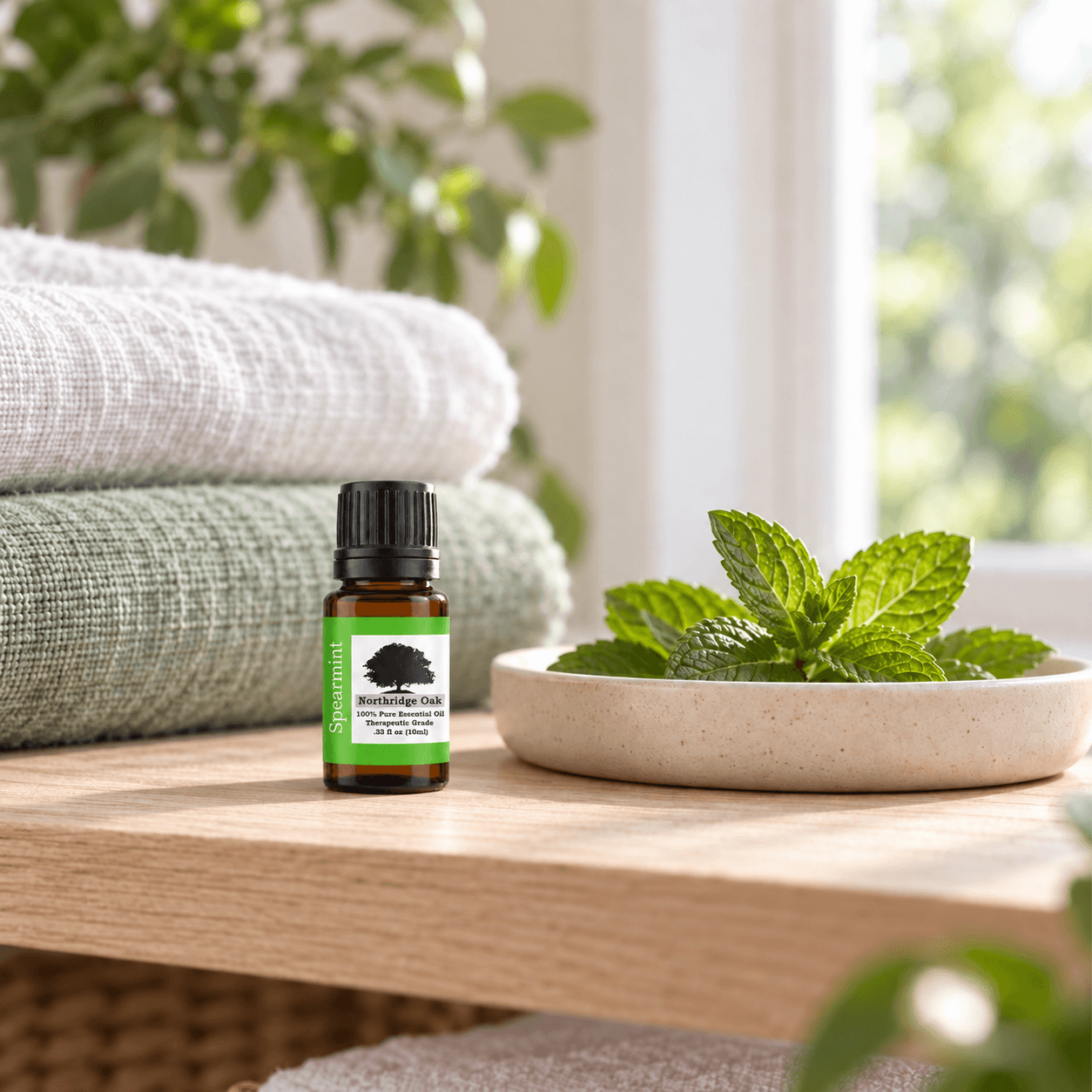
A good bottle should name the plant as Mentha spicata and identify the oil as pure and undiluted. Northridge Oak’s Spearmint Essential Oil is third-party GC/MS tested and bottled in small batches, giving you a transparent starting point for the recipes below.
What are the benefits of spearmint oil?
Most everyday benefits begin with aroma and formulation. In a diffuser, spearmint can make a room feel newly opened and lively. In body care, its sweet herbal freshness makes an uplifting addition to massage oils, scalp oils and shower blends. In home recipes, it pairs a clean-smelling character with the pleasure of a scent people already associate with freshness.
Laboratory research adds useful context. A review of Mentha spicata research describes antioxidant and antimicrobial activity across essential-oil and extract studies. A chemical-composition study published in Journal of Essential Oil Bearing Plants also reported antioxidant potential and activity against the microorganisms tested. These findings help formulators understand the plant and provide a strong scientific foundation for continued research into practical spearmint applications.
A closer look at the human research
One randomized, double-blind clinical study evaluated spearmint and peppermint volatile oils during chemotherapy. Fifty treatment courses were analyzed in each group, and the researchers reported fewer and less intense vomiting events during the first 24 hours in the essential-oil groups compared with control. This structured medical protocol shows serious clinical interest in spearmint, while Northridge Oak’s home-use guidance focuses on aromatic enjoyment and properly diluted topical recipes. It does show why spearmint’s relationship with queasy moments deserves thoughtful study.
Another 2024 randomized trial compared a combination containing spearmint essential oil and Berberis integerrima root extract with topical clindamycin in adults with mild to moderate acne. Both groups improved over four weeks, with no significant difference between groups at the endpoint. Because spearmint was part of a combined formula, the trial supports interest in the formulation.
Five easy ways to use spearmint oil
1. Diffuse a bright morning blend
Add 3 drops spearmint, 2 drops Lemon Essential Oil and 1 drop Grapefruit Essential Oil to a 200 mL diffuser. Begin with a 30-minute session and enjoy the fresh, cheerful aroma while you ease into the day.
2. Make a refreshing massage oil
For a 1% dilution, add 3 drops spearmint to 1 tablespoon (15 mL) jojoba or fractionated coconut oil. Massage into shoulders, legs or feet. The carrier oil gives you comfortable glide while the spearmint turns an ordinary massage into a cooling-feeling aromatic ritual.
3. Create a fresh shower moment
Place 2 drops spearmint and 2 drops Eucalyptus Essential Oil on a damp washcloth positioned away from the direct stream. The steam carries the aroma through the shower without putting undiluted oil on the skin or a slippery shower floor.
4. Blend a simple room mist
In a 2-ounce glass spray bottle, combine 1 tablespoon high-proof alcohol with 12 drops spearmint and 8 drops lemon. Swirl, add distilled water, cap and shake before each use. Direct the mist into open air, leaving comfortable space around faces, pets, polished wood and delicate fabrics.
5. Add it to a scalp ritual
Mix 2 drops spearmint and 1 drop Rosemary Essential Oil into 1 tablespoon jojoba oil. Part the hair, massage a small amount over the scalp, leave it for 10 to 15 minutes and shampoo thoroughly. The appeal here is a fresh-feeling, pleasantly aromatic routine, supported by spearmint’s distinctive sensory character and a research story that continues to develop.
What blends well with spearmint?
Citrus oils make spearmint sparkle. Lemon, lime, grapefruit and sweet orange create happy, kitchen-friendly blends. Lavender and geranium soften it for evening. Rosemary and eucalyptus emphasize its herb-garden character. Cedarwood and vetiver add a warm base that keeps the mint from disappearing too quickly.
Try a “Fresh Garden” diffuser blend with 3 drops spearmint, 2 drops rosemary and 1 drop lemon. For a softer “Mint Lavender” blend, use 3 drops spearmint, 3 drops Lavender Essential Oil and 1 drop cedarwood. These ratios are starting points; adjust the total number of drops to your diffuser manufacturer’s directions.
Spearmint oil and facial-hair questions
Many people searching for spearmint oil have encountered studies about spearmint tea and hormones. In a 30-day randomized trial, participants drank spearmint herbal tea twice daily. Free and total testosterone decreased and participants reported improvement; the authors noted that a longer study may better reflect changes across the natural hair-growth cycle.
The distinction is genuinely useful: it allows you to enjoy diluted spearmint oil in skin care for its aroma while keeping expectations aligned with what researchers actually studied. The dedicated facial hair and PCOS research guide walks through the trial without blurring tea, essential oil and clinical care.
How to dilute spearmint oil
For routine adult body care, a 1% dilution is a comfortable place to begin: 3 drops in 1 tablespoon (15 mL) of carrier oil. A 0.5% dilution—about 1 to 2 drops per tablespoon—is a lighter option for facial products or people who prefer a subtle aroma. Patch test a new blend on a small area and keep it away from eyes and other sensitive areas.
Diffusion works best in a ventilated room with breaks. Use fewer drops around children and allow pets to leave the room freely. Store the bottle tightly closed, upright, away from sunlight and out of reach of children. For the nuances of family and pet use, visit the complete spearmint safety guide.
A sweeter kind of mint for everyday life
Spearmint is a lovely example of an essential oil that feels familiar on the first inhale yet offers plenty of room to explore. Start with one recipe that fits your life: a bright diffuser blend, a relaxed shoulder massage or a clean-smelling room mist. Its gentle sweetness makes experimentation easy, and its versatility means your bottle can keep finding new roles as the seasons change.
Continue learning about Spearmint Essential Oil
Make this article part of a complete spearmint routine:
- What Does Spearmint Oil Smell Like? Aroma, Carvone and Pairings
- What Blends Well With Spearmint Oil?
- Spearmint Oil Diffuser Blends: 20 Fresh, Sweet Recipes
- Spearmint Oil for Skin and Acne: What Research Shows
- Spearmint Oil for Facial Hair and PCOS: What Studies Actually Tested
- Spearmint Oil for Hair and Scalp: Benefits, Research and Recipes
- Spearmint Oil for Nausea and Digestive Aromatherapy
- Spearmint Oil for Oral Care and Fresh-Breath Products
- Spearmint Oil for Cleaning and Fresh Home Aromas
- Spearmint Oil Safety: Dilution, Children, Dogs and Cats
- Peppermint vs. Spearmint Essential Oil: What’s Different?
Research references
- Review of Mentha spicata chemistry and pharmacology
- 2024 randomized acne-formulation trial
- Randomized nausea and vomiting study
- 30-day randomized spearmint-tea study
These statements have not been evaluated by the Food and Drug Administration. Northridge Oak products are not intended to diagnose, treat, cure or prevent disease.