Table of Contents
- Essential Oils for Beginners: Your Quick Start
- What Are Essential Oils?
- What Are Essential Oils Used For?
- What Are Essential Oils Good For?
- How Does Aromatherapy Work?
- Best Essential Oils for Beginners
- How to Choose Quality Essential Oils
- How to Use Essential Oils for Beginners
- Essential Oil Safety for Beginners
- Simple Habits That Help Beginners Succeed
- How to Start Blending Essential Oils
- Do Beginners Need an Essential Oil Diffuser?
- How Many Essential Oils Does a Beginner Need?
- Want an Easy Way to Build Your First Collection?
- Continue Exploring Essential Oils
- Frequently Asked Questions
Essential oils for beginners can be wonderfully simple. Start with a few versatile oils, learn the aromas you naturally enjoy, and explore one easy method at a time. A diffuser, a personal inhaler, or a properly diluted topical blend can turn your first bottles into a routine you genuinely look forward to using.
This complete beginner’s guide explains what essential oils are, what they are good for, the best essential oils for beginners, how to choose quality oils, simple ways to use them, easy blending ideas, and practical safety guidance.
If you would like a personalized starting point, the Northridge Oak Find Your Oil tool can match your aroma preferences and everyday goals with oils from our collection.
Essential Oils for Beginners: Your Quick Start
A satisfying first experience begins with three simple choices:
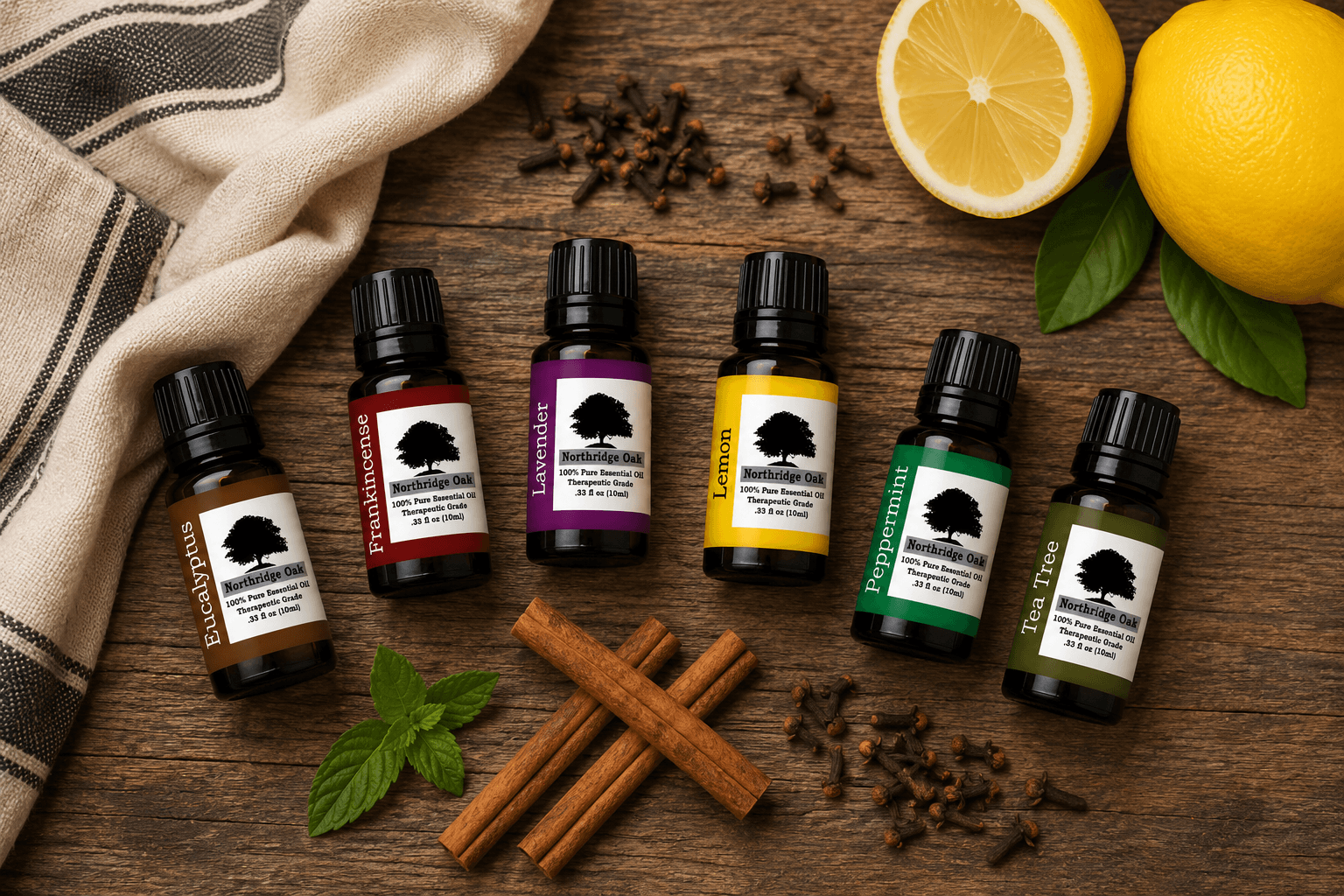
- Choose three or four versatile oils. Lavender, Peppermint, Lemon, and Frankincense introduce you to floral, minty, citrus, and resinous aromas.
- Begin with inhalation. Smell one oil from the bottle or add a small number of drops to a diffuser according to its directions.
- Keep notes on what you enjoy. Record favorite aromas, blends, and times of day so your collection grows around your real preferences.
That is enough to begin learning with confidence—and every section below will help you build from there.
What Are Essential Oils?
Essential oils are concentrated aromatic extracts obtained from plants.
Depending on the plant, an essential oil may come from flowers, leaves, peels, wood, roots, resin, or other plant material. Most essential oils are produced through steam distillation, while some citrus oils are commonly produced by expression, or cold pressing, of the peel.
The compounds found in an essential oil are responsible for its characteristic aroma and are part of the plant's natural chemistry.
That's why Peppermint smells dramatically different from Lavender, Lemon smells different from Frankincense, and each oil has its own aroma, chemical composition, blending characteristics, and safety considerations.
Essential Oils vs. Fragrance Oils
Essential oils and fragrance oils are two distinct types of aromatic products.
A genuine essential oil is derived from botanical material. A fragrance oil may contain synthetic aromatic ingredients designed primarily to create a particular scent.
For a genuine essential oil, choose a label that clearly names the botanical source and identifies the contents of the bottle.
What Are Essential Oils Used For?
People incorporate essential oils into everyday life in many different ways.
Some of the most popular include:
- Diffusing them to add natural aroma to a room
- Creating personal aromatherapy routines
- Making properly diluted body oils and roller blends
- Adding aroma to DIY home and personal-care projects
- Creating diffuser blends for different seasons and moods
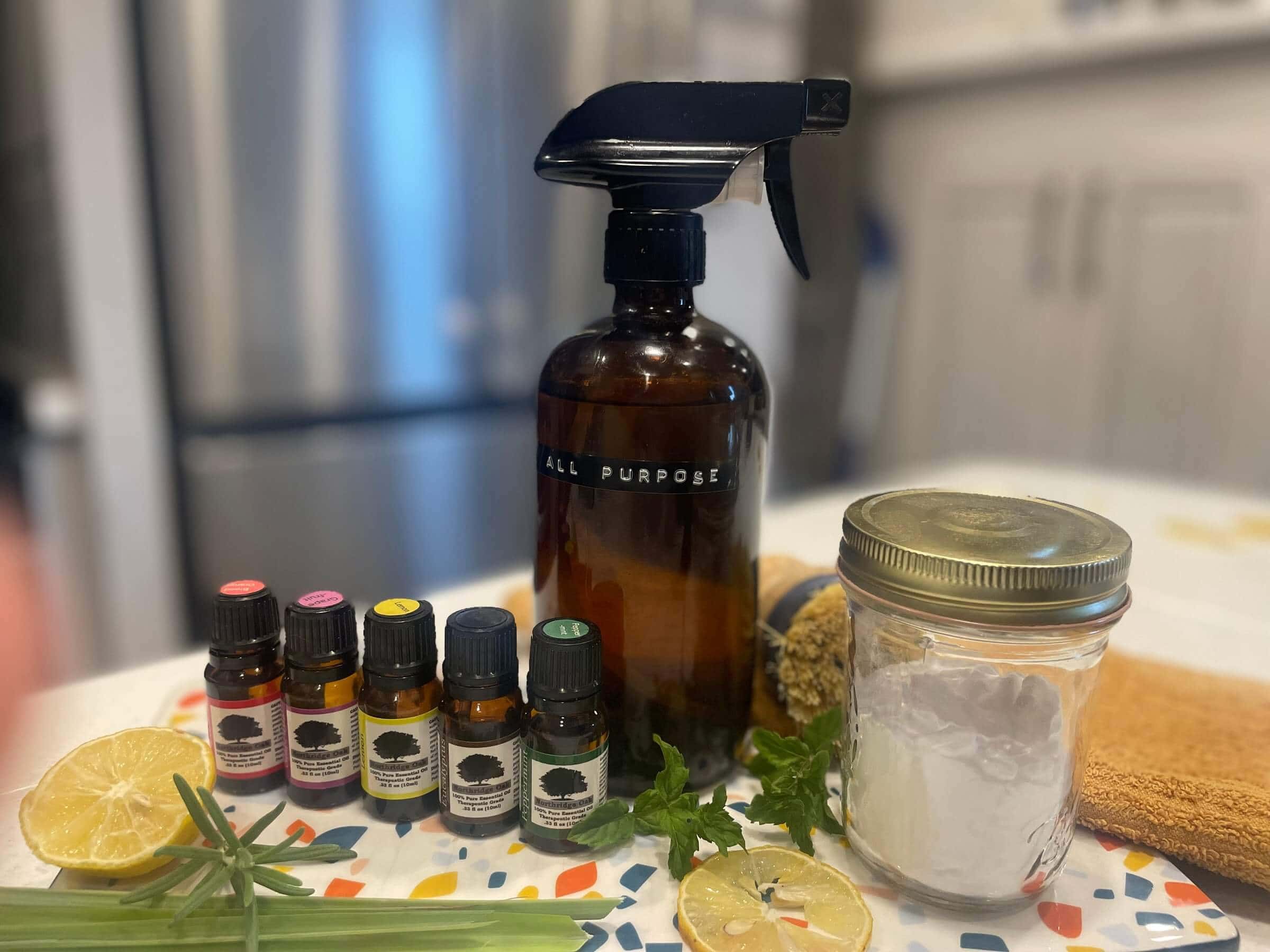
- Using certain oils in household cleaning recipes
- Creating room sprays and other home-fragrance products
- Adding fragrance to shower steamers and similar DIY projects
One of the advantages of starting with a few versatile oils is discovering just how many different ways the same bottle can be used.
For example, Peppermint can add a cool, crisp note to a diffuser blend, pair with citrus oils for a bright aroma, or be incorporated at an appropriate dilution into certain topical DIY recipes.
Lemon, meanwhile, works beautifully in fresh-smelling diffuser blends and is a popular choice for many DIY household recipes.
The possibilities grow as you learn how individual oils smell and which ones blend well together.
What Are Essential Oils Good For?
Essential oils are especially good for creating intentional sensory experiences. A bright citrus aroma can make a morning routine feel fresh and lively, Lavender can help shape a peaceful evening atmosphere, and woodsy or resinous oils can bring warmth and depth to a room.
Beginners often enjoy essential oils for:
- Creating a fresh, welcoming home atmosphere
- Building relaxing evening and bedtime rituals
- Adding bright aromas to work, study, and morning routines
- Making personalized diffuser blends and room recipes
- Bringing botanical fragrance into thoughtfully formulated body-care projects
- Exploring seasonal aromas and meaningful scent memories
The most rewarding benefit is often personal: discovering which aromas help a space or routine feel more like your own.
How Does Aromatherapy Work?
Our sense of smell is closely connected with areas of the brain involved in memory, emotion, and behavior.
When you inhale an aroma, odor molecules interact with receptors in the nose. Those signals are processed through the olfactory system and communicated to multiple areas of the brain.
This helps explain why aromas can become strongly associated with experiences, places, seasons, and memories.
You probably already experience this outside of aromatherapy. The smell of fresh coffee, pine trees, citrus peel, baked goods, or a familiar perfume can immediately remind you of a particular person or place.
Essential oils provide concentrated botanical aromas that can be incorporated into similar sensory experiences and routines.
Aroma preference is personal, which makes exploring essential oils especially enjoyable. The oils that feel most inviting to you are excellent choices for building your routine.
Best Essential Oils for Beginners
You don't need 30 essential oils to get started.
A small collection of versatile oils gives you plenty of opportunities to learn about individual aromas, experiment with blending, and try simple projects.
Here are seven oils we consider excellent places to begin.
1. Lavender Essential Oil
100% Pure Lavender Essential Oil – 10 mL
$11.67
100% Pure Lavender Essential Oil – Lavandula angustifolia Soft, floral and gently herbaceous, Northridge Oak Lavender Essential Oil is steam distilled from the flowering tops of Lavandula angustifolia grown in Bulgaria. This 100% pure, undiluted essential oil contains no fillers,… read more

Lavender is one of the most recognizable and versatile essential oils.
Its soft floral and herbaceous aroma works beautifully on its own and blends with citrus, mint, wood, resin, and other floral oils.
Lavender is especially popular in:
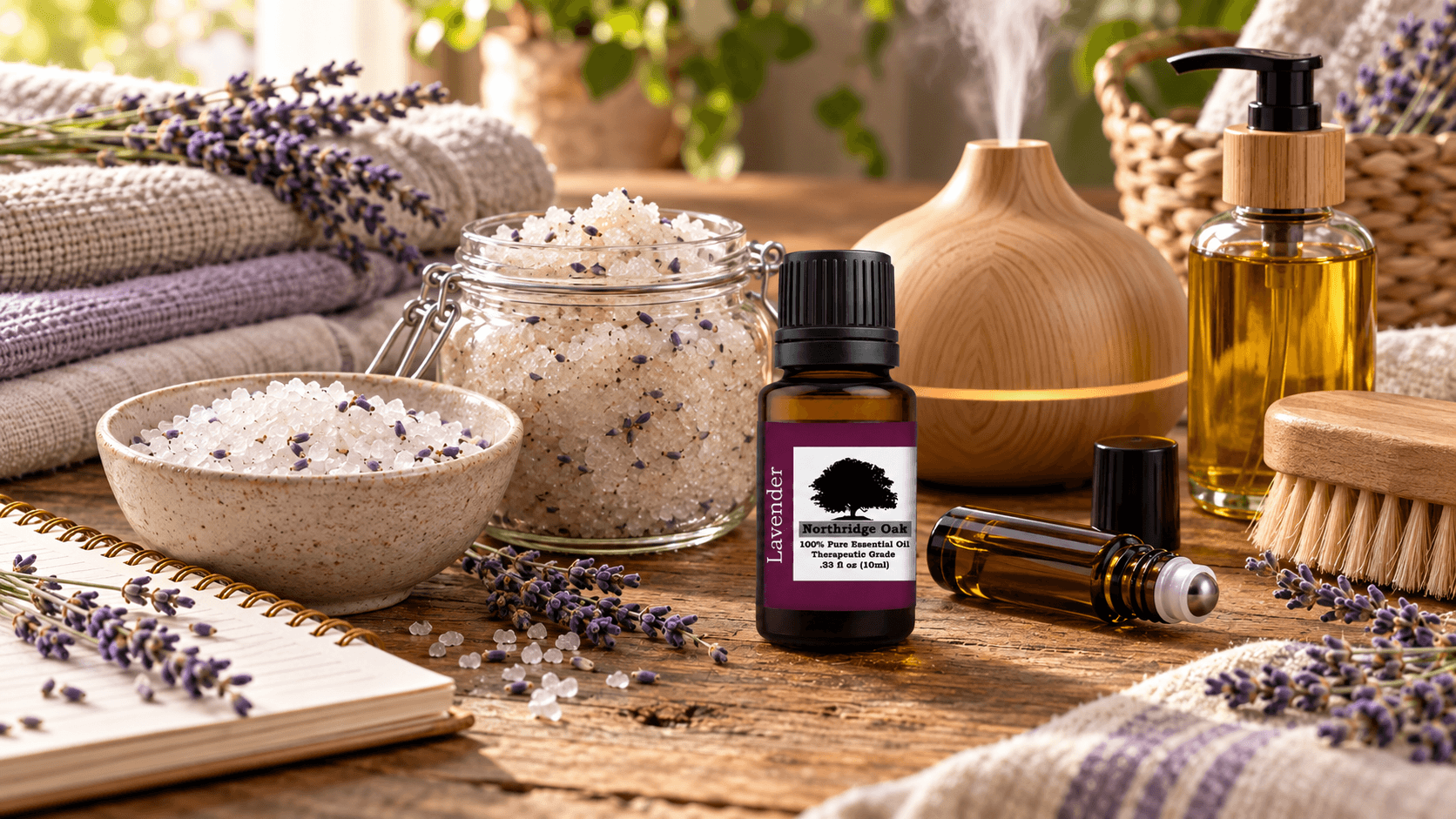
- Evening diffuser blends
- Linen and room sprays
- Bath and body recipes
- Relaxing aromatherapy routines
- Seasonal blends
- Personal-care DIYs
Because Lavender pairs with so many other aromas, it's also a great oil for learning the basics of essential oil blending.
Want more ideas? Explore our Lavender Essential Oil Guide.
2. Peppermint Essential Oil
100% Pure Peppermint Essential Oil – 10 mL
$7.50
100% Pure Peppermint Essential Oil Bright, crisp and unmistakably minty, Northridge Oak Peppermint Essential Oil brings a refreshing aroma to diffuser blends, personal-care routines and household DIY recipes. Its naturally cool, invigorating scent is a favorite when you want your… read more

Peppermint has a strong, cool, fresh mint aroma that is easy to recognize.
A little goes a long way, making Peppermint a helpful oil for learning how beautifully a small amount can shape an entire blend.
Peppermint works especially well with citrus, Eucalyptus, Lavender, Rosemary, and many woodsy oils.
Popular uses include:
- Fresh diffuser blends
- Seasonal blends
- Personal inhalers
- Shower steamers
- Properly diluted topical recipes
- DIY home recipes
We've created an entire Peppermint resource library around this versatile oil.
Start with our Peppermint Essential Oil Guide.
3. Lemon Essential Oil
100% Pure Lemon Essential Oil – 10 mL
$7.50
Bright, Fresh and Useful Far Beyond the Diffuser Northridge Oak Lemon Essential Oil has the crisp, cheerful aroma of freshly cut lemon peel—but its value goes well beyond making a room smell good. A few carefully measured drops can brighten… read more

If you enjoy bright, fresh aromas, Lemon is an easy oil to appreciate.
Its familiar citrus aroma works well by itself but is also extremely versatile in blends.
Lemon pairs particularly well with Peppermint, Lavender, Eucalyptus, Tea Tree, Rosemary, Frankincense, and other citrus oils.
Beginners can explore Lemon in:
- Diffuser blends
- Fresh-smelling room recipes
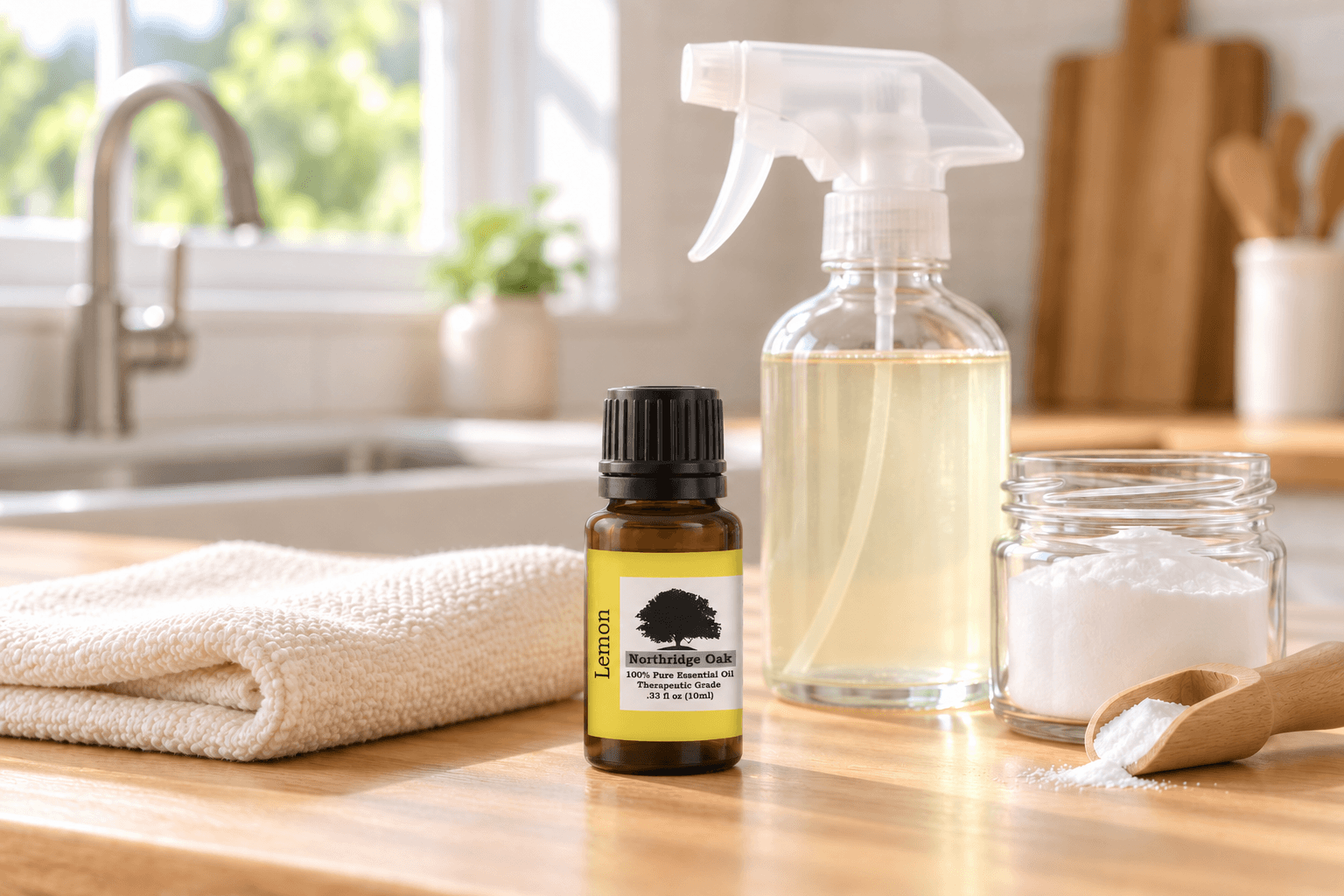
- DIY household cleaning recipes
- Seasonal blends
- Citrus-and-herb combinations
One important consideration is that some expressed citrus essential oils can be phototoxic when used topically above certain concentrations. Always check the safety information for the particular oil you're using.
Explore our Lemon Essential Oil Guide.
4. Frankincense Essential Oil
100% Pure Frankincense Essential Oil – 10 mL
$35.00
Warm, woody and resinous, Northridge Oak Frankincense Essential Oil is steam distilled from Boswellia serrata resin grown in India. This 100% pure, undiluted essential oil is third-party GC–MS tested for identity and purity, then bottled in the USA. Use Frankincense in diffusers, properly… read more

Frankincense is a wonderful introduction to resinous essential oils.
Its aroma is warm, complex, earthy, resinous, and subtly woody. It can help round out blends that otherwise smell too sharp or one-dimensional.
Frankincense pairs beautifully with oils including:
- Lavender
- Citrus oils
- Cedarwood
- Myrrh
- Patchouli
- Peppermint
- Eucalyptus
It's an especially interesting oil for beginners who want to move beyond familiar floral, citrus, and mint aromas and begin experimenting with more complex blends.
Explore our Frankincense Essential Oil Guide.
5. Tea Tree Essential Oil
100% Pure Tea Tree Essential Oil – 10 mL
$7.50
Fresh, herbaceous and unmistakably clean, Northridge Oak Tea Tree Essential Oil is a versatile oil for skincare, scalp care, household recipes and refreshing diffuser blends. Our Tea Tree Oil is 100% pure, undiluted and third-party GC/MS tested, giving you a… read more

Tea Tree has a strong, fresh, medicinal-herbaceous aroma.
It's particularly popular in DIY household and personal-care recipes and blends nicely with oils such as Lemon, Eucalyptus, Lavender, Peppermint, and Rosemary.
You'll often find Tea Tree incorporated into:
- DIY cleaning recipes
- Bathroom recipes
- Fresh diffuser blends
- Personal-care projects
- Home recipes
Learn more in our Tea Tree Essential Oil Guide.
6. Eucalyptus Essential Oil
100% Pure Eucalyptus Essential Oil – 10 mL
$7.50
100% Pure Eucalyptus Essential Oil Fresh, clean and beautifully clarifying, Northridge Oak Eucalyptus Essential Oil brings the unmistakable aroma of eucalyptus into diffuser blends, shower rituals, massage oils, scalp-care recipes and naturally fresh home routines. Our Eucalyptus radiata is 100%… read more

Eucalyptus is known for its distinctive fresh, penetrating aroma.
It's especially popular in spa-inspired and shower blends and pairs naturally with Peppermint, Lemon, Lavender, Rosemary, and Tea Tree.
Try Eucalyptus in:
- Diffuser blends
- Shower steamers
- Spa-inspired aromatherapy
- Fresh seasonal blends
- DIY home recipes
Different species of Eucalyptus can have different chemical profiles and safety considerations, so check the botanical name of the product you're using.
Explore our Eucalyptus Essential Oil Guide.
7. Bergamot Essential Oil
100% Pure Bergamot Essential Oil – 10 mL
$15.67
Bergamot FCF Essential Oil Northridge Oak Bergamot FCF Essential Oil brings bright citrus, soft florals and a refined green-tea finish together in one beautifully versatile oil. It can make a room feel freshly opened in the morning, add graceful brightness… read more

Bergamot gives beginners another type of citrus experience.
Rather than smelling exactly like Lemon or Orange, Bergamot has a complex citrus aroma with soft floral characteristics. It pairs particularly well with Lavender, Frankincense, Cedarwood, Geranium, and other citrus oils.
It's a beautiful choice for:
- Diffuser blends
- Evening aromas
- Citrus-floral blends
- Natural perfume blends
- Personal aromatherapy
Some Bergamot essential oil can be phototoxic when applied topically and followed by UV exposure. Northridge Oak's Bergamot is FCF, or bergapten-free, but you should always check the specifications and safety information for the Bergamot you're using.
Learn more in our Bergamot Essential Oil Guide.
How to Choose Quality Essential Oils
Shopping for essential oils becomes much easier when you know which product details reveal quality and transparency.
Focus on the information a company provides about the oil itself: botanical identity, ingredients, sourcing, testing, and clear directions.
Look for the Botanical Name
A quality essential oil listing should identify the botanical species.
For example, simply saying "Eucalyptus" doesn't tell you everything you may want to know. Different Eucalyptus species can have different chemical compositions and safety considerations.
Botanical identification helps you know exactly what you're buying.
Look at the Ingredient List
If you're buying a single essential oil, the ingredient list should make it clear what is actually in the bottle.
A product containing synthetic fragrance or carrier oil shouldn't be represented as an undiluted single essential oil.
Pre-diluted products such as roller bottles are different—they intentionally combine essential oil with a carrier and should identify those ingredients accordingly.
Consider Testing and Transparency
Testing can provide useful information about an essential oil's chemical composition.
At Northridge Oak, our essential oils are third-party GC/MS tested as part of our quality-control process.
Gas Chromatography/Mass Spectrometry, commonly called GC/MS, can identify and measure many of the volatile constituents in an essential oil and help evaluate whether its chemical profile is consistent with what is expected for that botanical oil.
GC/MS is a valuable analytical tool, although it should be viewed as one part of an overall quality-control program rather than an absolute guarantee of everything about an oil.
How to Use Essential Oils for Beginners
There isn't one "right" way to use essential oils.
Here are several easy ways to begin.
1. Use an Essential Oil Diffuser
Diffusing is one of the easiest ways to explore essential oils without applying them to your skin.
Follow the instructions provided with your diffuser, add water if required by the device, and start with a small amount of essential oil.
You don't need an overpowering aroma.
In fact, one of the best habits a beginner can learn is to start with less and add more only if needed.
Try starting with one oil before creating complicated blends. This helps you learn what each oil actually smells like.
Then experiment with simple two-oil combinations such as:
Lavender + Lemon
Peppermint + Lemon
Eucalyptus + Lavender
Frankincense + Lavender
Once you understand those aromas, three- and four-oil blends become much easier to create.
2. Use a Personal Inhaler
A personal aromatherapy inhaler allows you to enjoy an aroma without scenting an entire room.
They're convenient for travel, work, or situations where other people may not want to smell your diffuser blend.
Follow the inhaler's directions and avoid direct contact between undiluted essential oil and your skin.
3. Smell an Essential Oil From the Bottle
Sometimes the simplest approach is enough.
Open the bottle and gently smell the aroma from a comfortable distance rather than placing the bottle directly against your nose.
This is also one of the best ways to begin learning the differences among oils.
4. Use Properly Diluted Topical Blends
Essential oils are highly concentrated and should generally be appropriately diluted before routine topical use.
Carrier oils such as jojoba or fractionated coconut oil reduce the concentration of essential oil applied to the skin.
For example, essential oils can be incorporated into properly formulated:
- Roller blends
- Massage oils
- Body oils
- Solid perfumes
- Cuticle oils
- Other personal-care recipes
The appropriate dilution depends on the essential oil, intended application, person using it, and other factors.
For detailed dilution information, see our Complete Essential Oil Safety Guide.
5. Try Essential Oil DIY Recipes
Once you've learned a few oils, DIY recipes are a fun way to explore them.
You can experiment with projects such as:
- Diffuser blends
- Room sprays
- Shower steamers
- Body oils
- Scrubs
- Household cleaning recipes
- Seasonal aroma blends
- Personal-care projects
Browse our Essential Oil Recipes & DIY category whenever you're ready to make something new.
Essential Oil Safety for Beginners
Learning a few practical safety habits from the beginning helps every essential-oil experience feel comfortable and confident.
Because essential oils are concentrated botanical products, thoughtful amounts and oil-specific guidance help you enjoy them well.
These practical habits provide a strong foundation:
- Choose an appropriate dilution for topical use.
- Keep applications comfortably away from eyes and other sensitive areas.
- Reserve internal use for guidance from a properly qualified healthcare professional.
- Store bottles securely where children and pets cannot reach them.
- Review the directions and safety information for each individual oil.
- Seek personalized guidance for pregnancy, nursing, children, medications, pets, or health conditions.
- Follow any oil-specific maximum topical concentration.
- Check sunlight guidance when using expressed citrus oils topically.
Each oil has its own botanical chemistry. Learning the character and guidance for one oil at a time makes the process both approachable and rewarding.
We've created a separate resource specifically for this subject.
Read next: Essential Oil Safety: The Complete Guide to Using Essential Oils Safely.
Simple Habits That Help Beginners Succeed
Begin With a Few Drops
A few drops are often all you need to create a noticeable, enjoyable aroma.
Beginning with a small amount lets you appreciate the aroma, adjust gradually, and find the level that feels best in your space.
Start small, pause to experience the aroma, and add another drop only when you want more.
Dilute Essential Oils for Comfortable Topical Use
A carrier oil makes topical recipes easy to spread and helps you create a comfortable, consistent dilution.
For routine topical use, properly dilute essential oils and follow oil-specific dermal guidelines.
Build Your Collection Gradually
A focused starter collection gives you plenty to explore.
Starting with a smaller group allows you to learn how individual oils smell, which ones you actually enjoy, and how they interact when blended.
Expand your collection as you discover the aromatic families and uses you enjoy most.
How to Start Blending Essential Oils
Blending is one of the most enjoyable parts of using essential oils.
You can begin blending without memorizing complicated formulas.
Start by thinking about the overall aroma you want.
For something bright and fresh, you might combine:
Lemon + Peppermint
For something soft and floral:
Lavender + Bergamot
For something fresh and spa-like:
Eucalyptus + Lavender
For something warm and grounding:
Frankincense + Lavender
Start with only two oils and smell the combination. Adjust the ratio until you like it.
As you become more comfortable, add a third oil.
The goal isn't to follow an arbitrary rule. It's to learn how different aromas complement one another.
Our Essential Oil Recipes & DIY collection includes many ready-to-use blends if you'd rather begin with tested combinations before creating your own.
Do Beginners Need an Essential Oil Diffuser?
A diffuser is optional.
It is a convenient way to explore aromas, and you can also enjoy essential oils through personal inhalers, properly diluted topical products, DIY projects, or simply smelling an oil from its bottle.
Personal inhalers, properly diluted topical products, DIY projects, and simply smelling an oil from its bottle are all options.
However, a diffuser can be a useful first accessory because it allows you to experiment with different oils and blends without topical application.
If you buy one, choose a diffuser appropriate for the size of the room and follow the manufacturer's directions.
How Many Essential Oils Does a Beginner Need?
There's no magic number.
You can learn a tremendous amount from three or four oils.
A simple starter collection might include:
Lavender — floral/herbaceous
Peppermint — fresh/minty
Lemon — bright/citrus
Frankincense — warm/resinous
Those four alone give you very different aromatic families and numerous blending combinations.
Adding Tea Tree and Eucalyptus expands your options for fresh, herbal and DIY home recipes.
The important thing isn't owning the largest collection. It's learning to use the oils you have.
Want an Easy Way to Build Your First Collection?
If you'd rather start with a coordinated selection instead of choosing individual bottles one at a time, an essential oil starter set can be convenient.
The Northridge Oak Starter Essential Oil Set includes a diffuser and 10 essential oils:
Lavender, Peppermint, Tea Tree, Blood Orange, Lemon, Lemongrass, Clove, Frankincense, Patchouli, and Eucalyptus.
That gives you citrus, floral, mint, herbal, spice, resinous, and earthy aromas to explore as you learn what you enjoy.
Explore the Northridge Oak Starter Essential Oil Set
Essential Oil Starter Set
$153.84
Unlock Wellness with Our Essential Oil Set Collection of Therapeutic Essential Oils This curated collection of therapeutic essential oils is designed for beginners. Or, make it the perfect gift to those new to aromatherapy. This comprehensive kit includes a quiet ultrasonic diffuser… read more

Continue Exploring Essential Oils
Essential oils become more rewarding as you discover the aromas, routines, and recipes that feel natural in your everyday life. Continue through the Northridge Oak Essential Oil Learning Center whenever you are ready for your next idea.
- Find a personalized place to begin with the Find Your Oil tool.
- Build confidence with the complete Essential Oil Safety Guide.
- Discover practical projects in our Essential Oil Recipes and DIY collection.
- Explore individual aromas in our Essential Oil Guides.
- Start with 25 practical Lavender Essential Oil ideas.
- Bring fresh energy to your routine with 20 Peppermint Essential Oil uses.
- Explore a bright favorite with 15 ways to use Lemon Essential Oil.
- Discover warm resinous aromas in the Frankincense Essential Oil guide.
Choose one idea that sounds enjoyable, try it at your own pace, and let your essential-oil routine grow from there.
Essential oils are highly concentrated. Dilute appropriately for topical use and follow oil-specific safety guidance. Keep essential oils out of reach of children and pets. Avoid contact with eyes and other sensitive areas. If pregnant, nursing, taking medication, managing a medical condition, or using essential oils with children, consult an appropriate healthcare professional when needed.
These statements have not been evaluated by the Food and Drug Administration. Northridge Oak products are not intended to diagnose, treat, cure, or prevent any disease.