Table of Contents
- What Is Lemon Essential Oil?
- What Is Lemon Essential Oil Good For?
- 1. Lemon Essential Oil May Help Create a More Positive Mood
- 2. Lemon Essential Oil Can Support an Alert, Focused Atmosphere
- 3. Lemon Aromatherapy Has Been Studied for Nausea Comfort
- 4. Lemon Essential Oil Is a Natural Favorite for Cleaning
- 5. Lemon Essential Oil Freshens Rooms and Everyday Spaces
- 6. Lemon Essential Oil Blends With Almost Everything
- 7. Lemon Essential Oil Can Be Used in Properly Diluted Topical Recipes
- A Look at the Research
- Why Choose Northridge Oak Lemon Essential Oil?
- Bring Home the Brightness of Lemon
- Explore the Lemon Essential Oil Learning Center
- Frequently Asked Questions
Lemon essential oil benefits the home and daily routine in an impressive number of ways. Its bright citrus aroma can create a cheerful, energized atmosphere, while its practical uses include diffuser blends, natural cleaning recipes, room fresheners, odor control and properly diluted personal-care applications. Research has also explored Lemon Essential Oil for positive mood, mental performance, nausea comfort and antimicrobial activity.
Fresh, familiar and remarkably versatile, Lemon is one of those essential oils that rarely stays on the shelf for long. A few drops can brighten a morning diffuser blend, freshen a musty room, lift sticky residue from a hard surface or bring a clean citrus note to a homemade household recipe.
Shop Northridge Oak Lemon Essential Oil to add this cheerful, hardworking oil to your collection.
What Is Lemon Essential Oil?
Lemon Essential Oil is an aromatic oil obtained from the peel of the lemon, botanically known as Citrus limon. Unlike lemon juice, the essential oil captures the volatile aromatic compounds stored in tiny sacs within the peel.
The dominant constituent in most Lemon Essential Oil is limonene, a citrus-scented terpene that contributes significantly to the oil’s recognizable aroma and many of its researched properties. Its exact chemical composition can vary according to the variety of lemon, growing location, maturity of the fruit, extraction method and storage conditions.
Lemon oil is commonly produced by mechanically pressing the peel. Steam-distilled Lemon Essential Oil is also available, although the two types can have different safety considerations—particularly when the oil will be applied to skin.
Northridge Oak Lemon Essential Oil is:
- Botanically identified as Citrus limon
- Sourced from Italy
- 100% pure and undiluted
- Bottled in small batches
- Third-party GC/MS tested
- Free from fillers and unnecessary additives
That combination of botanical identity, purity testing and careful handling matters. A bottle labeled simply “lemon scent” or “lemon fragrance” is not necessarily Lemon Essential Oil and may contain synthetic fragrance ingredients.
What Is Lemon Essential Oil Good For?
Lemon Essential Oil is especially well suited to routines involving:
| Use | Why people choose Lemon |
|---|---|
| Diffusion | Creates a bright, crisp and welcoming atmosphere |
| Mood | Its aroma has been studied for its effect on positive mood |
| Focus | The fresh scent works well in morning, office and study blends |
| Cleaning | Adds citrus freshness and works well in DIY surface recipes |
| Odor control | Helps replace stale odors with a clean lemon aroma |
| Blending | Pairs easily with floral, mint, herbal, spice and wood oils |
| Personal care | Can be incorporated into properly diluted topical recipes |
| Seasonal routines | Adds freshness to stuffy indoor spaces throughout the year |
It is this range that makes Lemon one of the best essential oils for beginners. It smells immediately familiar, blends beautifully and can be used in nearly every room of the house.
1. Lemon Essential Oil May Help Create a More Positive Mood
One of the best-known human studies involving Lemon Essential Oil examined how lemon and lavender aromas affected mood and physiological responses.
Researchers enrolled 56 healthy adults and exposed them to lemon, lavender and a non-aromatic water control during separate laboratory visits. They measured mood, pain responses, heart rate, blood pressure, stress hormones and immune markers.
Lemon produced the clearest emotional result: it reliably improved positive mood compared with both lavender and the control condition. The study did not find meaningful changes in immune function or pain control, but the mood improvement was consistent across both self-reported and behavioral measures.
The value of that finding is straightforward. Lemon’s fresh aroma did more than simply smell pleasant to participants—it produced a measurable improvement in positive mood under controlled conditions. You can read the published lemon-aroma and mood study.
Try This Cheerful Morning Diffuser Blend
- 4 drops Lemon Essential Oil
- 2 drops Rosemary Essential Oil
- 1 drop Peppermint Essential Oil
Add the oils to an ultrasonic diffuser according to its water capacity and instructions. Begin with a shorter diffusion period and adjust according to the size of the room and your preference.
This is a crisp blend for getting the house moving in the morning, working through an afternoon slump or creating a brighter atmosphere on a gray day.
2. Lemon Essential Oil Can Support an Alert, Focused Atmosphere
Lemon’s bright aroma is commonly selected for offices, classrooms and study areas because it feels clean, awake and mentally refreshing.
A 2023 human study examined brain activity and task performance after participants inhaled Lemon, sandalwood and ho wood essential oils. Lemon inhalation was associated with significantly improved task performance. Brain-wave measurements also showed that the different oils produced distinct patterns of activity, supporting the idea that aroma can influence both subjective experience and measurable cognitive responses.
The researchers did not treat Lemon Essential Oil as a cure for a cognitive condition. They studied how inhalation influenced performance and brain activity during a controlled task. That makes the research especially relevant to practical uses such as diffusing Lemon while studying, organizing, writing or working.
Read the 2023 Lemon Essential Oil brain-activity study.
For an herbaceous variation, combine Lemon with Eucalyptus Essential Oil or Rosemary. If you prefer a sharper, more invigorating blend, add one drop of Peppermint.
3. Lemon Aromatherapy Has Been Studied for Nausea Comfort
Researchers have also examined inhaled Lemon Essential Oil as a comfort measure during nausea.
A controlled, double-blind randomized clinical trial included 100 pregnant women between six and sixteen weeks of pregnancy who were experiencing moderate nausea and vomiting. Fifty participants received Lemon Essential Oil diluted in almond oil, while fifty received almond oil alone as the control.
When nausea began, participants placed two drops of the assigned preparation on a cotton ball, held it about three centimeters from the nose and inhaled normally. Symptoms were measured over four days using the Pregnancy-Unique Quantification of Emesis and Nausea scale.
Both groups improved, but the reduction was significantly greater in the Lemon group. The reported difference in symptom scores was −1.60 points, with a 95% confidence interval from −2.60 to −0.60. The researchers concluded that inhaled Lemon Essential Oil could help reduce nausea and vomiting during pregnancy.
The full randomized Lemon aromatherapy study provides the complete design and results.
This research involved controlled inhalation—not ingestion. Pregnancy also changes how essential oils should be approached, so anyone who is pregnant should review the Northridge Oak Essential Oil Safety Guide and discuss personal use with a qualified professional.
4. Lemon Essential Oil Is a Natural Favorite for Cleaning
Lemon has earned a lasting place in natural home care. Its crisp aroma makes a room smell freshly cleaned, while limonene-rich citrus oils are useful in recipes designed to loosen greasy or sticky residue.
Laboratory research has also examined Lemon Essential Oil against bacteria and fungi. The results vary depending on the microorganism, concentration, oil composition and testing method. A scientific review of Citrus limon research reported measurable activity against several tested organisms while also showing that some strains were much less responsive than others.
For example, one laboratory analysis found only slight activity against E. coli, with an inhibition zone of 8.35 millimeters. Other organisms and Lemon oil samples produced different results. This variation is exactly why the oil’s concentration, composition and intended application matter.
These laboratory results help explain the scientific interest in Lemon as a household and formulation ingredient. They do not mean that every homemade mixture produces the same result as a controlled laboratory preparation. The review of Lemon Essential Oil chemistry and antimicrobial research provides a useful overview of the evidence.
For a particularly fresh botanical pairing, Lemon works beautifully with Tea Tree Essential Oil. You can also explore the measured recipes in our Tea Tree Essential Oil uses guide.
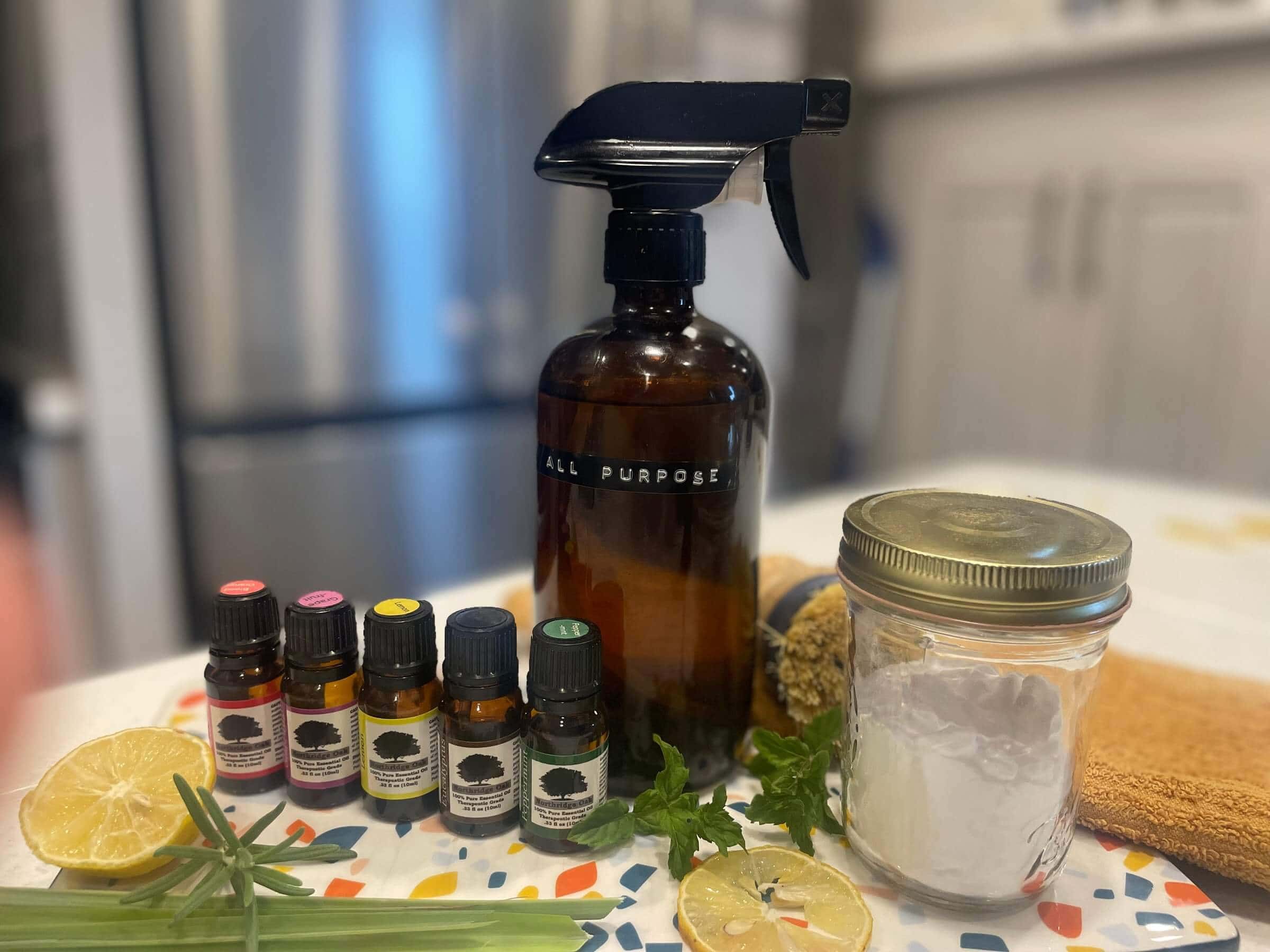
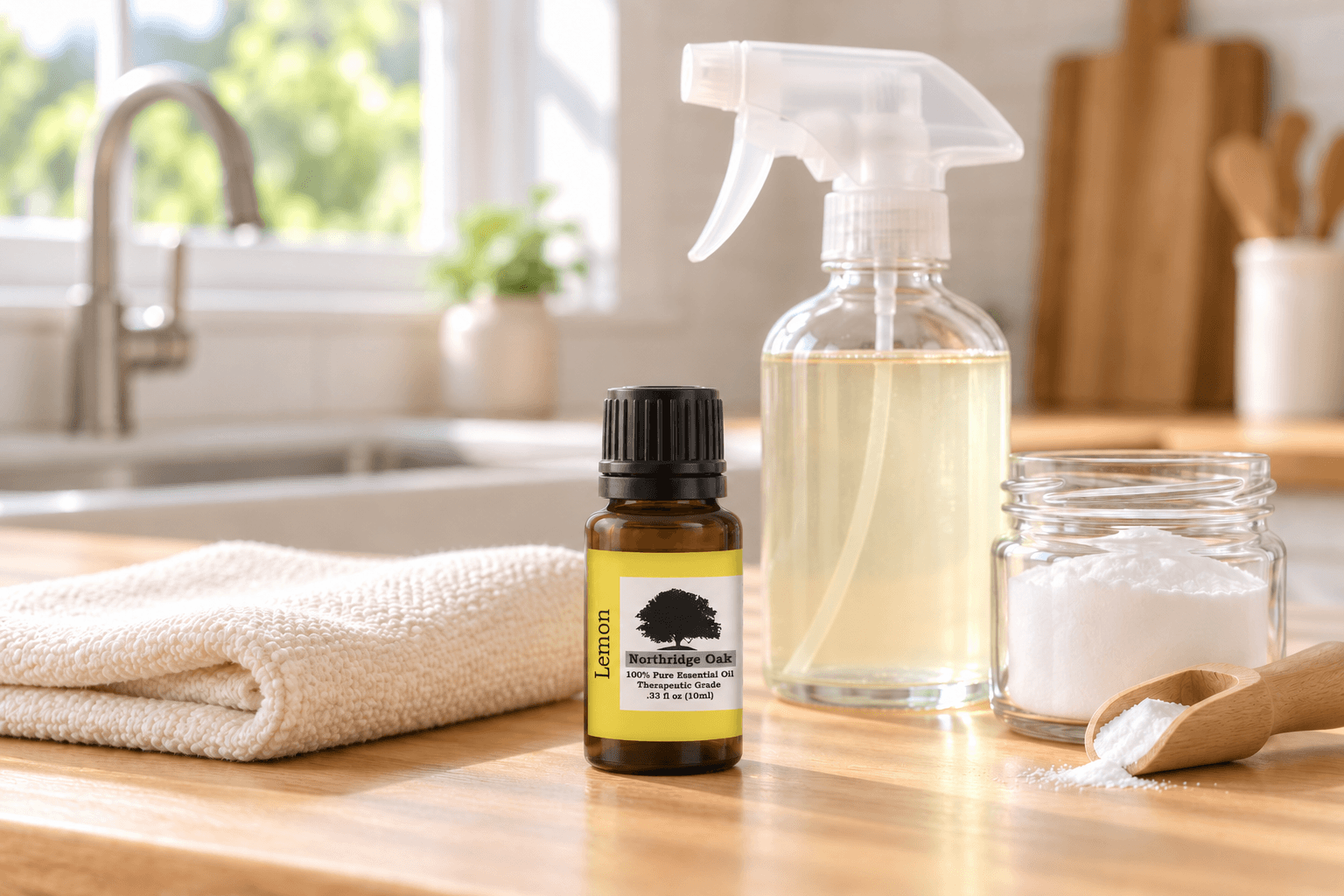
Everyday Lemon Surface Spray
- 1½ cups water
- ½ cup white vinegar
- 15 drops Lemon Essential Oil
- 16-ounce glass spray bottle
Add the water and vinegar to the bottle, followed by the Lemon Essential Oil. Replace the sprayer and shake thoroughly.
Shake before every use because essential oil does not remain evenly dispersed in water. Spray onto a cleaning cloth and wipe the intended surface. Test a hidden area first. Do not use acidic vinegar mixtures on natural stone, unfinished wood or surfaces that can be damaged by acid.
Lemon Sink Scrub
- ½ cup baking soda
- 1 tablespoon unscented liquid castile soap
- 8 drops Lemon Essential Oil
- Enough water to create a soft paste
Combine the baking soda and castile soap in a small bowl. Add the Lemon Essential Oil and stir. Add water a teaspoon at a time until the mixture forms a spreadable paste.
Apply with a damp cloth or non-scratching sponge, scrub gently and rinse thoroughly. Test the material first, especially on specialty finishes.
Sticky-Residue Helper
Place 1–2 drops of Lemon Essential Oil on a reusable cleaning cloth and work it over sticky residue. Follow with warm, soapy water to remove the loosened residue and remaining oil.
Always test a hidden spot first. Concentrated Lemon oil can affect certain plastics, painted finishes and delicate materials.
5. Lemon Essential Oil Freshens Rooms and Everyday Spaces
Lemon is a wonderful choice when a room feels stale, heavy or closed in. Its aroma is crisp without being sharp and sweet without becoming sugary.
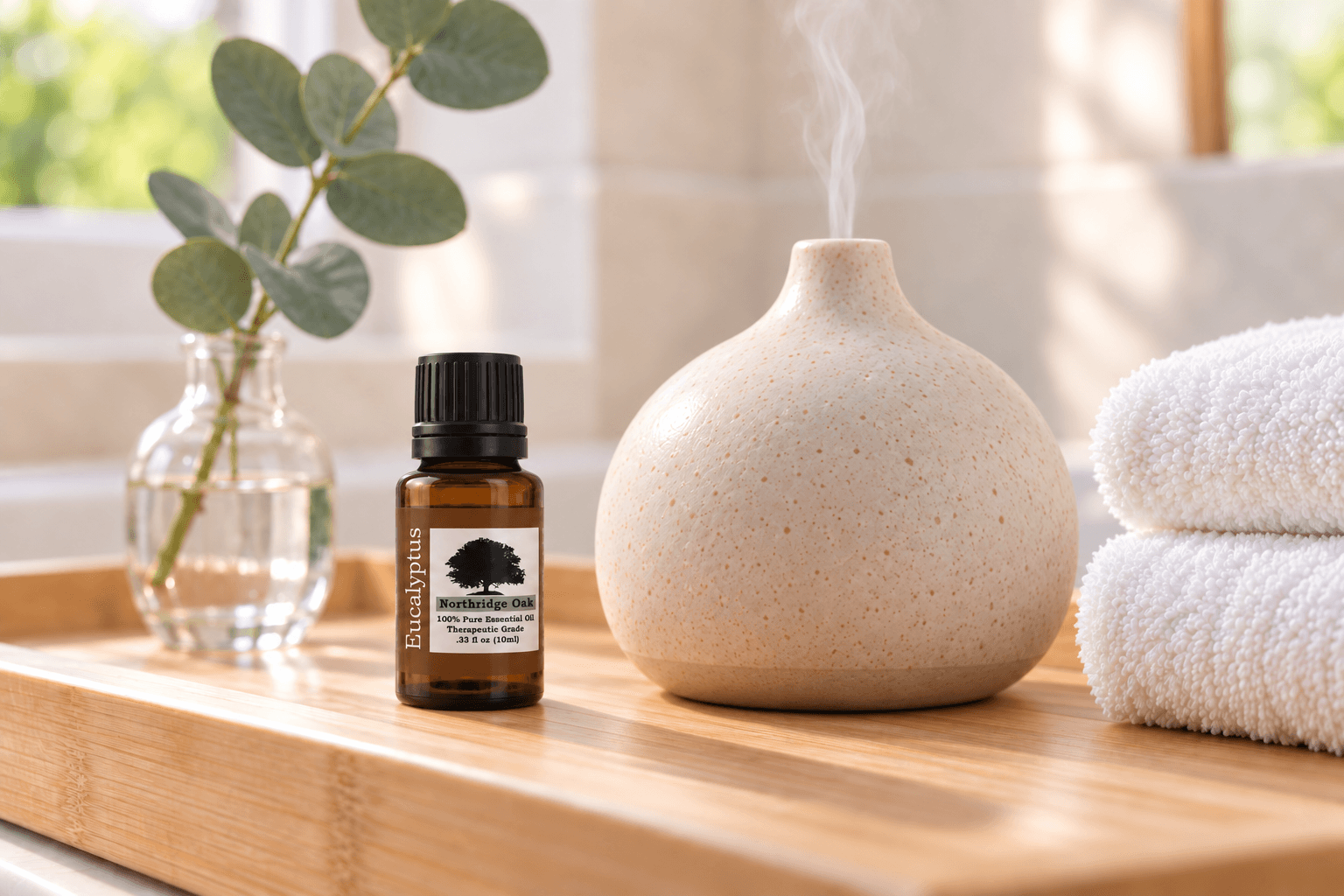
Simple Fresh-Home Diffuser Blend
- 4 drops Lemon Essential Oil
- 2 drops Eucalyptus Essential Oil
- 1 drop Tea Tree Essential Oil
This combination is especially useful in kitchens, bathrooms, entryways and other areas where you want a clean botanical aroma. Our Eucalyptus Essential Oil guide offers additional spa-inspired and home-use ideas.
Lemon Room Spray
- 2 tablespoons high-proof alcohol
- 20 drops Lemon Essential Oil
- 6 tablespoons distilled water
- 4-ounce glass spray bottle
Combine the alcohol and Lemon Essential Oil in the bottle and shake. Add the distilled water and shake again. Mist lightly into the air, avoiding faces, pets, polished furniture and floors that could become slippery.
Keep the bottle out of reach of children and pets. Label it with the ingredients and preparation date.
Cotton-Ball Freshener
Add 2–3 drops of Lemon Essential Oil to a cotton ball and place it in a small dish near a trash can, shoe rack or other odor-prone area. Position it where children and animals cannot reach it and where the concentrated oil cannot touch painted or finished surfaces.
6. Lemon Essential Oil Blends With Almost Everything
Lemon is one of the easiest oils to blend. It can make floral oils feel lighter, soften strong medicinal aromas and add brightness to deep woods and resins.
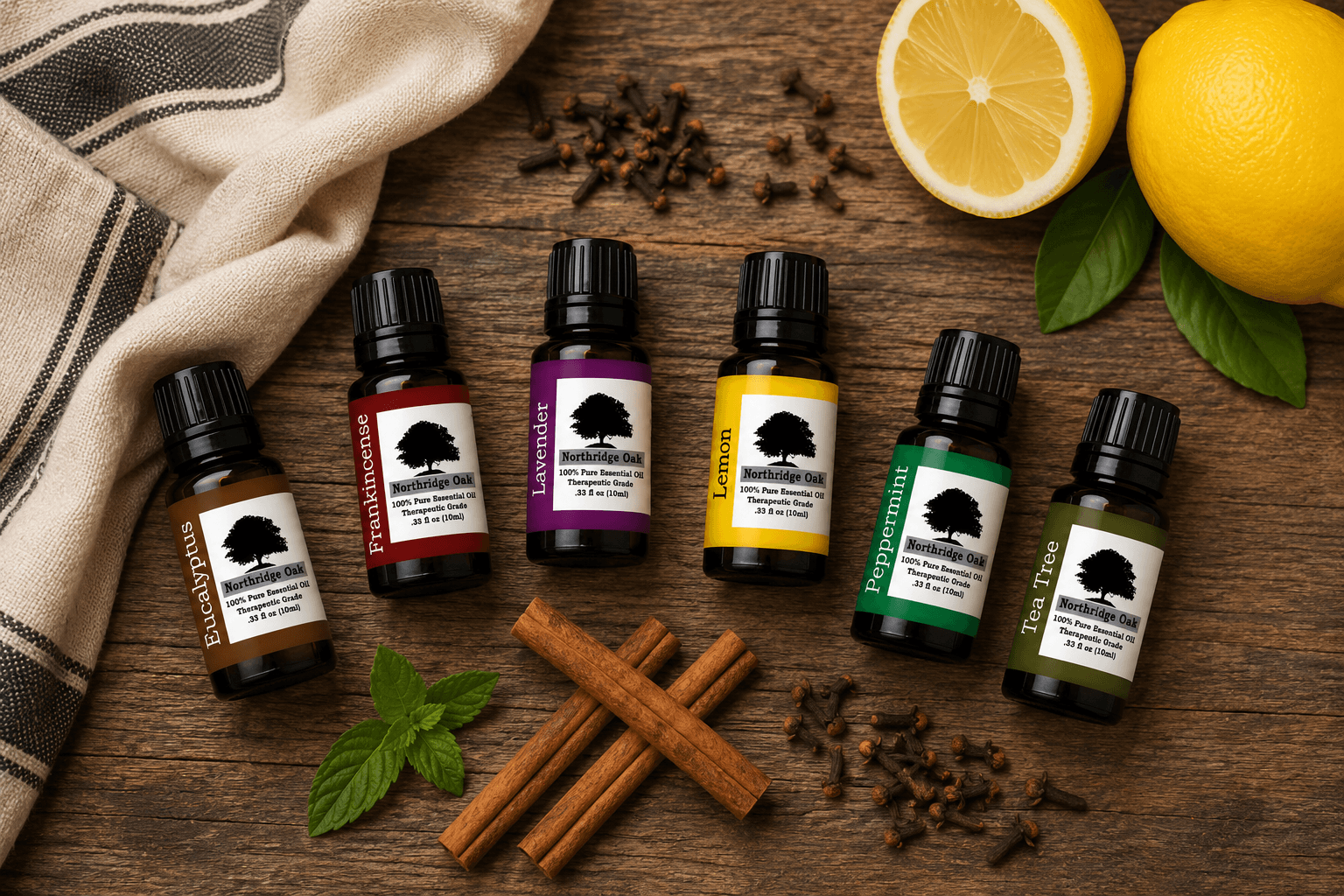
Some of its best partners include:
- Lavender for a soft, clean floral aroma
- Frankincense for a bright, resinous blend
- Peppermint for energy and freshness
- Rosemary for study and morning routines
- Eucalyptus for a crisp spa-like atmosphere
- Tea Tree for household recipes
- Blood Orange for a sweet citrus blend
- Grapefruit for an especially cheerful aroma
- Cedarwood for a grounded citrus-wood combination
- Balsam Fir for a fresh forest-and-citrus blend
- Clove for a warm seasonal fragrance
- Ginger for a lively, spicy citrus blend
A helpful starting ratio is three parts Lemon to one or two parts of the supporting oil. Make small test blends and adjust one drop at a time.
7. Lemon Essential Oil Can Be Used in Properly Diluted Topical Recipes
Lemon can add a beautiful citrus aroma to massage oils, body oils and other carefully formulated personal-care products. It should not be applied to skin undiluted.
For a conservative 1% dilution, add approximately one drop of Lemon Essential Oil to one teaspoon of carrier oil. Patch test a small area and discontinue use if redness, itching or discomfort develops.
Phototoxicity must also be considered. Some expressed or cold-pressed Lemon Essential Oils contain naturally occurring furocoumarins that can increase the skin’s sensitivity to ultraviolet light. Steam-distilled Lemon oil contains dramatically smaller amounts of several phototoxic compounds, but the product’s extraction method and safety documentation should always be checked.
Research comparing distilled and expressed Lemon oils found major differences in their phototoxic-compound profiles. Analysis cited by the Tisserand Institute reported that distilled Lemon contained 12 times less isopimpinellin, 22 times less bergapten and 930 times less citropten than expressed Lemon.
Learn more from the Tisserand Institute’s phototoxicity guidance and the Northridge Oak safety guide before using Lemon oil on sun-exposed skin.
A Look at the Research
Lemon Essential Oil has been examined in human, laboratory and chemical studies. Each type of research answers a different question.
| Research area | Study design | What researchers found |
|---|---|---|
| Positive mood | 56 healthy adults exposed to lemon, lavender and a control during separate laboratory visits | Lemon reliably improved positive mood compared with lavender and the control |
| Mental performance | Controlled human inhalation study with brain-wave and task measurements | Task performance improved significantly following Lemon Essential Oil inhalation |
| Nausea during pregnancy | Double-blind randomized trial of 100 pregnant women over four days | Symptom scores declined significantly more in the Lemon group than the almond-oil control |
| Antimicrobial activity | Laboratory testing and research review | Lemon showed activity against some tested organisms, with strength varying by strain and concentration |
| Phototoxicity | Chemical analysis and ultraviolet-response testing | Expressed Lemon contained phototoxic constituents; distilled oil contained much lower levels of several key compounds |
The overall picture is encouraging. Lemon’s strongest practical identity remains its versatility: it offers an uplifting aroma, useful household applications, excellent blending potential and several areas of promising scientific study.
Why Choose Northridge Oak Lemon Essential Oil?
A useful recipe begins with a trustworthy oil.
Northridge Oak is a family-owned essential oil company founded in 2016. Our Lemon Essential Oil comes from Italy and is bottled in small batches. It is 100% pure, undiluted and third-party GC/MS tested, giving you a clearly identified Citrus limon oil without fillers or unnecessary additives.
Whether you want to brighten your diffuser, freshen your home, build a natural cleaning routine or explore a properly diluted personal-care recipe, Lemon is an affordable and versatile place to begin.
Try Northridge Oak Lemon Essential Oil and discover how much one small bottle can do.
100% Pure Lemon Essential Oil – 10 mL
$7.50
Bright, Fresh and Useful Far Beyond the Diffuser Northridge Oak Lemon Essential Oil has the crisp, cheerful aroma of freshly cut lemon peel—but its value goes well beyond making a room smell good. A few carefully measured drops can brighten… read more

Bring Home the Brightness of Lemon
Lemon Essential Oil earns its place in an essential-oil collection because it is useful from the moment the bottle is opened. It can brighten a morning, freshen a room, complement a favorite blend and become part of practical DIY household recipes.
When that oil is pure, correctly identified and backed by third-party GC/MS testing, you can approach each recipe with greater confidence.
Northridge Oak Lemon Essential Oil is bottled in small batches and made to help you create a fresher, brighter routine—one drop at a time.
Explore the Lemon Essential Oil Learning Center
Want to discover even more ways to use Lemon Essential Oil? Explore the Northridge Oak Lemon Essential Oil Learning Center for practical recipes, household uses, research, safety guidance and answers to popular questions. Each guide focuses on a useful way to get more from your bottle of Lemon Essential Oil.
- How to Use Lemon Essential Oil: 15 Practical Uses
- Is Lemon Essential Oil Safe for Dogs? What Pet Parents Should Know
- Relieving Headaches With Lemon Essential Oils
Choose the topic that fits what you want to learn today, or bookmark this guide and return as the Lemon Essential Oil Learning Center continues to grow.
FDA Disclaimer
These statements have not been evaluated by the Food and Drug Administration. This information and these products are not intended to diagnose, treat, cure or prevent any disease. The information provided is for educational purposes only and is not a substitute for individualized medical advice. Always dilute essential oils appropriately, follow product-specific safety guidance and consult a qualified professional when pregnant, nursing, caring for children, managing a medical condition or using medications.
Frequently Asked Questions
What are the main benefits of Lemon Essential Oil?
Lemon Essential Oil is valued for its bright aroma, positive-mood potential, diffuser versatility, cleaning applications, odor-freshening ability and compatibility with many other essential oils. Human research has found that lemon aroma can improve positive mood, while additional studies have explored mental performance and nausea comfort.
What is Lemon Essential Oil good for around the house?
It can be used in properly formulated surface sprays, sink scrubs, room sprays, diffuser blends and sticky-residue recipes. Always test household surfaces first because concentrated citrus oil and acidic cleaner ingredients can affect certain finishes.
Can I diffuse Lemon Essential Oil every day?
Many adults enjoy diffusing Lemon regularly. Start with approximately 3–6 drops in a typical ultrasonic diffuser, depending on its size. Use shorter diffusion periods in small rooms, provide airflow and stop if anyone experiences discomfort.
Can Lemon Essential Oil be applied to skin?
Lemon Essential Oil can be incorporated into properly diluted topical recipes. Never apply it undiluted. Patch test first and determine whether the oil is expressed, cold-pressed, steam-distilled or otherwise documented as non-phototoxic before exposing treated skin to ultraviolet light.
Does Lemon Essential Oil cause photosensitivity?
Some expressed or cold-pressed Lemon Essential Oils are phototoxic because they contain naturally occurring furocoumarins. These compounds can cause an exaggerated skin reaction following ultraviolet exposure. Steam-distilled Lemon typically contains far lower levels of these compounds. Follow the product’s safety documentation and avoid UV exposure when required.
Is Lemon Essential Oil safe for dogs and cats?
Animals process aromatic compounds differently from people. Do not apply concentrated Lemon Essential Oil directly to a pet or place oil where it can be licked. Diffuse conservatively, provide ventilation and allow the animal to leave the room. Review species-specific safety information before use.
What essential oils blend well with Lemon?
Lemon blends especially well with Lavender, Frankincense, Peppermint, Rosemary, Eucalyptus, Tea Tree, Blood Orange, Grapefruit, Cedarwood, Balsam Fir, Clove and Ginger. Its brightness can lift deeper aromas and make sharper herbal oils feel fresher.
How should Lemon Essential Oil be stored?
Store Lemon Essential Oil tightly closed in its amber glass bottle, away from heat, sunlight and moisture. Citrus oils can oxidize as they age, so proper storage helps preserve the aroma and reduce the likelihood of irritation associated with oxidized oil.