Table of Contents
- The story behind Tea Tree’s enduring reputation
- What does modern research show?
- Why Choose Natural Products Over Harsh Chemicals?
- What You'll Need for These Tea Tree DIY Recipes
- Tea Tree for Acne-Prone Skin
- Soothe a Dry, Flaky Scalp
- Refresh Tired Feet
- Tea Tree Diffuser Blends You'll Love
- Why Quality Matters
- Tea Tree Essential Oil Safety
- Dilute Tea Tree Essential Oil Before Topical Use
- Patch-Test New Topical Products
- Never Swallow Tea Tree Essential Oil
- Use Extra Care Around the Face
- Essential Oils and Water Don't Stay Mixed
- Use Homemade Cleaners Only on Compatible Surfaces
- Why Tea Tree belongs in natural home cleaning
- Outdoor Spray Safety
- Diffuse Responsibly
- Keep Away From Children and Pets
- Store Tea Tree Essential Oil Properly
- When individual guidance is useful
- Ready to put Tea Tree to work?
- Explore the complete Tea Tree Essential Oil learning center
- Tea Tree research and further reading
- FAQs
Tea Tree Essential Oil is one of nature’s most versatile everyday botanicals. From fresh-looking skin and a comfortable scalp to foot care, home cleaning and bright diffuser blends, a single bottle can support dozens of practical routines. Its reputation is rooted in generations of traditional use and strengthened by laboratory research and human clinical trials.
This guide gives you 20 Tea Tree Essential Oil uses with measured recipes you can actually make. You will find skin and nail care, scalp support, foot-soak ideas, natural home fresheners, cleaning recipes and diffuser combinations—plus direct links to the studies that make Tea Tree much more than a pleasant-smelling addition.
The best way to discover Tea Tree is to give it a real job. Choose the concern or routine that matters most to you, follow one recipe consistently and observe the difference for yourself. That is how a bottle moves from the cabinet into everyday life.
Start here: Tea Tree’s standout research includes randomized human trials involving acne, dandruff, athlete’s foot and toenail fungus, along with extensive laboratory evidence of antibacterial and antifungal activity.
The story behind Tea Tree’s enduring reputation
Tea Tree comes from Melaleuca alternifolia, a small tree native to eastern Australia. The Bundjalung people traditionally crushed its leaves for topical preparations and inhaled the aromatic leaves as part of their wellness practices. Those uses came long before bottles, droppers or modern laboratories.
In the 1920s, Australian researchers began studying the distilled oil and its antiseptic qualities. Commercial Tea Tree production expanded, and the oil found its way into soaps, skin products, shampoos and household formulas. What began as botanical knowledge passed through generations became a subject of international scientific interest.
A comprehensive peer-reviewed review in Clinical Microbiology Reviews traces this history and summarizes Tea Tree’s chemistry, antimicrobial mechanisms and clinical research. Modern evidence does not replace the traditional story—it helps us understand why people kept returning to the plant.
What does modern research show?
Tea Tree Oil contains more than 100 identified components. Terpinen-4-ol is one of the most abundant and best studied, and research associates it strongly with the oil’s antimicrobial activity. Laboratory studies show that Tea Tree can disrupt microbial cell membranes, which helps explain its broad activity against many bacteria and fungi.
The human evidence is particularly inviting. A randomized placebo-controlled acne trial found that 5% Tea Tree gel was 3.55 times more effective at reducing total lesions and 5.75 times more effective at reducing acne severity than placebo. In a four-week dandruff study, 5% Tea Tree shampoo improved severity by 41%, compared with 11% for placebo.
Foot and nail studies add to the picture. A randomized athlete’s-foot trial reported a 64% mycological cure rate with 50% Tea Tree solution versus 31% with placebo. A six-month toenail study found comparable culture results between 100% Tea Tree and 1% clotrimazole, with clinical improvement reported in both groups.
Those are real results in real people, not simply folklore or marketing. They also show why formulation and consistency matter: researchers used defined concentrations on a regular schedule. The recipes below translate that same measured mindset into approachable ways to try Tea Tree at home.
Why Choose Natural Products Over Harsh Chemicals?
Many commercial skincare and cleaning products contain artificial fragrances, dyes, and unnecessary chemicals.
Making your own products allows you to:
- Know exactly what you're using
- Reduce exposure to synthetic ingredients
- Customize recipes for your family's needs
- Save money
- Create products with naturally derived ingredients
With just a few simple ingredients and tea tree essential oil, you can replace several products in your bathroom and cleaning cabinet.
What You'll Need for These Tea Tree DIY Recipes
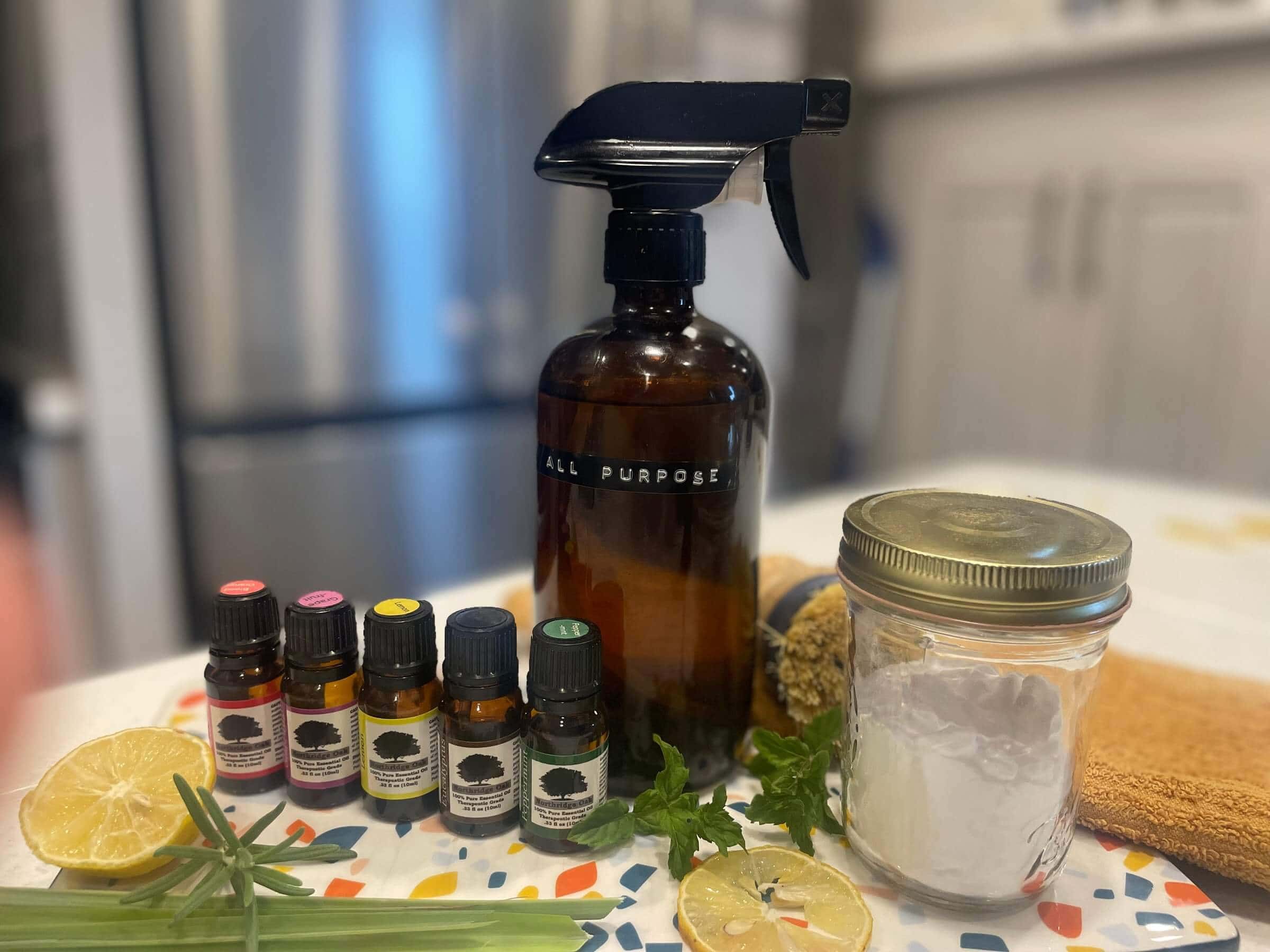
You don't need everything on this list to get started. Choose the recipes you'd like to make and use this as a quick shopping guide.
Tip: Tea Tree is the star of the show! You don't need every essential oil or supply on this list. Start with Tea Tree Essential Oil and add other ingredients as you find recipes you'd like to try.
Essential Oils
- Tea Tree Essential Oil
- Lavender Essential Oil
- Oregano Essential Oil
- Lemon Essential Oil
Carrier Oils & Personal Care Ingredients
- Jojoba Oil
- Fractionated Coconut Oil
- Unscented Liquid Castile Soap
- Shampoo
Salts, Baking & Household Ingredients
- Epsom Salt
- Baking Soda
- Distilled Water
- White Vinegar
- Witch Hazel
DIY Bottles & Containers
- 1 oz Dropper Bottle
- 2 oz Spray Bottle
- 4 oz Spray Bottle
- 16 oz Spray Bottles
- Clean Pump Bottle
- Shaker Container
Other DIY Supplies
- Essential Oil Diffuser
- Unfinished Wooden Clothespins
- Cotton Balls
- Mixing Bowls
- Measuring Cups & Spoons
- Clean Cloths
- Small Funnel
That's It!
You don't need to buy everything at once. Choose a Tea Tree DIY that sounds useful, see what you already have at home, and start there.
As you try more recipes, you can gradually add ingredients and essential oils to your DIY supplies.
Tea Tree for Acne-Prone Skin
One of the most popular uses for tea tree essential oil is supporting clearer-looking skin.
Its naturally cleansing properties make it a favorite addition to face washes, blemish rollers, and skincare routines.
Many people find that tea tree oil helps reduce the appearance of oily skin while supporting a healthy-looking complexion.
1. DIY Tea Tree Face Wash
Tea Tree Essential Oil is a popular addition to skincare routines, especially for oily and blemish-prone skin. This simple face wash lets you incorporate Tea Tree into your daily cleansing routine.
You'll Need:
- ½ cup unscented liquid Castile soap
- 1 tablespoon jojoba oil
- 4 drops Tea Tree Essential Oil
- Clean pump bottle
Add the Castile soap, jojoba oil, and Tea Tree Essential Oil to a clean pump bottle and gently swirl to combine. To use, dispense a small amount into wet hands and gently massage onto damp skin, avoiding the eye area. Rinse thoroughly with lukewarm water.
Important: For external use only. Avoid the eyes, mucous membranes, and broken or irritated skin. Discontinue use if irritation occurs.
2. Tea Tree Facial Oil
Tea Tree is commonly incorporated into skincare products designed for oily and blemish-prone skin. This simple facial oil combines a small amount of Tea Tree Essential Oil with lightweight jojoba oil for an easy addition to your skincare routine.
You'll Need:
- 1 oz jojoba oil
- 3 drops Tea Tree Essential Oil
- 2 drops Lavender Essential Oil
- 1 oz dropper bottle
Add the Tea Tree and Lavender Essential Oils to a clean 1 oz dropper bottle. Fill the remainder with jojoba oil, replace the cap, and gently roll the bottle between your hands to combine. Apply a small amount to clean skin as desired, avoiding the eye area.
Important: For external use only. Avoid the eyes, mucous membranes, and broken or irritated skin. Patch-test before first use and discontinue use if irritation occurs.
Healthy Nails & Nail Care
3. Tea Tree Nail Oil
Tea Tree and Oregano Essential Oils are commonly used in nail-care routines, including for nails affected by fungal concerns. This simple blend combines both oils with a nourishing carrier oil for an easy addition to your regular nail-care routine.
You'll Need:
- 1 oz jojoba oil or fractionated coconut oil
- 8 drops Tea Tree Essential Oil
- 5 drops Oregano Essential Oil
- 1 oz dropper bottle
Add the Tea Tree and Oregano Essential Oils to a clean 1 oz dropper bottle. Fill the remainder of the bottle with jojoba or fractionated coconut oil. Replace the cap and gently roll the bottle between your hands to combine. Apply a small amount to the nail and surrounding nail area and gently massage in. Wash hands after application.
Important: For external use only. Avoid broken, irritated, or damaged skin. Discontinue use if redness, burning, irritation, or another reaction occurs. Avoid contact with the eyes and mucous membranes.
Soothe a Dry, Flaky Scalp
A healthy scalp is the foundation for healthy-looking hair.
4. Tea Tree Scalp & Shampoo Boost
Tea Tree Essential Oil is commonly added to shampoos and scalp-care products, particularly those designed for oily, flaky, or dandruff-prone scalps. It's an easy way to incorporate Tea Tree into your regular hair-care routine.
You'll Need:
- 2 tablespoons of your favorite shampoo
- 2 drops Tea Tree Essential Oil
Combine the shampoo and Tea Tree Essential Oil in a small clean container and mix thoroughly. Use as you normally would shampoo, gently massaging it into the scalp before rinsing thoroughly.
Important: Avoid contact with the eyes. Do not use on broken or irritated skin, and discontinue use if irritation occurs.
5. Tea Tree & Lavender Outdoor "Bug" Spray
Tea Tree and Lavender Essential Oils are commonly used in outdoor aromatic blends, including DIY sprays intended for use when spending time outside. Their distinctive aromas make them popular choices for natural outdoor routines.
You'll Need:
- 5 drops Tea Tree Essential Oil
- 5 drops Lavender Essential Oil
- 1 teaspoon fractionated coconut oil
- Witch hazel
- 2 oz spray bottle
Add the Tea Tree and Lavender Essential Oils and fractionated coconut oil to a clean 2 oz spray bottle. Fill the remainder of the bottle with witch hazel, leaving a little room for shaking. Replace the sprayer and shake vigorously. Shake well before every use. Lightly mist onto exposed arms and legs as desired when spending time outdoors.
Avoid the face, eyes, mucous membranes, and broken or irritated skin. Discontinue use if irritation occurs.
Refresh Tired Feet
Long day?
6. Tea Tree Foot Soak
Tea Tree Essential Oil is a popular addition to foot-care routines. Pair it with Lavender, Epsom salt, and a small amount of carrier oil for a simple at-home foot soak.
You'll Need:
- ½ cup Epsom salt
- 1 tablespoon fractionated coconut oil
- 4 drops Tea Tree Essential Oil
- 2 drops Lavender Essential Oil
Combine the Tea Tree and Lavender Essential Oils with the fractionated coconut oil and mix thoroughly. Add the diluted oil mixture to the Epsom salt and stir until evenly incorporated. Add the mixture to a basin of comfortably warm water and stir thoroughly before placing your feet in the water. Soak for approximately 10–15 minutes, then carefully remove your feet and pat dry.
Important: Avoid use on broken or irritated skin. The carrier oil may make the basin or surrounding surfaces slippery, so use care when standing or walking afterward.
7. Tea Tree Mold & Mildew Cleaner
Tea Tree Essential Oil contains naturally occurring compounds with demonstrated antifungal activity, which is one reason it is commonly included in DIY cleaning recipes. This simple Tea Tree and vinegar spray can be incorporated into routine cleaning of compatible surfaces in moisture-prone areas where mold and mildew may be a concern.
You'll Need:
- ¾ cup distilled water
- ¾ cup white vinegar
- 15 drops Tea Tree Essential Oil
- 16 oz spray bottle
Add the distilled water, white vinegar, and Tea Tree Essential Oil to a clean 16 oz spray bottle. Replace the sprayer and shake vigorously.
Important: Essential oils and water do not stay mixed. Shake well before every use to temporarily disperse the Tea Tree Essential Oil.
Spray onto compatible hard, nonporous surfaces where mildew or light surface mold may be present. Allow the solution to remain on the surface briefly, then wipe clean and dry thoroughly.
Surface Caution: Because this recipe contains vinegar, do not use it on marble, limestone, travertine, or other acid-sensitive surfaces. Always spot-test first and follow the surface manufacturer's cleaning recommendations.
Important: This DIY cleaner is intended for routine household cleaning. It is not a substitute for professional mold remediation. Significant, recurring, or widespread mold growth may indicate an underlying moisture problem that should be properly addressed.
8. Tea Tree Wooden Clothespin Diffuser
You'll Need:
- Unfinished wooden clothespins
- 2–3 drops Tea Tree Essential Oil per clothespin
Add 2–3 drops of Tea Tree Essential Oil to an unfinished wooden clothespin and allow the oil to absorb completely. Clip the clothespin in your laundry room, linen closet, utility room, or another small space where you'd like to enjoy Tea Tree's fresh, clean aroma. Refresh with another 1–2 drops when the aroma begins to fade.
Important: Avoid allowing the oiled portion of the clothespin to come into direct contact with clothing, fabrics, painted surfaces, finished wood, or other materials that could be affected by concentrated essential oil. Keep out of reach of children and pets.
9. Tea Tree Shoe Freshener
Freshen up everyday shoes with this simple Tea Tree and baking soda powder.
You'll Need:
- 1 cup baking soda
- 10 drops Tea Tree Essential Oil
- Shaker container
Add the baking soda to a bowl or jar. Add the Tea Tree Essential Oil and mix thoroughly until the oil is evenly distributed and there are no visible clumps. Transfer to a shaker container. Lightly sprinkle a small amount inside compatible shoes and allow it to sit overnight. The following morning, thoroughly shake, tap, or vacuum out the powder before wearing the shoes.
Important: Always test first. Avoid use on leather, suede, or specialty footwear unless the manufacturer recommends using baking soda and essential oils on the material.
10. Tea Tree Yoga Mat Spray
Tea Tree's fresh, clean aroma makes it a natural choice for freshening yoga and exercise mats between uses.
You'll Need:
- 3 tablespoons witch hazel
- 4 tablespoons distilled water
- 8 drops Tea Tree Essential Oil
- 4 oz spray bottle
Add the witch hazel and Tea Tree Essential Oil to a clean 4 oz spray bottle. Add the distilled water, replace the sprayer, and shake vigorously.
Important: Essential oils and water do not stay mixed. Shake well before every use.
Lightly mist the yoga mat, wipe with a clean cloth, and allow the mat to dry completely before use.
Always spot-test first, as essential oils and other ingredients may affect some mat materials. Follow your mat manufacturer's cleaning instructions.
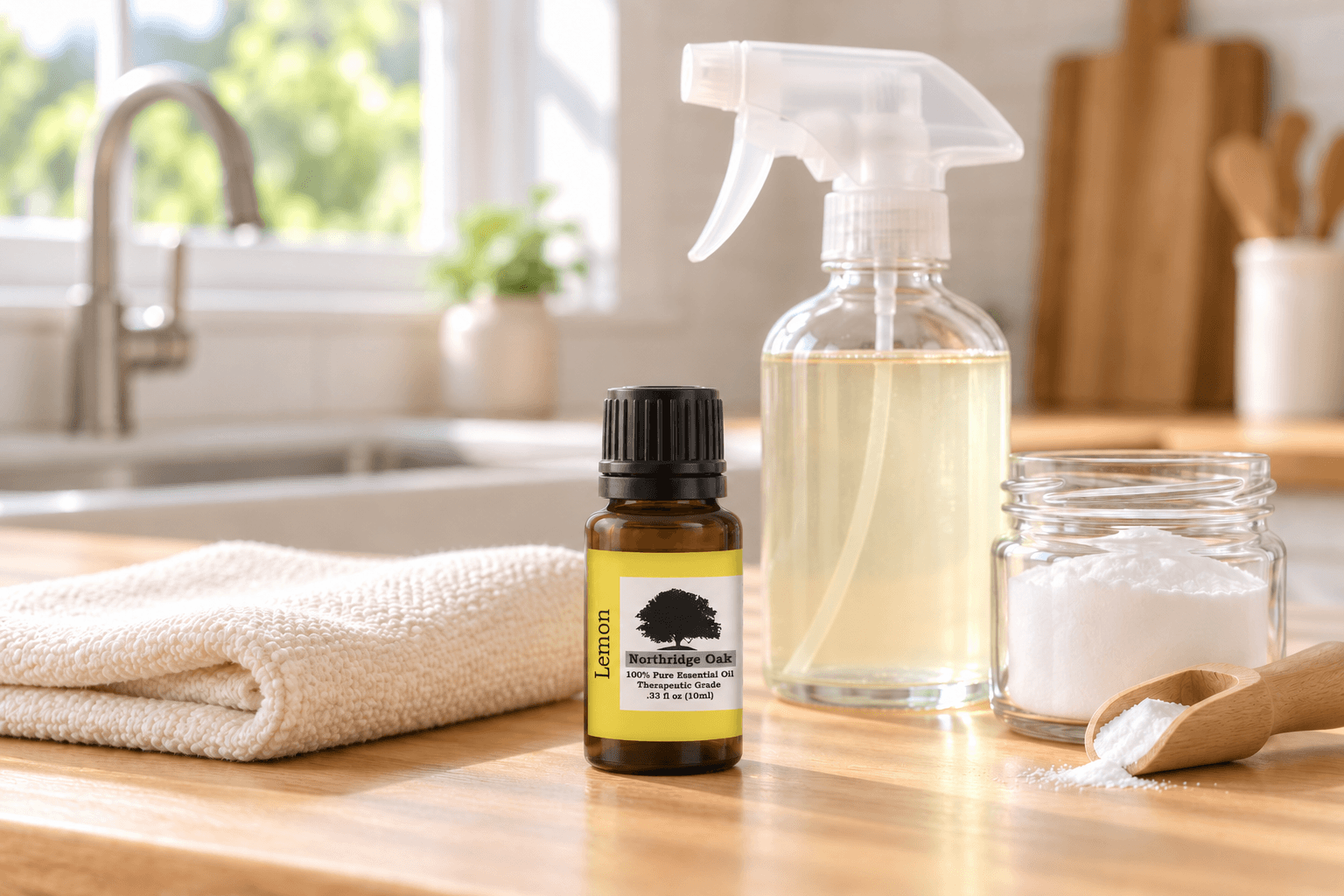
11. Tea Tree & Lemon Bathroom Cleaner
Tea Tree and Lemon Essential Oils bring a fresh, clean aroma to this simple vinegar-based bathroom cleaner.
You'll Need:
- ¾ cup distilled water
- ¾ cup white vinegar
- 10 drops Tea Tree Essential Oil
- 10 drops Lemon Essential Oil
- 16 oz spray bottle
Add the distilled water, white vinegar, Tea Tree Essential Oil, and Lemon Essential Oil to a clean 16 oz spray bottle. Replace the sprayer and shake vigorously.
Important: Essential oils and water do not stay mixed. Shake well before every use to temporarily disperse the essential oils.
Spray onto compatible bathroom surfaces and wipe clean with a cloth.
Surface Caution: Because this cleaner contains vinegar, do not use it on marble, limestone, travertine, or other acid-sensitive surfaces. Always spot-test first and follow the surface manufacturer's cleaning recommendations.
12. Tea Tree Trash Can Freshener
Tea Tree's strong, fresh aroma makes this one of the simplest ways to freshen a trash can between cleanings.
You'll Need:
- Cotton ball
- 2–3 drops Tea Tree Essential Oil
Add 2–3 drops Tea Tree Essential Oil to a cotton ball and allow the oil to absorb. Place the cotton ball under the trash can liner, where it won't come into direct contact with finished surfaces. Replace or refresh with another 1–2 drops when the aroma begins to fade.
Important: Keep the scented cotton ball out of reach of children and pets. Essential oils may damage or discolor some materials, so avoid direct contact with plastic, painted, stained, or finished surfaces.
Tea Tree Diffuser Blends You'll Love
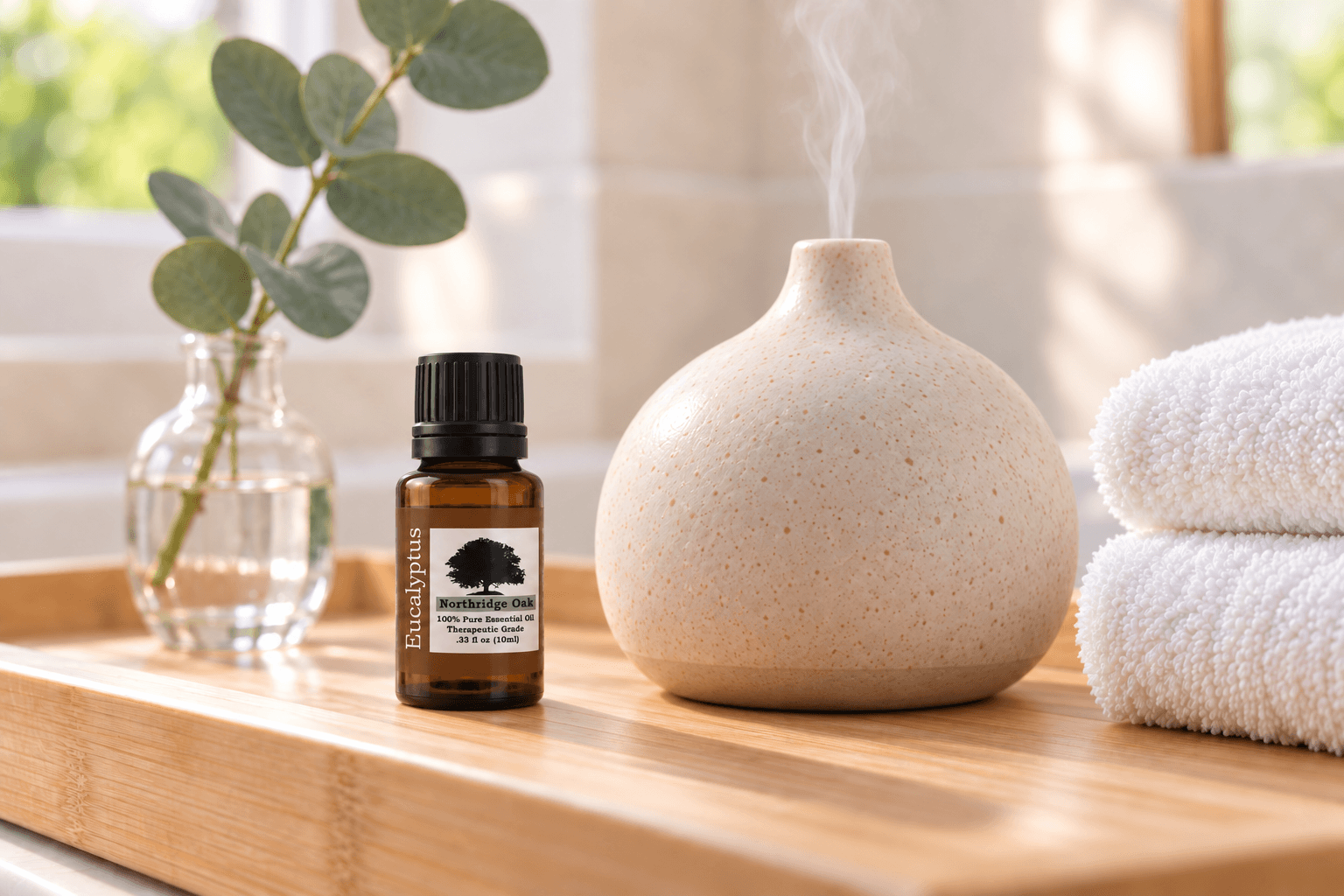
Tea Tree Essential Oil has a distinctly fresh, herbal aroma that blends surprisingly well with citrus, floral, woodsy, and other fresh essential oils. Try these combinations when you want to explore a different side of Tea Tree.
Add each blend to your diffuser according to the manufacturer's recommended oil capacity, adjusting the number of drops as needed for your diffuser size and room.
13. Fresh & Clean
- 3 drops Tea Tree Essential Oil
- 3 drops Lemon Essential Oil
- 2 drops Eucalyptus Essential Oil
A crisp, fresh combination that's perfect when you want your home to smell bright and clean.
14. Citrus Grove
- 3 drops Tea Tree Essential Oil
- 3 drops Blood Orange Essential Oil
- 2 drops Lemon Essential Oil
The sweet citrus aromas of Blood Orange and Lemon soften Tea Tree's herbal character for a bright, uplifting blend.
15. Lavender & Tea Tree
- 3 drops Tea Tree Essential Oil
- 4 drops Lavender Essential Oil
- 2 drops Frankincense Essential Oil
Lavender and Frankincense balance Tea Tree's fresh aroma for a softer blend that's especially nice when you want something less invigorating.
16. Spa Day
- 3 drops Tea Tree Essential Oil
- 3 drops Eucalyptus Essential Oil
- 2 drops Peppermint Essential Oil
- 2 drops Lavender Essential Oil
Fresh, minty, and herbal, this blend creates the kind of crisp aroma you might associate with a spa.
17. Fresh Forest
- 3 drops Tea Tree Essential Oil
- 3 drops Cedarwood Essential Oil
- 2 drops Balsam Fir Essential Oil
Tea Tree's herbal freshness combines with Cedarwood and Balsam Fir for a woodsy, outdoors-inspired aroma.
18. Citrus Mint
- 3 drops Tea Tree Essential Oil
- 3 drops Lemon Essential Oil
- 2 drops Peppermint Essential Oil
Bright Lemon and cooling Peppermint give Tea Tree a crisp, invigorating twist that's especially nice during the daytime.
19. Grounded & Fresh
- 3 drops Tea Tree Essential Oil
- 3 drops Frankincense Essential Oil
- 2 drops Cedarwood Essential Oil
- 1 drop Lavender Essential Oil
Frankincense and Cedarwood add warmth and depth to Tea Tree, while a touch of Lavender rounds out the blend.
20. Bright Morning
- 3 drops Tea Tree Essential Oil
- 3 drops Grapefruit Essential Oil
- 2 drops Blood Orange Essential Oil
- 1 drop Peppermint Essential Oil
A bright combination of citrus, mint, and Tea Tree that's fresh and energizing for the start of the day.
Why Quality Matters
Purity matters when Tea Tree is the active botanical at the center of a recipe.
Choose a tea tree essential oil that is:
- 100% pure
- Undiluted
- Third-party GC/MS tested
- Free of synthetic fragrances
- Free from fillers
Quality matters—especially when using essential oils in skincare products.
Tea Tree Essential Oil Safety
Tea Tree Essential Oil is highly concentrated and should be used responsibly. Whether you're incorporating it into skincare, personal care, aromatherapy, or household DIYs, a few basic precautions can help you use it safely.
Dilute Tea Tree Essential Oil Before Topical Use
Tea Tree Essential Oil should be appropriately diluted before applying it to the skin. Using essential oils undiluted can increase the risk of irritation or sensitization.
The topical recipes in this guide provide specific amounts and dilution instructions. Avoid adding extra essential oil simply to make a recipe stronger.
Always avoid the eyes, mucous membranes, and broken or irritated skin. Discontinue use if redness, burning, itching, or other irritation occurs.
Patch-Test New Topical Products
Before using a new Tea Tree DIY over a larger area of skin, test a small amount on a limited area first and watch for irritation.
This is particularly important for people with sensitive skin and for recipes containing other potent essential oils, such as Oregano Essential Oil.
Never Swallow Tea Tree Essential Oil
Tea Tree Essential Oil is intended for external and aromatic use and should not be swallowed. Ingestion can be toxic.
Store Tea Tree Essential Oil and homemade products securely and keep them out of reach of children and pets.
Use Extra Care Around the Face
Avoid applying Tea Tree Essential Oil near the eyes, eyelids, inside the nose, lips, or other mucous membranes.
When using the Tea Tree Face Wash or Facial Oil in this guide, follow the specified dilution and avoid the eye area. If a product gets into the eyes, rinse thoroughly with clean water.
Essential Oils and Water Don't Stay Mixed
Essential oils do not dissolve in water. Ingredients such as water, vinegar, and witch hazel in simple homemade recipes should not be assumed to permanently disperse essential oils.
For water-based sprays in this guide, shake vigorously before every use to temporarily disperse the essential oils.
Use Homemade Cleaners Only on Compatible Surfaces
Always spot-test homemade cleaning products in an inconspicuous area first.
Recipes containing vinegar should not be used on marble, limestone, travertine, or other acid-sensitive surfaces. Baking soda may also be unsuitable for delicate, polished, coated, or easily scratched materials.
Always follow the surface manufacturer's cleaning recommendations.
Why Tea Tree belongs in natural home cleaning
Tea Tree’s naturally occurring constituents have demonstrated antimicrobial and antifungal activity across a substantial body of laboratory research. That activity, combined with its crisp aroma, makes it a purposeful choice for routine household cleaners, bathroom sprays, yoga-mat refreshers and odor-control recipes. For a deeper look at the studies and seven complete formulas, visit our Tea Tree Oil cleaning guide.
Outdoor Spray Safety
We have to say this: The Tea Tree and Lavender outdoor spray combines Tea Tree’s crisp botanical character with two oils that have attracted scientific interest in insect research. Apply it to clothing or outdoor gear as directed, refresh when the aroma fades and discover how it fits your own time outside.
When reliable protection from mosquitoes, ticks, or other disease-carrying insects is needed, use an EPA-registered insect repellent according to its label directions.
Diffuse Responsibly
Follow your diffuser manufacturer's recommendations for water capacity and number of essential-oil drops. Start with less oil when diffusing in a small room or around people who may be sensitive to strong aromas.
Use essential oils in a well-ventilated space and discontinue diffusion if the aroma causes discomfort or irritation.
Keep Away From Children and Pets
Keep Tea Tree Essential Oil, other essential oils, and homemade DIY products securely out of reach of children and pets.
Children and animals can have different sensitivities to essential oils, so don't assume that a product appropriate for an adult is automatically appropriate for a child or pet.
Store Tea Tree Essential Oil Properly
Keep Tea Tree Essential Oil tightly closed and stored in a cool, dry location away from direct sunlight and excessive heat. Oxidized Tea Tree Oil is more likely to cause skin reactions, so properly storing the bottle and replacing old or deteriorated oil is important.
When individual guidance is useful
If you're pregnant, nursing, taking medications, under medical care, or have questions about using essential oils with a particular health condition, consult an appropriately qualified healthcare professional before use.
Ready to put Tea Tree to work?
You do not need to make all 20 recipes at once. Choose the one that solves a problem you already have: a flaky scalp, tired feet, stale shoes, a bathroom that needs refreshing or a morning diffuser blend. Follow the measurements, use it consistently and let the result earn its place in your routine.
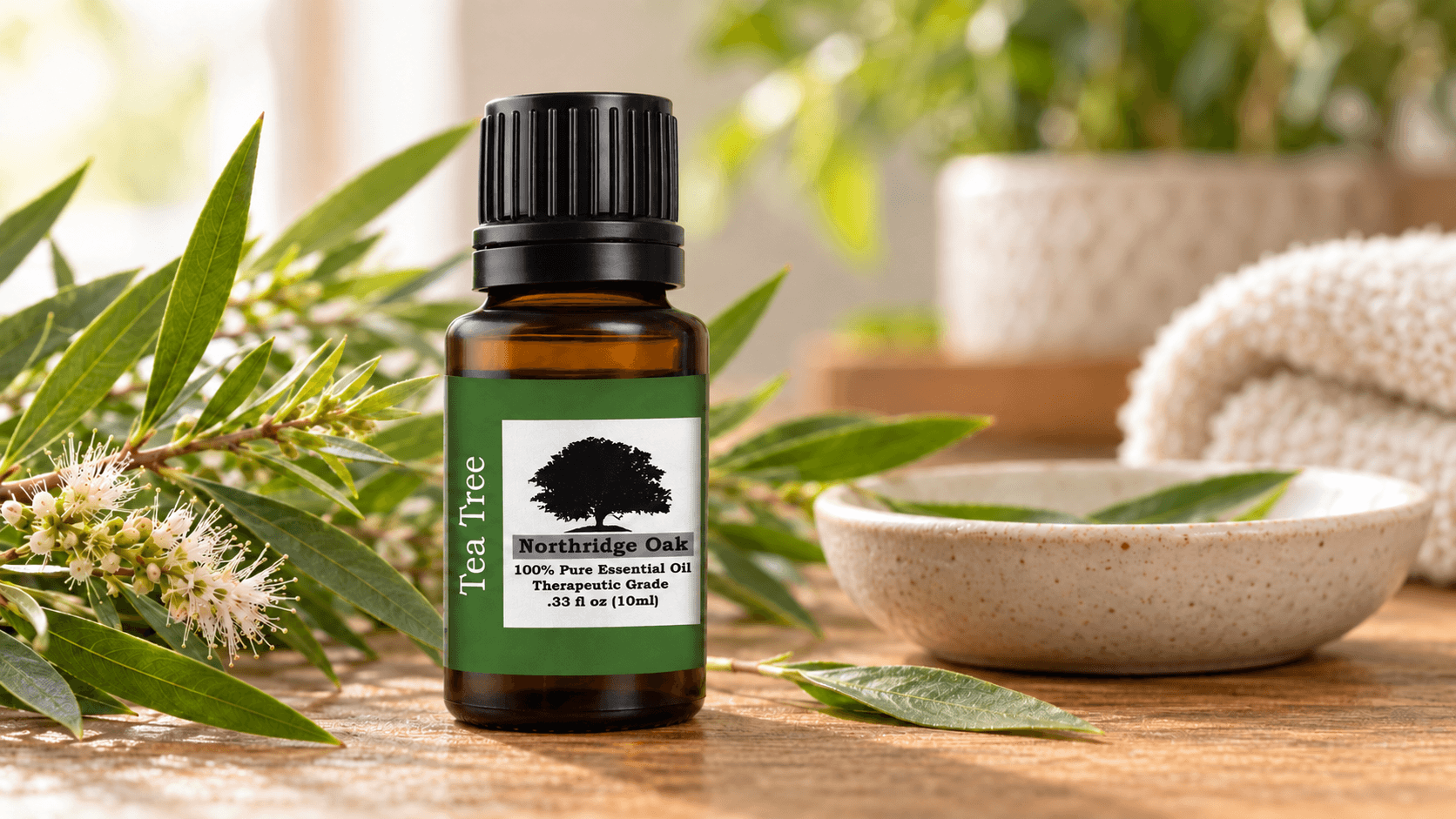
Northridge Oak Tea Tree Essential Oil is 100% pure, undiluted and steam-distilled. Every small batch is third-party GC/MS tested and bottled in amber glass. There are no fillers and no synthetic fragrance—just pure Melaleuca alternifolia that gives you complete control over every recipe.
Tea Tree has traveled a remarkable path from traditional Australian plant use to modern clinical research and homes around the world. Now it is your turn to try it. Pick one recipe below, notice what changes and come back whenever you are ready to give the same bottle its next job.
100% Pure Tea Tree Essential Oil – 10 mL
$7.50
Fresh, herbaceous and unmistakably clean, Northridge Oak Tea Tree Essential Oil is a versatile oil for skincare, scalp care, household recipes and refreshing diffuser blends. Our Tea Tree Oil is 100% pure, undiluted and third-party GC/MS tested, giving you a… read more

Explore the complete Tea Tree Essential Oil learning center
Use this guide as your starting point, then choose the article that matches what you want to try next. Every guide below connects a focused use with practical directions, research where available and an easy path back to our complete Tea Tree collection.
Start with the essentials
- Tea Tree Essential Oil benefits and research
- How to use Tea Tree Essential Oil safely
- How to dilute Tea Tree Oil
- Tea Tree Oil frequently asked questions
Skin, scalp and hair
- Tea Tree Oil for skin
- Tea Tree Oil for blemish-prone skin
- Tea Tree Oil face wash recipes
- Tea Tree Oil for hair
- Tea Tree Oil for dandruff and scalp care
- Tea Tree Oil for head lice
Feet and nails
Home, outdoors and aromatic blending
- Tea Tree Oil cleaning recipes
- Tea Tree Oil for laundry and odors
- Tea Tree Oil for mold and mildew
- Tea Tree Oil bug-repellent recipes
- Tea Tree Oil diffuser blends
- What blends well with Tea Tree Oil
- Tea Tree Oil vs. Eucalyptus Oil
Tea Tree research and further reading
- Peer-reviewed overview of Tea Tree Oil chemistry, studies and safety
- NCCIH Tea Tree Oil fact sheet
- Comparative clinical trial of Tea Tree gel for acne
- Clinical trial of 5% Tea Tree shampoo for dandruff
- Clinical trial of Tea Tree Oil for toenail onychomycosis
- Tea Tree Essential Oil benefits: an evidence-aware guide
- Shop Northridge Oak Tea Tree Essential Oil
Updated September 6, 2026. Educational information only; not medical advice. These statements are not intended to diagnose, treat, cure or prevent disease.