Table of Contents
- Natural Cleaning Recipes for Professionals—and Anyone Who Wants a Greener Home
- How Much Do Homemade Cleaning Products Cost?
- How We Calculate Essential Oil Costs
- Six Essential Oil Scent Profiles for Natural Cleaning
- 1. Gentle Everyday All-Purpose Cleaner
- 2. Quick-Drying All-Purpose Cleaning Spray
- 3. Bathtub, Shower & Sink Scrub
- 4. Hard-Water & Limescale Cleaner
- 5. Clinging Toilet Bowl Cleaning Gel
- 6. Streak-Free Mirror & Glass Cleaner
- 7. Natural Floor Cleaner
- 8. Natural Dusting Spray
- 9. Natural Furniture Polish
- 10. Carpet & Rug Freshening Powder
- 11. Natural Cream Cleaner
- 12. Fresh-Mixed Oxygen Oven Cleaner
- How Much Could You Save Making All 12 Cleaning Products?
- What Does It Cost to Stock Your Natural Cleaning Supply Shelf?
- How Many Times Can You Make These Recipes?
- Turn Your Natural Cleaning Option Into Part of Your Brand
- Want to Learn More About the Essential Oils in These Recipes?
- A Greener Cleaning Routine Doesn’t Have to Be Complicated
- Essential Oil and Cleaning Safety
- Disclaimer
- FAQs
If you clean houses professionally, the products you bring into a client’s home become part of the experience you provide.
Clients notice sparkling mirrors, clean countertops, fresh bathrooms, and beautiful floors. They may also care about what is left behind after the cleaning is finished. Conventional household cleaners can contain synthetic fragrances, solvents, surfactants, and other formulated ingredients. Depending on the product and how it is used, fragrance or residue may remain after cleaning.
For some homeowners, that is exactly what they are trying to reduce. They want dirt and grime removed while keeping the products used throughout their home as simple as practical.
If reducing synthetic fragrance is one of your goals, read Why You Should Avoid Synthetic Fragrance in Your Home (And Natural Alternatives That Actually Work).
For a professional cleaner, the products you choose can become part of the reason a customer hires you. Imagine being able to say:
“We offer a naturally fresh cleaning option using simple, recognizable ingredients and pure essential oils whenever appropriate for the surface being cleaned.”
But this guide is not only for professionals. These recipes are also practical for anyone who wants a greener cleaning routine at home.
Natural Cleaning Recipes for Professionals—and Anyone Who Wants a Greener Home
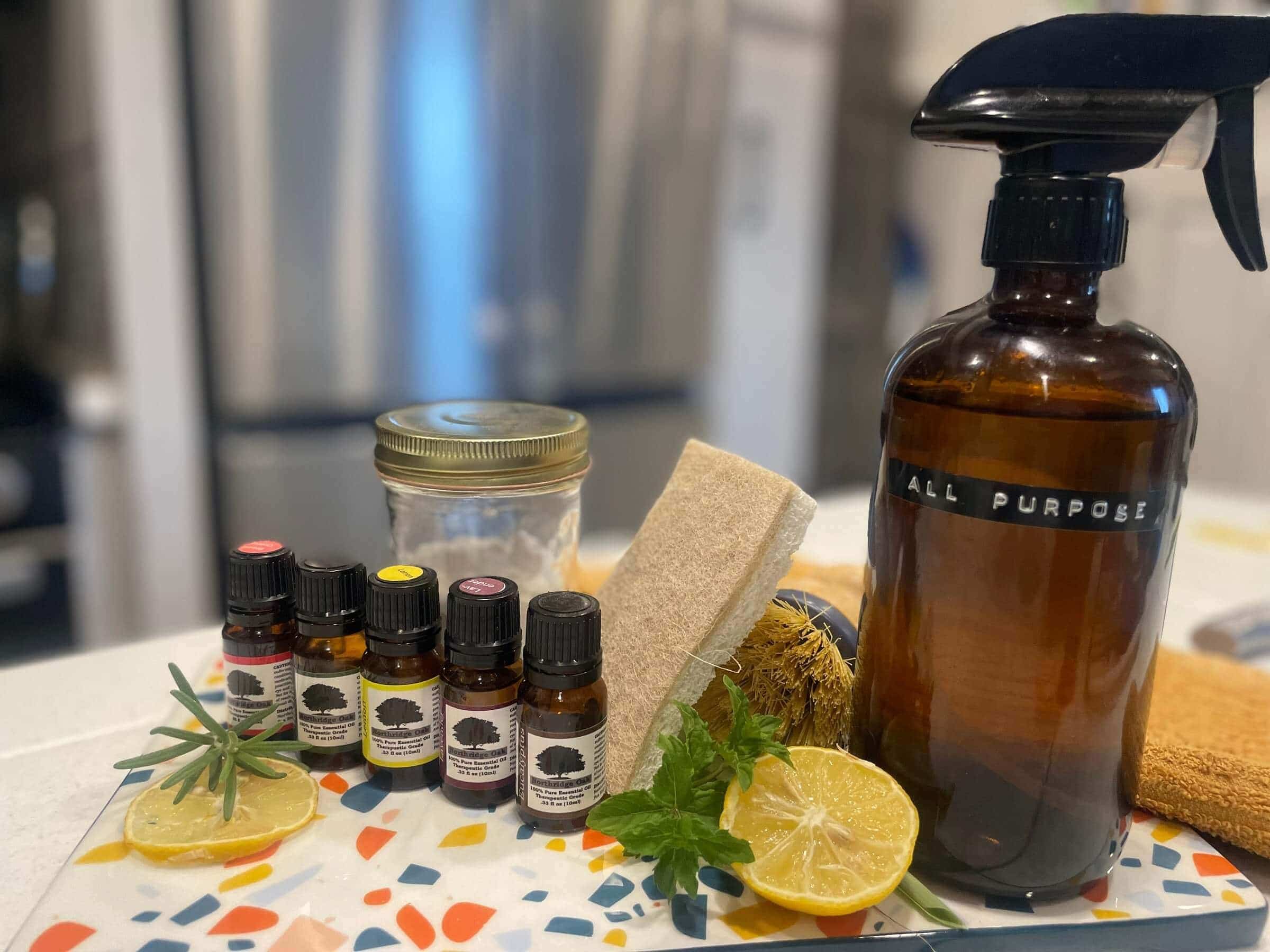
You do not have to own a cleaning business to use these recipes. They can be made by anyone who wants a greener approach to cleaning, wants greater control over the ingredients used throughout their home or simply wants to reduce reliance on conventional store-bought cleaning products.
Whether you clean 20 homes a week or simply want a different approach for your own kitchen, bathrooms, floors, baseboards, and furniture, the same principles apply: use the right ingredients for the job, measure carefully, confirm that a formula is compatible with the surface, and choose pure essential oils appropriate for the recipe.
With a relatively small collection of ingredients, you can make cleaners for countertops, sinks, bathtubs, showers, toilets, mirrors, floors, furniture, carpets, rugs, baseboards, and ovens.
How Much Do Homemade Cleaning Products Cost?
The same core ingredients can be used in many formulas. A gallon of distilled water does not make only one bottle of cleaner. A box of baking soda can make numerous batches. A 10 mL bottle of essential oil supplies many cleaning recipes.
That makes the cost of the amount actually used more meaningful than the initial shelf price. Each recipe below lists its approximate ingredient cost, finished cost, comparable store-bought price, and potential savings.
Cost estimates use representative U.S. retail prices and may vary by retailer, package size, location, and date.
How We Calculate Essential Oil Costs
Northridge Oak essential oils are sold in 10 mL bottles. For estimating purposes, we're using approximately 20 drops per mL, or about 200 drops per bottle. Actual drop size can vary depending on the essential oil, its viscosity and the dropper.
| Essential Oil | 10 mL Price | Approx. Cost Per Drop |
|---|---|---|
| Lemon | $7.50 | 3.75¢ |
| Eucalyptus | $7.50 | 3.75¢ |
| Tea Tree | $7.50 | 3.75¢ |
| Blood Orange | $7.50 | 3.75¢ |
| Peppermint | $7.50 | 3.75¢ |
| Grapefruit | $9.67 | 4.84¢ |
| Pine | $9.67 | 4.84¢ |
| Lavender | $11.67 | 5.84¢ |
Explore our Essential Oil Guides to learn more about the individual oils. Before using essential oils throughout your home or a client’s home, read our Essential Oil Safety Guide.
Six Essential Oil Scent Profiles for Natural Cleaning
Instead of making every cleaner smell exactly the same, we've created six scent profiles.
Naturally Fresh — Lemon + Blood Orange: bright, familiar, and citrus-forward.
Fresh & Crisp — Lemon + Eucalyptus + Peppermint: cool, bright, and refreshing.
Citrus Grove — Blood Orange + Lemon + Grapefruit: layered sweet and bright citrus.
Lavender Lemon — Lavender + Lemon: soft lavender balanced by fresh citrus.
Clean & Herbal — Tea Tree + Lemon + Eucalyptus: crisp and herbal, with Tea Tree taking the lead.
Fresh Pine — Pine + Lemon: fresh, woodsy, and bright.
These names describe scent profiles—not universal drop formulas. A gallon of floor cleaner and a 16-ounce spray require different amounts. Always use the exact drop counts listed in the individual recipe.
1. Gentle Everyday All-Purpose Cleaner
This vinegar-based formula is a practical everyday cleaner for many sealed, washable household surfaces.
Container: 16-ounce reusable spray bottle
Ingredients & Approximate Cost
1 cup distilled water — $0.09
1 cup white vinegar — $0.24
One blend option:
Naturally Fresh — 17 drops Lemon + 8 drops Blood Orange = approx. $0.95
Fresh & Crisp — 13 drops Lemon + 7 drops Eucalyptus + 5 drops Peppermint = approx. $0.95
Citrus Grove — 10 drops Blood Orange + 9 drops Lemon + 6 drops Grapefruit = approx. $1.01
Lavender Lemon — 15 drops Lavender + 10 drops Lemon = approx. $1.25
Clean & Herbal — 10 drops Tea Tree + 9 drops Lemon + 6 drops Eucalyptus = approx. $0.95
Fresh Pine — 17 drops Pine + 8 drops Lemon = approx. $1.13
Estimated cost to make: $1.28–$1.58
Comparable store-bought all-purpose cleaner: $3.50
Potential savings: $1.92–$2.22, or approximately 55–63%
Great for: Compatible sealed countertops, bathroom vanities, appliance exteriors, trash-can exteriors, baseboards, painted doors and frames, window sills, sealed shelving, light-switch plates, tables, washable walls, and other acid-tolerant washable surfaces.
Avoid: Marble, limestone, travertine, and other acid-sensitive surfaces. Never combine vinegar with chlorine bleach.
Directions: Add the distilled water and vinegar to the bottle, followed by one blend option. Replace the sprayer and shake before each use. Spray lightly and wipe clean with a compatible cloth.
2. Quick-Drying All-Purpose Cleaning Spray
This formula uses 70% isopropyl alcohol to help the spray evaporate more quickly, while a small amount of eco-friendly dishwashing liquid helps lift everyday grime.
Container: 24-ounce reusable spray bottle
Ingredients & Approximate Cost
1 cup 70% isopropyl alcohol — $0.74
1 cup distilled water — $0.09
1 teaspoon eco-friendly dishwashing liquid — $0.03
One blend option:
Naturally Fresh — 8 drops Lemon + 4 drops Blood Orange = approx. $0.46
Fresh & Crisp — 6 drops Lemon + 4 drops Eucalyptus + 2 drops Peppermint = approx. $0.46
Citrus Grove — 5 drops Blood Orange + 4 drops Lemon + 3 drops Grapefruit = approx. $0.49
Lavender Lemon — 7 drops Lavender + 5 drops Lemon = approx. $0.60
Clean & Herbal — 5 drops Tea Tree + 4 drops Lemon + 3 drops Eucalyptus = approx. $0.46
Fresh Pine — 8 drops Pine + 4 drops Lemon = approx. $0.54
Estimated cost to make: $1.32–$1.46
Comparable store-bought multi-surface cleaner: $3.50
Potential savings: $2.04–$2.18, or approximately 58–62%
Great for: Compatible sealed hard surfaces, appliance exteriors, trash-can exteriors, baseboards, painted doors and frames, window sills, sealed shelving, and many everyday washable surfaces.
Directions: Add the alcohol and distilled water to the bottle. Add the dishwashing liquid and one blend option. Replace the sprayer and gently turn the bottle several times to combine. Shake gently before use, spray lightly, and wipe with a clean microfiber cloth.
3. Bathtub, Shower & Sink Scrub
Baking soda provides mild abrasive action while Castile soap helps lift everyday bathroom grime.
Container: 8-ounce wide-mouth jar with lid
Ingredients & Approximate Cost
1/2 cup baking soda — $0.21
2 tablespoons unscented Castile soap — $0.54
1–2 tablespoons distilled water — $0.01
One blend option:
Naturally Fresh — 5 drops Lemon + 3 drops Blood Orange = approx. $0.30
Fresh & Crisp — 4 drops Lemon + 2 drops Eucalyptus + 2 drops Peppermint = approx. $0.30
Citrus Grove — 3 drops Blood Orange + 3 drops Lemon + 2 drops Grapefruit = approx. $0.32
Lavender Lemon — 4 drops Lavender + 2 drops Lemon = approx. $0.31
Clean & Herbal — 4 drops Tea Tree + 2 drops Lemon + 2 drops Eucalyptus = approx. $0.30
Fresh Pine — 5 drops Pine + 3 drops Lemon = approx. $0.35
Estimated cost to make: $1.06–$1.11
Comparable store-bought bathroom cleaner: $4.00
Potential savings: $2.89–$2.94, or approximately 72–74%
Great for: Compatible bathtubs, sinks, shower walls, ceramic tile, porcelain, faucet bases, soap dishes, and shower shelves.
Directions: Combine the baking soda and Castile soap. Slowly add enough water to create a soft paste. Stir in one blend option. Apply with a damp cloth or non-scratch sponge, scrub, and rinse thoroughly.
4. Hard-Water & Limescale Cleaner
Citric acid makes this a specialized formula for mineral deposits and hard-water buildup.
Container: 32-ounce acid-resistant spray bottle
An acid-resistant spray bottle is designed so the bottle, trigger, internal tube, seals, and other working parts can tolerate acidic cleaning solutions without quickly weakening, leaking, clogging, or corroding. Look for a bottle made from HDPE (high-density polyethylene) or polypropylene with a trigger specifically labeled chemical resistant. A standard household spray bottle may look similar, but its trigger mechanism and seals may not be made to withstand repeated contact with the concentrated citric-acid solution.
Chemical-resistant spray bottles are commonly sold in the cleaning, janitorial, automotive-detailing, lawn-and-garden, or pest-control sections of hardware stores, home-improvement stores, farm-supply stores, and some automotive stores. They are also widely available online. Check the manufacturer’s compatibility information before use, because the words “heavy duty” alone do not necessarily mean that every part of the sprayer is acid resistant.
Ingredients & Approximate Cost
1 cup very warm distilled water — $0.09
1 cup citric acid — $2.13
1 tablespoon eco-friendly dishwashing liquid — $0.09
One blend option:
Naturally Fresh — 7 drops Lemon + 3 drops Blood Orange = approx. $0.38
Fresh & Crisp — 5 drops Lemon + 3 drops Eucalyptus + 2 drops Peppermint = approx. $0.38
Citrus Grove — 4 drops Blood Orange + 4 drops Lemon + 2 drops Grapefruit = approx. $0.40
Clean & Herbal — 4 drops Tea Tree + 3 drops Lemon + 2 drops Eucalyptus = approx. $0.34
Fresh Pine — 7 drops Pine + 3 drops Lemon = approx. $0.45
Estimated cost to make: $2.65–$2.76
Comparable hard-water/limescale cleaner: $6.00
Potential savings: $3.24–$3.35, or approximately 54–56%
Great for: Compatible faucets, shower fixtures, shower glass, ceramic tile, sinks, and other acid-tolerant surfaces with mineral deposits.
Avoid: Marble, limestone, travertine, and other acid-sensitive stone.
Directions: Dissolve the citric acid completely in the warm water. Let it cool, then add the dishwashing liquid and one blend option. Apply to a compatible surface, allow a short contact time. Wear protective gloves and wipe or scrub as needed. Rinse thoroughly.
5. Clinging Toilet Bowl Cleaning Gel
A thicker consistency helps the cleaner cling beneath the toilet bowl rim rather than immediately running into the water.
Container: 24-ounce angled squeeze bottle (preferably HDPE)
Ingredients & Approximate Cost
2 cups warm distilled water — $0.17
2 teaspoons eco-friendly dishwashing liquid — $0.06
1/2 teaspoon xanthan gum — $0.04
1/4 cup citric acid — $0.53
1/3 cup hot distilled water — $0.03
One blend option:
Naturally Fresh — 7 drops Lemon + 3 drops Blood Orange = approx. $0.38
Fresh & Crisp — 5 drops Lemon + 3 drops Eucalyptus + 2 drops Peppermint = approx. $0.38
Citrus Grove — 4 drops Blood Orange + 4 drops Lemon + 2 drops Grapefruit = approx. $0.40
Clean & Herbal — 4 drops Tea Tree + 3 drops Lemon + 2 drops Eucalyptus = approx. $0.34
Fresh Pine — 7 drops Pine + 3 drops Lemon = approx. $0.45
Estimated cost to make: $1.17–$1.28
Comparable store-bought toilet bowl cleaner: $3.00
Potential savings: $1.72–$1.83, or approximately 57–61%
Great for: The inside of compatible porcelain toilet bowls, beneath the rim, and areas of routine mineral buildup.
Directions: Mix the xanthan gum into the dishwashing liquid until evenly dispersed. In a separate container, dissolve the citric acid in the hot water. Gradually combine it with the remaining water, then incorporate the thickened dishwashing-liquid mixture. Allow it to cool and thicken, add one blend option, and transfer it to the squeeze bottle. Apply beneath the rim, let it sit briefly, scrub, and flush.
6. Streak-Free Mirror & Glass Cleaner
This formula intentionally uses fewer essential-oil drops because too much oil can work against a streak-free finish.
Container: 16-ounce spray bottle
Ingredients & Approximate Cost
1 1/2 cups distilled water — $0.13
1/2 cup 70% isopropyl alcohol — $0.37
2 tablespoons white vinegar — $0.03
One blend option:
Naturally Fresh — 3 drops Lemon + 2 drops Blood Orange = approx. $0.19
Fresh & Crisp — 2 drops Lemon + 2 drops Eucalyptus + 1 drop Peppermint = approx. $0.19
Citrus Grove — 2 drops Blood Orange + 2 drops Lemon + 1 drop Grapefruit = approx. $0.20
Clean & Herbal — 2 drops Tea Tree + 2 drops Lemon + 1 drop Eucalyptus = approx. $0.19
Fresh Pine — 3 drops Pine + 2 drops Lemon = approx. $0.22
Estimated cost to make: $0.72–$0.75
Comparable store-bought glass cleaner: $3.50
Potential savings: $2.75–$2.78, or approximately 79%
Great for: Mirrors, interior windows, patio-door glass, glass tables, compatible shower glass, glass cabinet doors, and glass shelving.
Directions: Combine all ingredients with one blend option. Shake before use. Mist lightly and wipe with a clean glass microfiber cloth.
7. Natural Floor Cleaner
Container: 2-gallon cleaning bucket
Ingredients & Approximate Cost
1 gallon warm water — $1.37 when using purchased distilled water but you can use tap water
1 tablespoon unscented Castile soap — $0.27
One blend option:
Naturally Fresh — 13 drops Lemon + 7 drops Blood Orange = approx. $0.76
Fresh & Crisp — 10 drops Lemon + 6 drops Eucalyptus + 4 drops Peppermint = approx. $0.76
Citrus Grove — 8 drops Blood Orange + 7 drops Lemon + 5 drops Grapefruit = approx. $0.81
Lavender Lemon — 10 drops Lavender + 7 drops Lemon = approx. $0.85
Clean & Herbal — 8 drops Tea Tree + 6 drops Lemon + 4 drops Eucalyptus = approx. $0.68
Fresh Pine — 14 drops Pine + 6 drops Lemon = approx. $0.91
Estimated cost to make: $2.32–$2.55 per gallon using purchased distilled water. Appropriate tap water can reduce the cost considerably.
Comparable store-bought floor cleaner: $6.00
Potential savings: $3.45–$3.68, or approximately 58–61%
Great for: Compatible sealed tile, manufacturer-approved vinyl, and other compatible sealed hard floors.
Directions: Add the Castile soap and one blend option to the warm water and stir gently. Clean with a damp—not soaking wet—mop. Always follow the flooring manufacturer’s directions, especially for hardwood and laminate.
8. Natural Dusting Spray
This light spray helps a microfiber cloth collect dust while giving sealed, compatible surfaces a clean finish.
Container: 16-ounce reusable spray bottle
Ingredients & Approximate Cost
1 1/2 cups distilled water — $0.13
1/4 cup white vinegar — $0.06
1 tablespoon olive oil — $0.18
1 teaspoon eco-friendly dishwashing liquid — $0.03
One blend option:
Naturally Fresh — 5 drops Lemon + 3 drops Blood Orange = approx. $0.30
Fresh & Crisp — 4 drops Lemon + 2 drops Eucalyptus + 2 drops Peppermint = approx. $0.30
Citrus Grove — 3 drops Blood Orange + 3 drops Lemon + 2 drops Grapefruit = approx. $0.32
Lavender Lemon — 4 drops Lavender + 2 drops Lemon = approx. $0.31
Clean & Herbal — 4 drops Tea Tree + 2 drops Lemon + 2 drops Eucalyptus = approx. $0.30
Fresh Pine — 5 drops Pine + 3 drops Lemon = approx. $0.36
Estimated cost to make: $0.70–$0.76
Comparable store-bought dusting spray: $5.00
Potential savings: $4.24–$4.30, or approximately 85–86%
Great for: Compatible sealed shelving, finished wood furniture, cabinet exteriors, baseboards, window sills, door frames, and other dust-collecting sealed surfaces.
Directions: Combine the ingredients with one blend option. Shake vigorously before and during use because the oil naturally separates. Mist the cleaning cloth lightly rather than spraying furniture directly. Wipe the surface, then buff with a clean, dry cloth if needed. Test in a hidden area first and follow the furniture manufacturer’s care instructions.
9. Natural Furniture Polish
This concentrated oil-and-vinegar polish is intended for occasional use on compatible finished wood—not as an everyday spray.
Container: 8-ounce glass bottle with cap
Ingredients & Approximate Cost
1/2 cup olive oil — $1.40
1/4 cup white vinegar — $0.06
One blend option:
Naturally Fresh — 5 drops Lemon + 3 drops Blood Orange = approx. $0.30
Fresh & Crisp — 4 drops Lemon + 2 drops Eucalyptus + 2 drops Peppermint = approx. $0.30
Citrus Grove — 3 drops Blood Orange + 3 drops Lemon + 2 drops Grapefruit = approx. $0.32
Lavender Lemon — 4 drops Lavender + 2 drops Lemon = approx. $0.31
Clean & Herbal — 4 drops Tea Tree + 2 drops Lemon + 2 drops Eucalyptus = approx. $0.30
Fresh Pine — 5 drops Pine + 3 drops Lemon = approx. $0.36
Estimated cost to make: $1.76–$1.82
Comparable store-bought furniture polish: $5.50
Potential savings: $3.68–$3.74, or approximately 67–68%
Great for: Compatible finished wood tables, dressers, nightstands, chair frames, shelving, and some finished wood cabinet exteriors.
Directions: Combine the ingredients with one blend option. Shake well immediately before each use. Apply a small amount to a soft cloth rather than directly to furniture. Wipe with the grain and buff with a clean, dry cloth. Always test first and follow the manufacturer’s directions.
For more options, read our Natural Furniture Polish guide.
10. Carpet & Rug Freshening Powder
Container: 16-ounce shaker jar; a clean, empty parmesan-style shaker works well
Ingredients & Approximate Cost
2 cups baking soda — $0.83
One blend option:
Naturally Fresh — 7 drops Lemon + 3 drops Blood Orange = approx. $0.38
Fresh & Crisp — 5 drops Lemon + 3 drops Eucalyptus + 2 drops Peppermint = approx. $0.38
Citrus Grove — 4 drops Blood Orange + 4 drops Lemon + 2 drops Grapefruit = approx. $0.40
Lavender Lemon — 5 drops Lavender + 3 drops Lemon = approx. $0.40
Clean & Herbal — 4 drops Tea Tree + 3 drops Lemon + 2 drops Eucalyptus = approx. $0.34
Fresh Pine — 14 drops Pine + 6 drops Lemon = approx. $0.91
Estimated cost to make: $1.17–$1.74
Comparable store-bought carpet freshener: $3.00
Potential savings: $1.26–$1.83, or approximately 42–61%
Great for: Compatible wall-to-wall carpeting, approved area rugs, entry rugs, and carpeted stairs.
Directions: Add one blend option to the baking soda and mix extremely thoroughly so no concentrated oil droplets remain. Transfer to the shaker, apply only a light layer, allow about 15 minutes, and vacuum thoroughly. Obtain client approval before treating specialty carpeting or rugs, and consider children, pets, and household sensitivities.
11. Natural Cream Cleaner
A thicker cleaner for compatible surfaces that need more scrubbing than an everyday spray provides.
Container: 8-ounce wide-mouth jar
Ingredients & Approximate Cost
3/4 cup baking soda — $0.31
2 tablespoons vegetable glycerin — $0.55 (commonly found in the baking aisle)
1 tablespoon eco-friendly dishwashing liquid — $0.09
One blend option:
Naturally Fresh — 5 drops Lemon + 3 drops Blood Orange = approx. $0.30
Fresh & Crisp — 4 drops Lemon + 2 drops Eucalyptus + 2 drops Peppermint = approx. $0.30
Citrus Grove — 3 drops Blood Orange + 3 drops Lemon + 2 drops Grapefruit = approx. $0.32
Lavender Lemon — 4 drops Lavender + 2 drops Lemon = approx. $0.31
Clean & Herbal — 4 drops Tea Tree + 2 drops Lemon + 2 drops Eucalyptus = approx. $0.30
Fresh Pine — 5 drops Pine + 3 drops Lemon = approx. $0.36
Estimated cost to make: $1.25–$1.31
Comparable store-bought cream cleanser: $3.50
Potential savings: $2.19–$2.25, or approximately 63–64%
Great for: Compatible sinks, bathtubs, shower surfaces, ceramic tile, porcelain, faucet bases, and other surfaces requiring mild scrubbing.
Directions: Mix the baking soda, glycerin, and dishwashing liquid. Add one blend option and mix thoroughly. Adjust the consistency with a little baking soda or distilled water if necessary. Apply with a damp cloth or non-scratch sponge, scrub, and rinse.
12. Fresh-Mixed Oxygen Oven Cleaner
Sodium percarbonate gives this fresh-mixed formula extra cleaning power for tougher jobs.
Container: 16-ounce mixing bowl with silicone spatula or cleaning brush
Ingredients & Approximate Cost
1 cup baking soda — $0.42
2 tablespoons sodium percarbonate (oxygen bleach / non-chlorine bleach) — $0.62
1 tablespoon eco-friendly dishwashing liquid — $0.09
1/2 teaspoon xanthan gum — $0.04
Approximately 1/2 cup warm distilled water — $0.04
One blend option:
Naturally Fresh — 5 drops Lemon + 3 drops Blood Orange = approx. $0.30
Fresh & Crisp — 4 drops Lemon + 2 drops Eucalyptus + 2 drops Peppermint = approx. $0.30
Citrus Grove — 3 drops Blood Orange + 3 drops Lemon + 2 drops Grapefruit = approx. $0.32
Lavender Lemon — 4 drops Lavender + 2 drops Lemon = approx. $0.31
Clean & Herbal — 4 drops Tea Tree + 2 drops Lemon + 2 drops Eucalyptus = approx. $0.30
Fresh Pine — 5 drops Pine + 3 drops Lemon = approx. $0.36
Estimated cost to make: $1.51–$1.57
Comparable store-bought oven cleaner: $5.50
Potential savings: $3.93–$3.99, or approximately 71–73%
Great for: Compatible oven interiors, manufacturer-approved oven-door interiors, compatible oven racks, and baked-on cooking residue.
Directions: Make sure the oven is completely cool and put on cleaning gloves. Combine the baking soda, sodium percarbonate, and xanthan gum. Add the dishwashing liquid, then enough warm water to form a spreadable paste. Add one blend option. Apply to compatible surfaces while avoiding heating elements and any components the manufacturer says not to coat. Where protective gloves and allow time to work, scrub, and remove thoroughly with clean, damp cloths.
Make this formula fresh. Sodium percarbonate activates when water is added, so do not store the wet mixture in a sealed container.
How Much Could You Save Making All 12 Cleaning Products?
Because each recipe has appropriately scaled scent choices, the exact total depends on the blends selected.
Estimated cost to make one batch of all 12 products: approximately $16.91–$18.69
Estimated cost of comparable store-bought products: approximately $52.00
Estimated savings: approximately $33.31–$35.09, or about 64–67%
Professional cleaners will not use every formula at the same rate. Glass cleaner may disappear much faster than furniture polish. Still, saving even a few dollars on frequently repeated products can add up. Homeowners see the same benefit each time they refill a bottle instead of buying another finished cleaner.
What Does It Cost to Stock Your Natural Cleaning Supply Shelf?
There is an important difference between the cost of ingredients consumed in one recipe and the amount spent to buy full packages.
Approximate cost of basic ingredients: $63–$103
Approximate cost of all eight essential oils: $68.51
Approximate total initial investment: $132–$171
Reusable spray bottles, jars, and specialty containers are additional if you do not already own them. The initial investment is not the cost of making one set of cleaners. It stocks your supply shelf with baking soda, Castile soap, citric acid, xanthan gum, sodium percarbonate, essential oils, and other ingredients for future batches.
Other Supplies You’ll Want
A practical setup may include reusable spray bottles, a fine-mist bottle, an angled toilet-cleaner bottle, wide-mouth jars, a shaker container, mixing bowls, measuring cups and spoons, a silicone spatula, cleaning brushes, non-scratch scrubbers, microfiber cloths, a mop and bucket, cleaning gloves, waterproof labels, and a permanent marker.
Professional cleaners should clearly label every homemade product with its name, the date made, appropriate surfaces, and surfaces to avoid.
How Many Times Can You Make These Recipes?
Using commonly available package sizes, the base ingredient list can make approximately two complete sets of all 12 cleaning products before one or more of the base ingredients are used up—primarily baking soda, distilled water or rubbing alcohol. However, you'll still have many of the original supplies. Ingredients like Castile soap, citric acid, dishwashing liquid, vegetable glycerin, xanthan gum and sodium percarbonate can supply many additional batches.
Based on the approximate recipe costs, making two sets of each recipe would cost approximately $33.82–$37.38 in used ingredients, compared to about $104 for two sets of comparable store-bought cleaners. That gives a potential savings of approximately $66.62–$70.18!
The initial $132–$171 ingredient investment should not be seen as producing just 24 cleaning recipes. After making two complete sets, you'll still have many ingredients and essential oils left over for more batches. Replacing only the ingredients that run out allows the remaining supplies to continue producing individual cleaners for considerably longer.
Turn Your Natural Cleaning Option Into Part of Your Brand
For a professional house cleaner, natural cleaning products can be more than a way to reduce supply costs. They can become a service option.
You might tell prospective clients:
“We offer a naturally fresh cleaning option using simple cleaning ingredients and pure essential oils whenever appropriate for the surface.”
You can also let clients select a preferred scent profile:
Naturally Fresh — Lemon + Blood Orange
Fresh & Crisp — Lemon + Eucalyptus + Peppermint
Citrus Grove — Blood Orange + Lemon + Grapefruit
Lavender Lemon — Lavender + Lemon
Clean & Herbal — Tea Tree + Lemon + Eucalyptus
Fresh Pine — Pine + Lemon
Unscented — No essential oils where appropriate
No Preference — Let the cleaner choose
Want to Learn More About the Essential Oils in These Recipes?
The oils in these formulas have uses beyond the cleaning cabinet. Explore our Essential Oil Guides for individual-oil information, everyday uses, DIY recipes, diffuser blends, and safety considerations.
If you are just getting started, continue with Essential Oils for Beginners: A Complete Guide to Uses, Benefits & Safety.
Before incorporating essential oils into your home or professional cleaning service, read the Northridge Oak Essential Oil Safety Guide.
A Greener Cleaning Routine Doesn’t Have to Be Complicated
Whether you clean your own home or run a professional cleaning business, you do not necessarily need a different store-bought bottle for every surface.
A relatively small collection of ingredients can make cleaners for kitchens, bathrooms, floors, glass, furniture, carpets, baseboards, and tougher jobs. You choose the ingredients, essential oils, scent profile, and batch size. You can also choose an unscented option when appropriate.
For professional cleaners, that flexibility can become part of the customer experience while potentially reducing a recurring expense. For homeowners, it is a practical way to move toward a greener cleaning routine and reduce reliance on conventional store-bought products.
Essential Oil and Cleaning Safety
Essential oils are highly concentrated and should be used thoughtfully.
Keep essential oils and homemade cleaners out of reach of children and pets.
Avoid contact with eyes and mucous membranes.
Consider the people and animals in the home before selecting essential oils.
Ask clients about sensitivities, children, pets, and oils they prefer not to have used.
Wear cleaning gloves when appropriate, especially with concentrated cleaning ingredients.
Never combine these recipes with chlorine bleach or other cleaning products.
Test every cleaner on an inconspicuous area before widespread use.
Follow the surface manufacturer’s care instructions.
Label every container clearly and never place homemade cleaners in food or beverage containers.
Make manageable batches of water-based cleaners because these formulas do not contain commercial preservation systems. Discard a product if its appearance, odor, or consistency changes unexpectedly.
If you are pregnant, nursing, taking medication, have a medical condition, or have questions about personal essential-oil use, consult an appropriately qualified healthcare professional.
Disclaimer
These statements have not been evaluated by the Food and Drug Administration. These products and the information provided are not intended to diagnose, treat, cure, or prevent any disease.
This article is provided for educational and informational purposes and is not a substitute for advice from an appropriate professional. Cost estimates are approximate and based on representative U.S. retail pricing. Prices and package sizes vary. Essential-oil calculations use retail prices and approximately 200 drops per 10 mL bottle; actual drop count varies with oil viscosity and the dropper.
Frequently Asked Questions
Can professional house cleaners make their own cleaning products?
Yes. Handmade cleaning products can be incorporated into a professional cleaning service when they're made consistently, labeled clearly and used on appropriate surfaces.
Do I have to own a cleaning business to use these recipes?
No.
These recipes are also for homeowners who want a greener cleaning routine, greater control over the ingredients they use and less reliance on conventional store-bought cleaning products.
Are handmade cleaning products actually cheaper?
They can be.
Based on these recipes and our estimated ingredient costs, making all 12 recipes costs roughly $16–$17, compared with approximately $52.50 for comparable store-bought cleaners.
Actual costs vary according to ingredient prices and the essential-oil options you choose.
Why does it cost more than $100 to get started if the recipes cost less than $20?
Because you're purchasing full packages of ingredients. You might purchase four pounds of baking soda but use only a fraction of it in one recipe. Likewise, a 10 mL essential-oil bottle may contain approximately 200 drops while an individual cleaner requires only a handful. The initial investment stocks your supply shelf for future batches.
How many drops are in a 10 mL essential-oil bottle?
We use approximately 200 drops for cost-estimating purposes. The actual number varies according to oil viscosity and the dropper.
Are Naturally Fresh, Fresh & Crisp and the other scent profiles always made with the same number of drops?
No—and this is important. The names describe the combination and general scent profile, not a universal recipe. Always use the exact drop counts provided under the individual cleaning recipe you're making.
Why is Tea Tree included in the Clean & Herbal blend?
Tea Tree has a distinctive fresh, herbal aroma that works well in cleaning formulas, particularly when balanced with brighter Lemon and Eucalyptus. Because Tea Tree's aroma can be more pronounced than some citrus oils, the recipes generally use it in measured amounts rather than simply matching the total number of drops in another scent profile.
Which essential oils are used in these recipes?
This guide incorporates:
- Lemon
- Blood Orange
- Grapefruit
- Peppermint
- Eucalyptus
- Tea Tree
- Lavender
You don't necessarily need all seven to begin. Choose the scent profiles you expect to use most often and expand your collection over time.
Can I leave the essential oils out?
For many of these everyday cleaning formulas, yes. An unscented option may also be preferable for some households and can be an important choice for professional cleaners to offer clients.
Can I use vinegar on every surface?
No. Vinegar is acidic and shouldn't be used on acid-sensitive natural stone such as marble, limestone or travertine unless the manufacturer specifically approves it.
Can I use the all-purpose cleaner on baseboards?
It can be useful for many washable painted baseboards. Test a hidden area first and avoid oversaturating painted or wood surfaces.
How long should homemade cleaners be stored?
Make manageable batches, particularly with water-based formulas that don't contain commercial preservation systems.
Label containers with the date made and discard a product if its appearance, odor or consistency changes unexpectedly.
Fresh-activated sodium percarbonate formulas should be made when needed rather than stored wet.