Table of Contents
- What is Blood Orange essential oil?
- What does Blood Orange essential oil smell like?
- Why people enjoy Blood Orange in everyday routines
- How to diffuse Blood Orange essential oil
- What blends well with Blood Orange?
- Blood Orange for skin and body care
- Blood Orange for cleaning and home aromas
- What Blood Orange research and chemistry can tell us
- Is Blood Orange essential oil phototoxic?
- Blood Orange essential oil safety
- Freshness matters more than most people realize
- How to choose your first Blood Orange routine
- Continue learning about Blood Orange essential oil
- Frequently Asked Questions
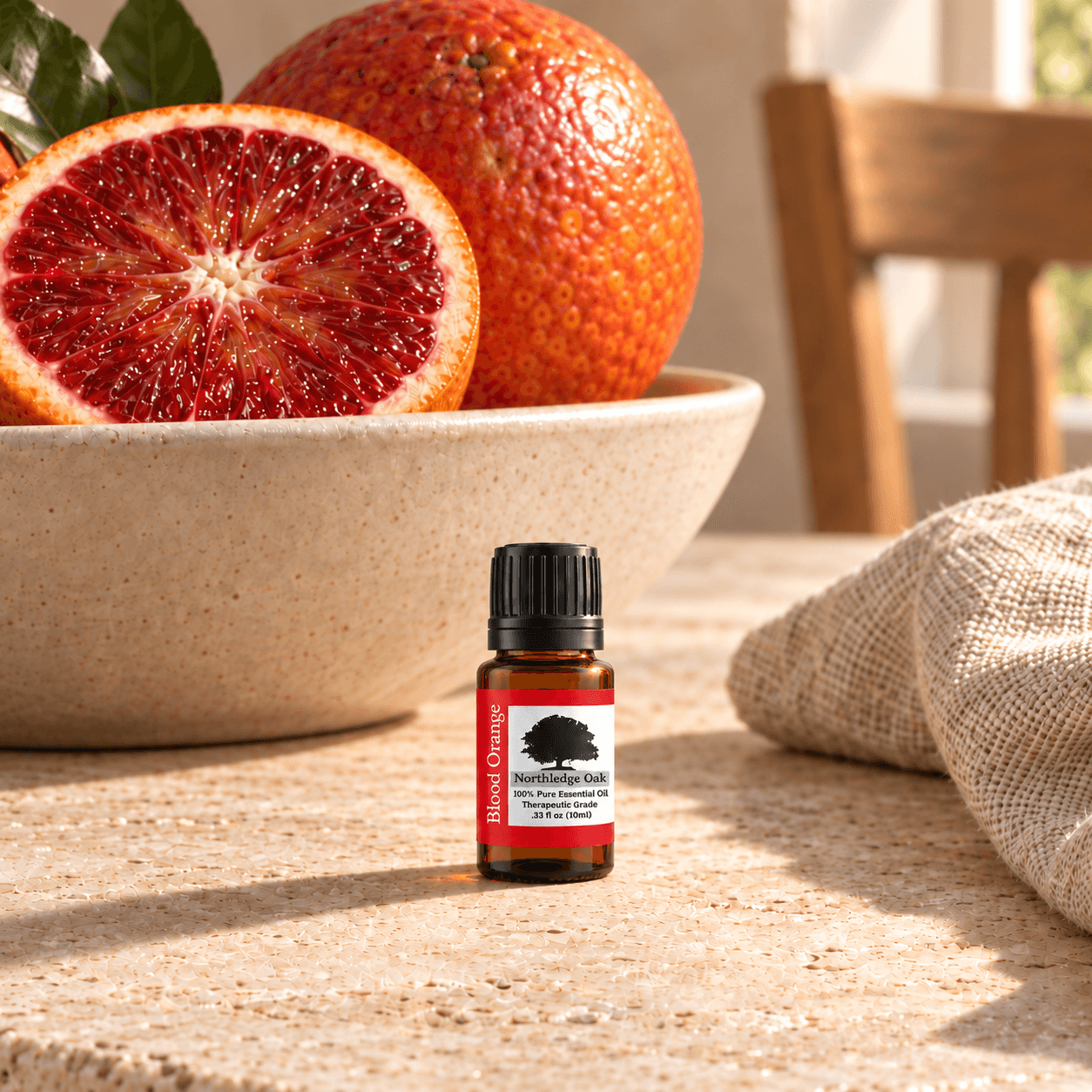
Some essential oils ask you to study them before you know what to do with them. Blood Orange Essential Oil is easier: open the bottle and you are immediately greeted by the aroma of freshly broken peel—bright, juicy, sweet, and just tart enough to feel alive. What makes it worth keeping close, though, is how naturally that cheerful aroma fits into real life: a morning diffuser, a freshly cleaned kitchen, a softly scented body oil, or a warm evening blend with cedarwood.
100% Pure Blood Orange Essential Oil – 10 mL
$7.50
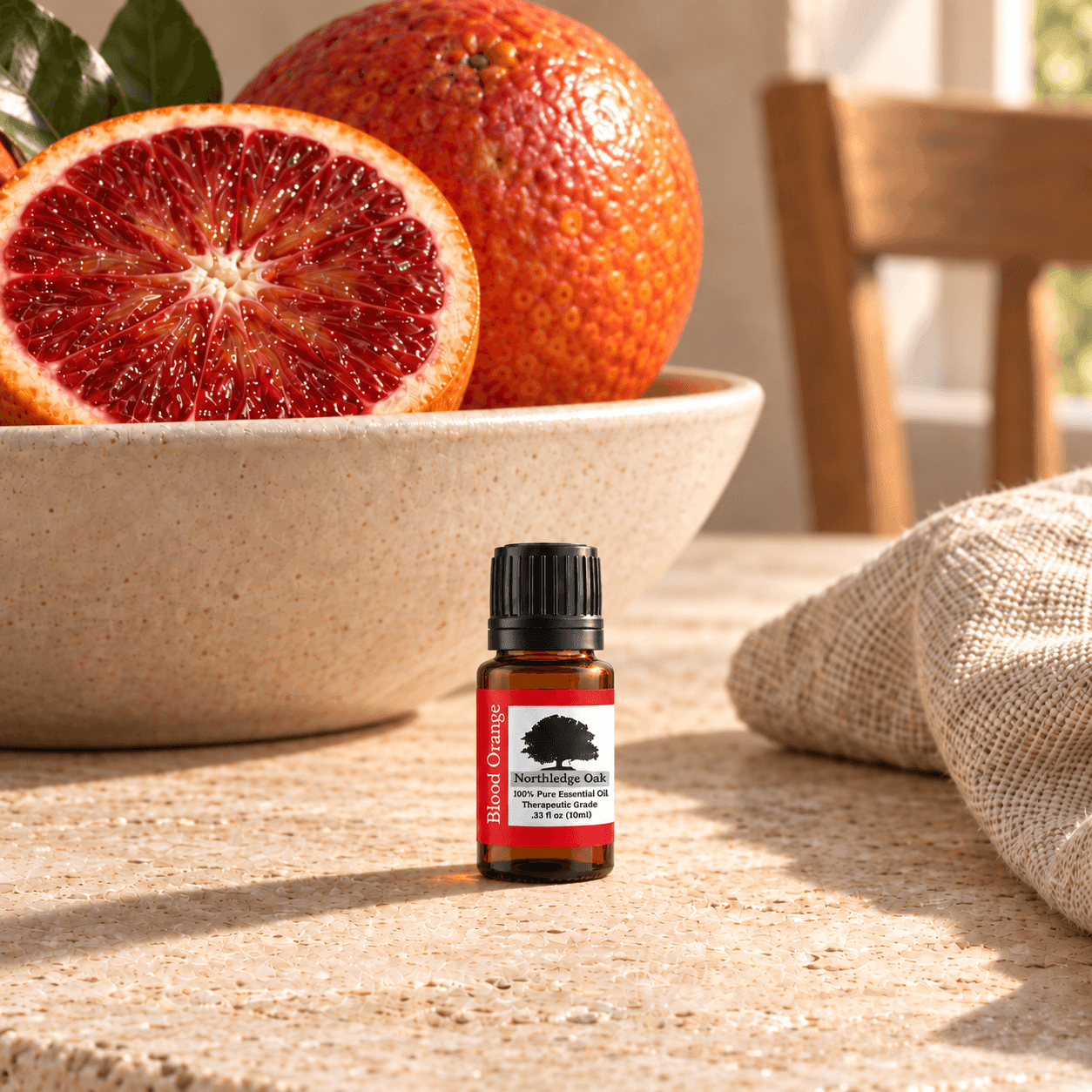
Bright, juicy and beautifully warm, Northridge Oak Blood Orange Essential Oil brings the aroma of freshly peeled citrus into the moments that could use a little more sunshine. Its sweet-tart scent feels familiar from the first breath, yet it has… read more

This guide brings the whole bottle into focus. You will learn what Blood Orange smells like, how it differs from Sweet Orange, which oils bring out its best qualities, how to use it in measured recipes, and how to keep every routine comfortable for skin, children, guests, and pets. You will also find clear boundaries around the research, because an oil can be beautiful and useful without being turned into a medical promise.
What is Blood Orange essential oil?
Blood oranges are pigmented cultivars of sweet orange, botanically Citrus sinensis. The fruit is famous for flesh that ranges from ruby-streaked to deep crimson. Those colors come from anthocyanin pigments in the fruit; the essential oil is different. It is the concentrated, volatile aromatic fraction found primarily in glands in the peel.
Most Blood Orange essential oil is produced by mechanically expressing the rind. Bend a fresh citrus peel near a sunny window and you may see a tiny aromatic mist—that is the material the process is designed to collect. Because this is peel oil rather than juice, it smells zestier and more aromatic than the fruit tastes. It also does not carry the whole fruit’s fiber, vitamins, sugars, or nutritional benefits.
Limonene is usually the dominant constituent, accompanied by much smaller amounts of other terpenes, aldehydes, and alcohols. Cultivar, growing region, weather, ripeness, processing, and storage can all shift the profile. That natural variation is one reason one batch may feel especially sparkling while another seems rounder and sweeter.
What does Blood Orange essential oil smell like?
Imagine pressing your thumb into the rind of a ripe orange. The first burst is lively and almost effervescent. A juicy sweetness follows, then a warmer, slightly tart nuance that some people describe as berry-like. It should smell like real peel rather than orange candy: fresh, sweet, zesty, and faintly bitter at the edge.
Compared with Sweet Orange Essential Oil, Blood Orange often feels brighter and more layered. Sweet Orange is the comfortable classic—mellow, familiar, and straightforwardly juicy. Blood Orange is the version to reach for when you want the blend to have a little more personality. Both belong to Citrus sinensis, so the difference is nuanced rather than absolute.
Blood Orange is a top note. You notice it quickly, and it fades sooner than a wood or resin. That is normal aromatic behavior, not a flaw. Pairing it with a slower note such as Cedarwood Essential Oil or Frankincense Essential Oil gives the blend a satisfying finish after the first citrus sparkle softens.
Why people enjoy Blood Orange in everyday routines
The most dependable reason to use Blood Orange is the experience of the aroma itself. It can make a room feel bright and welcoming, give a simple unscented body product a joyful citrus note, or mark the transition into a familiar habit. That might be opening the curtains, clearing the kitchen after dinner, sitting down to write, or putting work away for the evening.
Small human studies involving orange aroma have reported changes in situational anxiety, mood ratings, or stress-related measures in particular settings. These findings make it reasonable to explore pleasant citrus aroma as an environmental support. They do not establish Blood Orange as a treatment for anxiety, depression, or another condition. Personal preference matters too: an aroma that feels cheerful to one person may feel too stimulating or evoke an unwanted memory for another.
A useful approach is to pair the scent with an action that already supports the moment. Diffuse while you take five slow breaths, stretch, tidy for ten minutes, or write tomorrow’s first task. The oil becomes a cue within the routine instead of being asked to do all the work. Our Blood Orange guide for mood, relaxation, and everyday joy explores that idea in greater depth.
How to diffuse Blood Orange essential oil
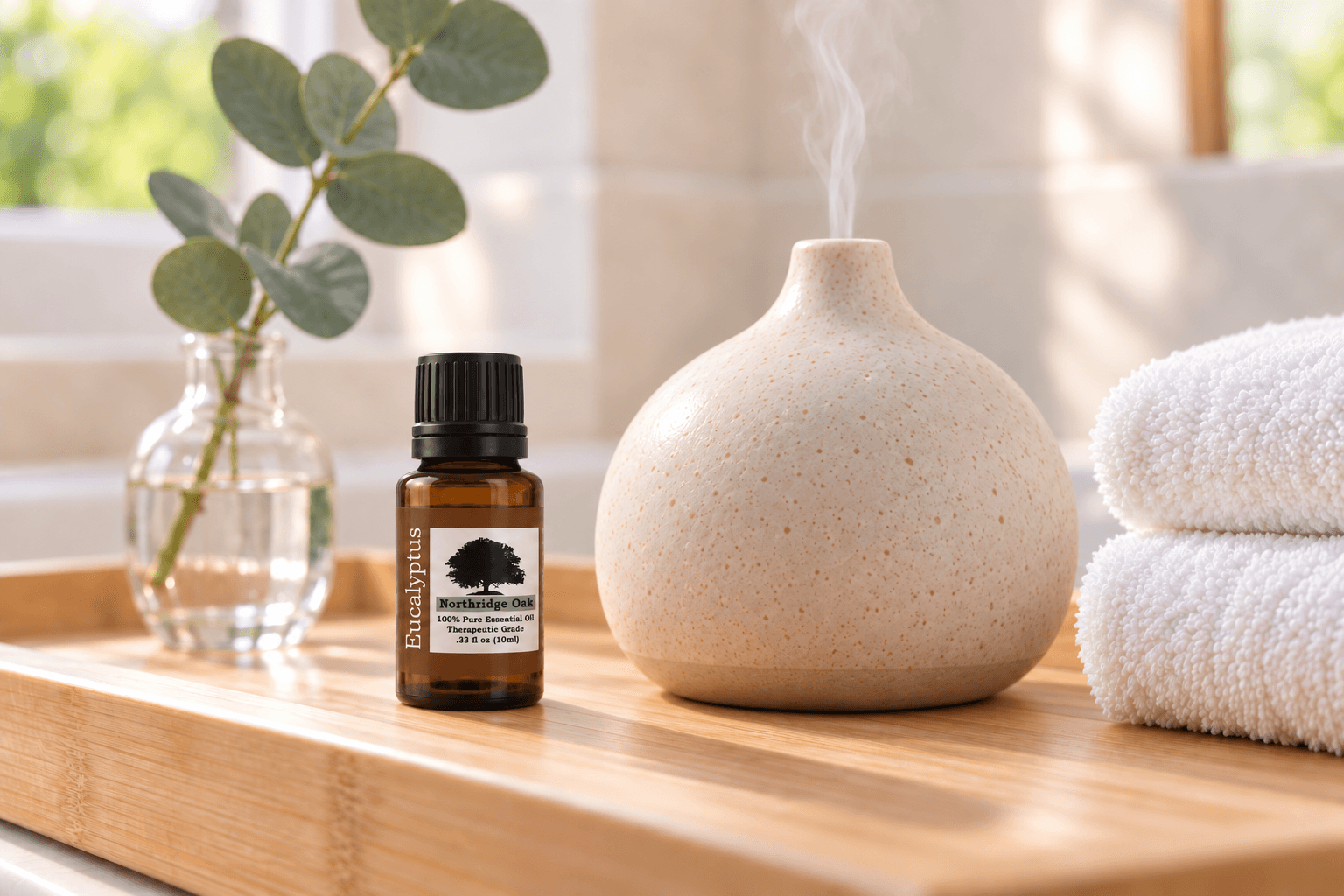
For a typical 100–200 mL ultrasonic diffuser, begin with 3–6 total drops. Fill the reservoir to the manufacturer’s line, add the oils, and diffuse for 20–30 minutes. Then pause. Short intervals keep the aroma pleasant and give your nose time to reset. Use fewer drops in a small room, with a high-output diffuser, or around anyone who is sensitive to scent.
Bright Morning
You will need: 4 drops Blood Orange and 2 drops Rosemary Essential Oil.
Directions: Add water to the diffuser’s fill line, add both oils, and diffuse for 20–30 minutes. The citrus opens the room while rosemary provides a fresh herbal outline. It is especially lovely while making a list, opening curtains, or beginning routine work.
Golden Hour
You will need: 3 drops Blood Orange, 2 drops Lavender Essential Oil, and 1 drop Cedarwood.
Directions: Add the oils to a water-filled diffuser and run for 20–30 minutes. The result is warm and relaxed without becoming heavy, making it a comfortable companion for dinner preparation or reading.
Open Windows
You will need: 3 drops Blood Orange, 2 drops Eucalyptus Essential Oil, and 1 drop Cedarwood.
Directions: Diffuse for up to 20 minutes in a well-ventilated adult space. It begins cool and airy, then settles into soft citrus and wood. Review eucalyptus-specific guidance before using around children or pets.
Warm Welcome
You will need: 3 drops Blood Orange, 2 drops Cedarwood, and 1 drop Frankincense.
Directions: Diffuse for 20 minutes before guests arrive, then turn the diffuser off and let the aroma settle naturally into the room. Ask first when guests have asthma, migraines, pregnancy, respiratory concerns, or scent sensitivity.
Orange Pomander
You will need: 4 drops Blood Orange, 1 drop Cinnamon Leaf Essential Oil, and 1 drop Cedarwood.
Directions: Add the oils to the diffuser and run for 15–20 minutes. One spice drop is enough. The result feels warm and seasonal while the orange remains easy to recognize. For more ideas, see our collection of 20 Blood Orange diffuser blends.
What blends well with Blood Orange?
Blood Orange is an unusually generous blending oil. With other citrus oils, it becomes brighter and juicier. With Lavender or Geranium Essential Oil, it softens florals and makes them feel approachable. With Cedarwood or Frankincense, it gains warmth and staying power. With Rosemary, Eucalyptus, or Peppermint Essential Oil, its fresh peel character moves forward. With Cinnamon Leaf, it becomes immediately seasonal.
For a dependable formula, begin with 3–4 drops Blood Orange and add 1–2 drops of one companion oil. Smell the combination before adding a third. If it needs depth, add one drop Cedarwood or Frankincense. If it needs lift, add one drop Lemon Essential Oil or Bergamot Essential Oil. Change only one drop at a time and write the formula down before diffusing.
That small habit is how a pleasant experiment becomes a blend you can make again. The complete Blood Orange blending guide explains what each aromatic family contributes.
Blood Orange for skin and body care
In body care, Blood Orange’s strongest contribution is sensory. It can turn a plain carrier oil or fragrance-free lotion into something you look forward to using. It should not be presented as a proven treatment for acne, pigmentation, wrinkles, or another skin concern.
For many healthy adults using a small area, a 1% dilution is a sensible starting point. That is approximately 2 drops per 10 mL or 6 drops per 30 mL (1 ounce) of finished product. Drop size varies, so professional formulas should be weighed.
Golden Citrus Body Oil
You will need: 6 drops Blood Orange, 1 ounce (30 mL) jojoba or fractionated coconut oil, and a clean 1-ounce bottle.
Directions: Add the Blood Orange to the bottle, fill with carrier oil, cap, and roll gently to combine. Label with the ingredients and date. Patch test on the inner forearm. If no irritation appears within 24 hours, massage a small amount onto damp arms or shoulders.
Citrus Lavender Lotion
You will need: 1 ounce fragrance-free lotion, 4 drops Blood Orange, and 2 drops Lavender.
Directions: Place the lotion in a clean bowl, add the oils, and stir thoroughly. Transfer to a clean pump container and label it. Use within the lotion manufacturer’s recommended period; adding essential oil does not preserve the formula or extend its shelf life.
Fresh Hand-and-Elbow Polish
You will need: 1 tablespoon fine sugar, 2 teaspoons jojoba oil, and 1 drop Blood Orange.
Directions: Mix in a small bowl immediately before use. Massage gently over wet hands or elbows for 20–30 seconds, then rinse and wash away any residue you do not want to leave on the skin. Do not store this water-exposed recipe. Avoid sensitive, inflamed, sunburned, or freshly shaved skin, and remember that oil can make sinks and tubs slippery.
Find additional measured ideas in Blood Orange Essential Oil for Skin & Body Care.
Blood Orange for cleaning and home aromas
Blood Orange is a lovely finishing aroma after everyday cleaning. The distinction matters: cleaning removes soil with detergent, water, and friction; disinfecting requires an appropriate registered product used for its full labeled contact time. A few drops of essential oil do not transform water, vinegar, or soap into a validated disinfectant.
Everyday Surface Spray
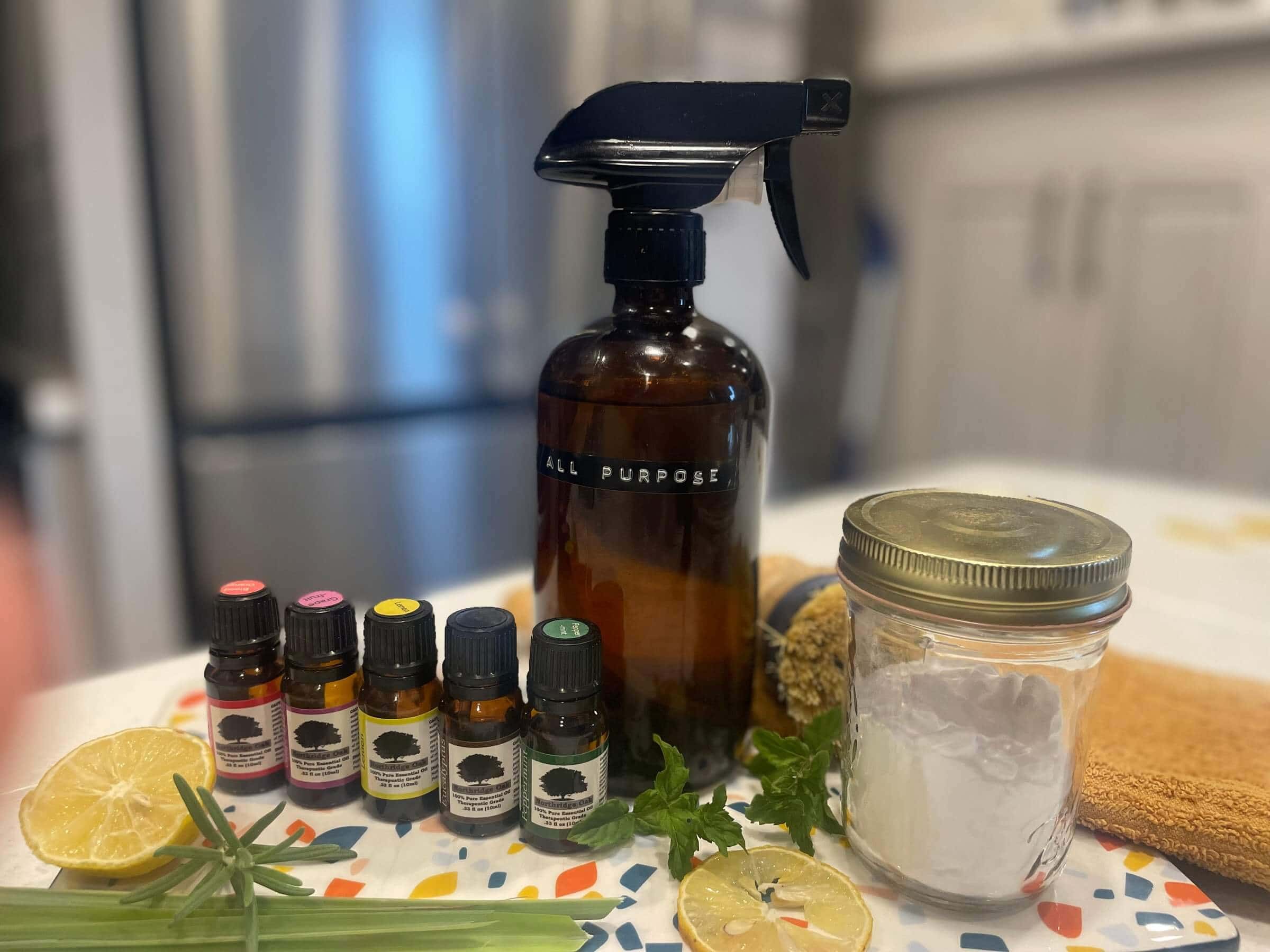
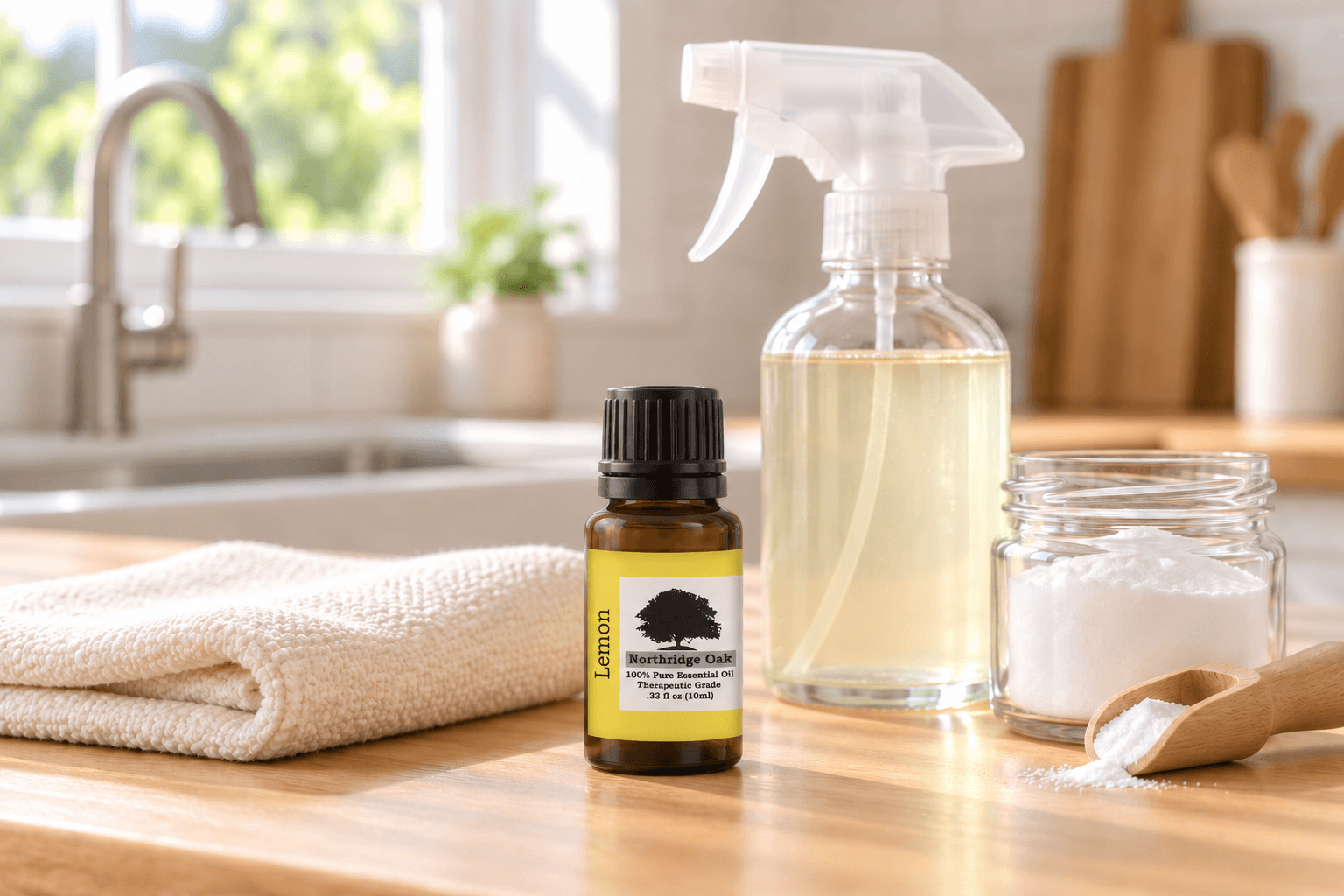
You will need: 1 cup distilled water, 1 teaspoon unscented liquid soap, 12 drops Blood Orange, 6 drops Lemon, and a labeled spray bottle.
Directions: Combine the ingredients and shake before every use. Mist the cloth rather than the surface, wipe, and dry. Make small batches and discard the spray if its appearance or aroma changes. Test a hidden spot first. Avoid natural stone, unfinished wood, waxed finishes, electronics, acrylic, and any surface whose manufacturer advises against these ingredients. Rinse food-contact surfaces with clean water.
Sink-Freshening Paste
You will need: 2 tablespoons baking soda, 1 teaspoon dish soap, and 2 drops Blood Orange.
Directions: Mix into a soft paste and use a nonabrasive sponge on a wet stainless-steel or porcelain sink. Scrub gently, rinse thoroughly, and dry. Do not use on natural stone, and never combine this or another homemade recipe with bleach, ammonia, or a commercial cleaner.
Fresh-Bin Sachet
You will need: 2 tablespoons baking soda, 3 drops Blood Orange, 1 drop Tea Tree Essential Oil, and a small breathable sachet.
Directions: Wash and completely dry the bin. Add the baking soda and oils to the sachet and tuck it beneath the liner where children and pets cannot reach it. Replace weekly. The sachet complements cleaning; it should not be used to hide a sanitation problem. The full Blood Orange cleaning and home-aroma guide includes more room-specific ideas.
What Blood Orange research and chemistry can tell us
Limonene supplies much of the oil’s recognizable citrus lift. Researchers have studied isolated limonene and citrus essential oils in laboratory, animal, and human models. Laboratory work has explored antioxidant, antimicrobial, anti-inflammatory, and other biological activity. These experiments can identify mechanisms worth investigating, but a test-tube result does not establish that ordinary diffusion or diluted skin application will prevent or treat disease.
Dose and route matter. Cells in a dish may be exposed to concentrations that bear little resemblance to several drops in a room. An isolated constituent can also behave differently from a complete essential oil. When reading a study, look for the botanical identity, chemical profile, dose, route, sample size, comparison group, and actual outcome.
The most relevant human aroma studies are generally small and concern orange aroma or Citrus sinensis, not necessarily the exact Blood Orange cultivar and product in your bottle. Their results make a pleasant environmental role plausible, but they do not justify medical claims. Our Blood Orange research and limonene guide explains how to interpret those distinctions.
Is Blood Orange essential oil phototoxic?
Phototoxicity is often discussed as though every citrus oil behaves the same way. It does not. Certain expressed citrus oils contain furocoumarins associated with serious light-related skin reactions. Expressed Sweet Orange (Citrus sinensis) is generally regarded as non-phototoxic, and Blood Orange is a cultivar of the same species.
That does not remove every consideration. Verify the botanical name and extraction method, follow the supplier’s documentation, dilute appropriately, and remember that oxidation can increase irritation risk. If product identity is uncertain, use the oil in a diffuser or apply only to covered skin until the details are confirmed.
Blood Orange essential oil safety
Do not ingest essential oils or add them to food, water, capsules, toothpaste, or beverages. Keep concentrated oil away from eyes, ears, mucous membranes, broken skin, and sensitive areas. Dilute for skin and patch test the finished product.
Use especially conservative amounts around children. For babies, toddlers, pregnancy, breastfeeding, asthma, seizure disorders, significant allergies, medications, or medical conditions, seek individualized guidance. Around older children, keep diffusion brief, the room ventilated, and the door open. Stop if the child coughs, rubs the eyes, complains of headache or nausea, or wants to leave.
Never apply essential oil to a pet or add it to food, water, treats, collars, litter, bedding, or grooming products unless a veterinarian directs the exact use. When diffusing, the animal must be free to leave. Birds, cats, small mammals, reptiles, and animals with respiratory or liver conditions may need extra caution. Keep diffusers away from cages, aquariums, food, and water.
For detailed dilution tables, first-aid guidance, and household considerations, read Blood Orange Essential Oil Safety: Dilution, Kids, Pets & Phototoxicity and our complete essential-oil safety guide.
Freshness matters more than most people realize
Limonene-rich citrus oil reacts with oxygen over time. Heat, light, repeated opening, and a large amount of air in a nearly empty bottle can accelerate change. Oxidized oil may smell dull, harsh, resinous, paint-like, or simply unlike fresh peel; it may also be more likely to irritate skin.
Write the opening date on the bottle, cap it promptly, and keep it cool and dark. Choose a size you can use while it is fresh. If the aroma changes significantly, retire the bottle from skin use. Thoughtful storage protects both the beauty of the scent and the comfort of the routine.
How to choose your first Blood Orange routine
If you want the simplest introduction, diffuse 4 drops Blood Orange with 2 drops Lavender for 20 minutes in a comfortable, ventilated room. If you enjoy the aroma and want something you can wear, make the 1% body oil and patch test it. If home care is more appealing, use the surface spray on an approved material and enjoy the citrus aroma after the practical cleaning is complete.
There is no prize for using an essential oil in every possible way. One recipe you enjoy and repeat is more valuable than a cabinet full of complicated experiments. Blood Orange earns its place by being easy to like, easy to pair, and flexible enough to meet the rhythm of the day.
Continue learning about Blood Orange essential oil
Choose the guide that matches what you want to make or understand next:
- Blood Orange Essential Oil Diffuser Blends: 20 Bright Recipes
- What Blends Well With Blood Orange Essential Oil?
- What Does Blood Orange Essential Oil Smell Like?
- Blood Orange Essential Oil for Mood, Relaxation & Everyday Joy
- Blood Orange Essential Oil for Skin & Body Care
- Blood Orange Essential Oil for Cleaning & Home Aromas
- Blood Orange Essential Oil for Fall & Holiday Blends
- Blood Orange Essential Oil Research: Limonene & Chemistry
- Blood Orange Essential Oil Safety: Dilution, Kids, Pets & Phototoxicity
- Blood Orange vs. Sweet Orange Essential Oil
These statements have not been evaluated by the Food and Drug Administration. Northridge Oak products are not intended to diagnose, treat, cure or prevent disease.