Table of Contents
- Cleaning, deodorizing, and disinfecting are different jobs
- Everyday surface spray
- Greasy stovetop helper
- Sink-freshening scrub
- Bright-room diffuser blend
- Soft welcome blend
- Fresh-bin routine
- Reusable cleaning cloths
- When you truly need disinfection
- Household safety that keeps the ritual pleasant
- A room-by-room way to use the aroma
- Why “more natural” still needs labels
- Continue learning about blood orange essential oil
- Frequently Asked Questions
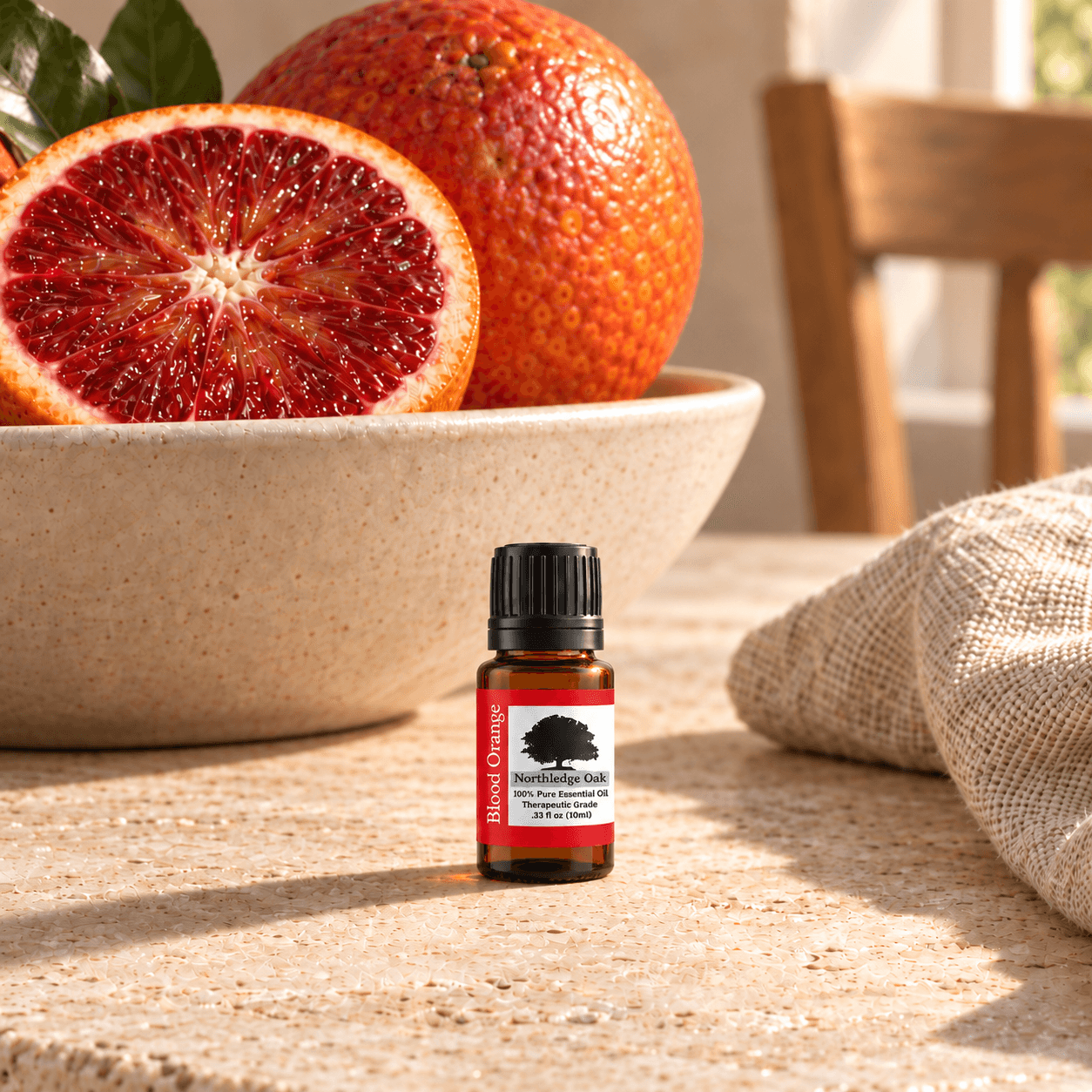
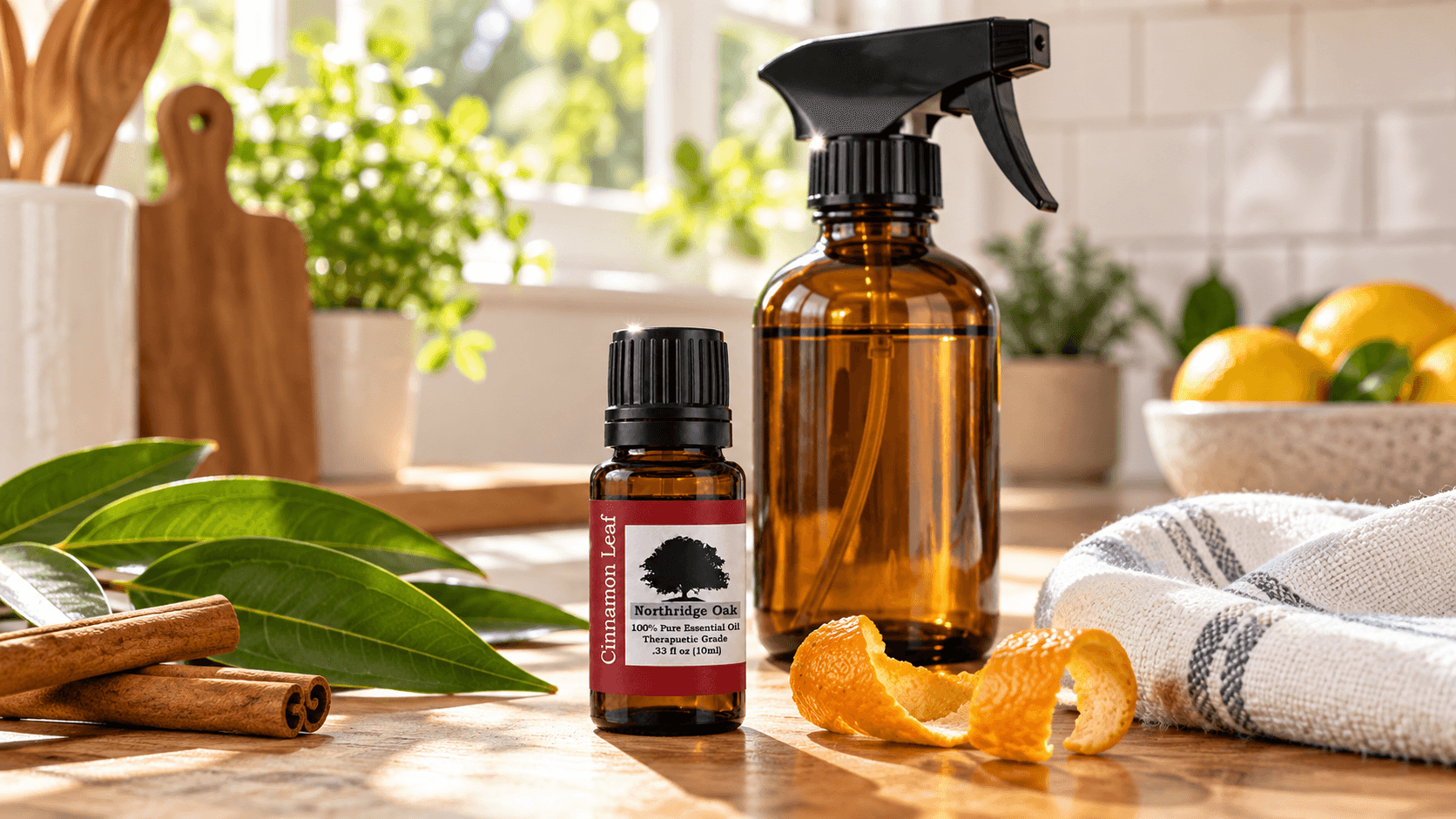
A clean home has its own quiet pleasure: clear counters, folded towels, and a room that smells fresh without feeling perfumed. Blood Orange Essential Oil fits that moment beautifully. Its juicy peel aroma can make ordinary cleaning feel more inviting, provided we are honest about its role: it adds a lovely scent and may complement routine cleaning, but it is not a stand-alone disinfectant.
Cleaning, deodorizing, and disinfecting are different jobs
Cleaning removes soil, grease, and many microbes through detergent, water, and friction. Deodorizing changes or reduces unwanted odor. Disinfecting uses an appropriately registered product for a specified contact time. A few drops of essential oil do not turn water or vinegar into a validated disinfectant. Keeping those jobs separate makes DIY home care both more effective and more credible.
Everyday surface spray
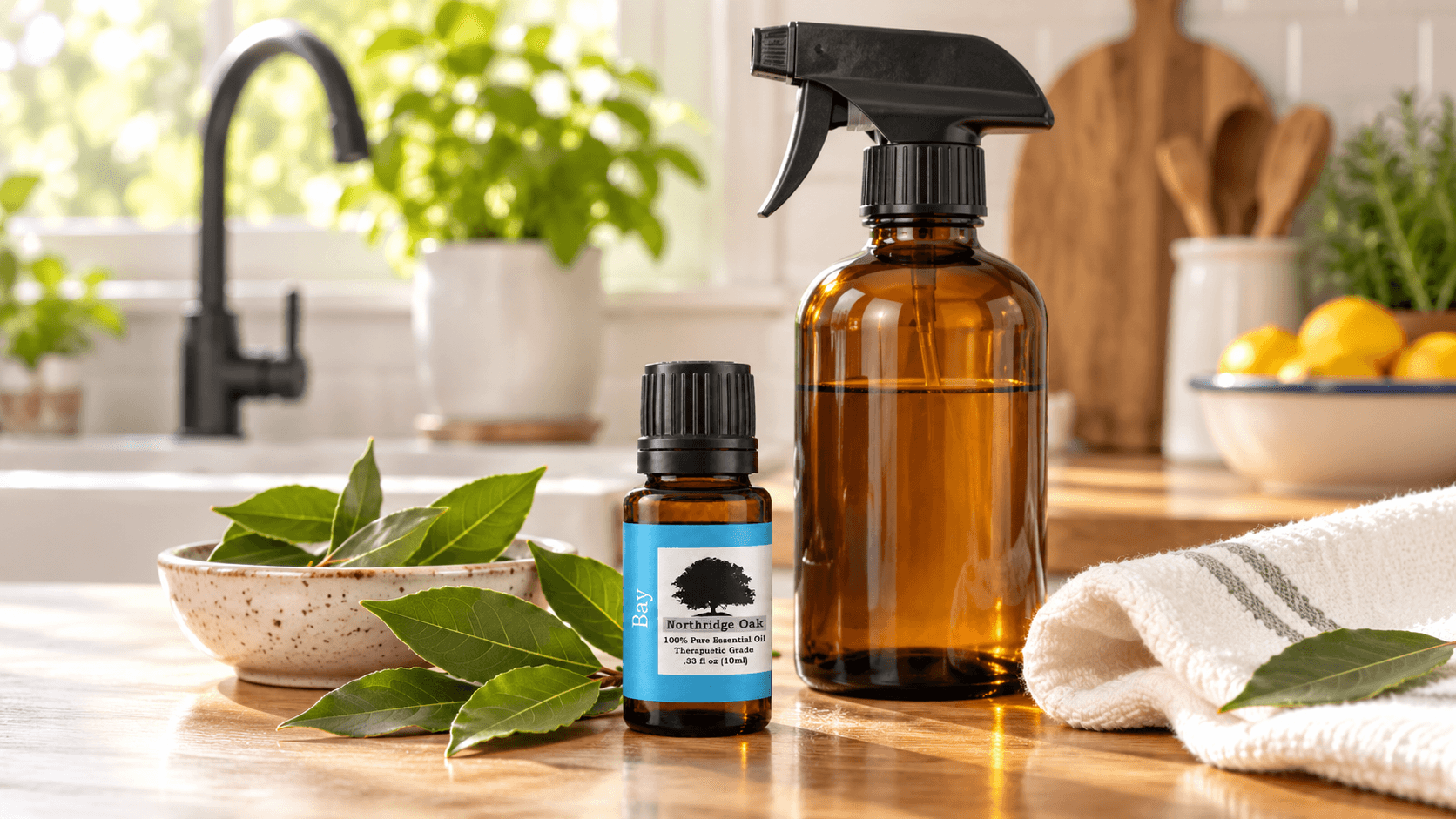
For sealed, water-safe surfaces, combine 1 cup distilled water with 1 teaspoon unscented liquid soap in a labeled spray bottle. Add 12 drops Blood Orange and 6 drops Lemon Essential Oil. Shake before each use, mist the cloth rather than the surface, wipe, and dry. Make small batches and replace if the appearance or odor changes.
Test first in a hidden spot. Skip natural stone, unfinished wood, waxed surfaces, electronics, acrylic, and any manufacturer-prohibited finish. For food-contact surfaces, follow with a clean water rinse. This recipe is for routine cleaning, not disinfection.
Greasy stovetop helper
Add a small squirt of dish soap to a damp cloth, then add 1 drop Blood Orange. Wipe a cool, sealed stovetop and follow with a fresh damp cloth. The soap does the degreasing; Blood Orange makes the task smell pleasantly bright. Never apply essential oil directly to painted, plastic, or finished surfaces because concentrated citrus oil can damage some materials.
Sink-freshening scrub
Mix 2 tablespoons baking soda, 1 teaspoon dish soap, and 2 drops Blood Orange into a soft paste. Apply to a wet stainless-steel or porcelain sink with a nonabrasive sponge, scrub gently, rinse thoroughly, and dry. Do not use on natural stone, and never combine this recipe with bleach or other household cleaners.
Bright-room diffuser blend
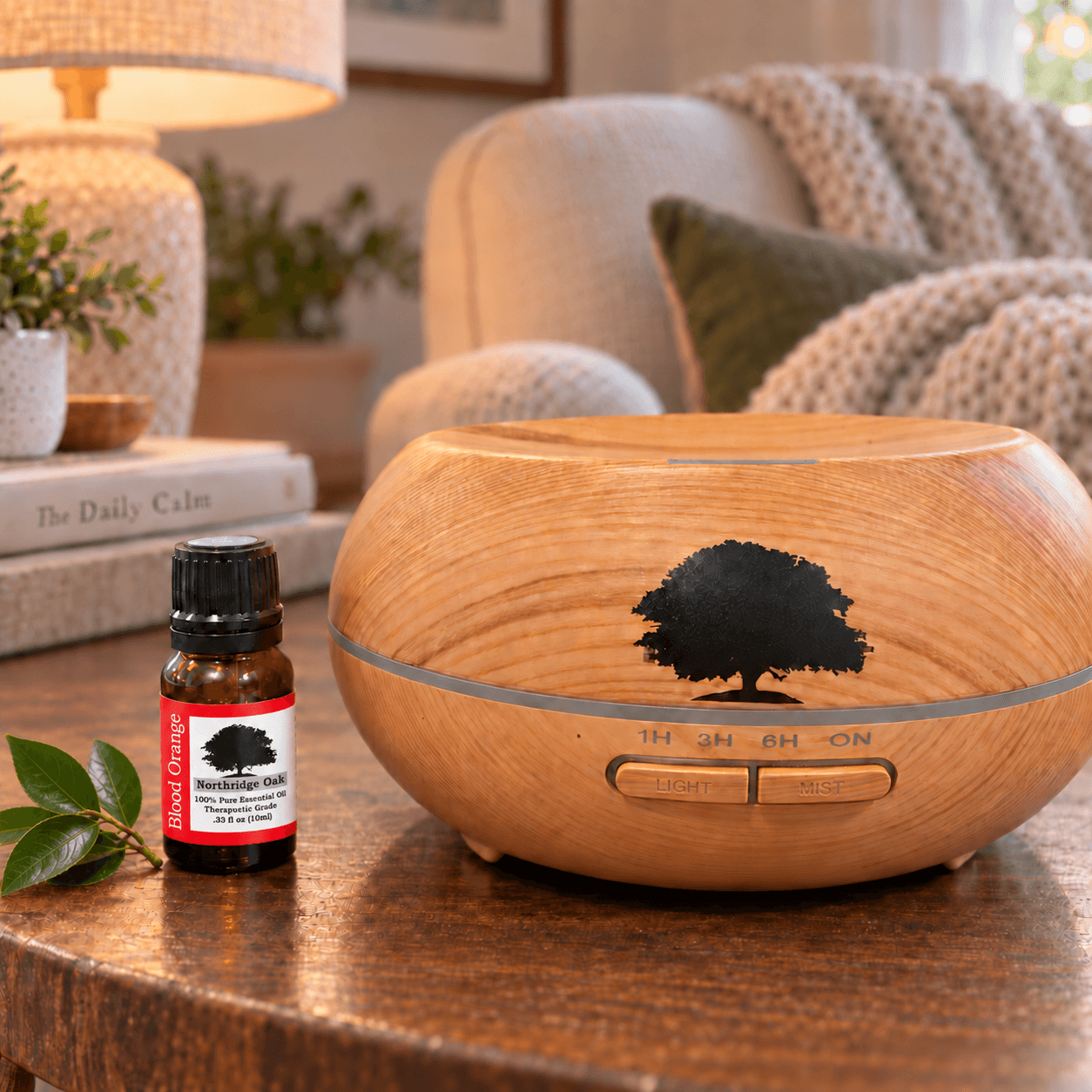
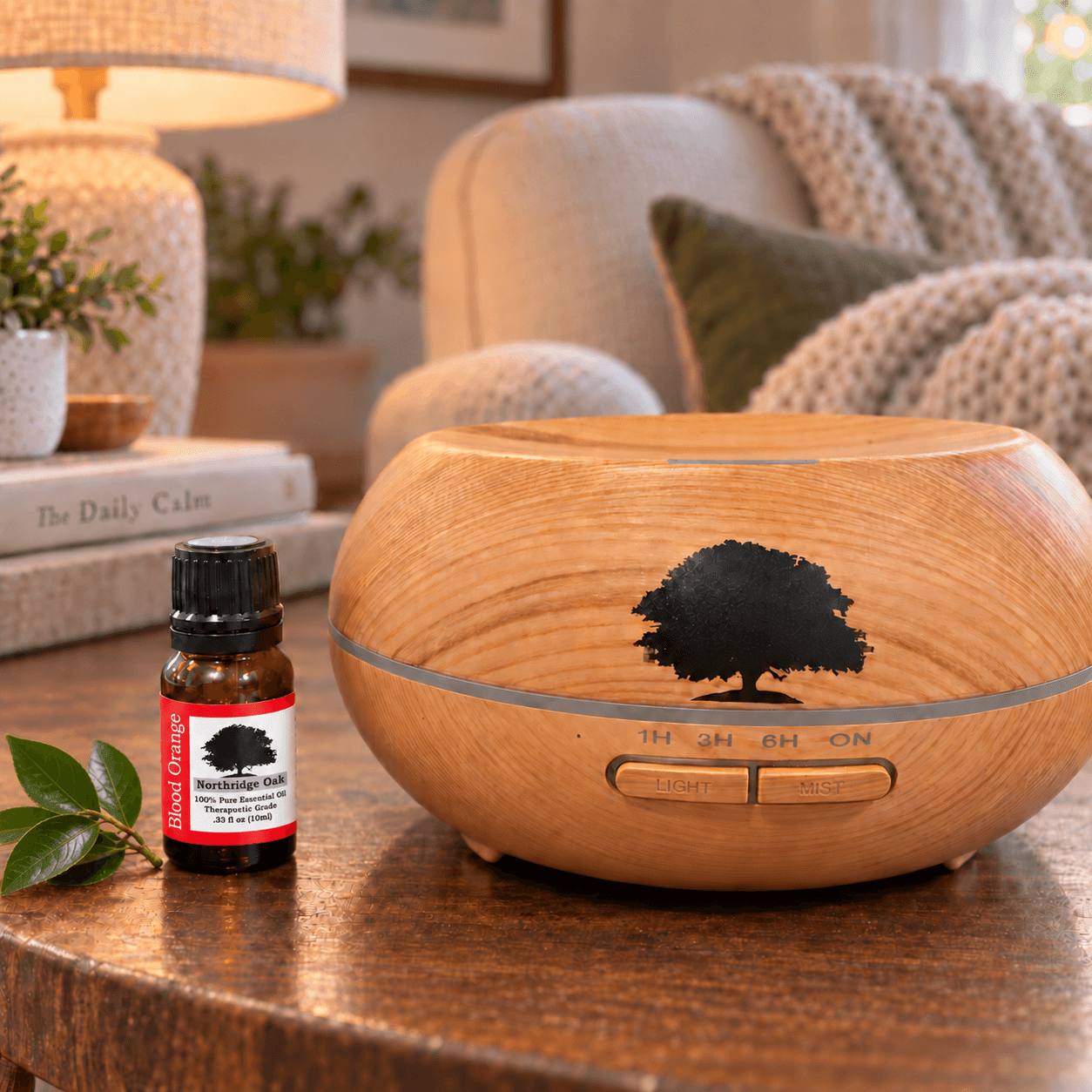
Add 4 drops Blood Orange, 2 drops Lemon, and 1 drop Rosemary Essential Oil to a 100–200 mL diffuser. Run for 20–30 minutes after cleaning, then pause. The blend smells sunny and herbal rather than sugary.
Soft welcome blend
For an entryway or living room, diffuse 3 drops Blood Orange, 2 drops Cedarwood Essential Oil, and 1 drop Frankincense Essential Oil. Place the diffuser where air circulates naturally and where children and pets cannot reach it.
Fresh-bin routine
Wash and dry the bin first. Place 2 tablespoons baking soda in a small breathable sachet, add 3 drops Blood Orange and 1 drop Tea Tree Essential Oil, and tuck it beneath the liner where it cannot touch pets or children. Replace weekly. Do not sprinkle essential oil directly into pet areas or use aroma to mask a sanitation problem.
Reusable cleaning cloths
Fill a bowl with 2 cups warm water and 1 teaspoon unscented liquid soap. Add 8 drops Blood Orange and 4 drops Lemon, stir, then soak several clean cotton cloths. Wring them out and use immediately for sealed, washable surfaces. Launder after use. Storing damp homemade wipes can invite microbial growth, so this is intentionally a make-and-use recipe.
When you truly need disinfection
After raw meat, illness, or high-risk contamination, clean first and then use a product registered for the organism and surface, following its label and full wet contact time. Do not mix disinfectants with essential oils, vinegar, ammonia, or one another. A bright citrus aroma can be the final touch after the safety-critical work is complete.
Household safety that keeps the ritual pleasant
Ventilate the room, use short diffusion intervals, and let pets leave freely. Keep concentrated oils away from cats’ fur, dogs’ paws, aquariums, bird rooms, food, and water bowls. Store every bottle and homemade product out of reach. If someone develops coughing, wheezing, headache, nausea, or eye irritation, stop, move to fresh air, and seek appropriate advice.
A room-by-room way to use the aroma
In the kitchen, choose Blood Orange with Lemon or Rosemary after the counters, sink, and odor source are clean. In the entryway, Blood Orange with Cedarwood creates a softer welcome. In a home office, Blood Orange and Rosemary can mark the start of work. For an evening living room, Lavender or Frankincense rounds the citrus without making the room smell like cleaner.
Bathrooms require ventilation and careful placement. Humidity does not make essential oils safer, and droplets should never be placed on toilet seats, towels, bath mats, or painted surfaces. A passive ceramic diffuser on a protective dish is easier to control.
Why “more natural” still needs labels
Every homemade bottle should say what it contains and when it was made. Keep it in the same secure storage as commercial cleaners. Do not repurpose beverage bottles or leave a clear liquid where someone could mistake it for water.
Simple recipes are a strength. They are easier to test, reproduce, and identify if a reaction occurs. Use Blood Orange where its aroma improves the task, then let appropriate soap, water, friction, and disinfectants handle their own jobs.
Continue learning about blood orange essential oil
Build a Blood Orange routine that feels useful, enjoyable, and informed:
- Blood Orange Essential Oil: Everyday Uses, DIY Recipes & Diffuser Blends
- Blood Orange Essential Oil Diffuser Blends: 20 Bright Recipes
- What Blends Well With Blood Orange Essential Oil?
- What Does Blood Orange Essential Oil Smell Like?
- Blood Orange Essential Oil for Mood, Relaxation & Everyday Joy
- Blood Orange Essential Oil for Skin & Body Care
- Blood Orange Essential Oil for Fall & Holiday Blends
These statements have not been evaluated by the Food and Drug Administration. Northridge Oak products are not intended to diagnose, treat, cure or prevent disease.