Table of Contents
- Start with a 1% dilution
- Golden Citrus Body Oil
- Soft Citrus Lavender Lotion
- Warm Woods Massage Oil
- Fresh Hand-and-Elbow Sugar Polish
- Aromatic shower oil—outside the stream
- Can Blood Orange brighten skin?
- Phototoxicity and citrus confusion
- Patch test and observe
- How to keep homemade body care simple and fresh
- Choose a texture you will enjoy
- Continue learning about blood orange essential oil
- Frequently Asked Questions
A small amount of Blood Orange Essential Oil can make an everyday body oil or unscented lotion feel like a sunlit ritual. Its sweet peel aroma is fresh without feeling clinical and warm without becoming heavy. The key is thoughtful dilution: enough aroma to enjoy, with plenty of carrier to make the blend comfortable for skin.
Start with a 1% dilution
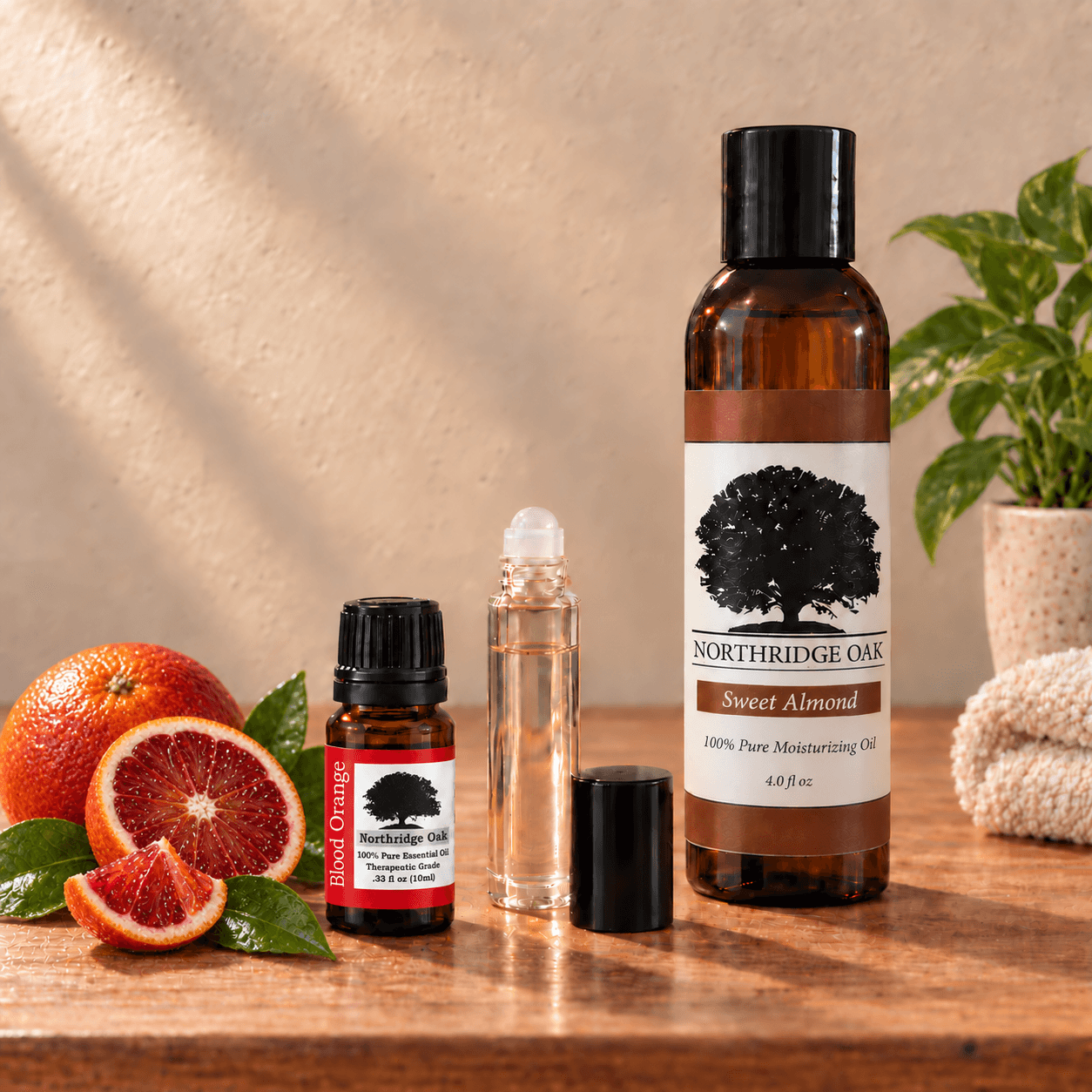
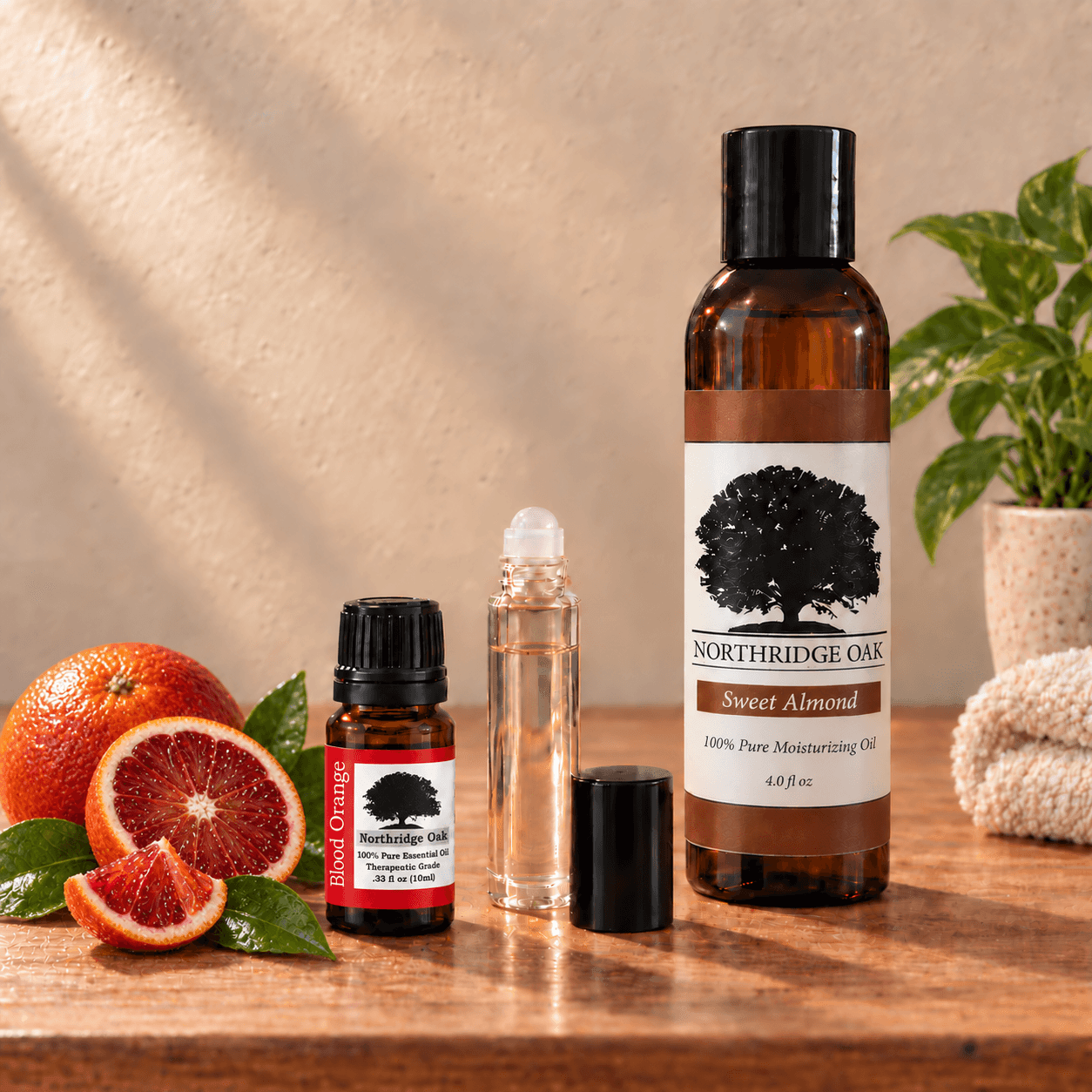
For many healthy adults using a small area of the body, a 1% dilution is a sensible everyday starting point. Add 6 total drops of essential oil to 1 ounce (30 mL) of carrier oil or unscented lotion. For a 10 mL roller bottle, use 2 total drops. Sensitive skin, pregnancy, medications, medical conditions, and use around children call for individualized guidance.
Essential oils do not dissolve in bathwater. Carrier oil can dilute them for skin, but it also makes the tub slippery; a properly formulated bath base is a better choice. Never drip undiluted Blood Orange directly into a bath.
Golden Citrus Body Oil
Add 6 drops Blood Orange to a 1-ounce bottle. Fill with jojoba or fractionated coconut oil, cap, and roll gently to combine. Label with the ingredients and date. Patch test, then massage a teaspoon or less onto damp arms and legs after a shower. Damp skin helps the carrier spread, so you use less and the finish feels lighter.
Soft Citrus Lavender Lotion
Place 1 ounce (30 mL) of fragrance-free lotion in a clean bowl. Add 4 drops Blood Orange and 2 drops Lavender Essential Oil. Stir thoroughly, transfer to a clean pump container, and label. Use within the lotion manufacturer’s recommended period; adding essential oil does not extend shelf life.
Warm Woods Massage Oil
Combine 3 drops Blood Orange, 2 drops Cedarwood Essential Oil, and 1 drop Frankincense Essential Oil in 1 ounce (30 mL) of carrier oil. This approximately 1% blend smells balanced and unisex. Keep massage away from eyes, mucous membranes, broken skin, and recently shaved areas.
Fresh Hand-and-Elbow Sugar Polish
For a single use, mix 1 tablespoon fine sugar, 2 teaspoons jojoba oil, and 1 drop Blood Orange in a small bowl. Massage gently over wet hands or elbows for 20–30 seconds, then rinse and wash away residue if desired. Do not store this water-exposed recipe; make it fresh each time. Skip it on sensitive, inflamed, sunburned, or freshly shaved skin.
Aromatic shower oil—outside the stream
Blend 2 drops Blood Orange and 1 drop Lavender into 1 tablespoon carrier oil. Before turning on the shower, apply a small amount to arms and shoulders, avoiding the feet and floor. Shower normally and use a nonslip mat. This gives you a brief burst of aroma without putting undiluted oil into steam or on shower surfaces.
Can Blood Orange brighten skin?
Marketing language often turns chemistry into cosmetic promises. Blood Orange oil is rich in volatile aromatic compounds, commonly including limonene, but that does not make a homemade blend a proven treatment for acne, pigmentation, wrinkles, or other skin concerns. Its most dependable benefit in body care is sensory: it gives a simple formula a beautiful aroma and can make a consistent self-care routine more appealing.
If you have a skin condition or want a measurable cosmetic result, work with a dermatologist or qualified formulator. Keep DIY products simple, freshly made, clearly labeled, and conservatively diluted.
Phototoxicity and citrus confusion
Not every citrus oil has the same sun-sensitivity profile. Expressed Sweet Orange (Citrus sinensis) is generally regarded as non-phototoxic, and Blood Orange belongs to the same species, but extraction method, composition, oxidation, and supplier guidance still matter. Check the label and documentation for your bottle rather than applying a blanket “all citrus is phototoxic” rule.
When in doubt, use the blend on covered skin or in the evening. More importantly, keep the oil fresh. Oxidized citrus oil is more likely to irritate skin. Store it cool and dark, cap it promptly, and replace it if the aroma becomes harsh or noticeably altered.
Patch test and observe
Apply a small amount of the finished diluted product to the inner forearm and wait 24 hours. Stop if redness, itching, burning, or swelling appears. A successful patch test lowers uncertainty but cannot guarantee a future reaction. Learn more in the complete Blood Orange safety guide.
How to keep homemade body care simple and fresh
Water-free carrier oils are easier home projects than creams and lotions made from scratch. Once water enters a formula, preservation becomes a serious formulation issue; pleasant aroma does not prevent microbial growth. If you want a lotion, scent a small portion of a professionally preserved, fragrance-free base and keep its original use-by guidance.
Use clean, dry tools and label every container with the ingredients, dilution, and date. Avoid dipping wet fingers into jars. A pump reduces repeated contact. Make an amount you can use comfortably rather than filling a large decorative jar that lingers through bathroom humidity.
Choose a texture you will enjoy
Jojoba has a silky, relatively dry finish. Fractionated coconut oil is lightweight and spreads easily. A richer carrier such as avocado oil can feel comforting on dry areas but may stain fabric. The best carrier suits your skin, allergies, climate, and preferred finish.
Blood Orange is a top note, so its aroma is brightest during application and then softens. For more staying power, include one or two of the six total drops as Cedarwood or Frankincense instead of increasing the overall concentration. Comfort comes from a balanced formula, not the strongest possible scent.
Continue learning about blood orange essential oil
If this sunny citrus has earned a place in your routine, these guides will help you use it with more confidence:
- Blood Orange Essential Oil: Everyday Uses, DIY Recipes & Diffuser Blends
- Blood Orange Essential Oil Diffuser Blends: 20 Bright Recipes
- What Blends Well With Blood Orange Essential Oil?
- What Does Blood Orange Essential Oil Smell Like?
- Blood Orange Essential Oil for Mood, Relaxation & Everyday Joy
- Blood Orange Essential Oil for Cleaning & Home Aromas
These statements have not been evaluated by the Food and Drug Administration. Northridge Oak products are not intended to diagnose, treat, cure or prevent disease.