Table of Contents
- Why Ylang Ylang works so well in massage
- Begin with a gentle concentration
- Velvet Floral massage oil
- Warm Floral Wood massage oil
- Simple two-oil body oil
- A ten-minute massage sequence
- What human research adds
- Use it in a body-care routine
- Let the aroma stay balanced
- Set the scene before blending
- Let touch and scent work together
- Choose a blend for the mood
- Prepare a trial batch
- Use Ylang Ylang with confidence
- Continue learning about Ylang Ylang essential oil
- Frequently Asked Questions
Few oils make a massage blend feel as instantly luxurious as Ylang Ylang Essential Oil. Its creamy floral aroma turns simple carrier oil into a warm botanical experience, especially alongside Lavender, Bergamot, Cedarwood or Frankincense.
Why Ylang Ylang works so well in massage
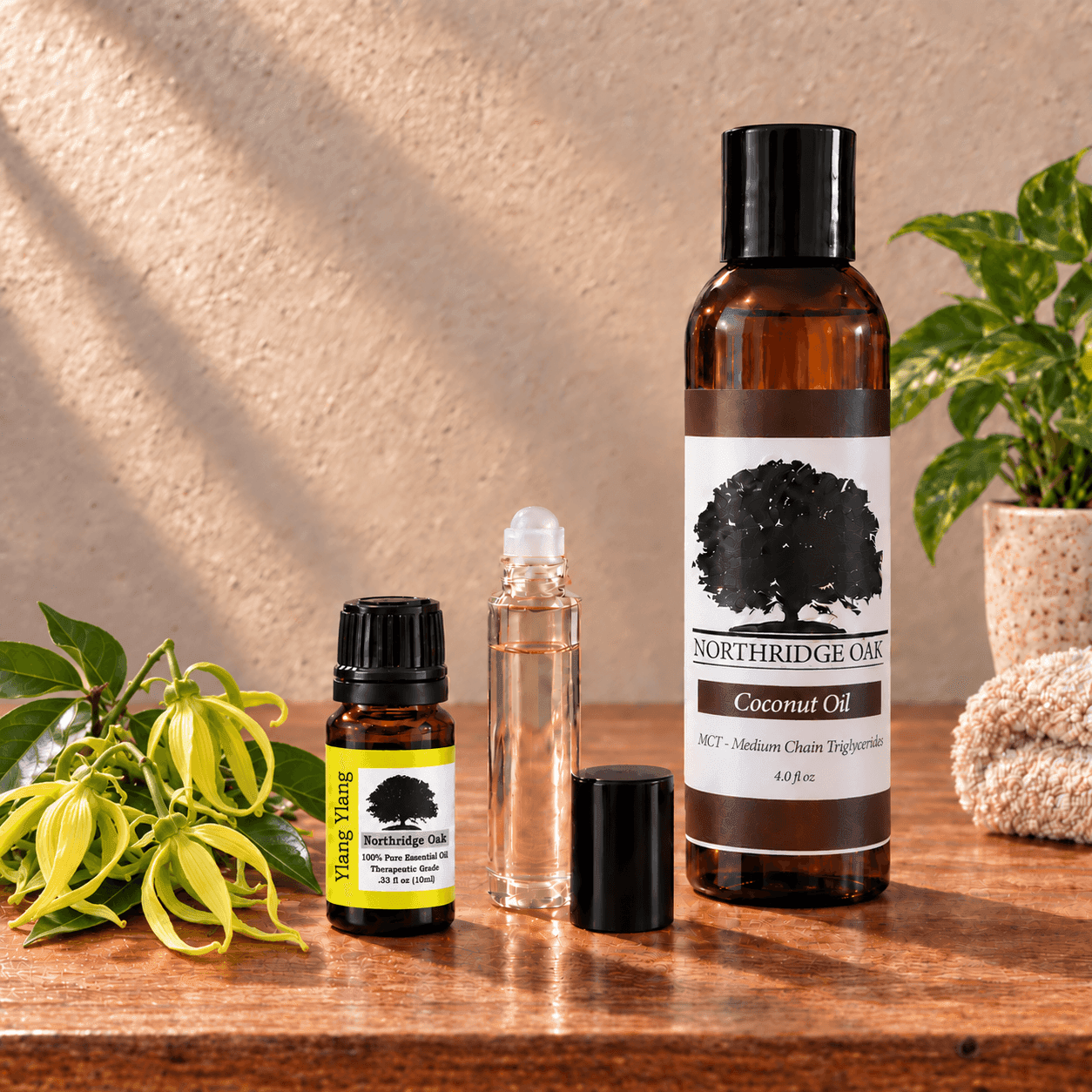
Massage is shaped by touch, temperature, pace, setting and scent. Ylang Ylang contributes the aromatic layer: lush, floral, warm and gently sweet. It encourages slower application because the fragrance feels best when it unfolds gradually rather than arriving all at once.
Begin with a gentle concentration
For a healthy adult using a small area occasionally, a 0.5–1% total essential-oil concentration is a comfortable starting point. That is approximately 3–6 total drops per 1 ounce (30 mL) of carrier oil. Ylang Ylang’s strength makes the lower end especially satisfying.
Velvet Floral massage oil
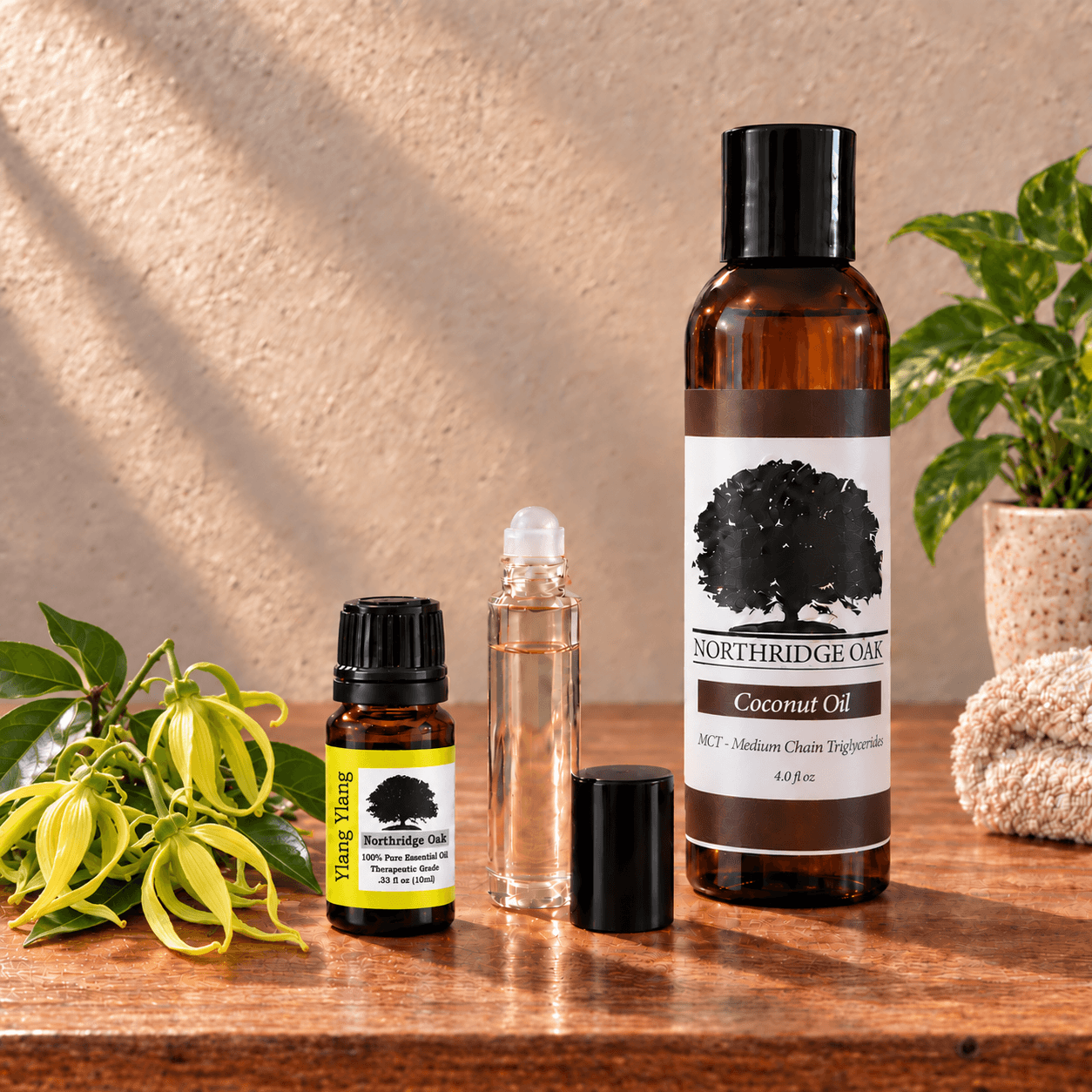
You will need: 2 drops Ylang Ylang, 2 drops Lavender, 2 drops Bergamot and 1 ounce jojoba or fractionated coconut oil.
Directions: Add the essential oils to a clean bottle, fill with carrier and roll gently. Label and patch test. Warm a teaspoon or less between palms and massage shoulders, arms or legs with smooth, comfortable pressure.
Warm Floral Wood massage oil
Combine 2 drops Ylang Ylang, 2 drops Cedarwood, 1 drop Frankincense and 1 drop Blood Orange with 1 ounce carrier oil. The aroma begins sweet and floral, then settles into a warm, polished base.
Simple two-oil body oil
Add 1 drop Ylang Ylang and 2 drops Lavender to 1 ounce jojoba. This gentle formula is easy to make, easy to remember and beautifully suited to an after-shower shoulder or forearm ritual.
A ten-minute massage sequence
Choose a comfortable chair, warm the finished oil in your palms and begin with broad strokes across the shoulders or forearms. Use slow circles over areas that welcome pressure. Let the floral aroma accompany an easy breathing pace. Finish with lighter strokes and allow a minute before dressing.
What human research adds
A 2006 study involving 40 healthy volunteers evaluated Ylang Ylang oil after transdermal absorption while fragrance inhalation was minimized. Researchers measured physiological parameters and self-evaluation, finding a pattern they interpreted as relaxing. Read the human transdermal study. It gives Ylang Ylang an intriguing research foundation while an at-home massage remains a personal-care ritual built around aroma, carrier-oil glide and gentle touch.
Use it in a body-care routine
The finished blend can be applied sparingly to healthy, intact skin after bathing. Jojoba offers a light finish; fractionated coconut oil gives smooth glide; sweet almond oil feels richer. Choose the carrier based on the texture you enjoy, because that sensory preference often determines whether the routine becomes a habit.
Let the aroma stay balanced
If the flower feels rich, add more carrier in the next batch or let Lavender and Cedarwood take the lead. If you want brightness, Bergamot or Blood Orange opens the blend. If you want depth, Frankincense or Patchouli gives the aroma a longer finish.
Set the scene before blending
Comfort begins with the room. Choose a supportive chair, use soft lighting and keep a towel nearby. Warm the finished oil between your palms. These preparations allow Ylang Ylang’s floral aroma to feel integrated into the experience.
Let touch and scent work together
Use broad, slow strokes to distribute the oil, then comfortable circles over shoulders, forearms, hands or calves. Return to lighter strokes at the end. The carrier provides glide, while Ylang Ylang gives the sequence a fragrant identity.
Choose a blend for the mood
Lavender and Ylang Ylang feel soft and familiar. Bergamot makes the blend luminous. Cedarwood adds warmth, and Frankincense brings a smooth resinous finish. For a richer perfume direction, use one drop Patchouli within the total dilution and allow citrus to lead.
Prepare a trial batch
A 10 mL bottle is useful while exploring. At approximately 1%, use about two total essential-oil drops. Try 1 drop Ylang Ylang and 1 drop Lavender, label it and observe the aroma over several uses. When you love the ratio, scale it carefully.
A small amount of the finished oil can also be used on healthy forearms after a shower or massaged into hands during a quiet break. Consistency turns the fragrance into a familiar cue for attentive care.
For an especially polished aroma, let the completed massage oil rest overnight before evaluating it. The citrus, floral and woody notes often feel more integrated the next day, giving the blend the character of a thoughtfully composed body oil.
Keep the finished blend where the ritual happens so it is easy to reach. A beautiful routine is most persuasive when preparation feels effortless and the aroma, texture and pace all work together naturally.
Use Ylang Ylang with confidence
Ylang Ylang is beautifully expressive, so one or two drops often give a blend all the floral character it needs. Dilute before skin use, patch test the finished formula and keep essential oil away from eyes, ears, mucous membranes and sensitive areas. Reserve it for aromatic and appropriately diluted topical use. Pregnancy, breastfeeding, young children, pets and individual health considerations benefit from guidance tailored to the exact household. The complete Ylang Ylang safety guide offers practical dilution and diffusion guidance.
Continue learning about Ylang Ylang essential oil
Make this article part of a complete Ylang Ylang routine:
- Ylang Ylang Essential Oil: Benefits, Uses, Blends & Safety
- Ylang Ylang Essential Oil Diffuser Blends
- What Blends Well With Ylang Ylang Essential Oil?
- What Does Ylang Ylang Essential Oil Smell Like?
- Ylang Ylang Essential Oil for Relaxation, Stress & Mood
- Ylang Ylang Essential Oil for Sleep & Bedtime
- Ylang Ylang Natural Perfume Recipes
- Ylang Ylang Essential Oil for Hair & Scalp
- Ylang Ylang Essential Oil for Skin & Massage
- Ylang Ylang Essential Oil Research & Chemistry
- Ylang Ylang Essential Oil Safety
These statements have not been evaluated by the Food and Drug Administration. Northridge Oak products are not intended to diagnose, treat, cure or prevent disease.