Table of Contents
- Begin with the exact botanical material
- Important aromatic constituents
- 2004 human inhalation study
- 2006 human transdermal study
- 2008 randomized aroma and mood study
- 2013 blood pressure and heart-rate study
- What the studies support trying
- Why GC/MS testing matters
- How to read the evidence warmly and accurately
- Compare the studies at a glance
- Why the findings feel coherent
- Questions future research can answer
- Use Ylang Ylang with confidence
- Continue learning about Ylang Ylang essential oil
- Frequently Asked Questions
The research story behind Ylang Ylang Essential Oil is unusually interesting because several studies have moved beyond test tubes and measured responses in people. When the findings are read alongside the oil’s chemistry, they help explain why Ylang Ylang feels so distinctive in relaxation, perfume and personal-care routines.
Begin with the exact botanical material
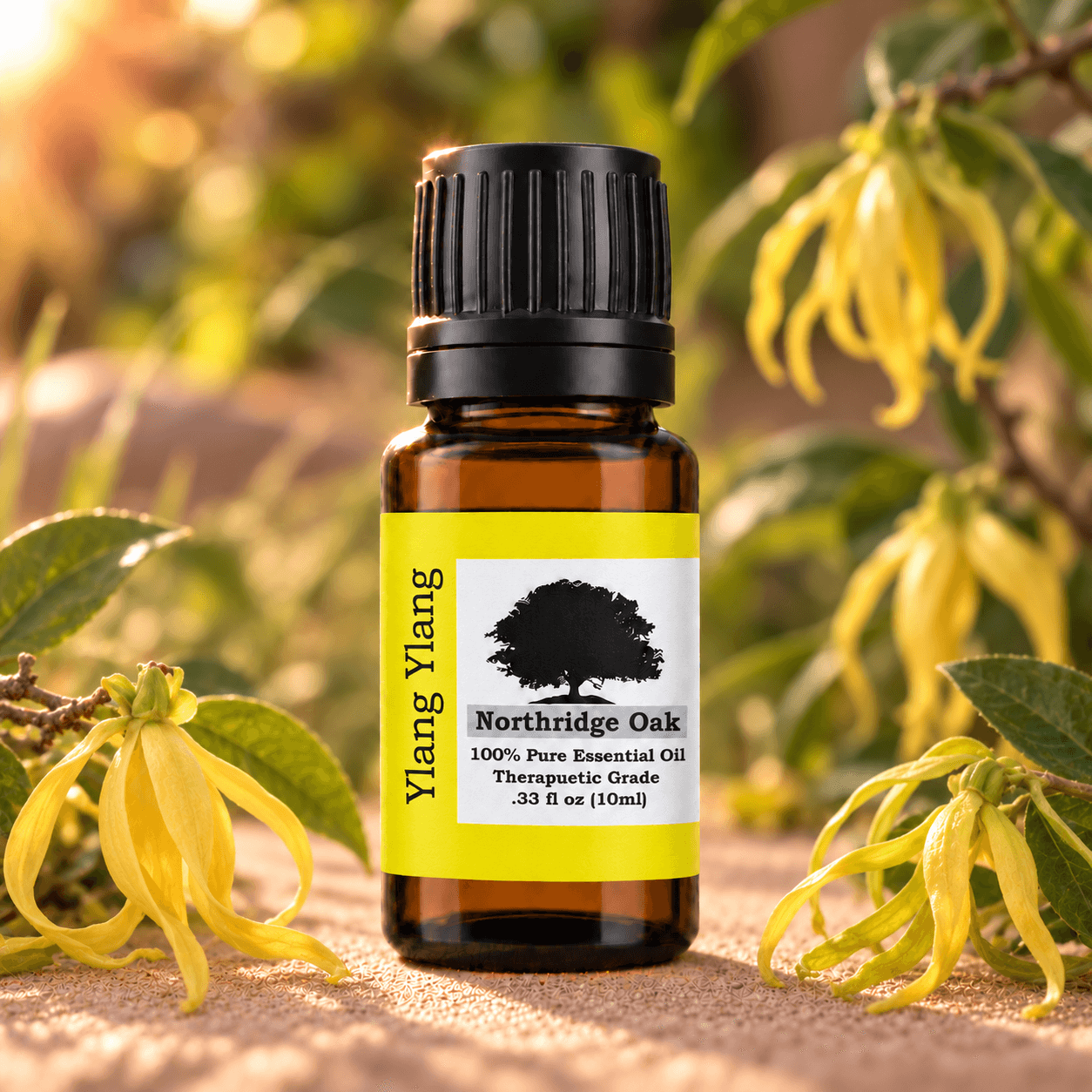
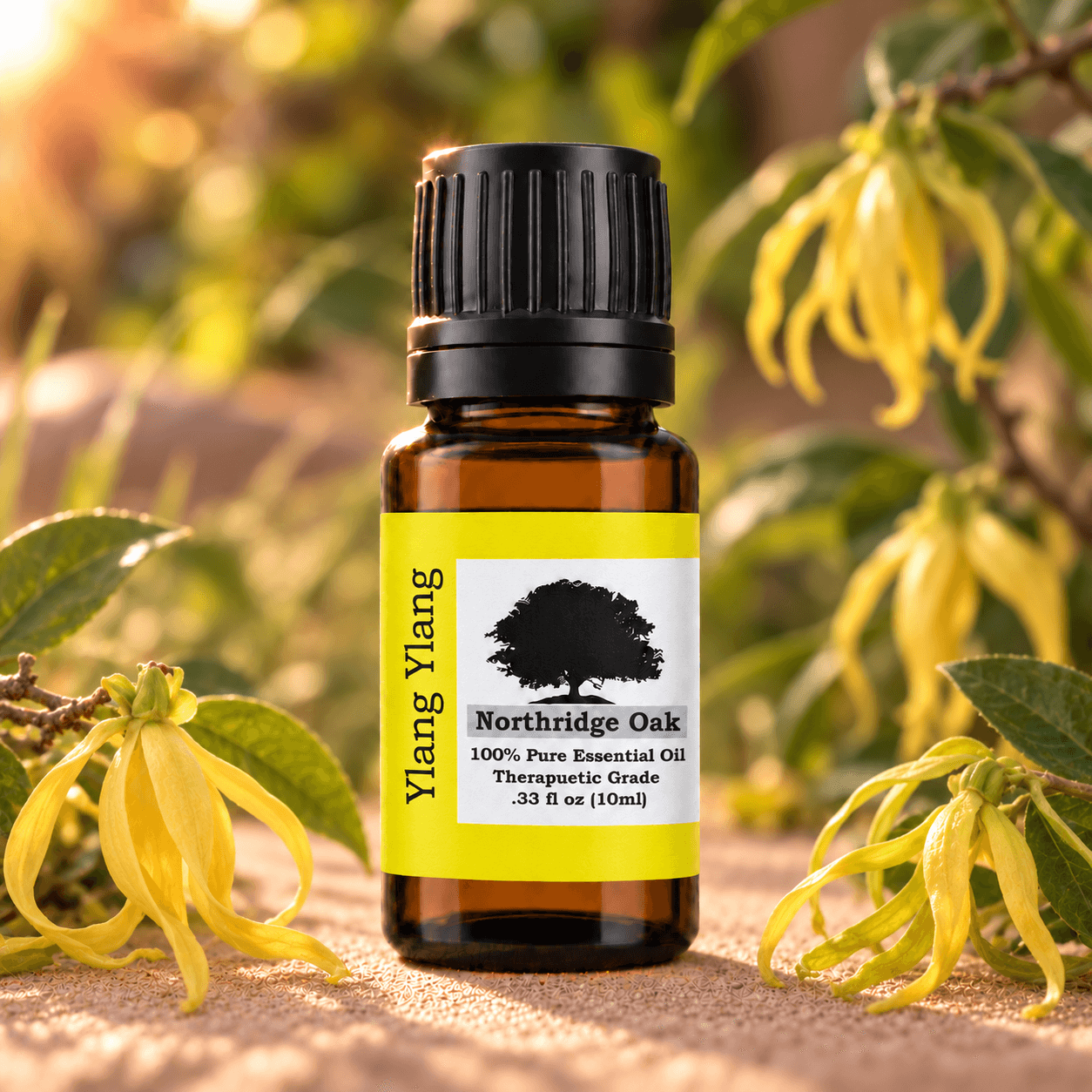
Northridge Oak Ylang Ylang is Cananga odorata, sourced from Madagascar and steam distilled. Ylang Ylang oils may vary by distillation fraction, growing conditions and production method. Researchers may study a particular fraction or composition, so the clearest interpretation begins by identifying the material.
Important aromatic constituents
Ylang Ylang commonly contains compounds from several chemical families, including linalool, benzyl acetate, benzyl benzoate, germacrene D, beta-caryophyllene, methyl benzoate and related sesquiterpenes and esters. The exact balance shapes both aroma and research relevance. Esters and floral alcohols contribute sweetness and lift; sesquiterpenes add warmth and persistence.
2004 human inhalation study
Hongratanaworakit and Buchbauer studied 24 healthy volunteers in a randomized clinical trial. Participants inhaled Ylang Ylang oil or an odorless control while researchers measured blood pressure, pulse, breathing rate, skin temperature and self-evaluations. Compared with control, Ylang Ylang produced significant decreases in blood pressure and pulse and increases in subjective attentiveness and alertness. The authors called the combined effect “harmonizing.” Read the 2004 clinical study.
2006 human transdermal study
In a separate study, 40 healthy volunteers received Ylang Ylang oil through a skin application designed to examine transdermal absorption while minimizing olfactory stimulation. Researchers tracked skin temperature, pulse, breathing and blood pressure along with visual-analog self-ratings. The physiological and subjective pattern was interpreted as relaxing. See the 2006 human study.
2008 randomized aroma and mood study
Moss and colleagues randomly assigned 144 volunteers to Ylang Ylang aroma, Peppermint aroma or a no-aroma control. Participants completed a computerized cognitive battery and mood scales. Ylang Ylang significantly increased calmness and decreased alertness; memory and processing measures also shifted. The practical insight is beautifully specific: Ylang Ylang fits calm, low-demand settings more naturally than intensive memory work. Read the 144-person randomized study.
2013 blood pressure and heart-rate study
A later human study examined Ylang Ylang aroma in healthy men and reported changes in blood pressure and heart rate consistent with a quieter physiological state. This line of research adds continuity to the earlier human findings and supports continued study of aromatic environments. Review the open-access 2013 study.
What the studies support trying
Together, the human findings make Ylang Ylang a thoughtful choice for evening diffusion, slow breathing, massage and other low-pressure rituals. They also show why context matters: an aroma that increases calmness may feel wonderful while reading, bathing or winding down, while a brighter oil may suit demanding study tasks.
Why GC/MS testing matters
GC/MS testing provides a chemical snapshot of the batch. It helps confirm identity, highlights the major constituents and makes comparisons with published research more meaningful. For a complex floral oil, that documentation supports both quality and thoughtful use.
How to read the evidence warmly and accurately
Look for the species, fraction, route, sample size, comparison group and measured outcome. Then translate the finding into a realistic routine. A change in calmness score can inspire a relaxation ritual; a physiological measurement can justify further human research. This evidence-matched approach gives the oil credibility while keeping the reader’s experience at the center.
Compare the studies at a glance
| Study | Participants and route | Key observation |
|---|---|---|
| Hongratanaworakit & Buchbauer, 2004 | 24 healthy volunteers; inhalation | Lower blood pressure and pulse with higher subjective attentiveness and alertness |
| Hongratanaworakit & Buchbauer, 2006 | 40 healthy volunteers; controlled transdermal exposure | Pattern interpreted as relaxing |
| Moss et al., 2008 | 144 volunteers; randomized aroma conditions | Increased calmness with changes in alertness, memory and processing speed |
| Jung et al., 2013 | Healthy men; aroma exposure | Blood-pressure and heart-rate changes consistent with quieter physiology |
Why the findings feel coherent
The studies used different routes and outcomes, yet several point toward a calmer or lower-arousal setting. The 2004 trial also found higher subjective attentiveness, leading the authors to use “harmonizing.” The 2008 work refines the context by pairing greater calmness with lower alertness and shifts in cognition.
Questions future research can answer
Larger samples, standardized chemical profiles, repeated exposures and comparisons between Ylang Ylang fractions would deepen the picture. Researchers can also explore how aroma preference interacts with physiology. These questions give the field a clear and promising path forward.
The most useful conclusion is practical: Ylang Ylang has enough human evidence to inspire confident, measured aromatic routines and enough unanswered questions to keep the science interesting. That combination gives readers both credibility and room for personal discovery.
Use Ylang Ylang with confidence
Ylang Ylang is beautifully expressive, so one or two drops often give a blend all the floral character it needs. Dilute before skin use, patch test the finished formula and keep essential oil away from eyes, ears, mucous membranes and sensitive areas. Reserve it for aromatic and appropriately diluted topical use. Pregnancy, breastfeeding, young children, pets and individual health considerations benefit from guidance tailored to the exact household. The complete Ylang Ylang safety guide offers practical dilution and diffusion guidance.
Continue learning about Ylang Ylang essential oil
Make this article part of a complete Ylang Ylang routine:
- Ylang Ylang Essential Oil: Benefits, Uses, Blends & Safety
- Ylang Ylang Essential Oil Diffuser Blends
- What Blends Well With Ylang Ylang Essential Oil?
- What Does Ylang Ylang Essential Oil Smell Like?
- Ylang Ylang Essential Oil for Relaxation, Stress & Mood
- Ylang Ylang Essential Oil for Sleep & Bedtime
- Ylang Ylang Natural Perfume Recipes
- Ylang Ylang Essential Oil for Hair & Scalp
- Ylang Ylang Essential Oil for Skin & Massage
- Ylang Ylang Essential Oil Research & Chemistry
- Ylang Ylang Essential Oil Safety
These statements have not been evaluated by the Food and Drug Administration. Northridge Oak products are not intended to diagnose, treat, cure or prevent disease.