Table of Contents
- What is Ylang Ylang essential oil?
- What does Ylang Ylang smell like?
- Why people love Ylang Ylang
- What blends well with Ylang Ylang?
- How to diffuse Ylang Ylang
- Ylang Ylang for relaxation and mood
- Ylang Ylang for sleep and bedtime atmosphere
- Ylang Ylang natural perfume
- Ylang Ylang for massage and body care
- Ylang Ylang for hair and scalp routines
- What Ylang Ylang research says
- Ylang Ylang essential oil safety
- Choose your first Ylang Ylang routine
- Why choose Northridge Oak Ylang Ylang Essential Oil?
- Continue learning about Ylang Ylang essential oil
- Frequently Asked Questions
Lush, creamy, sweet and softly spicy, Ylang Ylang Essential Oil can make a simple blend feel like a finished fragrance. One drop softens citrus, deepens lavender, warms woods and gives an ordinary evening ritual a sense of occasion. This complete guide shows you how to enjoy Ylang Ylang in diffuser blends, natural perfume, massage, hair and scalp care, bedtime routines and beautifully balanced everyday rituals.
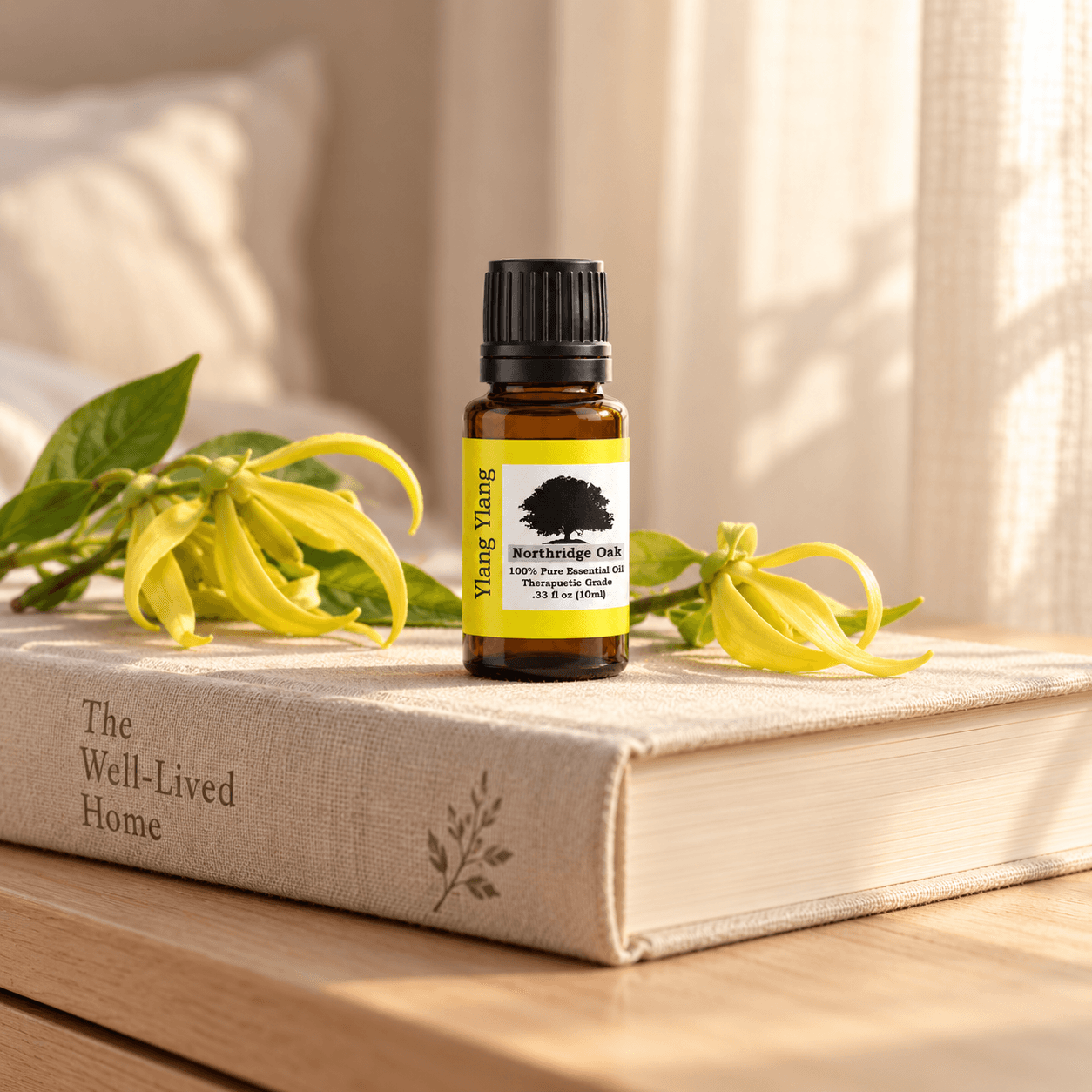
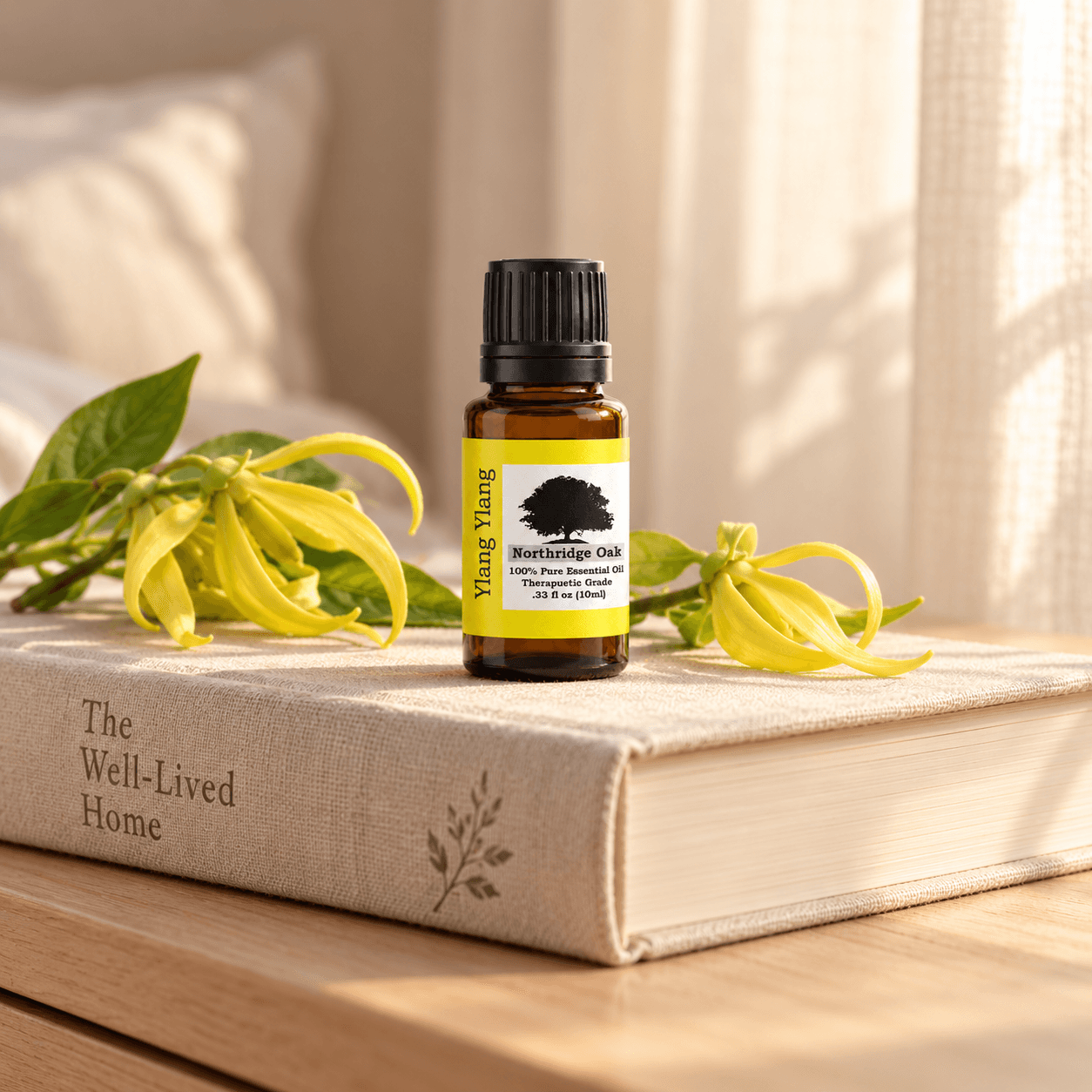
Northridge Oak Ylang Ylang is steam-distilled Cananga odorata from Madagascar. It is 100% pure, undiluted, bottled in small batches and third-party GC/MS tested. Because this flower creates such an expressive oil, a little goes a long way—often one measured drop is enough to change the direction of an entire blend.
What is Ylang Ylang essential oil?
Ylang Ylang essential oil comes from the fragrant flowers of the tropical Cananga odorata tree. The tree belongs to the Annonaceae family and is valued throughout tropical regions for flowers with an unusually rich natural perfume. Steam distillation captures the volatile aromatic compounds, creating an oil that is far more concentrated than the scent of a single blossom.
Ylang Ylang has a special place in fine fragrance because it behaves like a complete floral heart note. It can connect sparkling top notes such as Bergamot and Lemon with deeper base notes such as Cedarwood, Frankincense, Patchouli and Vetiver. That same talent makes it rewarding for home blending: even a beginner can create a polished aroma with three thoughtfully chosen oils.
What does Ylang Ylang smell like?
The aroma is creamy, sweet, tropical, floral and gently spicy. Some people notice ripe fruit or honeyed petals; others think of jasmine, custard or a warm tropical garden. The opening is full and floral, the middle becomes smooth and rounded, and the dry-down stays warm on a scent strip or in a properly diluted perfume.
Dose changes the experience dramatically. Concentrated vapor at the bottle opening can feel intense, while one drop surrounded by citrus, lavender or wood becomes airy and sophisticated. The guide to what Ylang Ylang smells like includes scent comparisons and three easy ways to experience its development.
Why people love Ylang Ylang
Ylang Ylang creates atmosphere. It can signal that work is finished, make a bedroom feel softer, turn a massage oil into a botanical perfume or bring elegance to a simple citrus diffuser blend. Its most dependable benefits are experiential: beauty, sensory pleasure and the ability to make a familiar routine feel intentional.
Human research adds genuine interest. Studies have measured blood pressure, pulse, mood, calmness, attentiveness and cognitive performance during Ylang Ylang aroma exposure or after controlled skin application. The findings are especially relevant to quiet, low-pressure settings such as evening diffusion, reading, massage and slow breathing.
What blends well with Ylang Ylang?
Citrus oils are the easiest partners. Bergamot Essential Oil makes Ylang Ylang elegant and luminous. Blood Orange adds juicy sweetness, Lemon adds clarity and Grapefruit gives the floral note a fresh modern edge.
Lavender Essential Oil makes the blend softer and more familiar. Geranium adds a rosy green quality. Cedarwood provides warm structure, Frankincense creates a smooth resinous finish and Patchouli turns the formula toward rich natural perfume.
A dependable starting ratio is three parts citrus, one part Ylang Ylang and one part wood or resin. Evaluate the blend on paper or in a diffuser, then change one drop at a time. Our complete guide to blending Ylang Ylang explains what every aromatic family contributes.
How to diffuse Ylang Ylang
For a typical 100–200 mL ultrasonic diffuser, begin with one drop Ylang Ylang as part of 3–6 total drops. Add water to the manufacturer’s fill line, add the oils and diffuse for 15–20 minutes. Pause, refresh the air and let the fragrance settle before deciding whether another brief session would feel welcome.
Golden Morning
You will need: 3 drops Blood Orange, 2 drops Bergamot and 1 drop Ylang Ylang.
Directions: Add to a water-filled diffuser and run for 15–20 minutes. The citrus makes the flower bright, friendly and easy to enjoy.
Velvet Evening
You will need: 3 drops Lavender, 1 drop Ylang Ylang and 1 drop Frankincense.
Directions: Diffuse earlier in the evening while you tidy the room, read or prepare for tomorrow. The blend begins floral and settles into a warm resinous softness.
Floral Woods
You will need: 2 drops Cedarwood, 2 drops Bergamot and 1 drop Ylang Ylang.
Directions: Diffuse for 15 minutes. Cedarwood gives the sweet floral note a dry, elegant base.
Find more measured formulas in 20 Ylang Ylang diffuser blends.
Ylang Ylang for relaxation and mood
Ylang Ylang fits rituals that help the day soften: turning off unnecessary notifications, lowering the lights, breathing slowly, stretching, journaling or enjoying a quiet cup of tea. A distinctive aroma can become a sensory cue that marks the transition from activity to rest.
In a 2004 randomized clinical study of 24 healthy volunteers, Ylang Ylang inhalation was associated with significant decreases in blood pressure and pulse and increases in subjective attentiveness and alertness compared with an odorless control. The authors described the combined pattern as “harmonizing.” A 2008 randomized study of 144 volunteers found that Ylang Ylang significantly increased calmness. These findings give the oil a particularly interesting foundation for low-pressure evening routines.
Try 3 drops Bergamot, 2 drops Lavender and 1 drop Ylang Ylang for a ten-minute reset. Turn the diffuser on, put the phone aside, take several comfortable breaths and write down the first priority for tomorrow. The full Ylang Ylang relaxation and mood guide explains the studies and offers three complete routines.
Ylang Ylang for sleep and bedtime atmosphere
A bedtime aroma works best as part of a repeatable sequence. Diffuse briefly before bed, prepare the room, dim the lights, set out tomorrow’s essentials and choose a quiet activity. After 15–20 minutes, turn off the diffuser and let the softened room hold the aroma.
For a gentle bedroom blend, use 4 drops Lavender, 1 drop Ylang Ylang and 1 drop Cedarwood. Lavender leads, Cedarwood adds warmth and Ylang Ylang gives the blend its creamy floral heart. The Ylang Ylang bedtime guide includes four diffuser recipes, a body oil and a thirty-minute wind-down sequence.
Ylang Ylang natural perfume
Ylang Ylang is one of the easiest oils for making a simple blend smell like a composed fragrance. Citrus creates the opening, Ylang Ylang forms the heart and a wood, resin or earthy oil anchors the dry-down.
Golden Floral roll-on
You will need: 2 drops Bergamot, 1 drop Ylang Ylang, 1 drop Cedarwood and enough jojoba to fill a 10 mL roll-on.
Directions: Add the essential oils, fill with jojoba, cap and roll gently. Label, patch test and let the perfume rest for 24 hours. Apply sparingly to wrists or forearms.
Quiet Garden roll-on
You will need: 1 drop Bergamot, 1 drop Lavender, 1 drop Ylang Ylang, 1 drop Frankincense and 10 mL jojoba.
This blend opens with citrus, moves into a soft floral center and finishes smooth and resinous. Explore five roll-ons and a solid perfume in our Ylang Ylang natural perfume recipes.
Ylang Ylang for massage and body care
Ylang Ylang gives massage oil a rich floral character with only a small amount. Carrier oil provides glide, warm hands create comfort and slow movements make the ritual feel restorative. For many healthy adults using a small area occasionally, begin around 0.5–1% total essential oil.
Velvet Floral massage oil
You will need: 2 drops Ylang Ylang, 2 drops Lavender, 2 drops Bergamot and 1 ounce jojoba or fractionated coconut oil.
Directions: Combine in a clean bottle, label and patch test. Warm a teaspoon or less between palms and massage shoulders, forearms or legs with smooth, comfortable pressure.
A 2006 study of 40 healthy volunteers examined Ylang Ylang after controlled transdermal absorption and found a physiological and subjective pattern the researchers interpreted as relaxing. Learn more in Ylang Ylang for skin and massage.
Ylang Ylang for hair and scalp routines
In hair care, Ylang Ylang adds a luxurious fragrance to a pre-shampoo oil and makes gentle scalp massage feel special. Jojoba provides light slip, while Rosemary adds a crisp herbal contrast and Lavender keeps the floral profile soft.
Floral Scalp pre-shampoo oil
You will need: 2 drops Ylang Ylang, 2 drops Lavender, 2 drops Rosemary Essential Oil and 1 ounce jojoba.
Directions: Combine and label. Part dry hair, apply a few drops of the finished oil and massage gently for two to three minutes. Leave for 15–30 minutes, then shampoo thoroughly. Begin once weekly and adjust the amount to suit your hair.
Ylang Ylang research is strongest in aroma and mood rather than hair growth, so the hair and scalp guide focuses on the tangible pleasures of fragrance, lubrication and consistent gentle care.
What Ylang Ylang research says
Four human studies make the research story especially useful. The 2004 inhalation trial involved 24 volunteers and reported changes in blood pressure, pulse and subjective attentiveness. The 2006 transdermal study involved 40 volunteers and reported a relaxing pattern. The 2008 randomized aroma study involved 144 volunteers and found increased calmness, along with changes in alertness, memory and processing speed that help clarify when the oil fits best. A 2013 study added further human blood-pressure and heart-rate observations.
These studies support Ylang Ylang’s place in calm, low-demand rituals and invite continued human research. They also show why context matters: an oil that feels lovely during reading, massage or an evening transition may serve a different purpose than an oil selected for concentrated study.
Chemically, Ylang Ylang may contain linalool, benzyl acetate, benzyl benzoate, germacrene D, beta-caryophyllene, methyl benzoate and other aromatic constituents. Exact composition varies with botanical material and distillation. Third-party GC/MS testing connects the product name to measurable chemistry. Read the full Ylang Ylang research and chemistry guide for study designs, sample sizes and plain-English interpretation.
Ylang Ylang essential oil safety
Ylang Ylang’s strength makes conservative use both easy and beautiful. Begin with one drop in a diffuser blend. Dilute before skin application and patch test the finished formula. Keep the oil away from eyes, ears, mucous membranes and sensitive areas, and reserve it for aromatic and appropriately diluted topical use.
Pregnancy, breastfeeding, young children, pets and individual health considerations benefit from guidance tailored to the exact household. Keep bottles and homemade products secured. Use brief diffusion with fresh airflow and let every person or animal leave the room freely. The complete Ylang Ylang safety guide includes dilution tables, pets, children, storage and first-aid guidance.
Choose your first Ylang Ylang routine
If you are new to the oil, begin with Golden Morning: 3 drops Blood Orange, 2 drops Bergamot and 1 drop Ylang Ylang. It introduces the flower through bright, familiar citrus. If you love the aroma, try the Golden Floral roll-on or the Velvet Floral massage oil after patch testing.
The best first experience is simple, measured and easy to repeat. Ylang Ylang earns its place by doing something few oils can do so effortlessly: it makes a room, a blend or a small act of care feel beautifully finished.
Why choose Northridge Oak Ylang Ylang Essential Oil?
Northridge Oak Ylang Ylang Essential Oil is steam-distilled Cananga odorata from Madagascar, bottled undiluted in a 10 mL amber glass bottle and third-party GC/MS tested. It contains no fillers or synthetic fragrance.
Northridge Oak is a family-owned company in Pea Ridge, Arkansas. Since 2016, our goal has been to make pure essential oils easier to understand and more enjoyable in real homes. Small-batch bottling, clear botanical identity, testing and practical education help you know exactly what you purchased and how to make it part of a routine you genuinely love.
Continue learning about Ylang Ylang essential oil
Choose the guide that matches what you would like to make or understand next:
- Ylang Ylang Essential Oil Diffuser Blends: 20 Floral Recipes
- What Blends Well With Ylang Ylang Essential Oil?
- What Does Ylang Ylang Essential Oil Smell Like?
- Ylang Ylang Essential Oil for Relaxation, Stress & Mood
- Ylang Ylang Essential Oil for Sleep & Bedtime
- Ylang Ylang Natural Perfume Recipes
- Ylang Ylang Essential Oil for Hair & Scalp Care
- Ylang Ylang Essential Oil for Skin & Massage
- Ylang Ylang Essential Oil Research: Studies & Chemistry
- Ylang Ylang Essential Oil Safety
These statements have not been evaluated by the Food and Drug Administration. Northridge Oak products are not intended to diagnose, treat, cure or prevent disease.