Table of Contents
- The clearest comparison
- Sweet Basil: fresh and highly blendable
- Holy Basil: warm, spicy and culturally significant
- Why chemistry can overlap
- Do they have different benefits?
- Which is better for a diffuser?
- Which is better for massage?
- Can you use culinary Basil instead?
- How to read a Basil label
- Which should you choose?
- A simple Sweet Basil scent test
- Names on marketplaces can be inconsistent
- Continue learning about Basil essential oil
- Frequently Asked Questions
“Basil oil” can sound like one familiar product, but Sweet Basil and Holy Basil come from different botanical species and can have notably different aromas and chemical profiles. Northridge Oak Basil Essential Oil is Ocimum basilicum from India. Holy Basil—often called tulsi—is usually Ocimum tenuiflorum or the synonym Ocimum sanctum. Knowing that distinction helps you choose recipes and safety guidance that actually fit the bottle.
The clearest comparison
| Sweet Basil | Holy Basil / Tulsi | |
|---|---|---|
| Typical botanical name | Ocimum basilicum | Ocimum tenuiflorum or O. sanctum |
| Common aroma | Fresh, green, sweet, lightly spicy; sometimes anise-like | Herbal, warm, spicy, clove-like or camphoraceous depending on type |
| Common chemistry | May emphasize linalool, estragole or other profiles | May emphasize eugenol, methyl eugenol or other profiles |
| Best buying rule | Check Latin name and GC/MS | Check Latin name, variety and GC/MS |
Sweet Basil: fresh and highly blendable
Ocimum basilicum is the species most people associate with culinary sweet basil, although the essential oil is far more concentrated than the herb. Its scent often feels green, sweet and lightly spicy. Depending on chemotype, linalool can add floral softness while estragole can add an anise-like nuance.
Sweet Basil pairs readily with Lemon, Blood Orange, Lavender, Rosemary, Cedarwood and Frankincense Essential Oil. It is especially appealing in bright workday blends and gentle herb-garden aromas.
Holy Basil: warm, spicy and culturally significant
Holy Basil or tulsi has deep cultural and spiritual importance in South Asia. Essential oil from Ocimum tenuiflorum may smell warmer, more pungent or more clove-like than a linalool-rich Sweet Basil oil, although varieties and batches differ.
Tulsi’s traditional use as an herb or tea belongs to a different preparation category from its concentrated essential oil, so each deserves its own guidance. A culinary infusion, standardized extract and essential oil are chemically and pharmacologically different preparations.
Why chemistry can overlap
Species names are the starting point, and chemotype or batch testing adds the detail needed to understand the constituent profile. Sweet Basil can have different chemotypes, and Holy Basil composition also varies with variety, region, harvest and distillation. Eugenol may appear in both; methyl eugenol or estragole may be relevant in particular profiles.
Because their aromas can overlap, the label’s botanical name and batch documentation provide the most reliable identification. The label and batch GC/MS report are more useful than a broad “sweet versus spicy” rule.
Do they have different benefits?
Research on Basil plants includes culinary material, extracts, isolated constituents and essential oils. Studies on Holy Basil tea or extract tell us about those particular preparations; essential-oil inhalation deserves research designed specifically for that route. Likewise, a study on one Sweet Basil chemotype is most useful when compared with a chemically similar oil.
For home aromatherapy, choose based on confirmed identity, aroma, quality documentation and an appropriate safety profile rather than expecting one species to provide a superior medical benefit.
Which is better for a diffuser?
Sweet Basil is an approachable choice when you want fresh, green and bright. Try 3 drops Lemon, 2 drops Sweet Basil and 1 drop Cedarwood. Holy Basil may suit someone who deliberately wants a warmer, spicier or clove-like profile and has safety guidance for the exact bottle.
Review the new oil’s chemistry and topical guidance before adapting a recipe drop-for-drop. Stronger eugenol-rich material can change both aroma and topical considerations.
Which is better for massage?
Neither should be selected for skin solely by common name. Review the batch chemistry and topical maximum. For Northridge Oak Sweet Basil, a conservative adult starting blend is 3 drops Basil plus 3 drops Lavender in 1 ounce carrier oil, provided the product documentation and individual circumstances support use.
Patch test. Pregnancy, breastfeeding, medications, medical conditions, sensitive skin and use around children require individualized guidance.
Can you use culinary Basil instead?
Fresh basil leaves and essential oil serve different purposes. Leaves can bring fragrance to food when used normally. Essential oil is highly concentrated and belongs in aromatic or appropriately diluted topical routines rather than culinary recipes. Do not ingest essential oil or add it to recipes, tea, water or capsules.
How to read a Basil label
Look for the Latin name, country of origin, plant part, extraction method and batch or lot information. Ask whether GC/MS testing is available. Treat “Basil,” “Sweet Basil” and “Tulsi” as distinct names that deserve botanical confirmation.
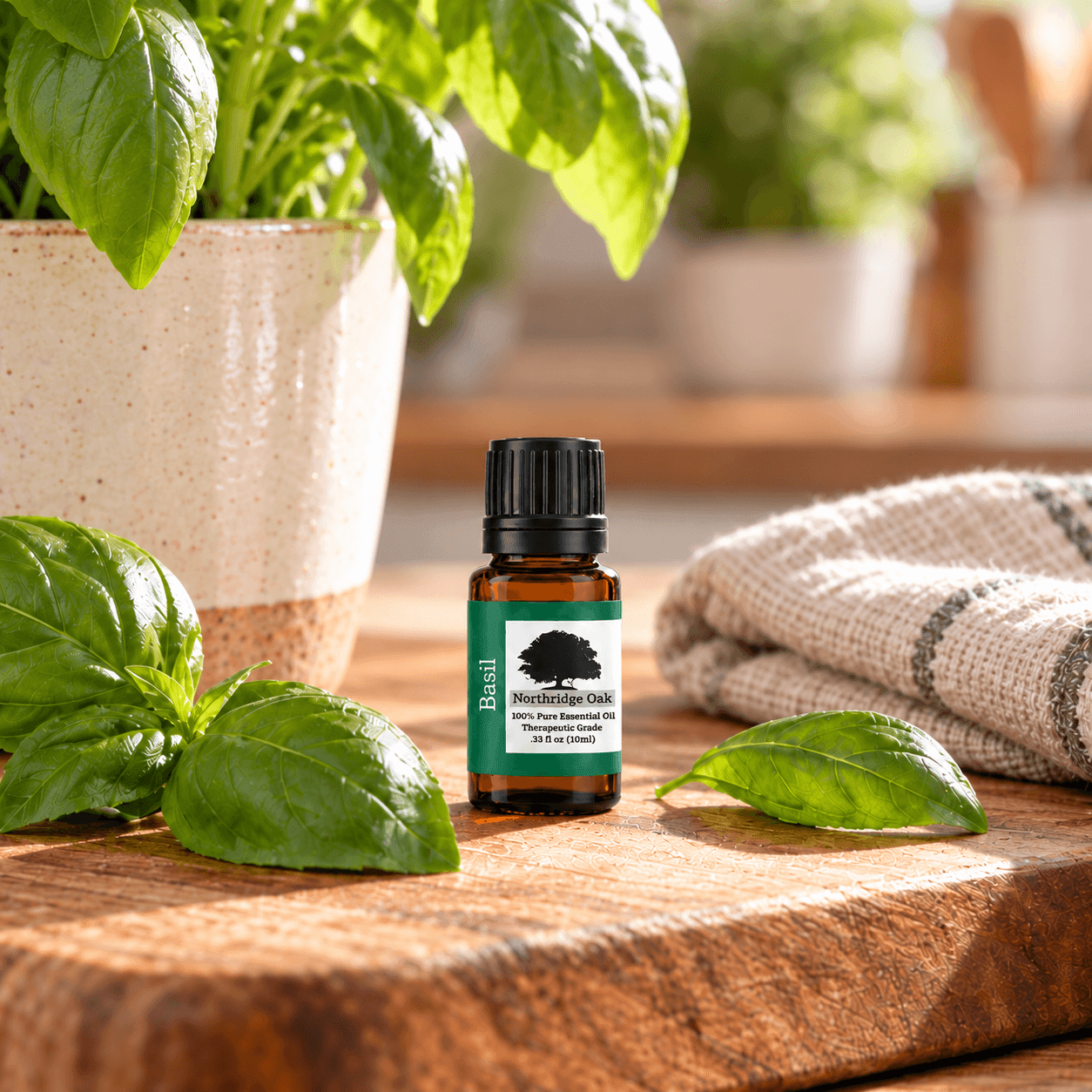
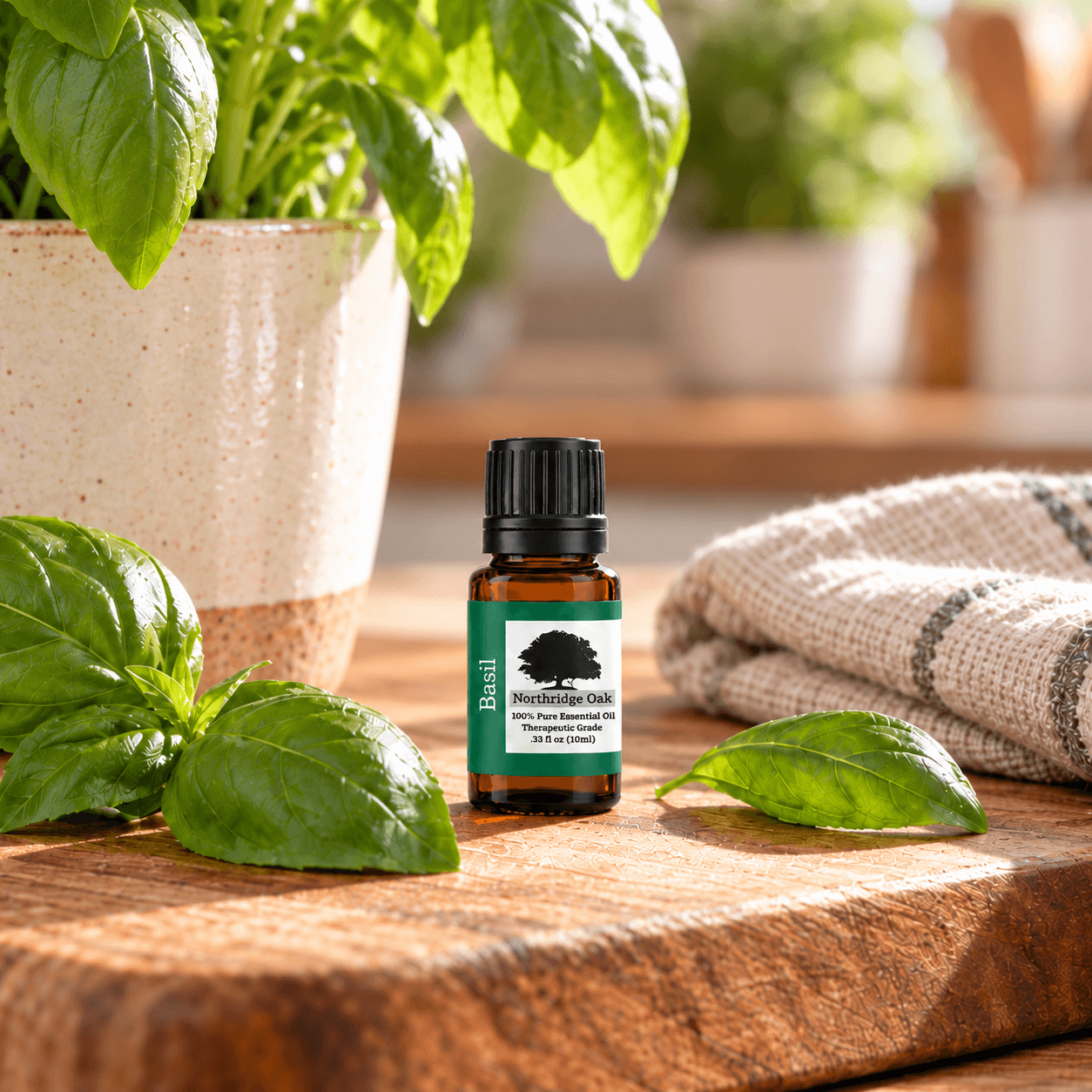
Northridge Oak identifies this product as Ocimum basilicum, sourced from India, steam distilled, 100% pure, undiluted and third-party GC/MS tested.
Which should you choose?
Choose Sweet Basil when you want a fresh, familiar herb-garden aroma that blends easily with citrus, florals and woods. Explore Holy Basil only when you specifically want its warmer character and can verify the species and profile. Neither is universally better; the right bottle is the one whose identity, aroma and safe-use guidance match your intended routine.
A simple Sweet Basil scent test
Place one drop Sweet Basil on a paper strip. On a second strip, place one drop Sweet Basil and one drop Lemon. On a third, use one drop Sweet Basil and one drop Lavender. Smell immediately and after fifteen minutes. The exercise reveals whether you prefer Basil bright, soft or on its own—and makes your next blend much easier to choose.
Names on marketplaces can be inconsistent
Some listings use “Basil,” “Sweet Basil,” “Tulsi” or “Holy Basil” loosely, and a front-label name may omit the species entirely. Use the botanical name, plant part, extraction method and batch documentation to identify the oil with confidence. The Latin name and batch documentation should agree. If they are missing, choose a better-documented product before adapting a topical recipe.
Continue learning about Basil essential oil
Choose the guide that matches what you would like to make or understand next:
- Basil Essential Oil: Benefits, Uses, DIY Recipes & Diffuser Blends
- Basil Essential Oil Diffuser Blends: 20 Fresh Recipes
- What Blends Well With Basil Essential Oil?
- What Does Basil Essential Oil Smell Like?
- Basil Essential Oil for Focus, Work & Study
- Basil Essential Oil for Sore Muscles & Massage
- Basil Essential Oil for Hair & Scalp Care
- Basil Essential Oil for Cleaning & Home Aromas
These statements have not been evaluated by the Food and Drug Administration. Northridge Oak products are not intended to diagnose, treat, cure or prevent disease.