Table of Contents
- What Basil can contribute to massage
- Start with approximately 1%
- Garden Ease Massage Oil
- Warm Herb and Wood Massage Oil
- Fresh Post-Activity Blend
- A ten-minute shoulder ritual
- Carrier oils change the experience
- How to prepare a properly dispersed bath blend
- When professional care comes first
- Keep the blend fresh
- Let comfortable pressure guide the massage
- Continue learning about Basil essential oil
- Frequently Asked Questions
After gardening, a long drive, a demanding workout or an afternoon spent on your feet, massage can be a welcome way to slow down and give tired areas some attention. Basil Essential Oil brings a fresh, green and lightly spicy aroma to that ritual. Paired with lavender, cedarwood or frankincense, it smells warm and restorative without needing to make a medical promise.
What Basil can contribute to massage
Massage itself can support comfort through touch, warmth, attention and temporary changes in how an area feels. Basil adds an herbaceous aroma that many people associate with freshness and movement. Research on Basil and its constituents provides an intriguing scientific backdrop for a massage ritual centered on aroma, carrier-oil glide, warmth and comfortable pressure.
That distinction still leaves plenty of room for a useful ritual. A well-diluted oil can make self-massage more appealing and help you take several unhurried minutes to notice how your body feels.
What an animal inflammation study found
A 2016 study by Rodrigues and colleagues tested Ocimum basilicum essential oil and estragole in several mouse models of swelling and inflammation. The tested oil contained 60.96% estragole, and the researchers reported reductions in paw edema and other inflammatory measures at the studied oral doses. The full study is indexed in PubMed.
The result helps explain why Basil chemistry continues to interest researchers and creates a strong foundation for future human studies. The animals received measured systemic doses, while an at-home massage blend is used on the skin. For readers, the evidence supports genuine curiosity, while the most immediate value comes from the herbal aroma, carrier-oil glide, comfortable pressure and a few unhurried minutes of massage.
Start with approximately 1%
For many healthy adults using a small area, about 6 total essential-oil drops in 1 ounce (30 mL) carrier oil is a practical starting point. Basil chemistry can vary by chemotype and batch, so conservative formulation and product-specific documentation matter. Use less for frequent application or sensitive skin.
Patch test the complete blend on the inner forearm and wait 24 hours. Stop for redness, burning, itching, swelling or discomfort. Choose healthy, intact skin for massage, and bring acute injuries, unexplained swelling or significant pain to a qualified clinician for assessment.
Garden Ease Massage Oil
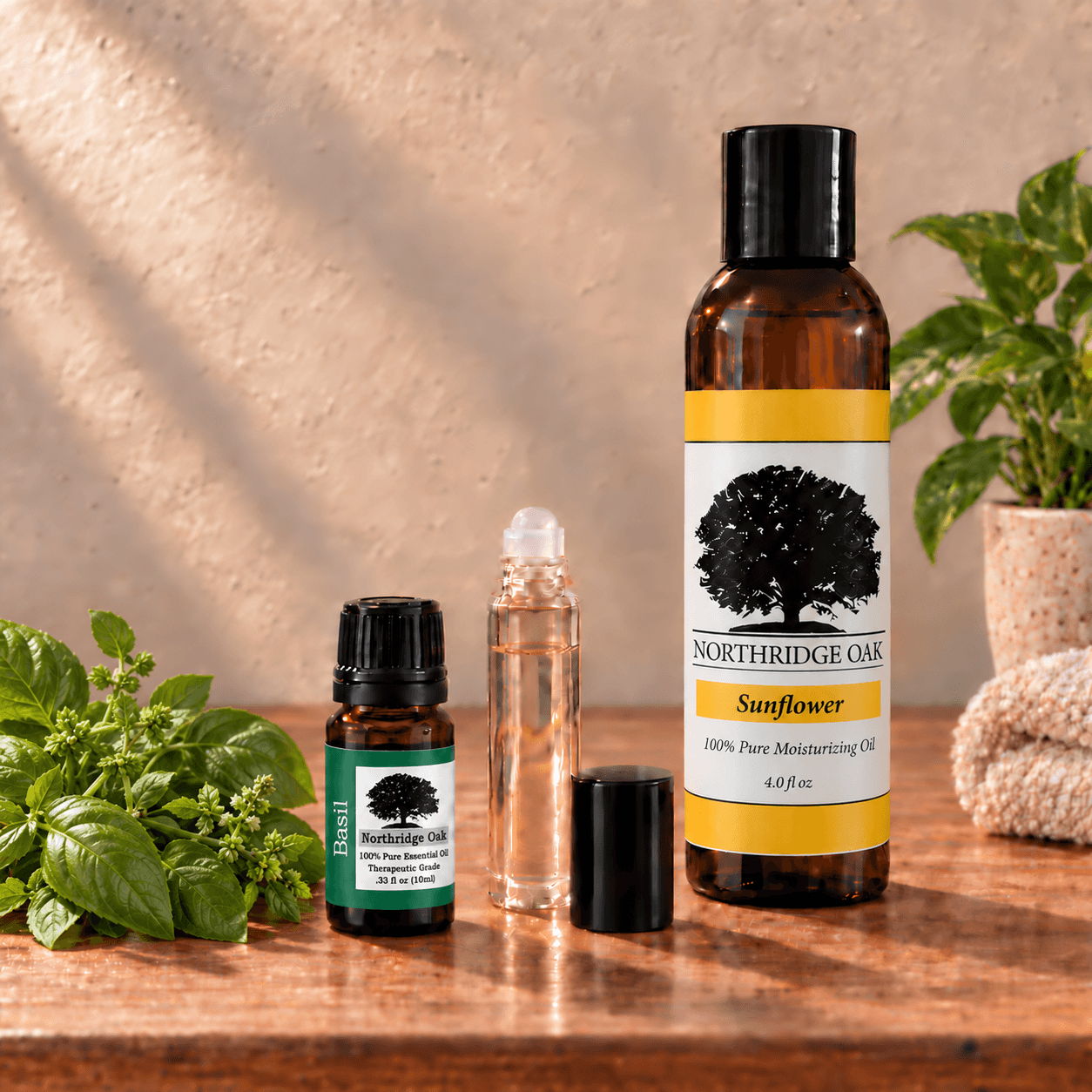
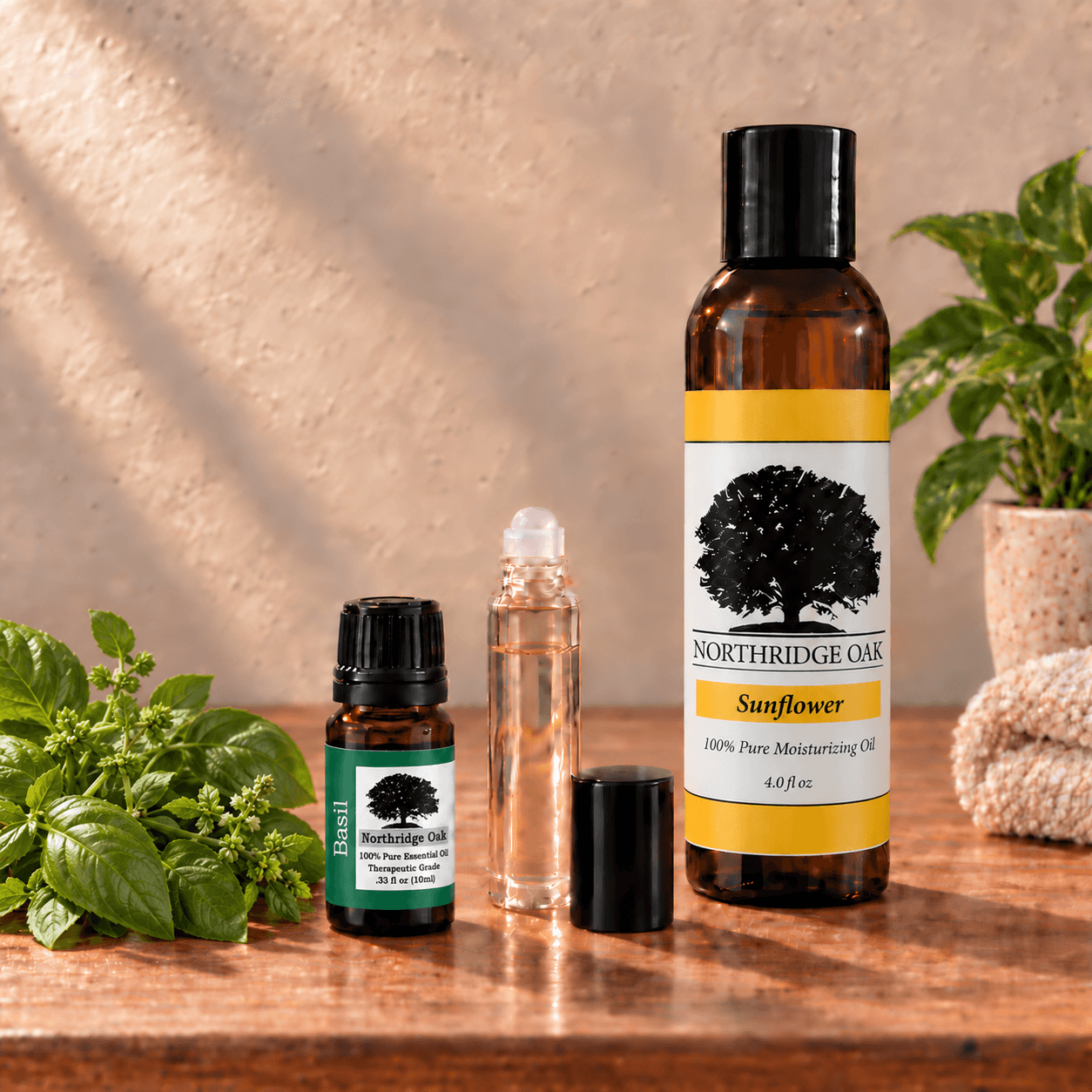
You will need: 3 drops Basil, 2 drops Lavender Essential Oil, 1 drop Frankincense Essential Oil, 1 ounce jojoba or fractionated coconut oil, and a clean bottle.
Directions: Add the essential oils to the bottle, fill with carrier, cap and roll gently. Label with ingredients, dilution and date. Apply a teaspoon or less to shoulders, forearms, calves or another small area and massage with comfortable pressure for three to five minutes.
Warm Herb and Wood Massage Oil
You will need: 3 drops Basil, 2 drops Cedarwood Essential Oil, 1 drop Lavender and 1 ounce carrier oil.
Directions: Combine, label and patch test. This blend smells dry, green and softly warm. Use a small amount after bathing or on a quiet evening, keeping it away from the face and sensitive areas.
Fresh Post-Activity Blend
You will need: 2 drops Basil, 2 drops Lavender, 1 drop Rosemary Essential Oil, 1 drop Peppermint Essential Oil and 1 ounce carrier oil.
Directions: Blend and patch test as above. Apply sparingly to a small adult area. Peppermint creates a cooling sensation, so wash hands well and keep away from eyes, face, heat and sensitive skin. This formula is designed for healthy adults; children benefit from individualized pediatric and aromatherapy guidance.
A ten-minute shoulder ritual
Warm a teaspoon of the prepared Garden Ease oil between your palms. With relaxed fingers, make slow circles over the upper shoulders without pressing directly on the neck bones. Follow with long strokes toward the outside of the shoulders. Pause whenever the pressure stops feeling comfortable.
Finish by resting your hands lightly on the shoulders and taking three easy breaths. The purpose is to create a few restorative minutes of warmth, comfortable movement and attentive self-care.
Carrier oils change the experience
Jojoba feels silky and relatively dry. Fractionated coconut oil is lightweight and gives good glide. Sweet almond oil is richer but is unsuitable for someone with the relevant allergy. Choose a carrier based on skin preference, stability and the length of massage.
Water-based lotions require a properly designed preservation system; essential oils are included for aroma rather than preservation. For the simplest home formula, use a water-free carrier oil or scent a small portion of a professionally preserved fragrance-free base.
How to prepare a properly dispersed bath blend
Use a properly formulated bath base so Basil disperses evenly through the water and reaches the skin at a comfortable concentration. A carrier oil may dilute it but also makes the tub slippery. Use a properly formulated bath base according to its supplier’s directions, or enjoy the massage blend before a shower while keeping oil away from the floor.
When professional care comes first
Seek qualified care for severe or persistent pain, a suspected tear or fracture, significant swelling, redness and heat, weakness, numbness, chest pain, breathing difficulty or symptoms after a major injury. Massage and aroma are comfort practices that pair well with appropriate professional assessment whenever symptoms call for it.
Pregnancy, breastfeeding, medications, medical conditions and use around children require individualized guidance. Basil oil composition varies, making the botanical name, batch chemistry and supplier guidance the best tools for choosing a topical limit.
Keep the blend fresh
Use a clean, dry bottle and label it. Store cool and dark. Make an amount you can finish rather than keeping a large bottle for years. Discard the blend if the aroma, color or texture changes.
A successful massage oil can smell beautifully balanced at a gentle concentration. It should make the ritual inviting while remaining comfortable on skin. Basil’s green character is memorable even at a restrained concentration.
Let comfortable pressure guide the massage
Aromatic massage feels best with smooth movements and pressure that remains comfortable throughout. Use slow, broad contact over muscular areas and reduce pressure around joints, the spine and tender points. If you are helping another adult, ask regularly about comfort rather than assuming silence means the pressure is right. The most successful Basil blend supports an unhurried experience and leaves the skin comfortable afterward.
Continue learning about Basil essential oil
Choose the guide that matches what you would like to make or understand next:
- Basil Essential Oil: Benefits, Uses, DIY Recipes & Diffuser Blends
- Basil Essential Oil Diffuser Blends: 20 Fresh Recipes
- What Blends Well With Basil Essential Oil?
- What Does Basil Essential Oil Smell Like?
- Basil Essential Oil for Focus, Work & Study
- Basil Essential Oil for Hair & Scalp Care
- Basil Essential Oil for Cleaning & Home Aromas
- Basil Essential Oil Research: Linalool, Estragole & Chemistry
These statements have not been evaluated by the Food and Drug Administration. Northridge Oak products are not intended to diagnose, treat, cure or prevent disease.