Table of Contents
- The short answer
- Citrus partners: the easiest place to begin
- Florals: a softer, more relaxed Basil
- Herbal partners: a true garden blend
- Woods and resins: warmth and staying power
- A simple blending formula
- Five reliable combinations
- From diffuser formula to skin formula
- Keep notes and trust your nose
- A quick way to compare pairings
- Continue learning about Basil essential oil
- Frequently Asked Questions
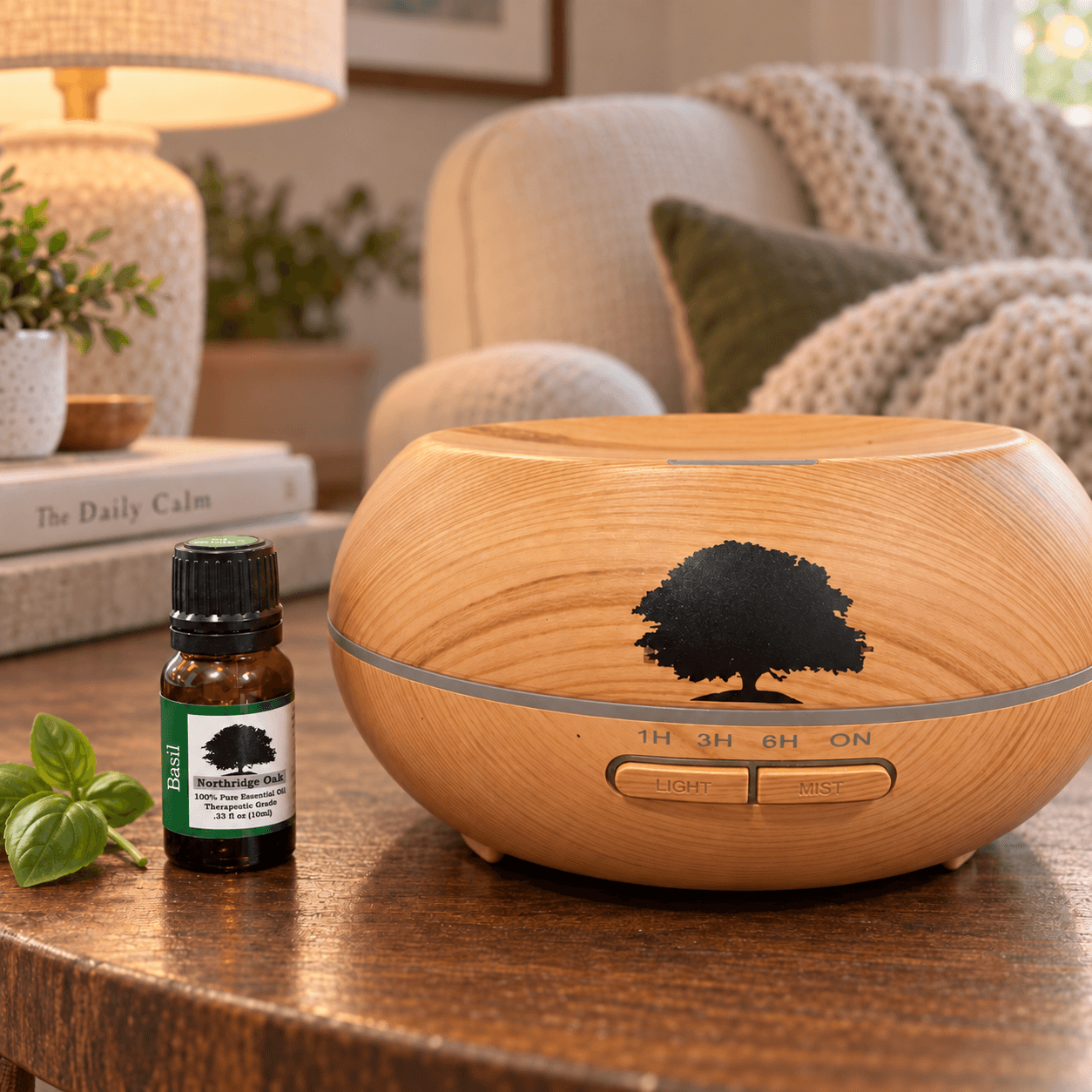
Basil Essential Oil is more versatile than its herb-garden reputation suggests. Citrus can make it bright and almost sparkling. Lavender draws out a softer sweetness. Woods and resins give its green aroma depth, while rosemary and peppermint make it feel crisp and purposeful. Once you understand those relationships, Basil becomes much easier to blend—and far more inviting to use.
The short answer
Basil blends especially well with Lemon, Blood Orange, Bergamot, Lavender, Rosemary, Peppermint, Eucalyptus, Cedarwood, Frankincense and Patchouli Essential Oil. The best partner depends on whether you want brightness, softness, freshness or depth.
Citrus partners: the easiest place to begin
Lemon makes Basil smell especially clean and green. Try 3 drops Lemon, 2 drops Basil and 1 drop Cedarwood in a diffuser. Blood Orange adds juicy sweetness: 3 drops Blood Orange, 2 drops Basil and 1 drop Rosemary creates a sunlit herb-garden impression. Bergamot is softer and more polished, making it a lovely choice when Lemon feels too sharp.
Citrus and Basil are both lively top-to-middle notes, so the aroma can move quickly. One drop of Cedarwood or Frankincense provides a slower finish without making the recipe heavy.
Florals: a softer, more relaxed Basil
Lavender is the most approachable floral partner. It rounds Basil’s sharper green edges and reveals its sweet side. Diffuse 3 drops Lavender, 2 drops Basil and 1 drop Frankincense. For an adult massage oil, combine 3 drops Lavender, 2 drops Basil and 1 drop Frankincense in 1 ounce (30 mL) carrier oil. This is approximately a 1% dilution; patch test before broader use.
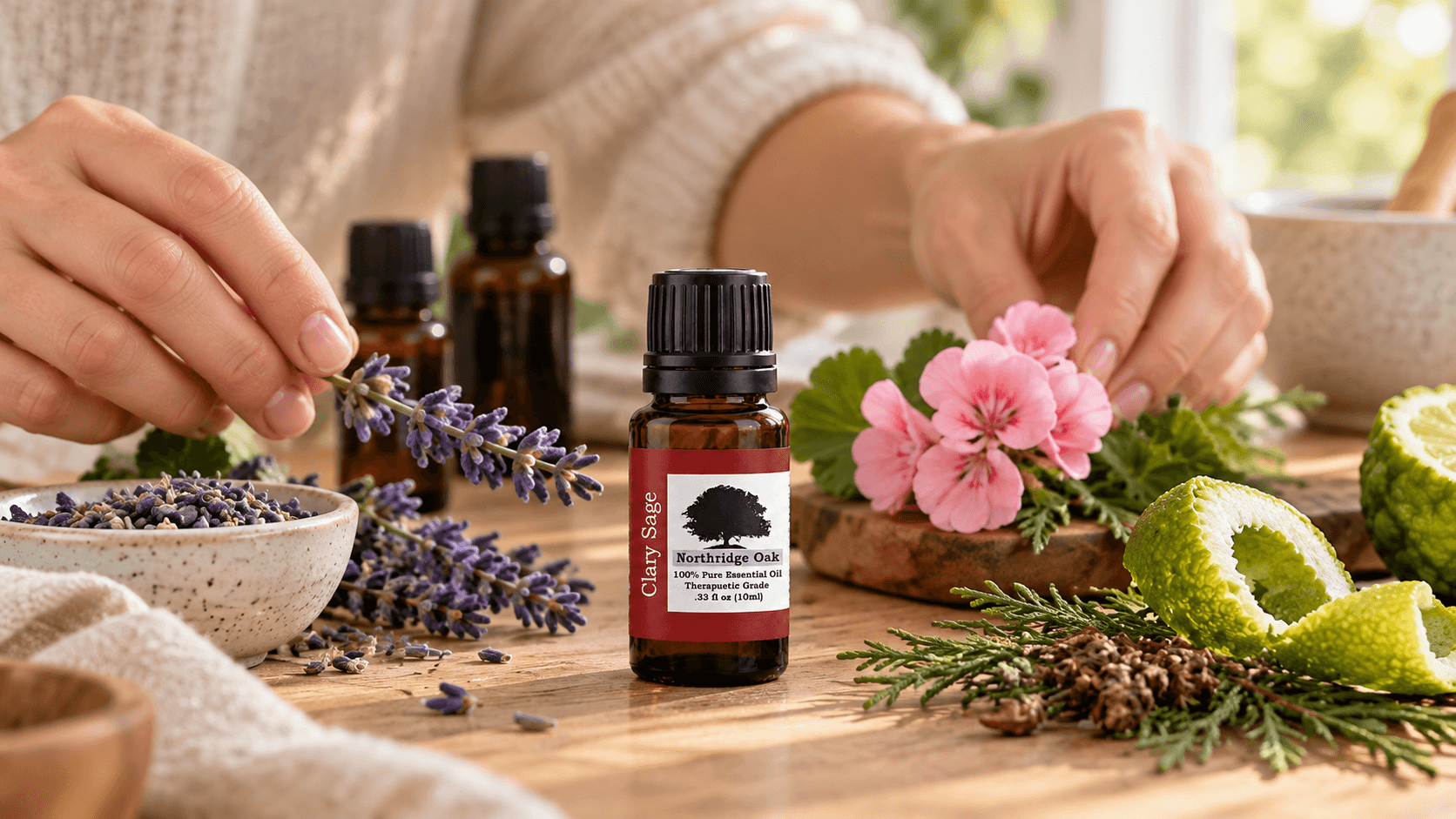
Clary Sage Essential Oil gives Basil a tea-like, herbaceous softness. Try 3 drops Bergamot, 2 drops Clary Sage and 1 drop Basil in an adult diffuser blend. Review each oil’s safety profile before use.
Herbal partners: a true garden blend
Rosemary makes Basil smell structured and purposeful. A 1:1 pairing can be intense, so add Lemon or Blood Orange to open the blend: 3 drops Lemon, 2 drops Basil and 1 drop Rosemary. Peppermint contributes a cooling lift; begin with one drop beside 3–4 drops citrus and 1–2 drops Basil.
Eucalyptus creates an airy, green aroma. Diffuse 3 drops Lemon, 2 drops Basil and 1 drop Eucalyptus in a ventilated adult space. These herb-and-mint combinations can feel stimulating, so they often fit daytime routines better than quiet evenings.
Woods and resins: warmth and staying power
Cedarwood gives Basil a dry, smooth foundation. Frankincense adds resinous spaciousness. Together they create a dependable structure: 2 drops Basil, 2 drops Cedarwood, 2 drops Frankincense. Add one drop Blood Orange if you want a friendlier opening.
Patchouli changes Basil dramatically, bringing out its earthy character. Start with only one drop Patchouli to 3 drops Blood Orange, 2 drops Basil and 1 drop Cedarwood. Patchouli has lasting power; restraint keeps the herb recognizable.
A simple blending formula
Begin with 3 drops of a friendly lead oil such as Lemon, Blood Orange, Bergamot or Lavender. Add 2 drops Basil. Smell the combination on a strip or diffuser lid. If it needs depth, add 1 drop Cedarwood or Frankincense. If it needs crispness, add 1 drop Rosemary or Peppermint. Stop when it feels complete.
Judging directly from open bottles can mislead you because concentrated vapor at the neck smells harsher than the diluted aroma in air. Give the blend several minutes, then change one drop at a time.
Five reliable combinations
Garden Morning
3 drops Lemon + 2 drops Basil + 1 drop Rosemary.
Soft Green
3 drops Lavender + 2 drops Basil + 1 drop Frankincense.
Sunlit Herb
3 drops Blood Orange + 2 drops Basil + 1 drop Cedarwood.
Fresh Air
3 drops Bergamot + 2 drops Basil + 1 drop Eucalyptus.
Earth and Leaf
3 drops Blood Orange + 2 drops Basil + 1 drop Patchouli.
From diffuser formula to skin formula
Create body-care formulas separately, using skin-appropriate dilution rather than a diffuser ratio. A diffuser recipe is designed for aroma in air; a topical formula must account for the finished concentration and the most restrictive oil in the blend. For many healthy adults using a small area, approximately 1%—about 6 total drops per ounce of carrier—is a practical starting point.
Basil oils can vary in chemistry, and that variation matters for topical limits. Know the botanical identity and review batch documentation. When in doubt, choose aromatic use or work with a trained formulator.
Keep notes and trust your nose
Write the recipe before you turn on the diffuser. Note what arrives first, what remains after twenty minutes and what you would change. Your ideal blend depends on the room, diffuser, batch and your own scent memory. The best formula is the combination that makes you smile and want to reach for the bottle again.
A quick way to compare pairings
Place one drop Basil on three separate scent strips. Add Lemon to the first, Lavender to the second and Cedarwood to the third. Smell from several inches away immediately and again after fifteen minutes. You will hear the same green “voice” in each strip, but citrus makes it sparkle, lavender rounds it and wood gives it weight. This exercise is an easy way to choose a direction before using six diffuser drops.
Continue learning about Basil essential oil
Choose the guide that matches what you would like to make or understand next:
- Basil Essential Oil: Benefits, Uses, DIY Recipes & Diffuser Blends
- Basil Essential Oil Diffuser Blends: 20 Fresh Recipes
- What Does Basil Essential Oil Smell Like?
- Basil Essential Oil for Focus, Work & Study
- Basil Essential Oil for Sore Muscles & Massage
- Basil Essential Oil for Hair & Scalp Care
- Basil Essential Oil for Cleaning & Home Aromas
- Basil Essential Oil Research: Linalool, Estragole & Chemistry
These statements have not been evaluated by the Food and Drug Administration. Northridge Oak products are not intended to diagnose, treat, cure or prevent disease.