Table of Contents
- How Basil can support a focused atmosphere
- A five-minute beginning ritual
- Four blends for different kinds of work
- Use time blocks rather than continuous diffusion
- A personal inhaler for portable routines
- Pair the aroma with evidence-based work habits
- Should you use the same scent during a test?
- When Basil feels too strong
- Create a seven-day cue
- Close the routine deliberately
- Continue learning about Basil essential oil
- Frequently Asked Questions
When a desk feels stale and your attention keeps wandering, a fresh aroma can help mark a clean beginning. Basil Essential Oil is especially well suited to that role. Its green, sweet and lightly spicy character feels alert and purposeful, while citrus, rosemary or a restrained touch of peppermint can shape it for the kind of work in front of you.
A human inhalation study offers an intriguing first look
In a 2024 Journal of Functional Foods study, Hong and colleagues analyzed sweet Basil (Ocimum basilicum) essential oil by GC–MS and then monitored brain-wave patterns, blood pressure and pulse while participants inhaled the aroma. Linalool was the major volatile compound. During inhalation, beta-wave activity increased in selected brain regions, gamma activity decreased, and blood-pressure and pulse measurements showed downward trends. The authors interpreted the pattern as relevant to stress responses and certain attention- or language-related brain functions. Read the peer-reviewed human inhalation study.
This is promising early evidence that Basil aroma can produce measurable short-term physiological changes. The study gives researchers an encouraging foundation for future human work. The warm, practical takeaway is to use Basil as an aromatic cue alongside habits that already help you concentrate—and to notice how naturally the scent fits your routine.
How Basil can support a focused atmosphere
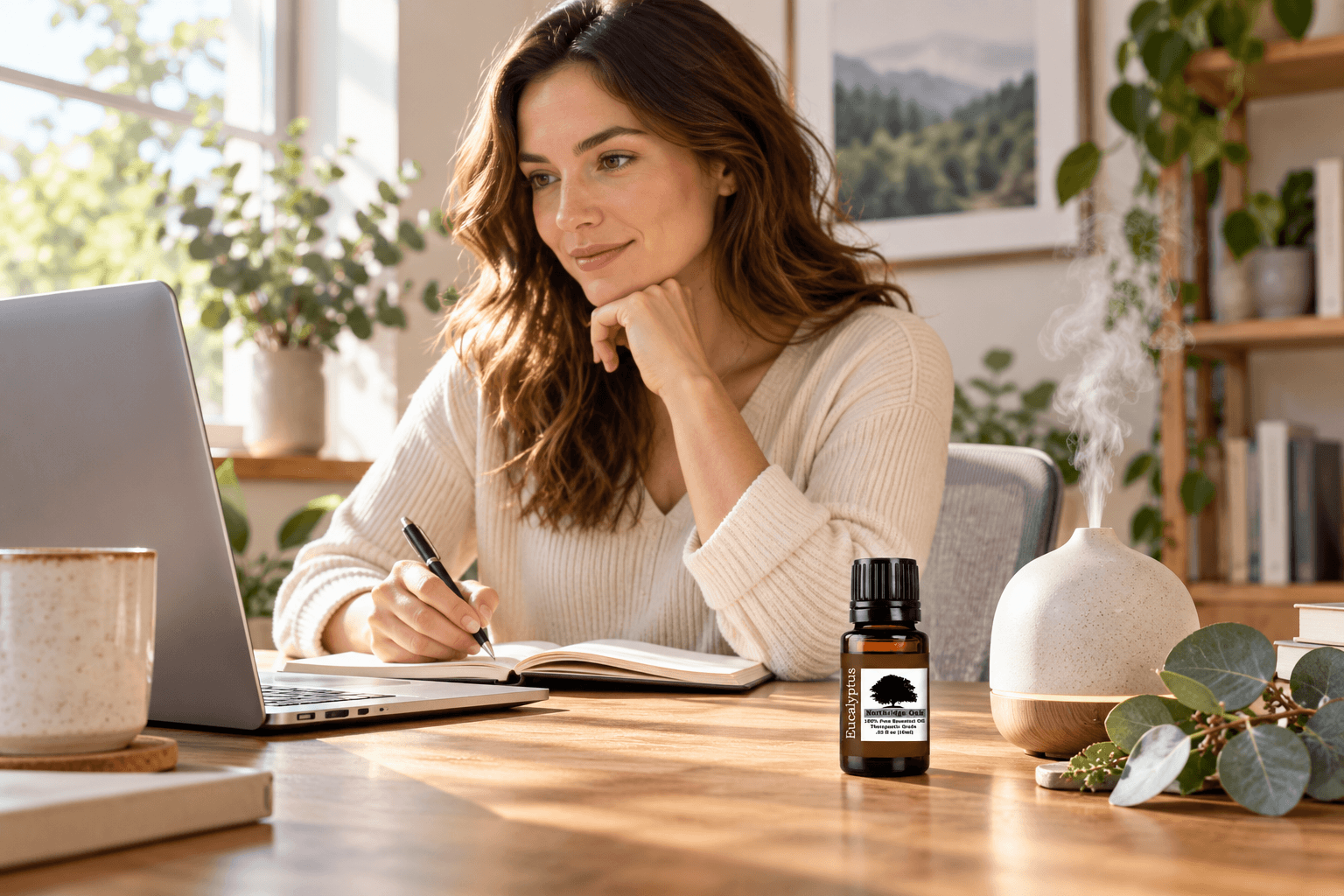
Basil works best as one enjoyable part of a strong routine that includes restorative sleep, clear priorities and appropriate professional support when needed. Aroma can play a smaller and genuinely useful role: it can change the sensory environment and become associated with a particular routine. When you use the same Basil blend while clearing distractions, setting a timer and beginning one defined task, the scent becomes part of the transition into work.
Research involving Basil species, individual constituents or aroma is mixed in method and relevance. Laboratory and animal findings help shape future questions, while the human inhalation study provides the most relevant early evidence for an aromatic work routine. The practical reason to try it is sensory: many people experience its herbaceous aroma as fresh, alert and compatible with daytime work.
A five-minute beginning ritual
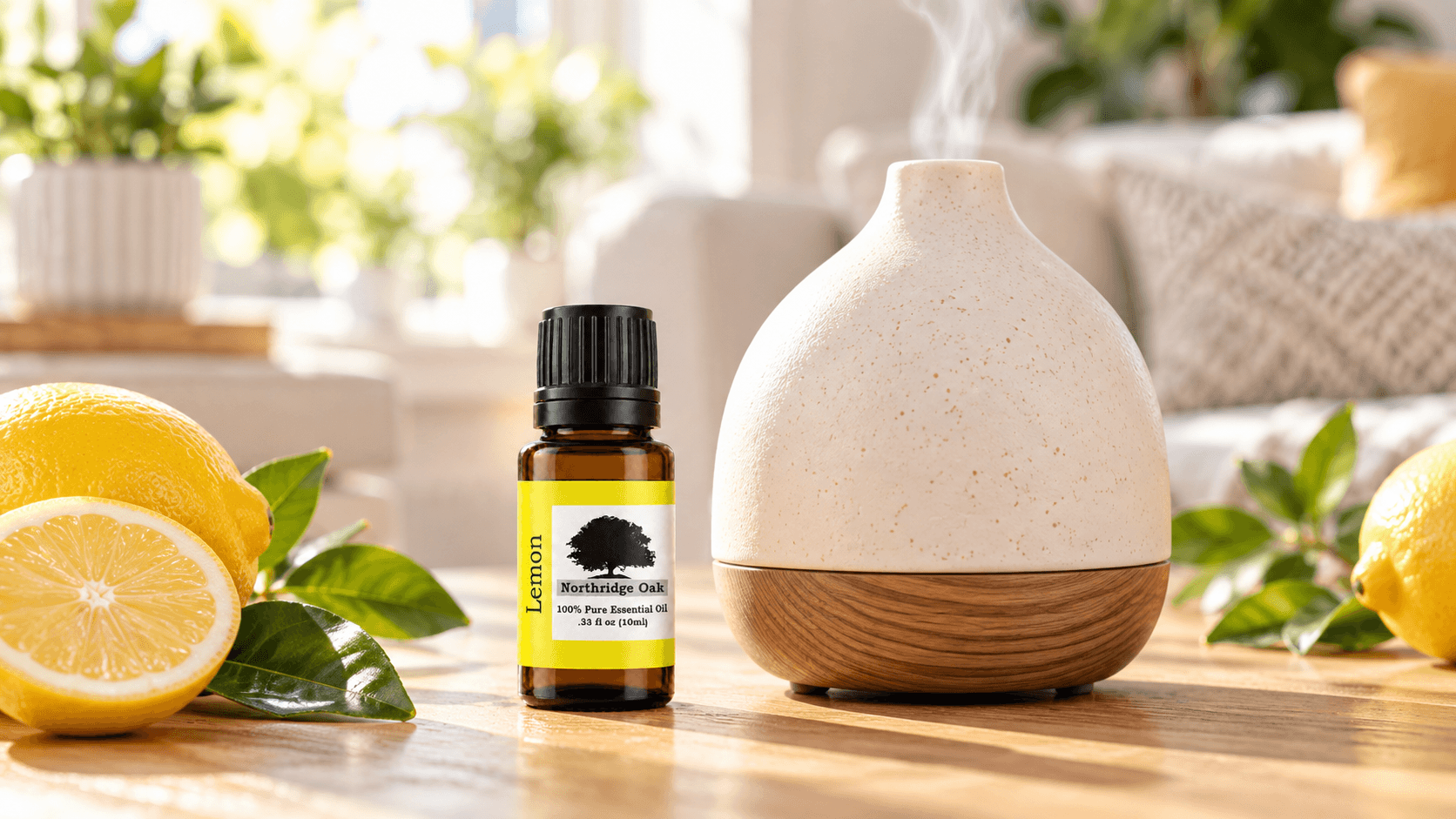
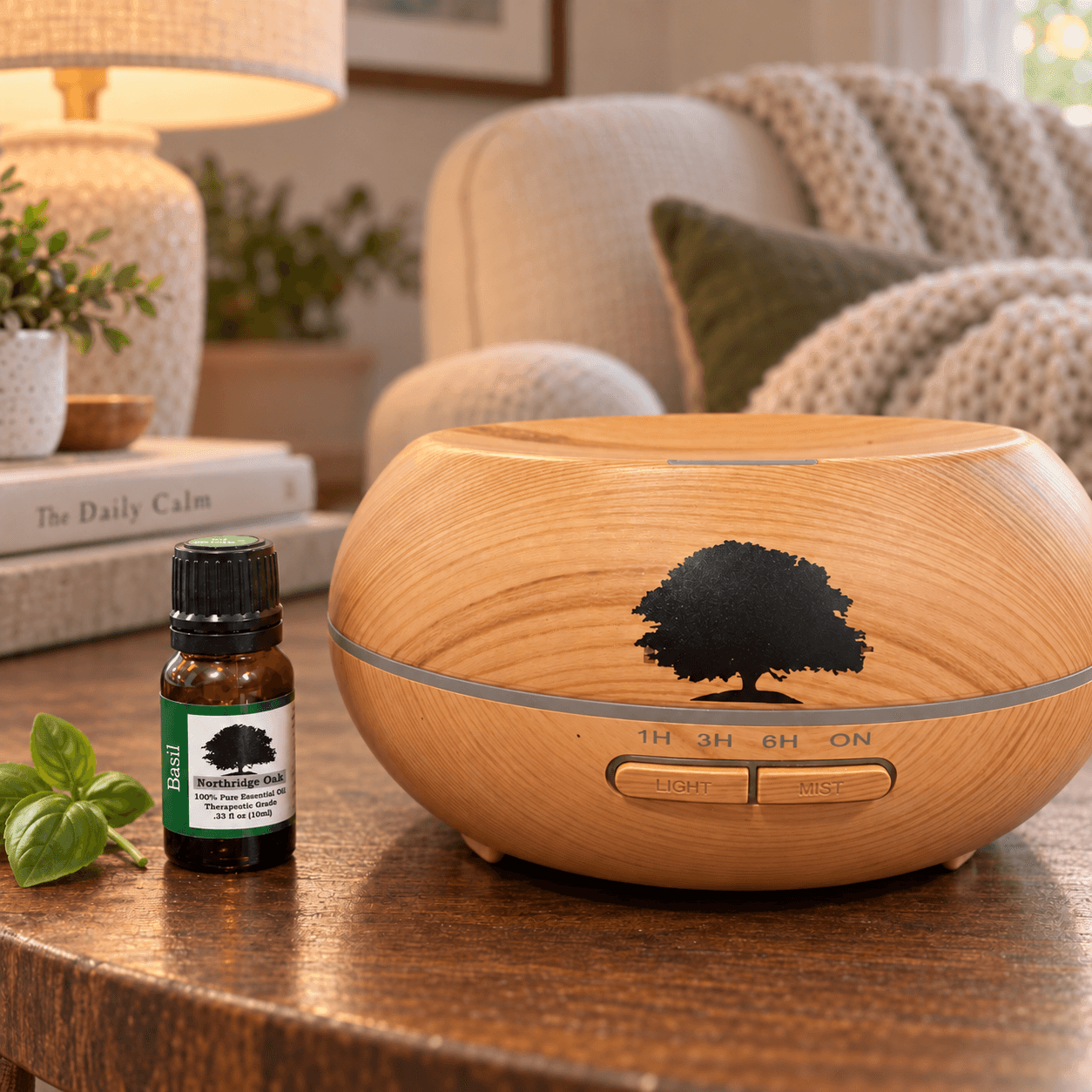
Fill a 100–200 mL diffuser and add 3 drops Lemon Essential Oil, 2 drops Basil and 1 drop Rosemary Essential Oil. Clear one small area of the desk, silence unnecessary alerts and write the single outcome you want from the next work block. Diffuse for 20 minutes while you begin.
The power of the routine is its consistency. The aroma marks the satisfying transition from preparing to beginning.
Four blends for different kinds of work
Clear Desk
3 drops Lemon + 2 drops Basil + 1 drop Rosemary. Bright and herbaceous for planning, writing and administrative work.
Creative Table
3 drops Blood Orange Essential Oil + 2 drops Basil + 1 drop Frankincense Essential Oil. Sweet citrus softens the green note while resin adds depth.
Afternoon Reset
3 drops Bergamot Essential Oil + 2 drops Basil + 1 drop Peppermint Essential Oil. Mint is assertive, so one drop is enough.
Quiet Reading
2 drops Basil + 2 drops Lemon + 2 drops Cedarwood Essential Oil. Cedarwood gives the faster herbal notes a smoother finish.
Use time blocks rather than continuous diffusion
Choose a work interval—twenty-five, forty-five or sixty minutes—then diffuse only for the first 15–20 minutes. Turn the diffuser off during the break, stand up, drink water and let the room air. This prevents olfactory fatigue and keeps the scent associated with beginning rather than background noise.
When the aroma fades into the background, pause for fresh air before deciding whether another brief diffusion period would feel welcome. Your nervous system naturally adapts to continuous scent. A break restores perception more effectively than making the room stronger.
A personal inhaler for portable routines
Add 8 drops Basil, 6 drops Lemon and 2 drops Rosemary to the cotton wick of a blank aromatherapy inhaler. Insert the wick, cap and label it. Hold it an inch or two from the nose and take one or two gentle breaths before starting a task. Do not insert it into the nostril or share it.
This is an adult-oriented aromatic blend. The drop count is for the inhaler wick, not skin. Replace the wick when the aroma fades or changes.
Pair the aroma with evidence-based work habits
Basil aroma is most useful when it supports practical choices: adequate sleep, daylight, hydration, food, movement, clear priorities and fewer interruptions. Put the phone out of reach, break a large assignment into a visible first action and decide when the work block will end.
For studying, retrieval practice and spaced repetition are more reliable than rereading. Use the aroma as a beginning cue, then test yourself without notes. The routine becomes persuasive when Basil’s bright herbal aroma helps you begin consistently and the work block ends with something meaningful completed.
Should you use the same scent during a test?
Some people like using the same personal scent cue during practice and performance, but many schools and testing environments restrict fragrances. Respect shared-space policies and the comfort of others. The study skills learned under the routine should remain useful without the aroma.
For an office, a personal inhaler or ceramic aroma stone is often more considerate than a room diffuser. Scent should be optional in shared environments.
When Basil feels too strong
Reduce Basil to one drop and increase Lemon or Bergamot. For a softer formula, try 3 drops Lavender Essential Oil, 1 drop Basil and 2 drops Cedarwood. Stop entirely if aroma contributes to headache, nausea, coughing, eye irritation or sensory overload.
Create a seven-day cue
Use one blend at the same kind of task for seven days. Record when you started, what you intended to finish and whether the scent felt helpful, neutral or distracting. At the end of the week, keep the routine only if it genuinely made work more approachable.
That small experiment is more useful than promising that one aroma works for everyone. Basil’s role is to make the environment feel fresh, deliberate and ready for the next step.
Close the routine deliberately
When the timer ends, turn off the diffuser, write the next physical action on a note and put materials where you can resume easily. This small closing ritual prevents the scent from becoming continuous background and makes tomorrow’s beginning less demanding. Over time, Basil can mark both edges of the work block: a fresh invitation to begin and a clear signal that the planned interval is complete.
Continue learning about Basil essential oil
Choose the guide that matches what you would like to make or understand next:
- Basil Essential Oil: Benefits, Uses, DIY Recipes & Diffuser Blends
- Basil Essential Oil Diffuser Blends: 20 Fresh Recipes
- What Blends Well With Basil Essential Oil?
- What Does Basil Essential Oil Smell Like?
- Basil Essential Oil for Sore Muscles & Massage
- Basil Essential Oil for Hair & Scalp Care
- Basil Essential Oil for Cleaning & Home Aromas
- Basil Essential Oil Research: Linalool, Estragole & Chemistry
These statements have not been evaluated by the Food and Drug Administration. Northridge Oak products are not intended to diagnose, treat, cure or prevent disease.