Table of Contents
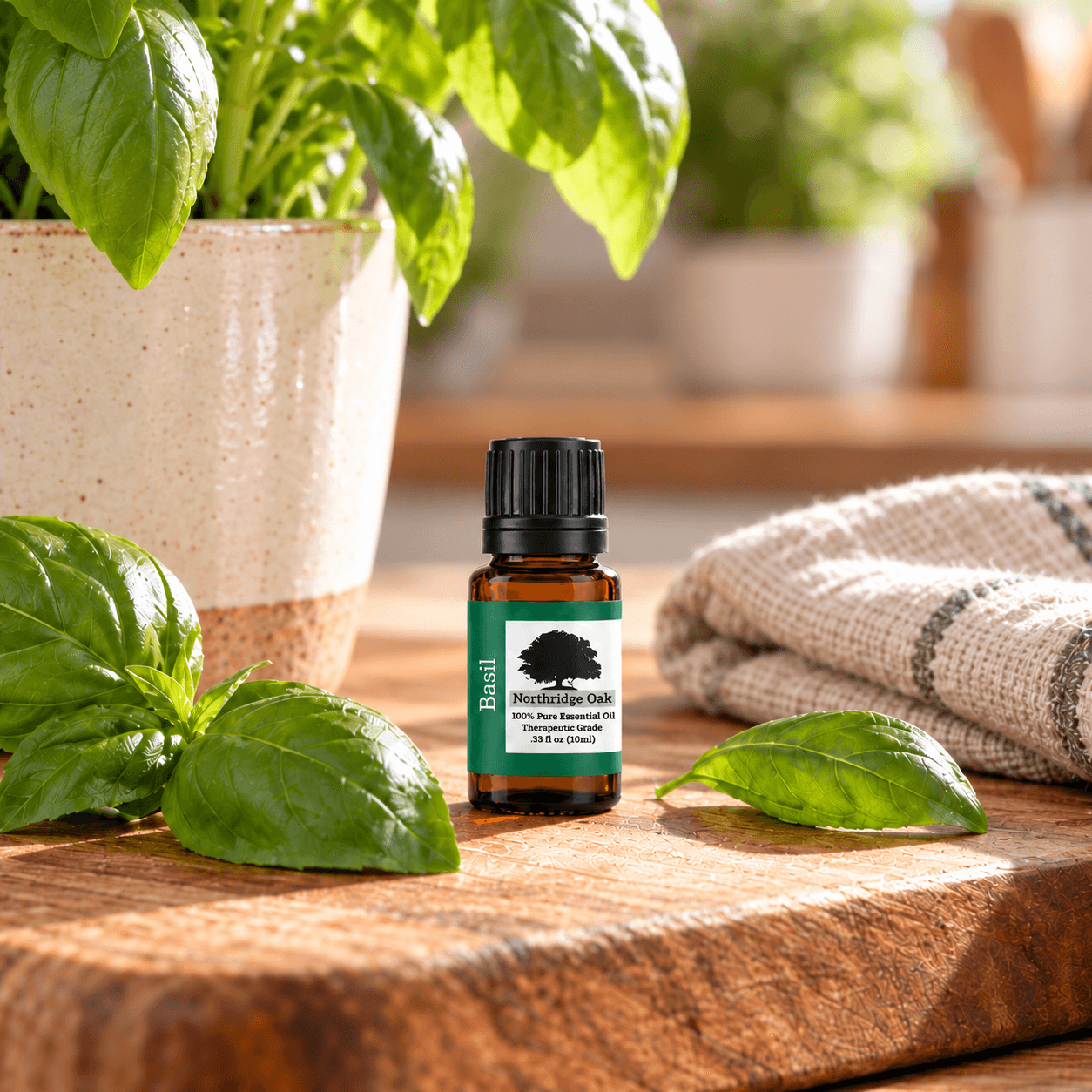
There is something wonderfully alive about the aroma of Basil Essential Oil. It smells green, sweet, lightly spicy and unmistakably herbal—like brushing your hand across fresh basil leaves in a sun-warmed garden. In a diffuser, that familiar herb can become crisp and energizing, soft and floral, bright with citrus, or unexpectedly warm beside woods and resins.
Before you begin
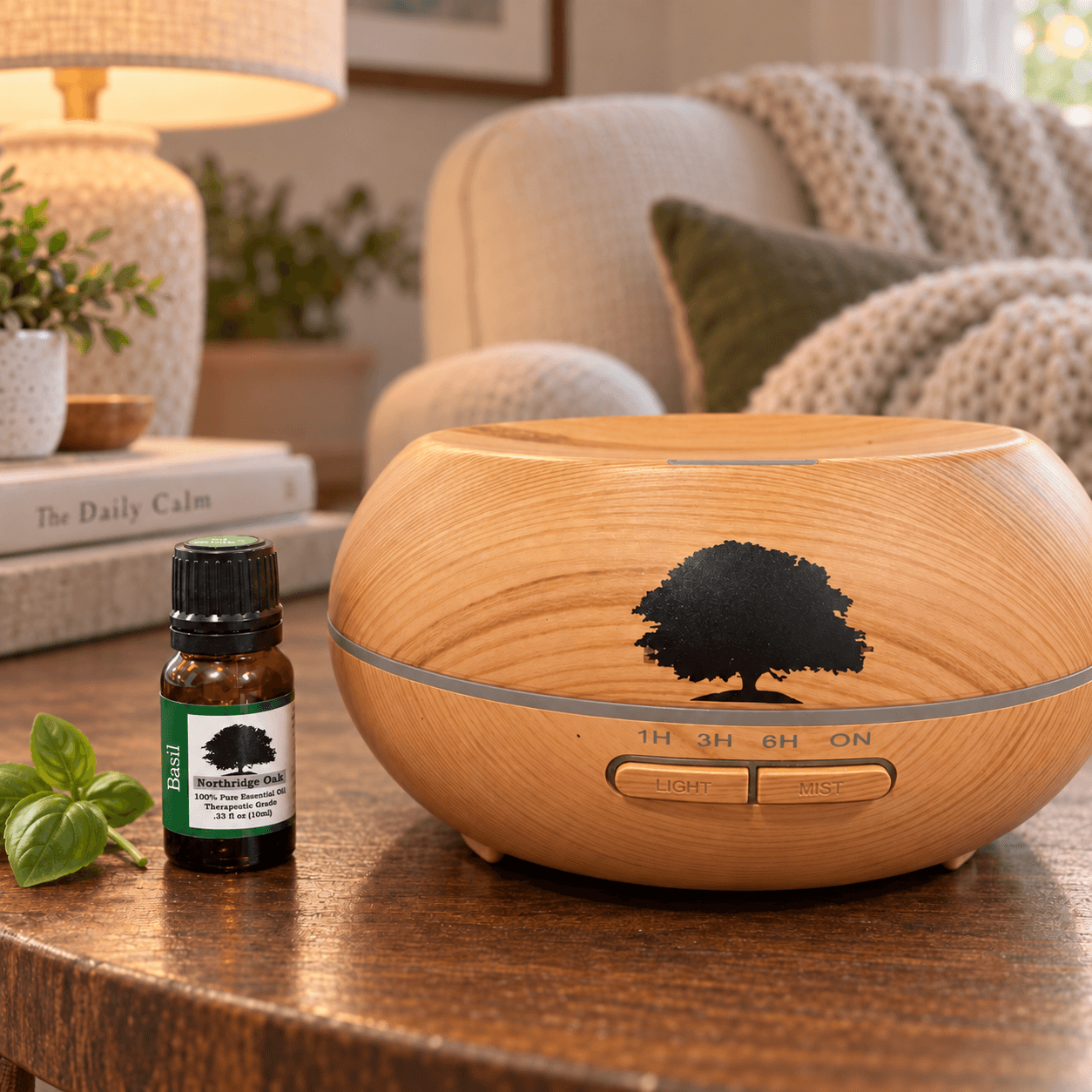
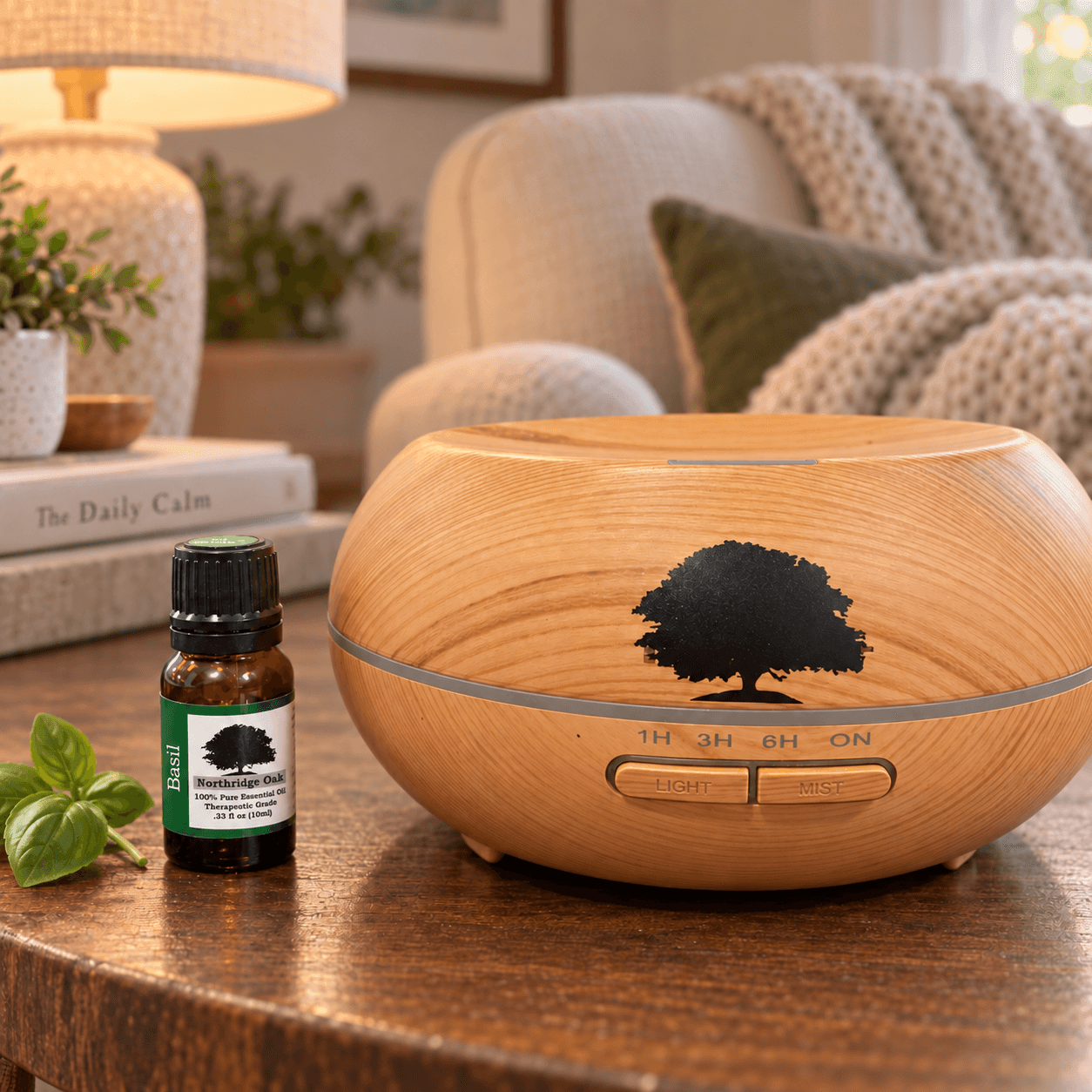
These recipes are written for a typical 100–200 mL ultrasonic diffuser. Fill to the manufacturer’s water line, add the oils, and begin with a 20-minute diffusion period. Use half the drops in a small room or around anyone sensitive to aroma. Basil can be expressive, so blends often smell better when it supports the recipe rather than dominating it.
Fresh starts and productive mornings
1. Open the Day
3 drops Lemon Essential Oil + 2 drops Basil + 1 drop Rosemary Essential Oil. Lemon opens brightly, while the two herbs create the feeling of a clean garden path.
2. Clear Desk
3 drops Lemon + 2 drops Basil + 1 drop Peppermint Essential Oil. Peppermint is powerful; one drop is enough to give the blend a cool, brisk edge.
3. Morning Garden
3 drops Blood Orange Essential Oil + 2 drops Basil + 1 drop Rosemary. Sweet citrus makes the herbs feel friendly and sunlit.
4. Fresh Page
3 drops Bergamot Essential Oil + 2 drops Basil + 1 drop Cedarwood Essential Oil. This is polished and balanced, with a dry woody finish.
5. Green Momentum
3 drops Basil + 2 drops Lemon + 1 drop Cedarwood. Basil leads, while citrus and wood keep the aroma rounded.
Work and study blends
6. Quiet Focus
2 drops Basil + 2 drops Rosemary + 2 drops Lemon. Use the blend as a consistent cue for beginning a focused work block, then turn the diffuser off during your break.
7. Creative Table
3 drops Blood Orange + 2 drops Basil + 1 drop Frankincense Essential Oil. The juicy opening settles into something warm and thoughtful.
8. Afternoon Reset
3 drops Bergamot + 2 drops Basil + 1 drop Peppermint. This feels lively without becoming as sharp as a mint-forward recipe.
9. Reading Room
2 drops Basil + 2 drops Lemon + 2 drops Cedarwood. Wood gives the herbs a calm structure and keeps the blend from feeling fleeting.
10. Finish the List
3 drops Lemon + 1 drop Basil + 1 drop Rosemary + 1 drop Peppermint. Diffuse for 15–20 minutes in a well-ventilated adult workspace.
Softer Basil blends
11. Garden Calm
3 drops Lavender Essential Oil + 2 drops Basil + 1 drop Frankincense. Lavender reveals Basil’s sweeter side, while frankincense slows the finish.
12. Evening Herb Garden
3 drops Lavender + 1 drop Basil + 2 drops Cedarwood. This is gentle, green and warm rather than sleepy or medicinal.
13. Soft Green Light
3 drops Bergamot + 2 drops Lavender + 1 drop Basil. Floral citrus makes Basil feel especially refined.
14. Quiet Porch
2 drops Blood Orange + 2 drops Lavender + 1 drop Basil + 1 drop Cedarwood. Sweet, herbal and softly grounded.
15. Slow Sunday
3 drops Frankincense + 2 drops Lavender + 1 drop Basil. Basil adds a fresh green accent to a warm resin-and-floral base.
Fresh-home and seasonal blends
16. Open Windows
3 drops Lemon + 2 drops Basil + 1 drop Eucalyptus Essential Oil. Airy and herbaceous; review eucalyptus guidance around children and pets.
17. Herb Garden Kitchen
3 drops Blood Orange + 2 drops Basil + 1 drop Lemon. Diffuse after routine cleaning for a fresh botanical finish.
18. Woodland Herb
2 drops Basil + 2 drops Cedarwood + 1 drop Frankincense + 1 drop Patchouli Essential Oil. One patchouli drop is enough to create an earthy base.
19. Autumn Garden
3 drops Blood Orange + 2 drops Cedarwood + 1 drop Basil. Warm citrus and wood make Basil feel seasonal without hiding its green character.
20. Winter Greenhouse
2 drops Basil + 2 drops Rosemary + 2 drops Frankincense. It smells green, resinous and quietly warm.
How to adjust the recipes
If Basil feels too sharp, add one drop Lavender, Blood Orange or Cedarwood. If the blend feels too sweet, add one drop Basil, Rosemary or Lemon. Change one drop at a time and let the diffuser run for several minutes before deciding. Airflow, room size, water volume and even nearby textiles change what you notice.
Keep a simple blending notebook. Record the formula, room, diffusion time and what remained after twenty minutes. That is the easiest way to turn a good experiment into a recipe you can enjoy again.
Diffusing around a household
Use fewer drops, keep the room ventilated and make aroma optional. Children, guests and pets should be able to leave freely. Never add essential oil to a pet’s fur, food, water, bedding or litter, and keep bottles and active diffusers out of reach. Read the complete Basil safety guide before adapting blends for a sensitive household.
Make the room part of the recipe
A blend that feels balanced in a bright kitchen may seem too strong in a small office. Begin with fewer drops when doors are closed or fabrics hold scent, and place the diffuser where air can circulate rather than directly beside your face. If you are preparing for guests, diffuse briefly before they arrive and let the room settle. The most inviting result is a fresh, gentle background that leaves the room feeling comfortable.
Continue learning about Basil essential oil
Choose the guide that matches what you would like to make or understand next:
- Basil Essential Oil: Benefits, Uses, DIY Recipes & Diffuser Blends
- What Blends Well With Basil Essential Oil?
- What Does Basil Essential Oil Smell Like?
- Basil Essential Oil for Focus, Work & Study
- Basil Essential Oil for Sore Muscles & Massage
- Basil Essential Oil for Hair & Scalp Care
- Basil Essential Oil for Cleaning & Home Aromas
- Basil Essential Oil Research: Linalool, Estragole & Chemistry
These statements have not been evaluated by the Food and Drug Administration. Northridge Oak products are not intended to diagnose, treat, cure or prevent disease.