Table of Contents
- Start with Ylang Ylang’s role in a blend
- Citrus oils make Ylang Ylang sparkle
- Floral oils create a full bouquet
- Woods give the flower structure
- Resins make the aroma feel refined
- Earthy oils deepen the perfume
- Herbs add a fresh surprise
- Three formulas that almost always work
- How to rescue a blend
- Build the blend from top to bottom
- Blend for the application
- Use Ylang Ylang with confidence
- Continue learning about Ylang Ylang essential oil
- Frequently Asked Questions
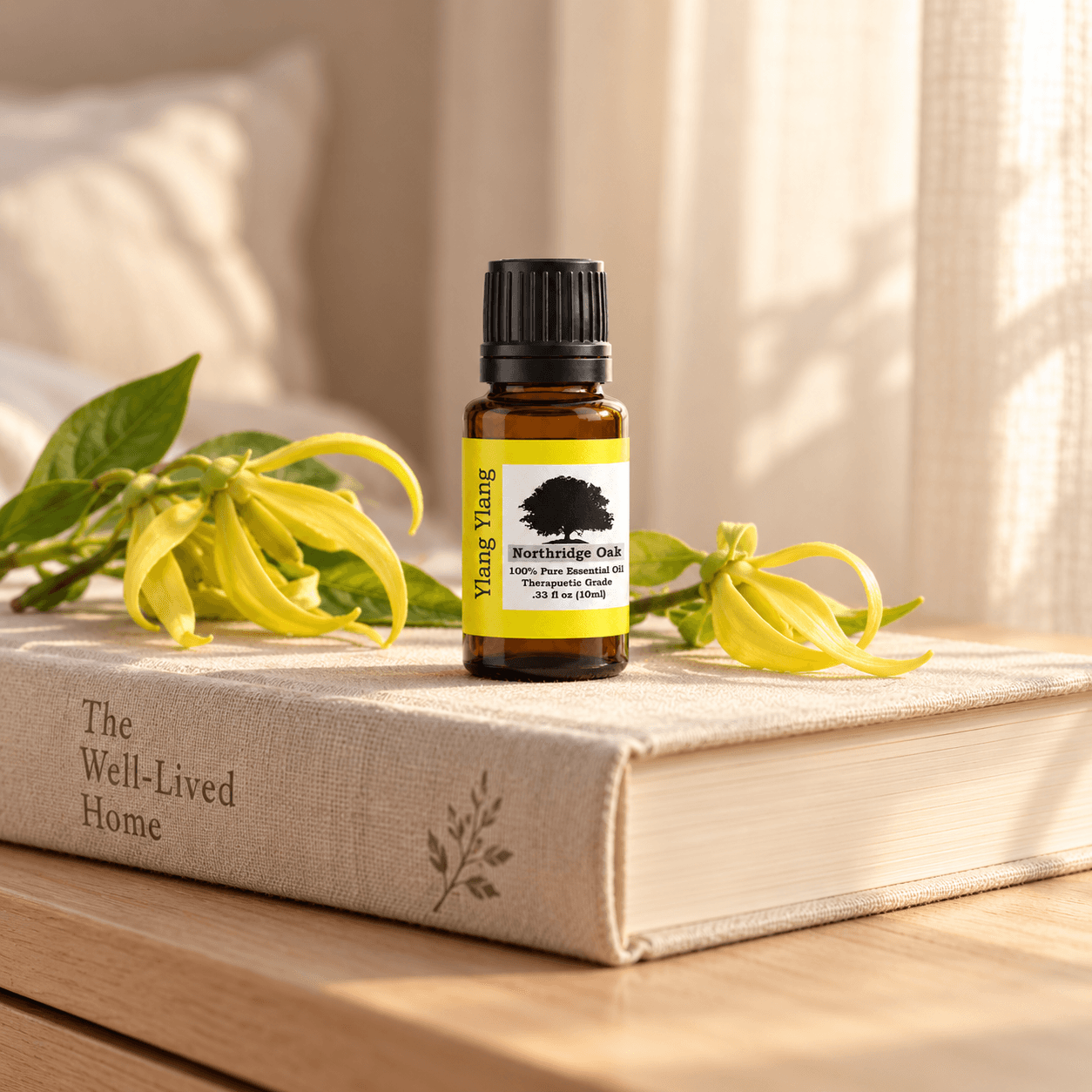
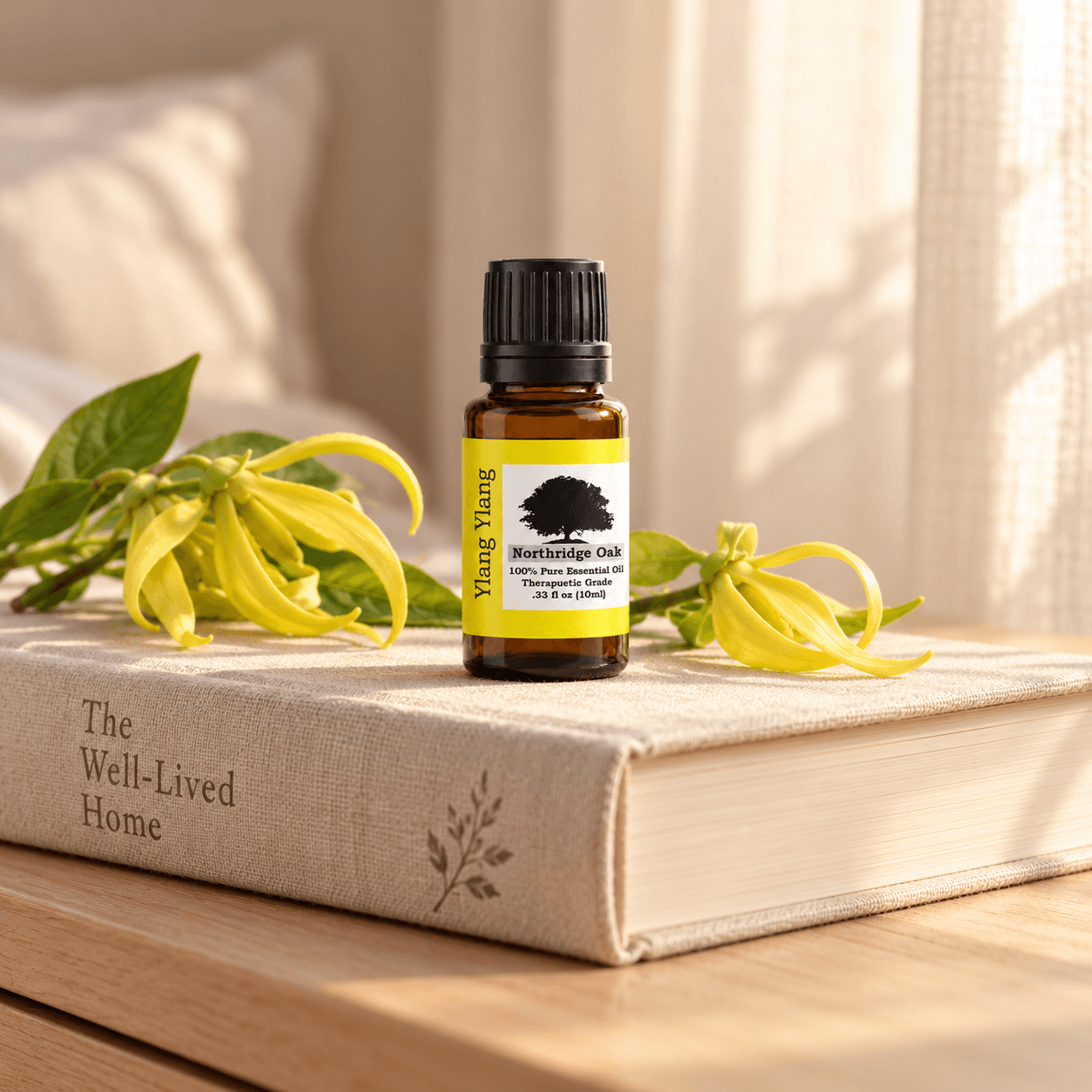
Ylang Ylang Essential Oil is the kind of floral that changes everything around it. Citrus becomes rounder, lavender feels more luxurious, patchouli becomes smoother and cedarwood takes on a soft perfumery finish. Learning what each companion contributes is the key to making Ylang Ylang feel elegant rather than overwhelming.
Start with Ylang Ylang’s role in a blend
Ylang Ylang usually works best as the heart note—the fragrant bridge between bright top notes and deeper base notes. Its aroma is sweet, creamy, tropical, floral and gently spicy. Because it carries so much character, one drop can shape an entire six-drop diffuser recipe or a small perfume blend.
A reliable beginner formula is three parts citrus, one part Ylang Ylang and one part wood or resin. Smell the blend on paper first, wait ten minutes and then adjust one drop at a time.
Citrus oils make Ylang Ylang sparkle
Bergamot is one of the most natural partners. Its elegant citrus-floral character makes Ylang Ylang feel polished and airy. Blood Orange adds juicy sweetness, Lemon adds clarity and Grapefruit gives the blend a lively, modern edge.
Try 3 drops Bergamot, 1 drop Ylang Ylang and 1 drop Cedarwood for a balanced diffuser blend. For a brighter variation, use 3 drops Blood Orange, 2 drops Grapefruit and 1 drop Ylang Ylang.
Floral oils create a full bouquet
Lavender makes Ylang Ylang softer and more familiar. It is the easiest floral companion for bedtime and massage blends. Geranium adds a green, rosy character that turns the pairing into a true botanical bouquet.
A blend of 3 drops Lavender, 1 drop Ylang Ylang and 1 drop Frankincense is warm and serene. For a more romantic perfume direction, combine 2 parts Geranium, 1 part Ylang Ylang and 1 part Bergamot on scent strips.
Woods give the flower structure
Cedarwood grounds sweetness with a dry, warm foundation. It makes Ylang Ylang feel calmer and less ornate. Balsam Fir adds a forest-fresh contrast, while Vetiver creates a dark, earthy perfume base.
Use 2 drops Cedarwood, 2 drops Bergamot and 1 drop Ylang Ylang in a diffuser. In a perfume, begin with 1 drop Ylang Ylang, 2 drops Cedarwood and 3 drops Bergamot in 10 mL jojoba, then evaluate after a day.
Resins make the aroma feel refined
Frankincense adds a smooth, spacious quality. Myrrh is deeper and more contemplative. Both help the floral note feel intentional and long-lasting. A simple combination of 2 drops Frankincense, 2 drops Bergamot and 1 drop Ylang Ylang works beautifully in quiet evening spaces.
Earthy oils deepen the perfume
Patchouli can transform Ylang Ylang into a warm, sensual perfume accord. Keep the proportions restrained: 3 parts citrus, 1 part Ylang Ylang and 1 part Patchouli is plenty. Vetiver offers a drier, smokier alternative.
Herbs add a fresh surprise
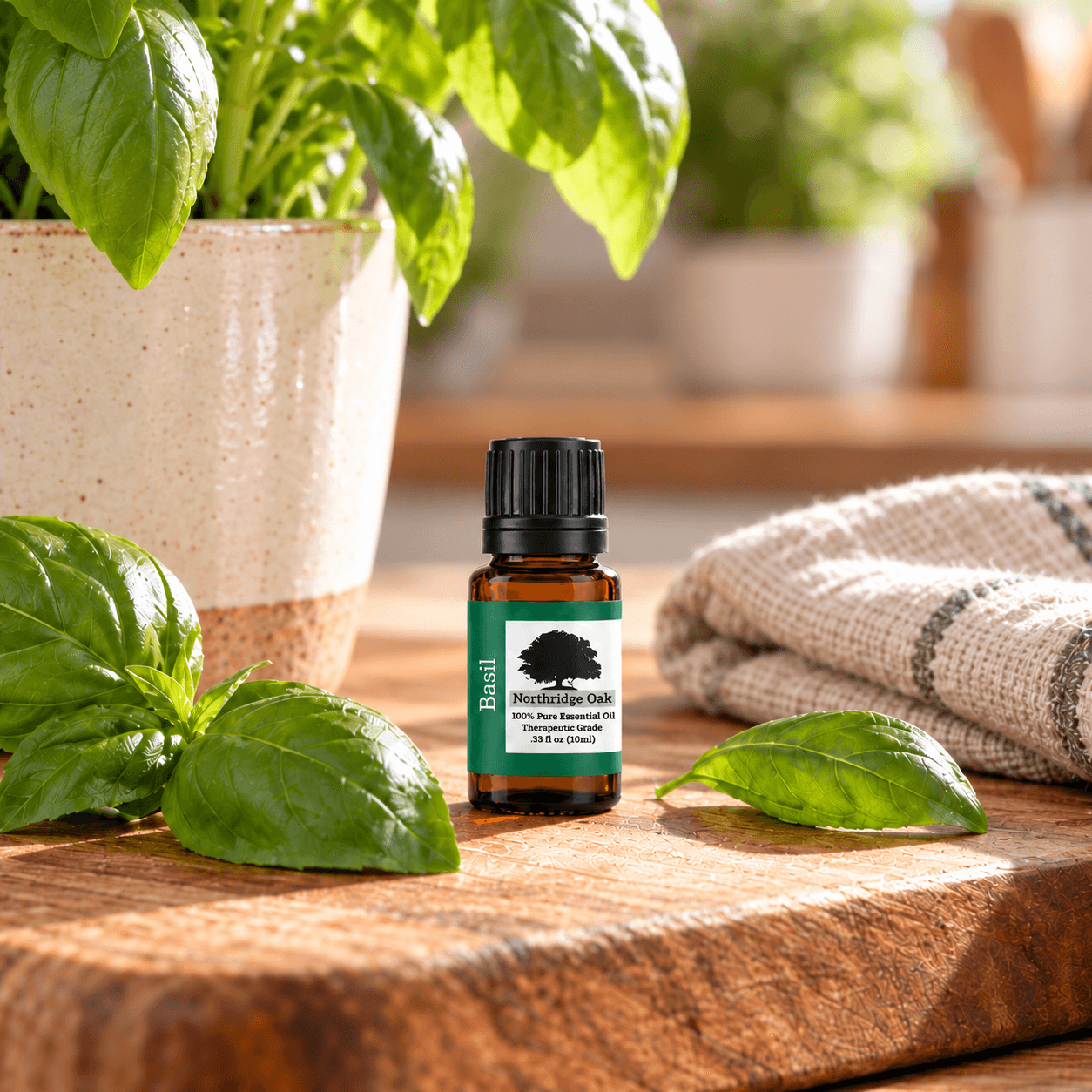
Rosemary, Basil and Spearmint create contrast. They make Ylang Ylang feel less traditionally floral and more contemporary. Try 3 drops Lemon, 1 drop Basil, 1 drop Ylang Ylang and 1 drop Cedarwood. For a cool variation, pair 3 drops Grapefruit, 1 drop Spearmint and 1 drop Ylang Ylang.
Three formulas that almost always work
Bright floral
3 drops Bergamot, 2 drops Blood Orange and 1 drop Ylang Ylang.
Soft floral wood
3 drops Lavender, 2 drops Cedarwood and 1 drop Ylang Ylang.
Natural perfume accord
3 parts Bergamot, 1 part Ylang Ylang, 1 part Geranium and 1 part Patchouli. Dilute the finished concentrate appropriately for skin.
How to rescue a blend
When Ylang Ylang feels too sweet, add Lemon, Grapefruit or Cedarwood. When a citrus blend feels thin, add one drop Ylang Ylang. When an earthy blend feels heavy, Bergamot brings in light. These small adjustments let you keep the original idea while improving its balance.
Build the blend from top to bottom
Start with the feeling you want. For something bright, choose Bergamot or Blood Orange. For a softer floral, add Lavender or Geranium. For warmth and staying power, finish with Cedarwood, Frankincense or Patchouli. Ylang Ylang sits in the middle and makes those transitions feel smooth.
A five-part structure is easy to remember: three drops top note, one drop Ylang Ylang and one drop base note. Once that feels familiar, replace one citrus drop with Lavender or Geranium to add complexity while keeping the formula understandable.
Blend for the application
Diffuser formulas can be airy and expressive. Natural perfumes benefit from careful dilution and a base note that develops slowly on skin. Massage blends often feel most inviting when Lavender, Bergamot or Cedarwood softens the floral richness. Each format deserves its own measured recipe.
Explore three directions: Grapefruit, Bergamot, Ylang Ylang and Cedarwood for fresh and modern; Lavender, Ylang Ylang and Frankincense for soft and comforting; or Bergamot, Geranium, Ylang Ylang and Patchouli for rich and romantic.
Use Ylang Ylang with confidence
Ylang Ylang is beautifully expressive, so one or two drops often give a blend all the floral character it needs. Dilute before skin use, patch test the finished formula and keep essential oil away from eyes, ears, mucous membranes and sensitive areas. Reserve it for aromatic and appropriately diluted topical use. Pregnancy, breastfeeding, young children, pets and individual health considerations benefit from guidance tailored to the exact household. The complete Ylang Ylang safety guide offers practical dilution and diffusion guidance.
Continue learning about Ylang Ylang essential oil
Make this article part of a complete Ylang Ylang routine:
- Ylang Ylang Essential Oil: Benefits, Uses, Blends & Safety
- Ylang Ylang Essential Oil Diffuser Blends
- What Blends Well With Ylang Ylang Essential Oil?
- What Does Ylang Ylang Essential Oil Smell Like?
- Ylang Ylang Essential Oil for Relaxation, Stress & Mood
- Ylang Ylang Essential Oil for Sleep & Bedtime
- Ylang Ylang Natural Perfume Recipes
- Ylang Ylang Essential Oil for Hair & Scalp
- Ylang Ylang Essential Oil for Skin & Massage
- Ylang Ylang Essential Oil Research & Chemistry
- Ylang Ylang Essential Oil Safety
These statements have not been evaluated by the Food and Drug Administration. Northridge Oak products are not intended to diagnose, treat, cure or prevent disease.