Table of Contents
- How a natural perfume is built
- Choose the right base
- Golden Floral roll-on
- Velvet Citrus roll-on
- Quiet Garden roll-on
- Modern Floral roll-on
- Romantic Garden roll-on
- Create a solid perfume
- How to evaluate your perfume
- Make the fragrance feel like yours
- Understand how the perfume develops
- Keep a perfume notebook
- Turn one formula into three
- Use Ylang Ylang with confidence
- Continue learning about Ylang Ylang essential oil
- Frequently Asked Questions
If you want a natural perfume to smell like an intentional fragrance rather than a collection of separate oils, Ylang Ylang Essential Oil is one of the most useful bottles you can own. Its creamy floral heart connects sparkling citrus with woods, resins and earthy base notes, creating blends that unfold beautifully on skin.
How a natural perfume is built
Top notes are the first impression: Bergamot, Lemon, Grapefruit and Blood Orange. Heart notes give the fragrance its identity: Ylang Ylang, Lavender and Geranium. Base notes remain longest: Cedarwood, Frankincense, Patchouli and Vetiver. A balanced perfume usually includes something from each group.
Because Ylang Ylang is rich, begin with one part. Let citrus take up three or four parts and use one or two parts of a base note. Blend the essential oils on scent strips before adding carrier oil, then evaluate again after the finished perfume rests for 24–48 hours.
Choose the right base
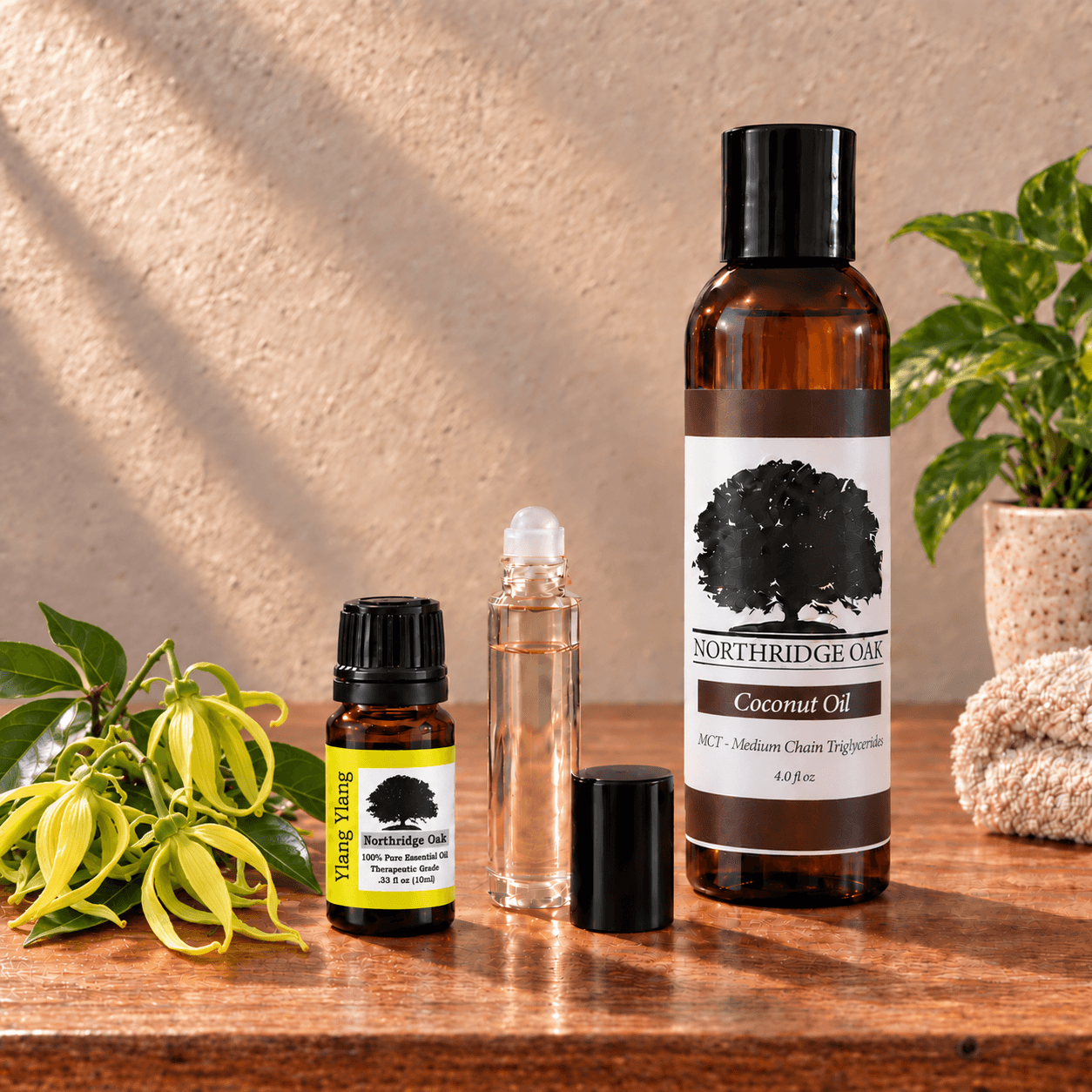
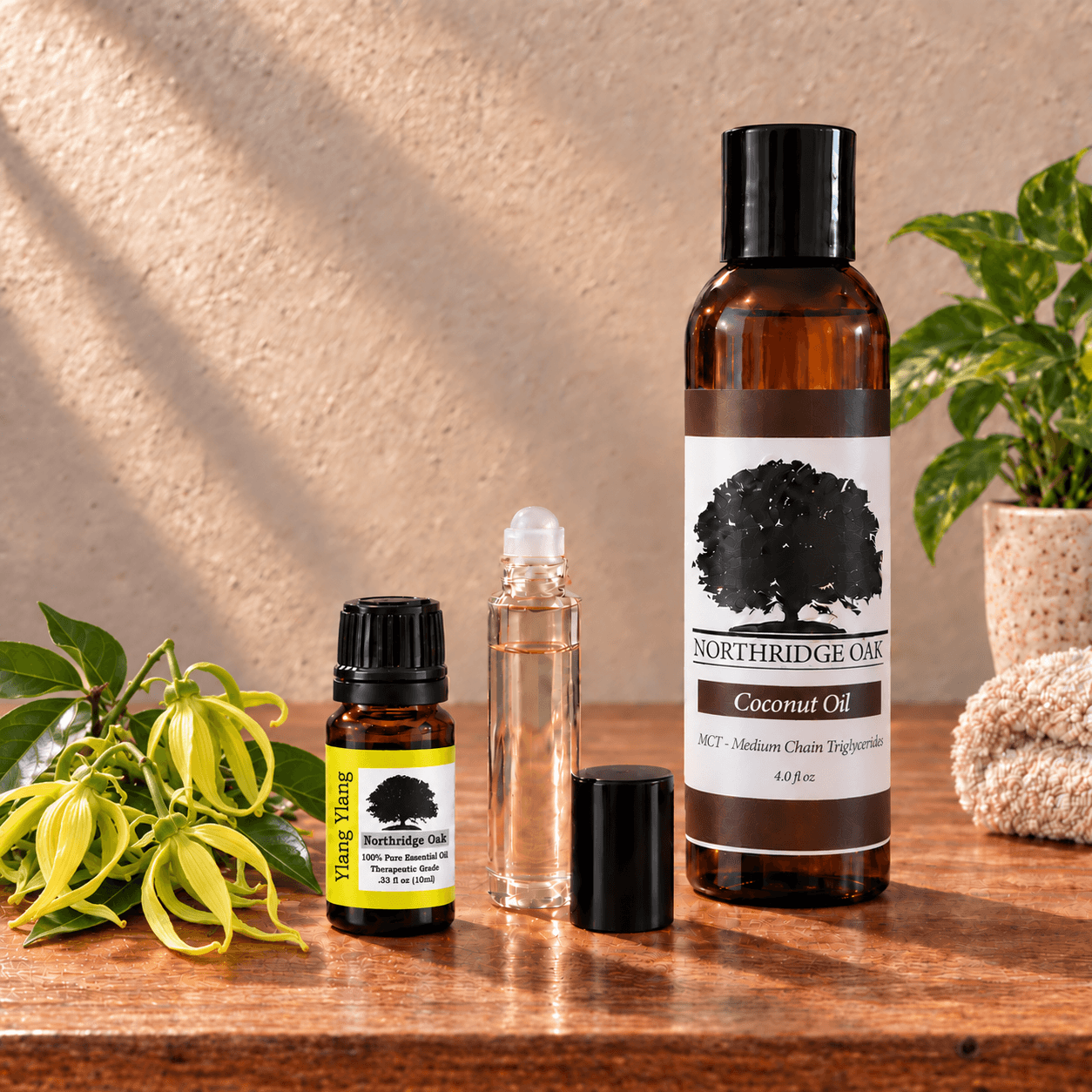
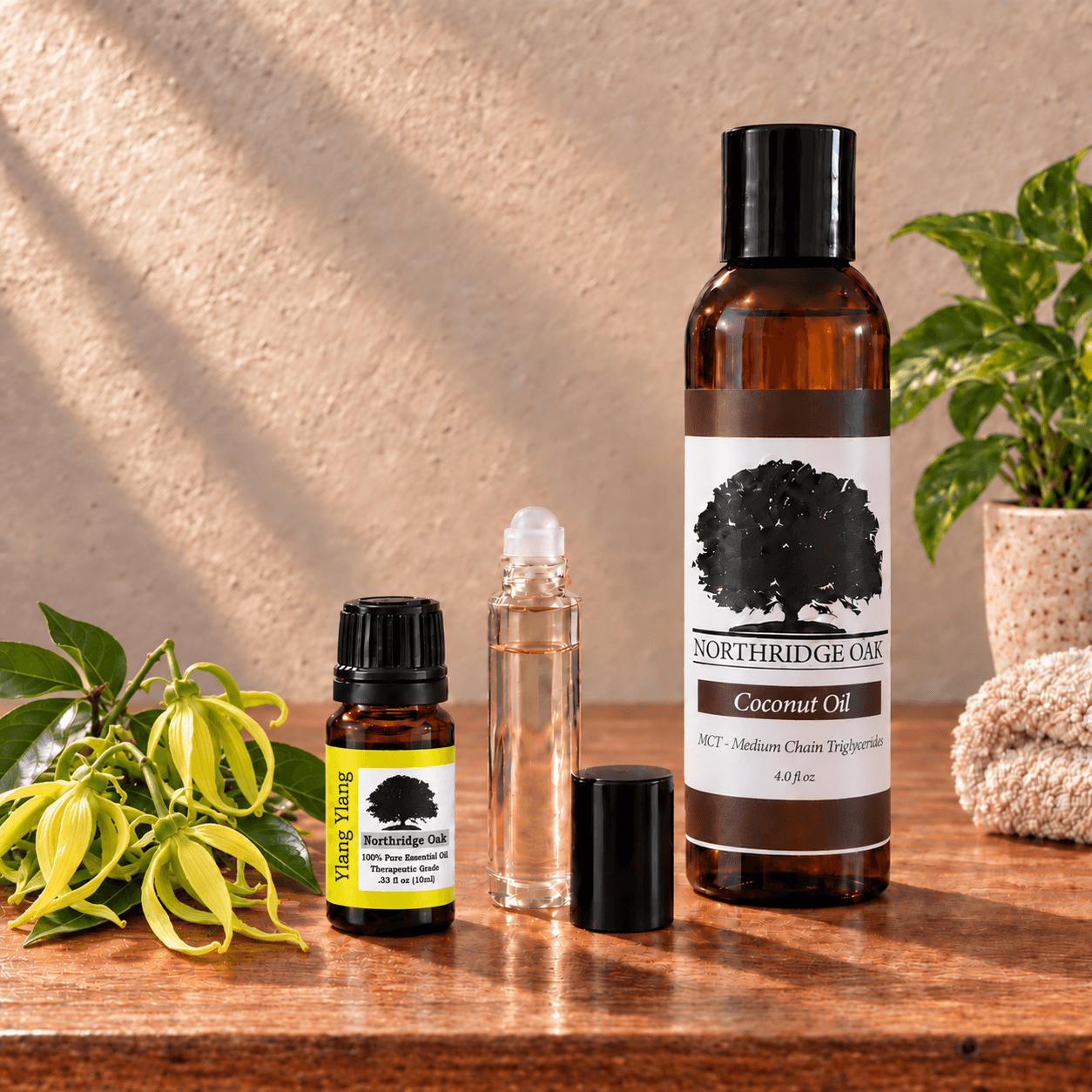
Jojoba is an excellent roll-on base because it feels light and has very little aroma. Fractionated coconut oil is another smooth, clear choice. For a 10 mL adult roll-on, the recipes below use a gentle 2% concentration—approximately four total essential-oil drops. Patch test the finished perfume before regular wear.
Golden Floral roll-on
You will need: 2 drops Bergamot, 1 drop Ylang Ylang, 1 drop Cedarwood and enough jojoba to fill a 10 mL roll-on.
Directions: Add the oils, fill with jojoba, cap and roll gently. Label with ingredients and date. Let it rest for one day, then apply sparingly to wrists or forearms.
Velvet Citrus roll-on
You will need: 2 drops Blood Orange, 1 drop Ylang Ylang, 1 drop Patchouli and 10 mL jojoba.
This formula opens sweet and juicy, then settles into a warm floral-earthy finish. It is an easy introduction to Patchouli because Ylang Ylang rounds its deeper edges.
Quiet Garden roll-on
You will need: 1 drop Bergamot, 1 drop Lavender, 1 drop Ylang Ylang, 1 drop Frankincense and 10 mL jojoba.
Lavender makes the floral heart familiar, while Frankincense gives the blend a smooth, polished base.
Modern Floral roll-on
You will need: 2 drops Grapefruit, 1 drop Ylang Ylang, 1 drop Vetiver and 10 mL jojoba.
The bright-bitter citrus and dry earthy base make Ylang Ylang feel contemporary and restrained.
Romantic Garden roll-on
You will need: 1 drop Bergamot, 1 drop Geranium, 1 drop Ylang Ylang, 1 drop Cedarwood and 10 mL jojoba.
This creates a full bouquet with a warm woody finish. Apply lightly; a little is wonderfully expressive.
Create a solid perfume
Melt 1 tablespoon jojoba and 1 tablespoon beeswax in a heat-safe container set over warm water. Remove from heat, allow it to cool slightly and stir in 2 drops Bergamot, 1 drop Ylang Ylang and 1 drop Cedarwood. Pour into a small clean tin and let it set. Label and patch test. Texture varies with room temperature, so adjust future batches with a little more jojoba for softness or beeswax for firmness.
How to evaluate your perfume
Smell immediately, after fifteen minutes, after two hours and the next day. The opening tells you about the citrus; the middle reveals Ylang Ylang; the dry-down shows whether the base feels warm, earthy or resinous. Write down each version before changing it.
Make the fragrance feel like yours
For more sparkle, add Bergamot or Grapefruit. For more softness, add Lavender. For a greener floral, use Geranium. For warmth and staying power, try Cedarwood, Frankincense or Patchouli. Change one drop at a time so you can hear what each ingredient contributes to the aromatic conversation.
Understand how the perfume develops
Natural perfume changes in stages. Bergamot or Grapefruit is brightest in the first few minutes. Ylang Ylang becomes more noticeable as the citrus settles. Cedarwood, Frankincense, Patchouli or Vetiver remains into the dry-down. Smelling at several intervals helps you evaluate the complete fragrance.
Temperature matters too. A roll-on may smell quieter in a cool room and fuller on warm skin. Apply sparingly after patch testing and give the fragrance time before adding more.
Keep a perfume notebook
Write the date, exact drops, carrier and first impression. Return after one hour and the next day. Note which ingredient leads, whether the sweetness feels balanced and how long the base remains.
Turn one formula into three
Begin with 2 drops Bergamot, 1 drop Ylang Ylang and 1 drop Cedarwood. For a softer version, replace one Bergamot drop with Lavender. For a deeper evening version, replace Cedarwood with Patchouli. For a brighter daytime version, replace Cedarwood with Grapefruit. One dependable structure can teach you more than many unrelated formulas.
When giving a handmade perfume, include the full ingredient list, date, intended dilution and patch-test guidance. A scent strip lets the recipient experience it before application.
Use Ylang Ylang with confidence
Ylang Ylang is beautifully expressive, so one or two drops often give a blend all the floral character it needs. Dilute before skin use, patch test the finished formula and keep essential oil away from eyes, ears, mucous membranes and sensitive areas. Reserve it for aromatic and appropriately diluted topical use. Pregnancy, breastfeeding, young children, pets and individual health considerations benefit from guidance tailored to the exact household. The complete Ylang Ylang safety guide offers practical dilution and diffusion guidance.
Continue learning about Ylang Ylang essential oil
Make this article part of a complete Ylang Ylang routine:
- Ylang Ylang Essential Oil: Benefits, Uses, Blends & Safety
- Ylang Ylang Essential Oil Diffuser Blends
- What Blends Well With Ylang Ylang Essential Oil?
- What Does Ylang Ylang Essential Oil Smell Like?
- Ylang Ylang Essential Oil for Relaxation, Stress & Mood
- Ylang Ylang Essential Oil for Sleep & Bedtime
- Ylang Ylang Natural Perfume Recipes
- Ylang Ylang Essential Oil for Hair & Scalp
- Ylang Ylang Essential Oil for Skin & Massage
- Ylang Ylang Essential Oil Research & Chemistry
- Ylang Ylang Essential Oil Safety
These statements have not been evaluated by the Food and Drug Administration. Northridge Oak products are not intended to diagnose, treat, cure or prevent disease.