Table of Contents
- Quick safety summary
- Adult topical dilution
- Simple 0.5% floral body oil
- Diffusion
- Pregnancy and breastfeeding
- Children
- Pets
- Baths and water
- Storage
- If an exposure needs attention
- Choose safety that supports enjoyment
- Label every homemade blend
- Share fragrance thoughtfully
- Review companion oils
- Use Ylang Ylang with confidence
- Continue learning about Ylang Ylang essential oil
- Frequently Asked Questions
Ylang Ylang Essential Oil is easy to enjoy when its rich floral strength is matched with a light hand. One drop can shape a diffuser blend, and a gentle dilution gives massage oils and natural perfumes all the aroma they need. These practical guidelines make confident use simple.
Quick safety summary
- Reserve Ylang Ylang for aromatic and appropriately diluted topical use.
- Begin with one drop in a diffuser blend.
- Dilute before skin application and patch test the finished formula.
- Keep bottles and homemade products secured away from children and pets.
- Choose short diffusion periods with fresh airflow.
- Use household-specific guidance during pregnancy, breastfeeding and around young children or animals.
Adult topical dilution
For occasional use on a small area by a healthy adult, begin around 0.5–1% total essential oil. In 10 mL carrier oil, that is approximately 1–2 total drops. In 1 ounce (30 mL), it is approximately 3–6 total drops. Drop size varies, so these are practical household approximations.
Ylang Ylang is aromatic enough that gentler concentrations often smell more balanced. Choose the lower end for frequent use, sensitive skin or larger application areas.
Simple 0.5% floral body oil
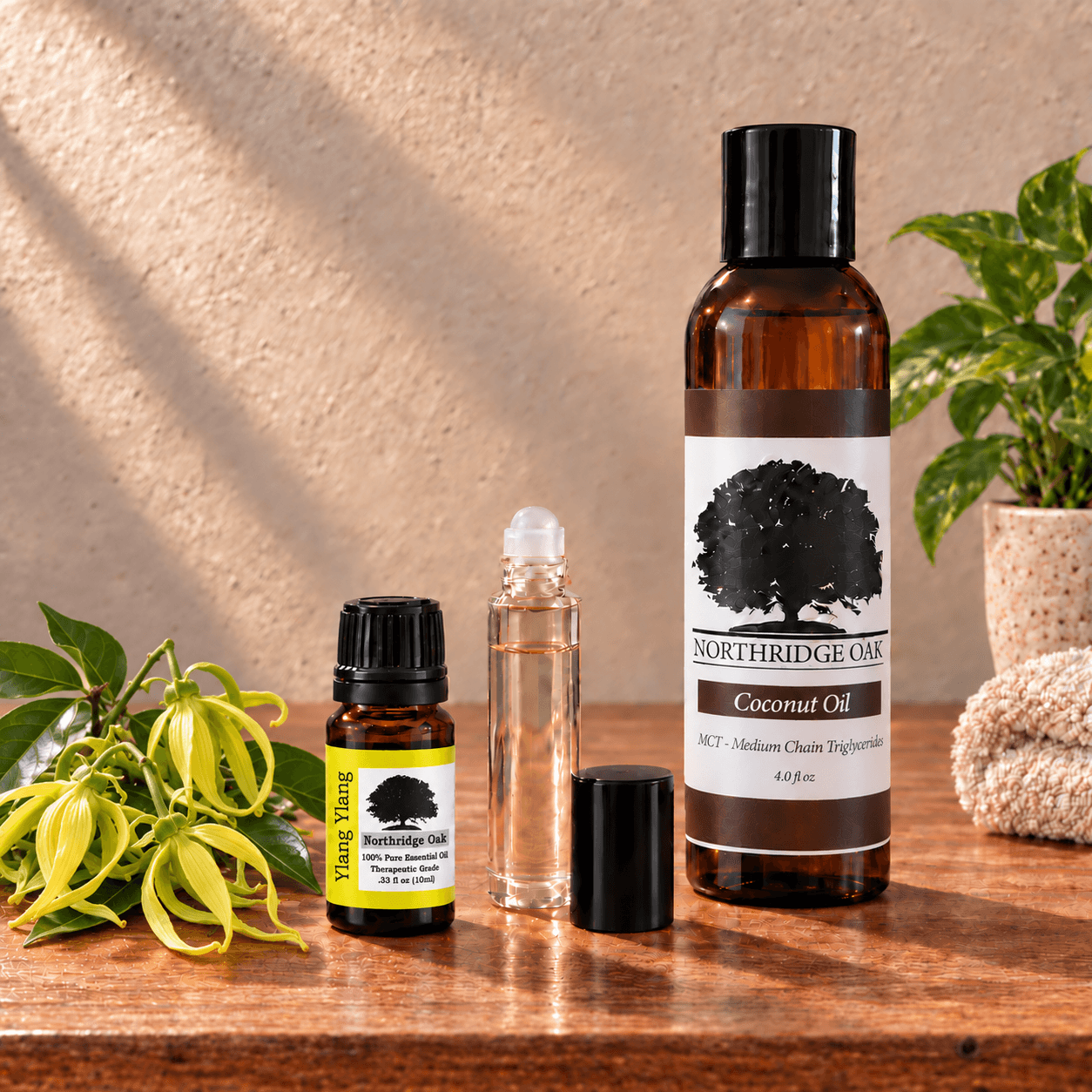
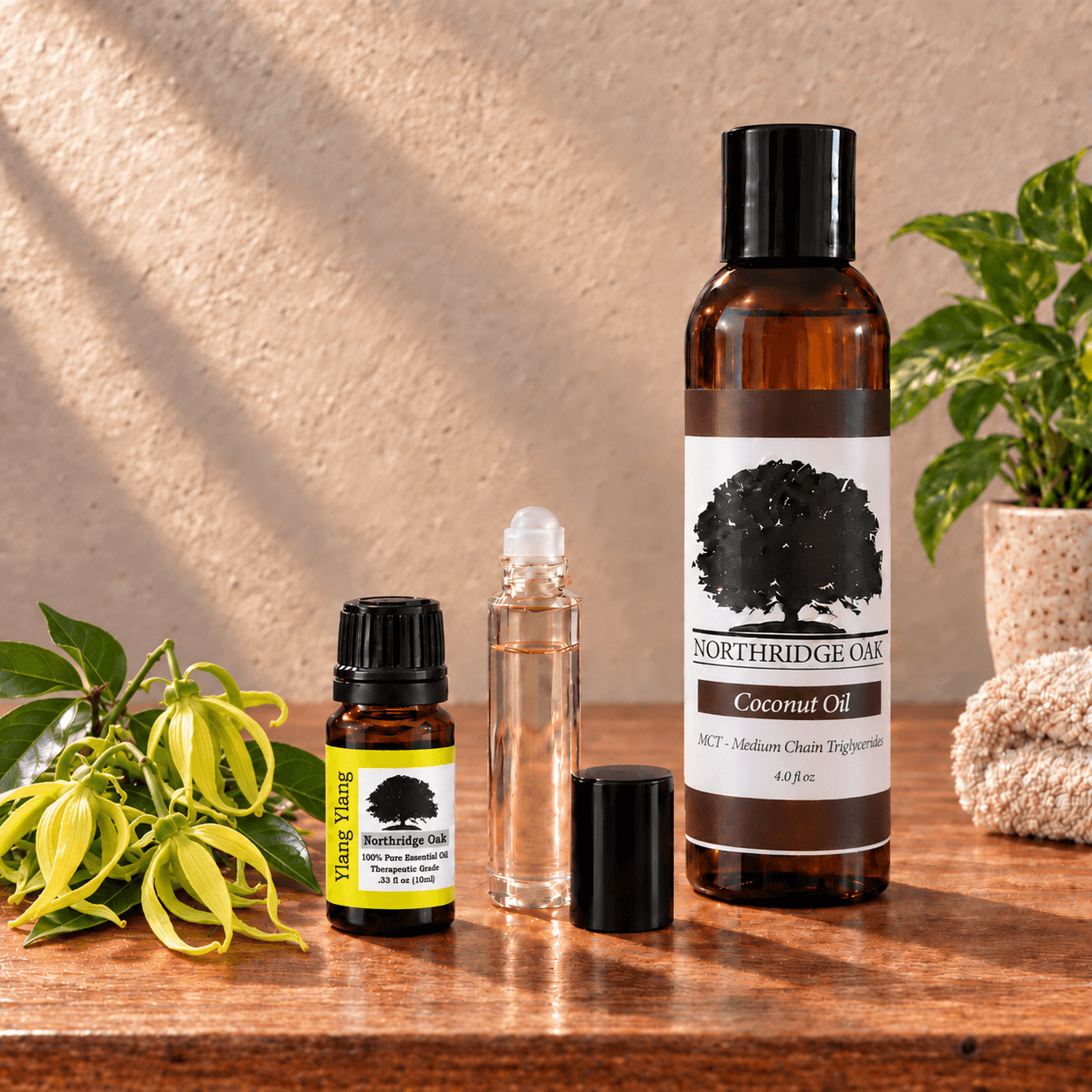
Add 1 drop Ylang Ylang and 2 drops Lavender to 1 ounce jojoba or fractionated coconut oil. Cap, roll gently and label with the ingredients and date. Patch test the finished blend on a small area before broader use.
Diffusion
For a typical 100–200 mL diffuser, begin with 1 drop Ylang Ylang as part of 3–6 total essential-oil drops. Diffuse for 15–20 minutes, then pause and refresh the air. Citrus, Lavender and Cedarwood are excellent companions because they give the floral note room to breathe.
Pregnancy and breastfeeding
Individual circumstances, trimester, health history, route and dose all matter. A prenatal clinician and qualified aromatherapy professional can help match guidance to the person and product. During breastfeeding, keep essential oil away from the breast and any skin an infant may contact.
Children
Young children experience aroma differently because of their smaller bodies and developing respiratory systems. Seek age-specific pediatric and professional aromatherapy guidance before using Ylang Ylang around babies or toddlers. For older children, use very small amounts, brief diffusion and an open door so the aroma remains optional.
Pets
Keep concentrated oil off animals and away from food, water, bedding, collars, litter and grooming products unless a veterinarian directs an exact formula. If diffusing in a pet household, use a modest amount briefly in a large ventilated room and let the animal leave freely. Cats, birds, small mammals and animals with respiratory or liver conditions benefit from especially careful veterinary guidance.
Baths and water
Essential oil needs a properly formulated bath base because it floats on plain water. Use a product designed to disperse essential oils evenly, and remember that carrier oil can make a tub slippery. A warm foot or body massage with a prepared dilution is often the simpler aromatic ritual.
Storage
Close the bottle promptly and store it cool, dark and upright. Record the opening date. A fresh, well-stored oil keeps its aroma more consistent and makes each blend easier to reproduce.
If an exposure needs attention
For skin discomfort, stop use and wash gently with soap and plenty of water. For eye exposure, rinse with clean lukewarm water for at least 15 minutes and contact poison control or medical care. For inhalation discomfort, stop diffusion and move to fresh air. If swallowed, contact poison control or emergency services and keep the bottle available. For animal exposure, contact a veterinarian or animal poison service promptly.
Choose safety that supports enjoyment
The goal of good guidance is a routine comfortable enough to repeat. Ylang Ylang’s strength makes this easy: one diffuser drop or a gentle topical dilution provides a full floral experience. Measuring carefully also makes favorite recipes reproducible.
Label every homemade blend
Include each ingredient, the preparation date and intended use. A label prevents a perfume from being confused with another product and helps you recreate a successful formula. Store blends in suitable containers away from heat and direct light.
Share fragrance thoughtfully
Ask before diffusing in a shared room and provide fresh airflow. Scent preference is personal, and the most welcoming aroma is one everyone can comfortably experience. In guest rooms or gatherings, begin with less and let feedback guide the next session.
Review companion oils
A blend’s guidance comes from all its ingredients. Bergamot, Lavender, Cedarwood, Peppermint and other companions each have their own topical and household considerations. Review the complete formula before deciding on dilution or household use.
A three-oil formula is easier to measure, label and evaluate than a crowded blend. Start with citrus, Ylang Ylang and one wood or resin, then add complexity one drop at a time.
Use Ylang Ylang with confidence
Ylang Ylang is beautifully expressive, so one or two drops often give a blend all the floral character it needs. Dilute before skin use, patch test the finished formula and keep essential oil away from eyes, ears, mucous membranes and sensitive areas. Reserve it for aromatic and appropriately diluted topical use. Pregnancy, breastfeeding, young children, pets and individual health considerations benefit from guidance tailored to the exact household. The complete Ylang Ylang safety guide offers practical dilution and diffusion guidance.
Continue learning about Ylang Ylang essential oil
Make this article part of a complete Ylang Ylang routine:
- Ylang Ylang Essential Oil: Benefits, Uses, Blends & Safety
- Ylang Ylang Essential Oil Diffuser Blends
- What Blends Well With Ylang Ylang Essential Oil?
- What Does Ylang Ylang Essential Oil Smell Like?
- Ylang Ylang Essential Oil for Relaxation, Stress & Mood
- Ylang Ylang Essential Oil for Sleep & Bedtime
- Ylang Ylang Natural Perfume Recipes
- Ylang Ylang Essential Oil for Hair & Scalp
- Ylang Ylang Essential Oil for Skin & Massage
- Ylang Ylang Essential Oil Research & Chemistry
- Ylang Ylang Essential Oil Safety
These statements have not been evaluated by the Food and Drug Administration. Northridge Oak products are not intended to diagnose, treat, cure or prevent disease.