Table of Contents
Safety guidance should make an oil easier to enjoy, not make the reader afraid to open the bottle. Cedarwood is concentrated, expressive and rewarding when the amount and method fit the moment. This guide turns dilution, diffusion, children, pets and storage into clear choices so you can use its dry, woody and quietly balsamic character thoughtfully and comfortably.
Confirm the Botanical Name
This guide addresses Atlas Cedarwood, Cedrus atlantica. Virginia Cedarwood is Juniperus virginiana, Texas Cedarwood commonly comes from Juniperus ashei, and Himalayan Cedarwood is Cedrus deodara. Shared common names do not create identical chemistry.
Northridge Oak’s Cedarwood is Cedrus atlantica from Morocco. Learn the distinctions in Atlas Cedarwood vs. Virginia Cedarwood.
Topical Dilution
For general adult body use, begin around one percent total essential oil or less unless qualified, oil-specific guidance supports another concentration for the intended use. One percent is approximately one drop per teaspoon of carrier, although drop size varies.
Large application areas and aroma-sensitive users often prefer an even lighter concentration. Measure the carrier and total essential oil rather than estimating by scent.
Patch Testing
Apply a small amount of the completed diluted formula to a limited area of intact skin and observe how it feels before broader use. A patch test helps you evaluate the full recipe, including the carrier and every essential oil in the blend.
Diffuser Safety
Follow the diffuser manufacturer’s instructions, begin with fewer drops and use intermittent sessions with ventilation. Provide a scent-free exit for everyone in the room. Position the diffuser where mist disperses into open air and stays away from bedding, electronics and animal enclosures.
Children and Pregnancy
Age, concentration, route and individual health all matter. Seek individualized guidance before using Cedarwood with young children or during pregnancy and nursing. This makes it easier to choose a method and concentration appropriate to the person.
Cedarwood Around Pets
Species, size, health and exposure route shape pet safety. Keep bottles and topical blends inaccessible, diffuse only with ventilation and a scent-free exit, and keep mist away from cages, aquariums, bedding, food and water. A veterinarian familiar with the animal’s health can provide individualized guidance.
Use the essential oil for diffusion and properly diluted topical formulas. Keep it out of food, drinks and homemade capsules. This preserves a clear, measured approach to a concentrated aromatic product.
Store Cedarwood upright with the cap tightly closed in a cool, dark location. Write the opening date on the bottle. Fresh Atlas Cedarwood should smell dry, layered and balsamic. Choosing a fresh bottle when the aroma changes noticeably gives blends their best character.
Essential oil can affect fabric, paint, plastic and finished wood. Let closet blocks or aroma stones absorb fully and position them with space from clothing and surfaces. Test household recipes in an inconspicuous area.
The positive 1998 hair trial used Atlas Cedarwood as part of a measured four-oil formula diluted in carriers. Research-based interest is a reason to formulate carefully, not to apply the oil undiluted. Read the complete Cedarwood hair-study guide.
Northridge Oak Cedarwood Essential Oil is 100% pure, undiluted Cedrus atlantica from Morocco. It is bottled in small batches and third-party GC/MS tested, with no fillers or synthetic fragrance. Its dry wood, subtle smoke and soft balsamic finish make it a versatile choice for diffusion, grooming and carefully diluted topical recipes.
Try Northridge Oak Cedarwood Essential Oil
For a general adult body oil at approximately one percent, place one teaspoon of carrier in a clean container and add one total drop of essential oil. For two teaspoons, use two total drops. If a recipe includes Cedarwood plus another oil, those drops count together toward the total concentration.
A lighter blend can still smell complete because Cedarwood is a persistent base note. Start low, label the container with the ingredients and date, and patch test the finished formula before broader use.
Keep the bottle closed and stored in secure storage reserved for adults. If an unintended exposure occurs, stop using the product and contact an appropriate medical professional, veterinarian or poison-control resource for guidance specific to the person, animal and route of exposure. Bring the product label so the botanical identity and ingredients are clear.
Air, heat and strong light gradually change essential oils. Store Atlas Cedarwood upright, close the cap promptly and use clean tools when making blends. Write the opening date on the label and smell the oil on a strip periodically. Fresh Cedarwood should feel layered, moving from dry wood toward earth and soft balsamic warmth.
Clear habits make creativity easier: confirm Cedrus atlantica on the label, measure every formula, use intact skin, ventilate the room and keep notes. Those steps let you enjoy Cedarwood in a diffuser, beard oil, body oil or scalp routine with confidence and make favorite recipes easy to repeat.
Record the botanical name, number of drops, carrier volume, date and intended use for every formula. Good notes let you repeat a blend you love, calculate concentration and identify exactly what changed when you adjust it.
Start with the lightest effective aromatic amount. Cedarwood’s base-note strength makes conservative formulas smell complete.
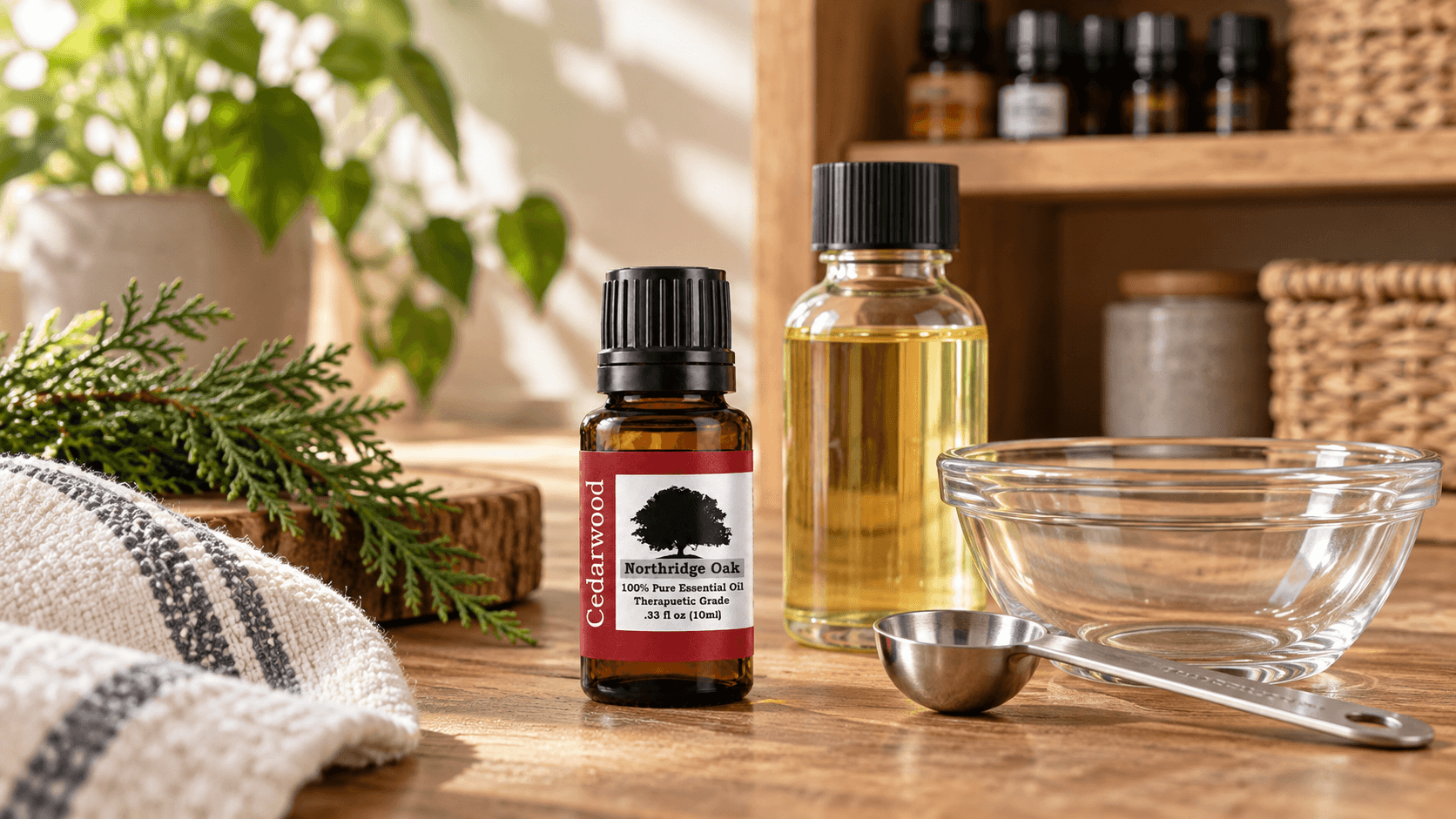
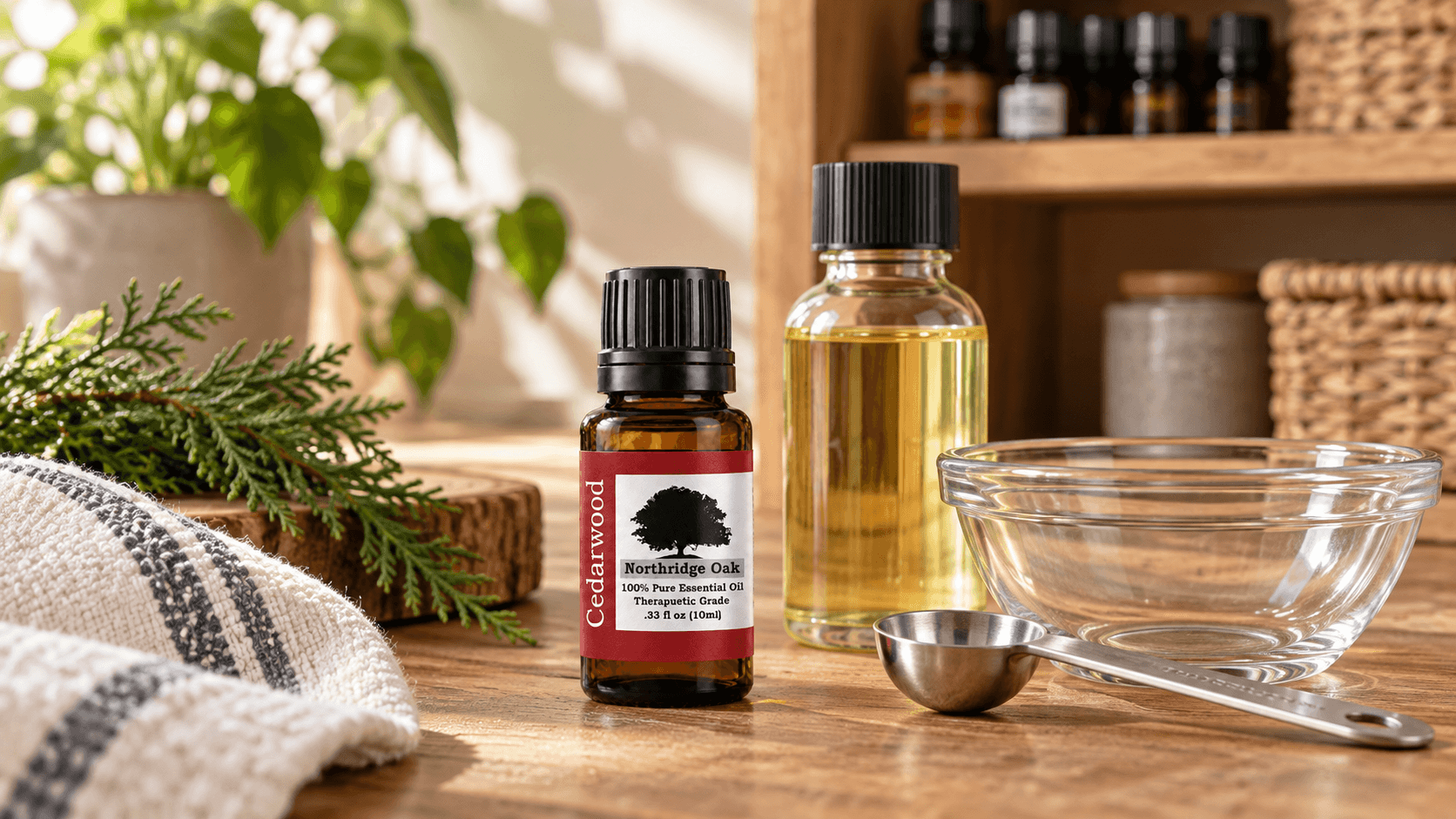
Set up a simple mixing station with the Cedarwood bottle, carrier, clean measuring tools and a label. Record Cedrus atlantica, the number of drops, carrier volume, date and intended use before putting the blend away.
For diffusion, start with a light recipe in a ventilated room and observe how the aroma develops. For topical use, calculate the total concentration, patch test the completed blend and use it on intact skin. These habits preserve the warm wood character while making recipes easy to repeat.
Store the bottle upright, tightly closed and protected from heat and sunlight. Thoughtful storage supports the layered aroma—dry wood, warm earth and soft balsamic depth—that makes fresh Atlas Cedarwood so rewarding to use.
A Simple Way to Experience Cedarwood
You do not need a complicated project to decide whether this oil is for you. Begin with the aroma itself. Place one drop on a paper scent strip or cotton pad, set it several inches away and notice the first impression. Return after 15 minutes, then again after an hour. Cedarwood often reveals more character as the sharpest opening settles, and this slower test makes it easier to notice the dry, woody and quietly balsamic details that disappear when you smell directly from the bottle.
Once you know the aroma, choose one straightforward method and follow the measured guidance in this article. A short, ventilated diffuser session is usually easier to evaluate than an elaborate recipe. Thoughtful use is not about making the experience clinical; it is what keeps the aroma pleasant and lets you reach for the bottle with confidence.
If that sounds like the kind of ritual you would enjoy, Northridge Oak Cedarwood Essential Oil is 100% pure and undiluted, bottled in small batches and third-party GC/MS tested. It gives you a clearly identified single oil and a dependable place to begin.
Continue Learning About Cedarwood Essential Oil
Make this article part of a complete Cedarwood routine:
- Cedarwood Essential Oil Diffuser Blends: 20 Woodsy Recipes
- Cedarwood Essential Oil Benefits, Uses & Safety Guide
- What Blends Well With Cedarwood Essential Oil?
- What Does Cedarwood Essential Oil Smell Like?
- Cedarwood Essential Oil for Hair and Scalp: Study & Recipes
These statements have not been evaluated by the Food and Drug Administration. Northridge Oak products are not intended to diagnose, treat, cure or prevent disease.