Table of Contents
- The Opening: Dry Wood and Warm Earth
- The Heart: Soft Balsamic Warmth
- The Drydown: Smoke, Resin and Staying Power
- Atlas Cedarwood Compared With Other Aromas
- Who Usually Enjoys Cedarwood?
- How Cedarwood Behaves in a Blend
- A Simple Way to Experience Cedarwood
- Continue Learning About Cedarwood Essential Oil
- Frequently Asked Questions
If you have never smelled Cedarwood, the name alone does not quite prepare you for it. Imagine fresh-cut wood, a calm room and the grounded comfort of a well-loved cedar chest. That is the direction of the aroma: dry, woody and quietly balsamic, with small details that become more noticeable as it settles. Here is what to expect from the bottle, in the diffuser and in a finished blend—so you can decide whether it belongs in your collection.
That description is only the beginning. Cedarwood changes slowly, and its greatest value often appears after brighter oils have faded.
The Opening: Dry Wood and Warm Earth
The first impression is direct and natural. Atlas Cedarwood feels drier than Sandalwood and less needle-like than Balsam Fir or Pine. The opening has the character of cut wood rather than green branches.
The Heart: Soft Balsamic Warmth
After several minutes, the harder edges soften. A subtle resin-like sweetness appears beneath the dry wood, making the aroma feel warm rather than austere. This is where Atlas Cedarwood becomes especially appealing in Lavender, Bergamot and Frankincense blends.
The Drydown: Smoke, Resin and Staying Power
On a scent strip, Cedarwood can remain present long after citrus and herbs have settled. The late aroma is quiet, warm and faintly smoky. That longevity is why it works as a base note in natural perfumery and as an anchor in diffuser blends.
Atlas Cedarwood Compared With Other Aromas
Atlas Cedarwood vs. Virginia Cedarwood
Atlas Cedarwood, Cedrus atlantica, tends to feel dry, balsamic and softly smoky. Virginia Cedarwood, Juniperus virginiana, often feels sharper and more pencil-like. Read the full Atlas-vs.-Virginia Cedarwood comparison.
Cedarwood vs. Sandalwood
Sandalwood is usually creamier, smoother and sweeter. Cedarwood is drier, more structured and often easier to use when you want a clean woody base.
Cedarwood vs. Vetiver
Vetiver feels darker, rootier and more earthy. Cedarwood feels more like dry timber. Together they create a strong base, so begin with more Cedarwood than Vetiver.
Cedarwood vs. Patchouli
Patchouli is sweet-earthy and leafy. Cedarwood is cleaner and drier. Cedarwood can make Patchouli feel more polished and controlled.
Who Usually Enjoys Cedarwood?
Cedarwood often appeals to people who enjoy forest cabins, unfinished timber, dry fragrances, incense, leather, books, earthy gardens and unisex colognes. It is also a useful choice for someone who wants a quiet evening aroma but finds sweet florals too prominent.
How Cedarwood Behaves in a Blend
With Lemon or Grapefruit, Cedarwood feels brighter and more modern. With Lavender or Clary Sage, it becomes soft and comfortable. With Frankincense or Myrrh, it feels meditative and resinous. With Balsam Fir, Pine or Rosemary, it creates a convincing outdoor atmosphere.
Explore exact ratios in what blends well with Cedarwood and complete room recipes in 20 Cedarwood diffuser blends.
The aroma is distinctive enough to enjoy alone and versatile enough to improve dozens of oils you may already own. It adds depth without demanding sweetness, lasts well on a scent strip and works throughout the year. A single drop can make a familiar blend feel finished.
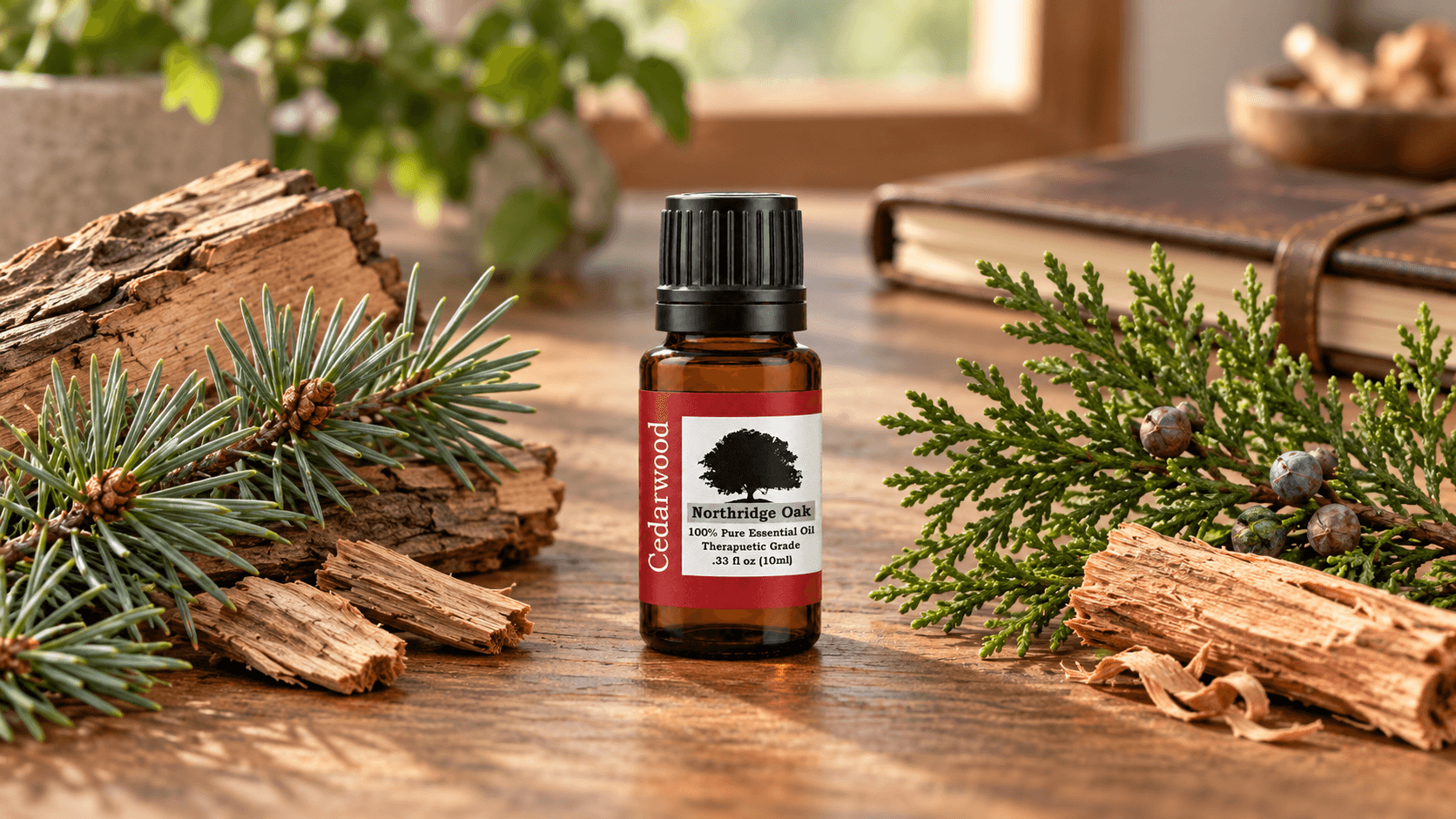
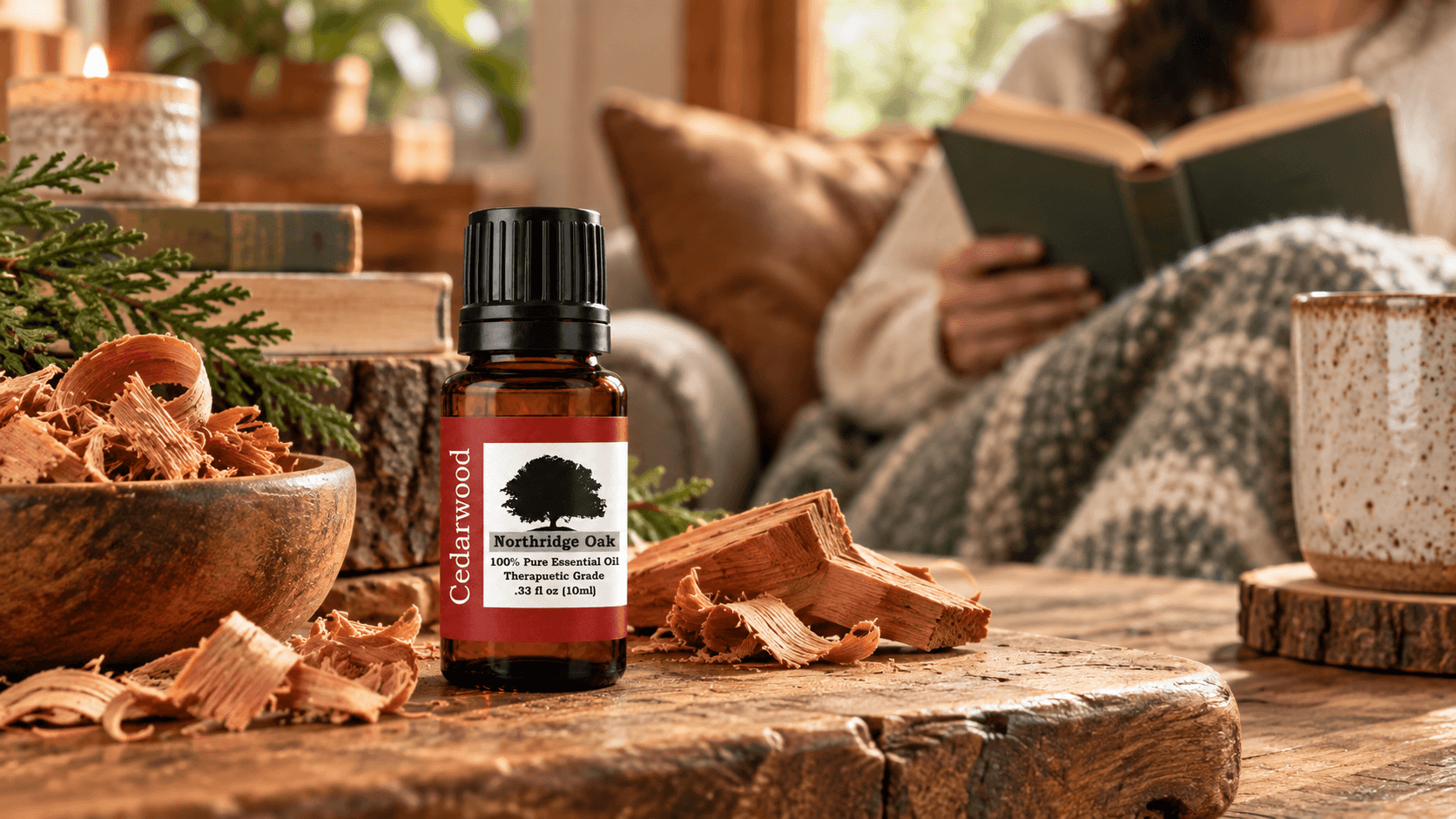
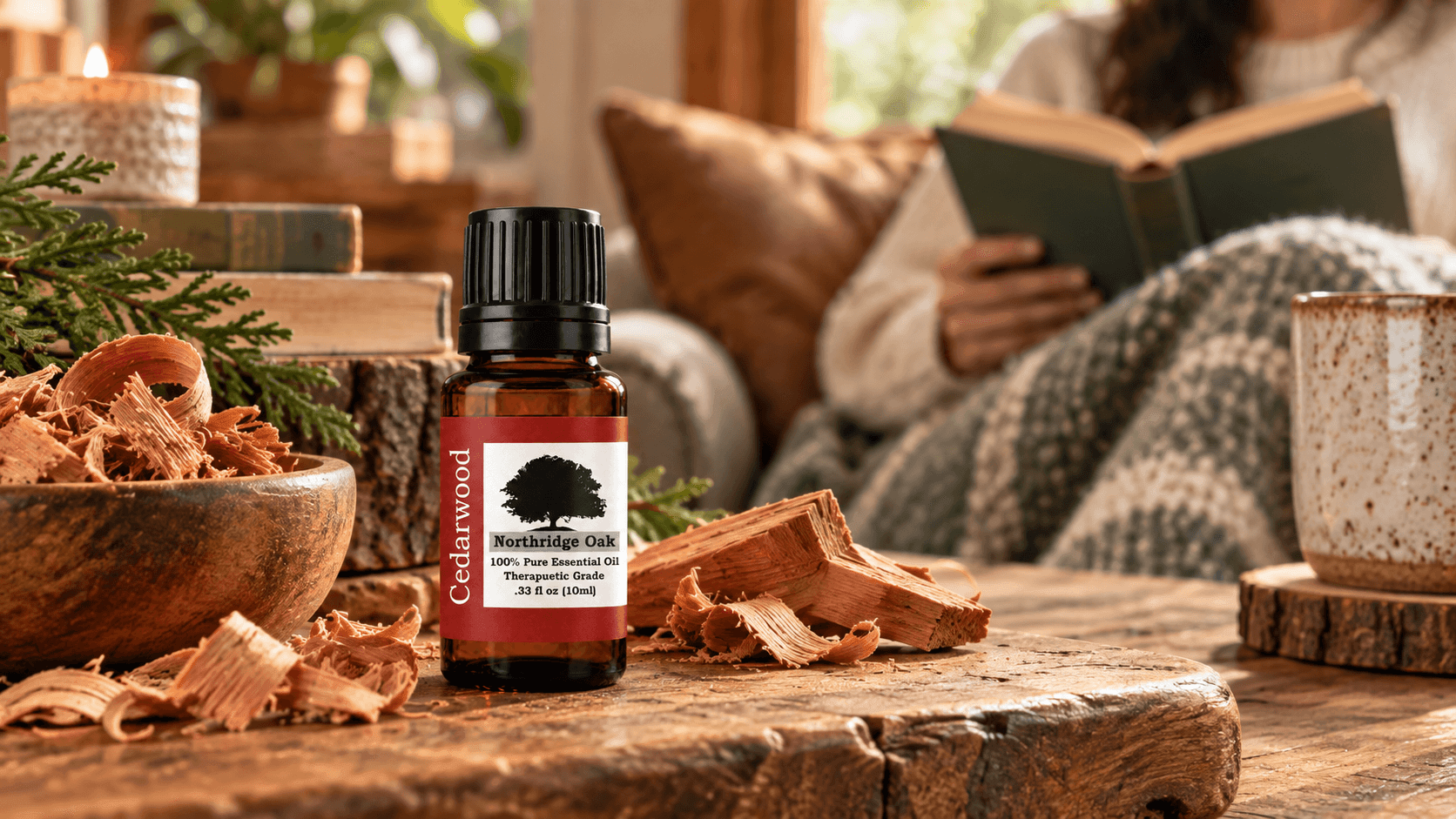
Northridge Oak Cedarwood Essential Oil is 100% pure, undiluted Cedrus atlantica from Morocco. It is bottled in small batches and third-party GC/MS tested, with no fillers or synthetic fragrance. Its dry wood, subtle smoke and soft balsamic finish make it a versatile choice for diffusion, grooming and carefully diluted topical recipes.
Try Northridge Oak Cedarwood Essential Oil
Smelled directly from the bottle, Cedarwood can seem concentrated and intensely woody. On a paper strip, the dry opening has space to reveal earth, soft smoke and balsamic warmth. In a diffuser, those elements spread more gently and create an impression of polished wood and open forest air.
Try three evaluations: smell the capped bottle from a short distance, place one drop on a strip, and diffuse a simple recipe with Bergamot. The comparison explains why the same oil can feel rugged alone and refined in a blend.
Atlas Cedarwood often appeals to people who like dry woods, subtle smoke, earthy fragrances, unisex colognes and forest-inspired rooms. Fans of Frankincense, Vetiver or Balsam Fir frequently appreciate its depth, while citrus lovers may enjoy how it gives brighter oils a longer, warmer finish.
A layered aroma is also a useful quality clue. The exact profile naturally varies by batch, yet a well-kept Atlas Cedarwood essential oil should develop over time rather than smelling like a single flat fragrance. Record what you notice at zero, fifteen and sixty minutes; the vocabulary that emerges becomes your own practical scent guide.
If you enjoy deeper earthy aromas, compare Cedarwood with Patchouli on separate scent strips, then together. Cedarwood keeps the pairing dry and structured while Patchouli adds rich earthiness.
Place one drop on a paper strip and write down three words immediately. Return after fifteen minutes and again after one hour. Many people notice dry wood first, balsamic warmth second and a soft smoky-resinous base last.
Next, compare one drop Cedarwood plus two drops Bergamot against one drop Cedarwood plus two drops Frankincense. The first reveals brightness; the second reveals depth. This gives you a practical map for future blending.
Close the bottle promptly and store it upright away from heat and sunlight. A fresh oil should smell layered and natural. Use clean tools and label handmade blends with the date and botanical name.
Use specific words instead of stopping at “woodsy.” Atlas Cedarwood may suggest dry timber, warm earth, restrained smoke, soft resin or balsamic sweetness at different stages. Writing down those changes makes product comparisons and future blending much more precise.
Compare Cedarwood beside Balsam Fir, Frankincense and Vetiver. Balsam Fir emphasizes forest freshness, Frankincense highlights the resinous side, and Vetiver makes Cedarwood’s drier structure easier to notice.
Return to the scent strip the next day. The faint aroma that remains explains why Cedarwood is so useful as a base note and why one drop can give a blend a more finished, lasting character.
A Simple Way to Experience Cedarwood
You do not need a complicated project to decide whether this oil is for you. Begin with the aroma itself. Place one drop on a paper scent strip or cotton pad, set it several inches away and notice the first impression. Return after 15 minutes, then again after an hour. Cedarwood often reveals more character as the sharpest opening settles, and this slower test makes it easier to notice the dry, woody and quietly balsamic details that disappear when you smell directly from the bottle.
Then compare it with one familiar oil from the recipes below. Hold the strips side by side rather than mixing immediately. You will begin to hear the aroma almost like harmony: one oil carries the opening, one shapes the middle and one lingers. That small experiment is often the moment an unfamiliar oil becomes genuinely exciting.
If that sounds like the kind of ritual you would enjoy, Northridge Oak Cedarwood Essential Oil is 100% pure and undiluted, bottled in small batches and third-party GC/MS tested. It gives you a clearly identified single oil and a dependable place to begin.
Continue Learning About Cedarwood Essential Oil
Make this article part of a complete Cedarwood routine:
- Cedarwood Essential Oil Diffuser Blends: 20 Woodsy Recipes
- Cedarwood Essential Oil Benefits, Uses & Safety Guide
- What Blends Well With Cedarwood Essential Oil?
- Cedarwood Essential Oil for Hair and Scalp: Study & Recipes
- Cedarwood Essential Oil for Skin, Body & Beard Care
These statements have not been evaluated by the Food and Drug Administration. Northridge Oak products are not intended to diagnose, treat, cure or prevent disease.