Table of Contents
- The Botanical Difference
- How Atlas Cedarwood Smells
- How Virginia Cedarwood Smells
- Which One Is Better for Blending?
- Which Cedarwood Appeared in the Hair Trial?
- Which Cedarwood Is Connected With Cedrol Research?
- A Simple Way to Experience Cedarwood
- Continue Learning About Cedarwood Essential Oil
- Frequently Asked Questions
Two oils can share a familiar name and still create completely different experiences. This comparison is here to help you smell the difference before you buy: which one feels softer or bolder, which fits the blends you already love and which is easier to reach for in everyday routines. By the end, you should know not just how they differ, but which bottle you will be excited to use.
The Botanical Difference
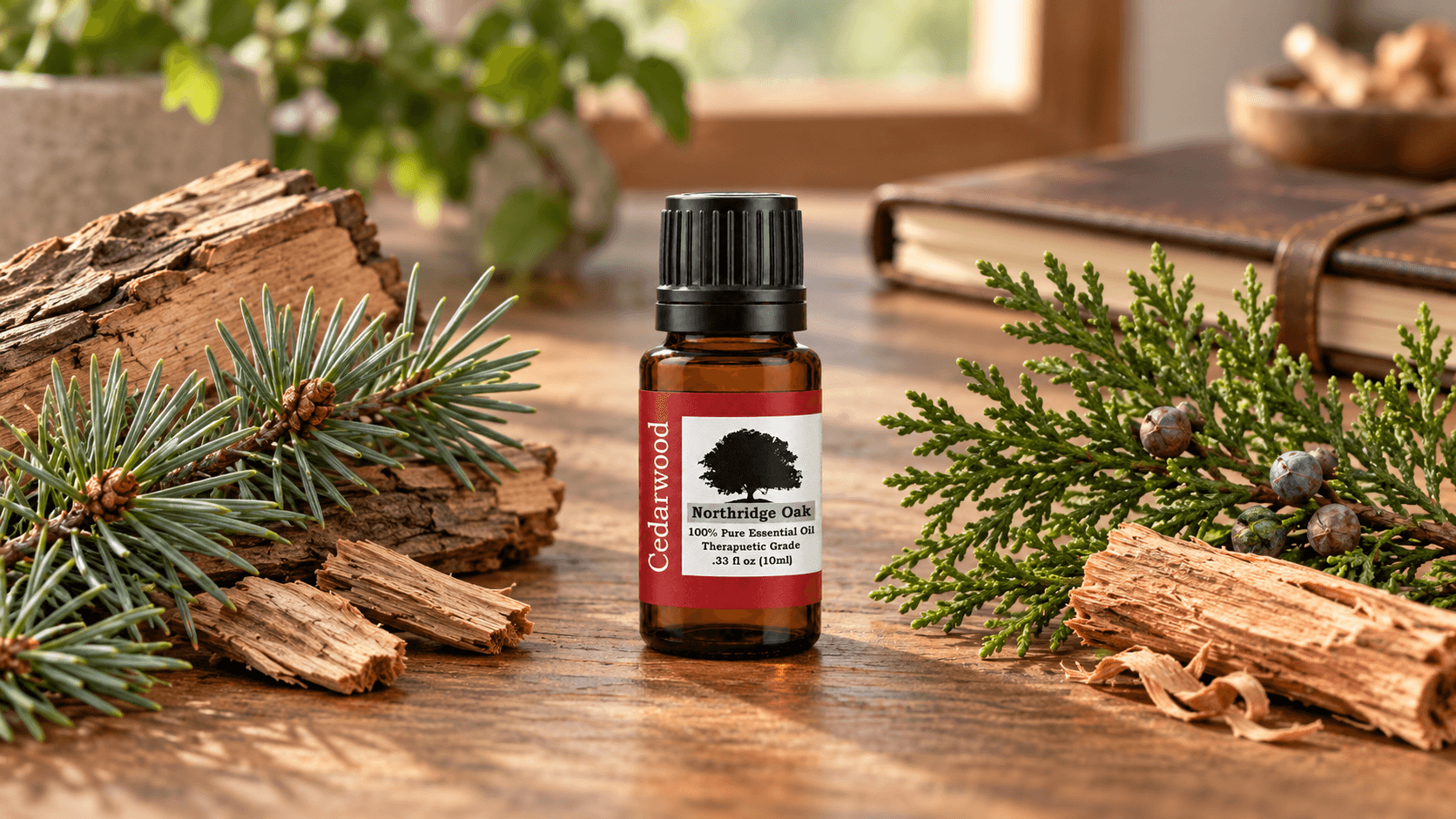
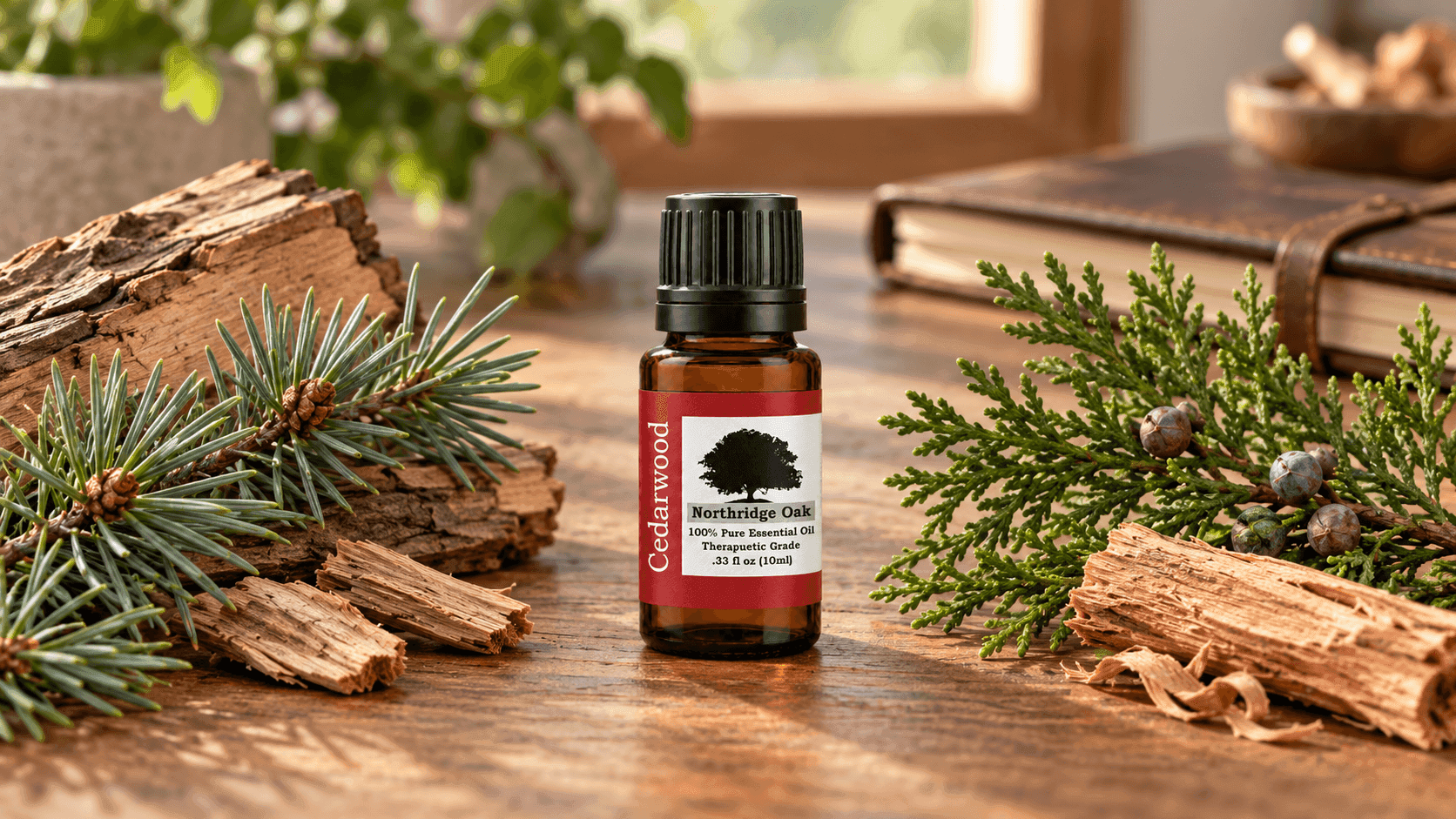
Atlas Cedarwood is Cedrus atlantica, a true cedar in the Pinaceae family. It is native to the Atlas Mountains of Morocco and Algeria. Northridge Oak’s Cedarwood is Cedrus atlantica from Morocco.
Virginia Cedarwood is Juniperus virginiana, a juniper in the Cupressaceae family. It is often called Eastern red cedar in North America, but botanically it is not a true cedar.
How Atlas Cedarwood Smells
Atlas Cedarwood feels dry, warm, softly smoky and balsamic. Its wood character is rounded and refined, with an almost resinous finish. It works especially well when you want a natural perfume base, warm diffuser blend or polished grooming aroma.
How Virginia Cedarwood Smells
Virginia Cedarwood is often sharper, drier and more immediately pencil-like. Its aroma can feel crisp and familiar, resembling cedar closets or freshly sharpened pencils. It is also commonly associated with a cedrol-rich profile.
Which One Is Better for Blending?
The answer depends on the effect you want. Atlas Cedarwood is excellent with Bergamot, Lavender, Frankincense, Patchouli and Vetiver when you want warmth and softness. Virginia Cedarwood can be useful when you want a sharper, cleaner wood line.
For a smooth evening blend, Atlas is often the more approachable choice. For a crisp pencil-wood effect, Virginia may fit more closely.
Which Cedarwood Appeared in the Hair Trial?
The 1998 randomized aromatherapy trial used Cedrus atlantica—Atlas Cedarwood—alongside Thyme, Rosemary and Lavender in carrier oils. Nineteen of 43 people in the active group showed improvement, compared with 6 of 41 using carrier oils alone. Read the published trial.
The result belongs to the complete formula and protocol, but it is still an important reason to identify the botanical correctly. A recipe referring to that study should not silently substitute a different cedarwood species.
Which Cedarwood Is Connected With Cedrol Research?
Cedrol is strongly associated with juniper-derived cedarwood oils such as Virginia Cedarwood. A 2003 inhalation study reported marked sedative effects for isolated cedrol. Read the cedrol study.
That study should not be treated as a trial of every oil sold under the Cedarwood name. It is valuable because it shows why botanical identity and chemical profile matter.
For a casual diffuser blend, you may enjoy either, but the aroma will change. In research-based formulas, safety references and products designed around a named botanical, use the specified species. In natural perfume, sample both on scent strips before deciding.
- Look for the full botanical name.
- Check the country of origin.
- Confirm the plant part and extraction method.
- Look for purity and third-party testing information.
- Record the botanical name in every recipe.
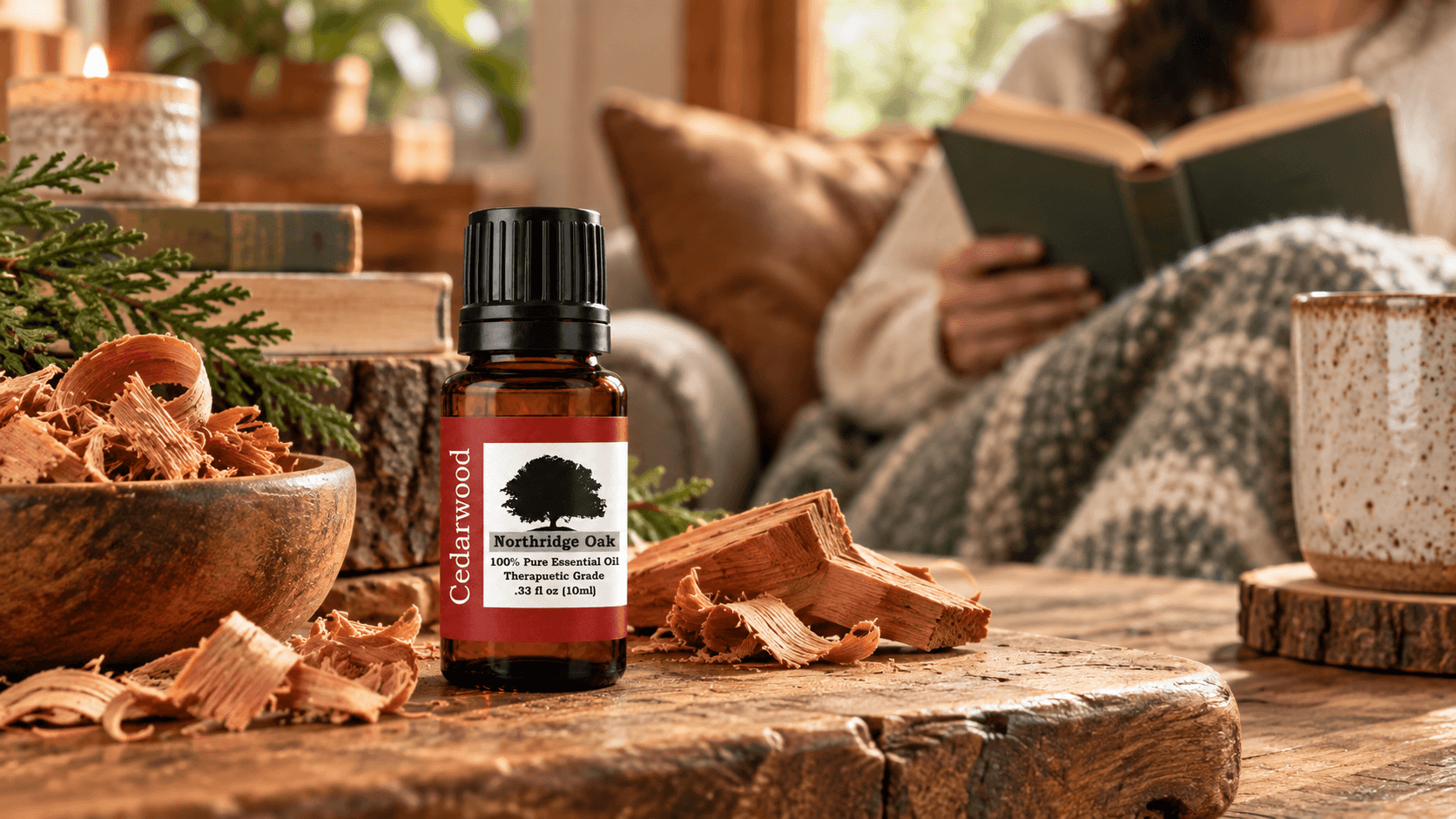
Northridge Oak Cedarwood Essential Oil is 100% pure, undiluted Cedrus atlantica from Morocco. It is bottled in small batches and third-party GC/MS tested, with no fillers or synthetic fragrance. Its dry wood, subtle smoke and soft balsamic finish make it a versatile choice for diffusion, grooming and carefully diluted topical recipes.
Try Northridge Oak Cedarwood Essential Oil
Atlas Cedarwood, Cedrus atlantica, is a true cedar associated with North Africa and prized for dry wood, warm earth, restrained smoke and balsamic softness. Virginia Cedarwood, Juniperus virginiana, is a juniper native to eastern North America and often presents a sharper pencil-wood profile. Both are useful, yet the botanical names show that they are not the same plant.
The positive 1998 aromatherapy hair trial specifically included Cedrus atlantica, which makes Atlas Cedarwood the relevant botanical when discussing that formula. Cedrol research is often more closely associated with cedrol-rich juniper-derived cedarwoods. Reading the species name keeps an encouraging study connected to the oil actually examined.
For casual aromatic experimentation, you can compare them as creative alternatives, expecting the finished scent to change. For a research-inspired formula or guidance that names a species, choose that exact botanical. In perfumery, Atlas Cedarwood is a beautiful choice when you want rounded balsamic warmth; Virginia Cedarwood suits blends that call for a crisper pencil-wood edge.
Try a side-by-side scent strip exercise and record the opening, fifteen-minute impression and one-hour drydown. Then blend each separately with Bergamot. This makes the botanical difference easy to smell. Northridge Oak Cedarwood is clearly identified as Moroccan Cedrus atlantica, so you know which aromatic and research context applies.
If you have access to both oils, place one drop of each on separate scent strips. Smell immediately and again after thirty minutes. Notice sharpness, sweetness, smoke, dryness and staying power. Then pair each with Bergamot. The comparison will make the botanical difference easier to remember than a chart alone.
Choose Atlas Cedarwood when you want dry wood with balsamic warmth, a true Cedrus botanical and the same cedarwood species used in the well-known hair trial. Northridge Oak’s small-batch, GC/MS-tested Atlas Cedarwood makes that identity clear.
Select Atlas Cedarwood when you want a true cedar with dry wood, warm earth, restrained smoke and balsamic softness. Select Virginia Cedarwood when a sharper pencil-wood aroma or a source specifically naming Juniperus virginiana matches the goal.
For Northridge Oak recipes and the 1998 hair-study discussion, look for Cedrus atlantica. Writing the botanical name beside every saved formula keeps the aroma, research context and safety information aligned.
The comparison is not about declaring one universally superior. It gives you two distinct aromatic tools and the confidence to choose intentionally. Begin with pure Atlas Cedarwood when you want the warm, refined wood character explored throughout these guides.
A Simple Way to Experience Cedarwood
You do not need a complicated project to decide whether this oil is for you. Begin with the aroma itself. Place one drop on a paper scent strip or cotton pad, set it several inches away and notice the first impression. Return after 15 minutes, then again after an hour. Cedarwood often reveals more character as the sharpest opening settles, and this slower test makes it easier to notice the dry, woody and quietly balsamic details that disappear when you smell directly from the bottle.
If both oils are available, place one drop of each on separate labeled scent strips. Smell from a comfortable distance at the beginning, after 15 minutes and after an hour. This reveals the difference far better than a comparison chart alone—and helps you choose the oil whose drydown you actually want in your home.
If that sounds like the kind of ritual you would enjoy, Northridge Oak Cedarwood Essential Oil is 100% pure and undiluted, bottled in small batches and third-party GC/MS tested. It gives you a clearly identified single oil and a dependable place to begin.
Continue Learning About Cedarwood Essential Oil
Make this article part of a complete Cedarwood routine:
- Cedarwood Essential Oil Diffuser Blends: 20 Woodsy Recipes
- Cedarwood Essential Oil Benefits, Uses & Safety Guide
- What Blends Well With Cedarwood Essential Oil?
- What Does Cedarwood Essential Oil Smell Like?
- Cedarwood Essential Oil for Hair and Scalp: Study & Recipes
These statements have not been evaluated by the Food and Drug Administration. Northridge Oak products are not intended to diagnose, treat, cure or prevent disease.
The most useful comparison is the one your own nose can repeat. Place one drop of each cedarwood variety on separate scent strips, label the strips and smell them at the same intervals. Notice the opening after one minute, the heart after fifteen minutes and the drydown the next day. This simple exercise reveals why two oils sold under the Cedarwood name can lead a blend in different directions and helps you choose the variety that best matches the experience you want.