Table of Contents
- Cedarwood Essential Oil at a Glance
- What Is Atlas Cedarwood Essential Oil?
- Aroma: What Does Cedarwood Smell Like?
- History and Traditional Appreciation
- Why Try Cedarwood Essential Oil?
- What Research Says About Atlas Cedarwood and Aromatic Use
- What the Cedarwood Hair Study Actually Found
- Cedrol inhalation research
- Diffusion
- Natural perfumery and personal aromatherapy
- Hair and scalp care
- Skin, body and beard care
- Bedtime routines
- Closets, drawers and outdoor-inspired home aromas
- Citrus
- Florals
- Evergreens and herbs
- Resins and earthy oils
- A simple three-part blending method
- For a welcoming room
- For a personal woodland aroma
- For a scalp-massage ritual
- For a bedtime scent cue
- A Simple Way to Experience Cedarwood
- Continue Learning About Cedarwood Essential Oil
- Frequently Asked Questions
Some essential oils make sense the moment you open the bottle. Cedarwood is one of them—but not always for the reason people expect. Its dry, woody and quietly balsamic aroma can shift a room, soften the edges of a familiar blend and turn a simple routine into something you genuinely look forward to. This guide brings the aroma, practical uses, research, recipes and safety together so you can understand what makes Cedarwood distinctive and decide how it might fit naturally into your own home.
This is an oil people often buy for one purpose—perhaps a bedtime diffuser blend or beard oil—and then discover it belongs in far more of their routines. It can anchor citrus, soften herbs, deepen florals, enrich scalp and body oils, and give closets or living spaces a welcoming forest character.
This authoritative guide covers what Atlas Cedarwood is, how it smells, its history and chemistry, what research found, why people enjoy it, the best blending partners, diffuser recipes, hair and skin applications, bedtime rituals, closet and outdoor uses, quality, dilution and safety.
Cedarwood Essential Oil at a Glance
- Botanical name: Cedrus atlantica
- Common name: Atlas Cedarwood
- Origin: Morocco
- Plant part: Wood
- Extraction: Steam distillation
- Aroma: Dry, woody, earthy, grounding and softly balsamic
- Aromatic role: A long-lasting base note that gives blends depth
- Popular uses: Diffusion, bedtime aromas, natural perfumery, beard care, scalp oils, body oils, closets and fresh-home routines
What Is Atlas Cedarwood Essential Oil?
Atlas Cedarwood comes from Cedrus atlantica, a majestic evergreen native to the Atlas Mountains of Morocco and Algeria. Steam distillation draws volatile aromatic compounds from the wood, creating an essential oil with remarkable depth and staying power.
“Cedarwood” is a broad market name, not one single botanical. Virginia Cedarwood is Juniperus virginiana, Texas Cedarwood is commonly produced from Juniperus ashei, and Himalayan Cedarwood is Cedrus deodara. They all smell woody, yet their chemistry and aromatic personalities differ. The botanical name on the bottle tells you which oil you actually have.
Aroma: What Does Cedarwood Smell Like?
Atlas Cedarwood opens with dry pencil-shaving wood and warm earth. As it rests, the aroma becomes smoother, revealing soft balsamic sweetness and a gently smoky, resin-like character. It feels less sharp than many conifers and less sweet than Sandalwood.
That slow, steady drydown is why perfumers call Cedarwood a base note. It can help the brighter character of Lemon, Bergamot or Grapefruit feel connected to the deeper notes of Frankincense, Patchouli, Vetiver and Myrrh. Read our complete guide to what Cedarwood essential oil smells like for comparisons and a scent-strip exercise.
History and Traditional Appreciation
Cedar trees have long represented strength, endurance and protection. Aromatic woods and resins were valued in building, storage, incense, craft and personal fragrance across ancient cultures. Atlas Cedarwood specifically comes from the great cedar forests of North Africa, and its warm wood aroma still gives modern routines a feeling of steadiness and permanence.
Historical appreciation is part of the story, while the oil in a modern bottle deserves its own clear identity. Knowing the botanical species, origin and extraction method connects traditional respect for aromatic wood with responsible present-day use.
Why Try Cedarwood Essential Oil?
- It anchors blends. One drop can make bright or floral oils feel more complete.
- It lasts. As a base note, Cedarwood remains noticeable after many lighter aromas fade.
- It works across the home. The same bottle can support diffusion, grooming, body oils, closets and natural fragrance.
- It welcomes people who dislike sweet scents. Its dry, refined wood character feels balanced and gender-neutral.
- It pairs beautifully. Citrus, flowers, herbs, resins, evergreens and earthy oils all find common ground with Cedarwood.
- It is easy to begin with. A one-drop addition produces an immediate, noticeable change in a blend.
What Research Says About Atlas Cedarwood and Aromatic Use
What the Cedarwood Hair Study Actually Found
The most frequently cited human research is a seven-month randomized, double-blind controlled trial published in Archives of Dermatology in 1998. Eighty-six people diagnosed with alopecia areata entered the study. The active group massaged a blend of Thyme, Rosemary, Lavender and Atlas Cedarwood (Cedrus atlantica) in carrier oils into the scalp daily; the control group used the carrier oils alone.
The outcome was encouraging: 19 of 43 participants in the active group showed improvement, compared with 6 of 41 in the control group. The difference was statistically significant. The exact formula combined four essential oils, massage and long-term consistency, so the trial does not isolate Cedarwood by itself. What it does show is that Cedrus atlantica was part of a thoughtfully measured blend that performed better than carrier oil alone. Read the published trial.
That positive result gives hair-care enthusiasts a genuine reason to explore Atlas Cedarwood as part of a carefully diluted scalp routine. Its dry, clean wood aroma also pairs beautifully with the exact herbal and floral oils used in the study.
Cedrol inhalation research
A 2003 study examined inhaled cedrol, an aromatic constituent associated with several cedarwood-type oils, in rats and people. Researchers reported marked sedative effects and measurable changes related to autonomic activity. Read the cedrol study.
This research is especially interesting for understanding why woody aromas continue to be studied in connection with quiet evening environments. Atlas Cedarwood is its own botanical and every batch has its own profile, so the most honest reason to try it at bedtime is also the simplest: its slow, dry, balsamic aroma can make a nightly wind-down ritual feel calm, familiar and beautifully grounded.
Diffusion
Cedarwood creates depth without taking over the room. Begin with two or three drops in a typical ultrasonic diffuser, adjusting for the diffuser, room and people present. Pair it with Lavender and Bergamot for evenings, Lemon and Balsam Fir for a bright forest aroma, or Frankincense for a quiet resinous blend.
- Forest Morning: 2 Cedarwood, 2 Balsam Fir, 2 Lemon
- Soft Evening: 2 Cedarwood, 3 Lavender, 1 Bergamot
- Quiet Study: 2 Cedarwood, 2 Frankincense, 1 Rosemary
- Deep Woods: 2 Cedarwood, 1 Patchouli, 2 Blood Orange
Find twenty complete recipes in Cedarwood diffuser blends.
Natural perfumery and personal aromatherapy
Cedarwood gives perfume blends a warm, dry foundation. It is especially useful beneath citrus, Lavender, Clary Sage and Ylang Ylang. Try it first on a scent strip, then build in small ratios so you can notice how it extends and connects the other notes.
Hair and scalp care
Atlas Cedarwood has a particularly interesting connection to hair research because it was one component in the 1998 controlled aromatherapy trial. At home, use it as a carefully diluted aromatic ingredient in a pre-shampoo scalp oil. Its scent pairs naturally with Rosemary, Lavender and Thyme—the same essential oils used alongside it in the study.
Our Cedarwood hair and scalp guide explains the study, gives practical recipes and distinguishes the tested blend from claims about Cedarwood used alone.
Skin, body and beard care
The dry wood aroma makes Cedarwood popular in beard oils, massage blends, hand oils and body products. One drop in a teaspoon of carrier creates an approachable one-percent adult body dilution. Pair it with Bergamot for a clean cologne direction, Lavender for softness, or Frankincense for a richer resinous finish.
Explore recipes and carrier guidance in Cedarwood for skin and body care.
Bedtime routines
Cedarwood is an inviting alternative for people who want a bedtime aroma that is less floral. Diffuse it with Lavender, Frankincense, Vetiver or Marjoram during the early part of an evening routine. Repeating the same gentle aroma can help the room feel familiar and ready for rest.
See Cedarwood bedtime blends and rituals for diffuser recipes, scent-strip ideas and ways to build an evening routine around aroma.
Closets, drawers and outdoor-inspired home aromas
Cedarwood has a natural association with cedar chests and closets. Place one drop on an unfinished wooden aroma block designed for essential oils, allow it to absorb fully, and keep it from direct contact with fabric. Refresh only when the aroma fades.
EPA records have historically included cedarwood oil in registered products used to repel insects. Those records cover specific pesticide products and cedarwood types, so use a properly labeled repellent when verified performance is needed. For aromatic household ideas, visit Cedarwood for closets, bugs and outdoor aromas.
Citrus
Bergamot gives Cedarwood a polished cologne quality. Lemon adds brightness. Grapefruit creates a dry, modern freshness, while Blood Orange warms the wood.
Florals
Lavender is the most dependable floral partner. Clary Sage creates a soft herbal-floral blend, and Ylang Ylang becomes more balanced when Cedarwood supports its sweetness.
Evergreens and herbs
Balsam Fir and Pine emphasize the forest character. Rosemary adds clarity, while Marjoram softens the edges.
Resins and earthy oils
Frankincense, Myrrh, Patchouli and Vetiver build depth and longevity. These combinations work especially well in evening, meditation and personal-fragrance blends.
For ratios and blending strategy, read what blends well with Cedarwood essential oil.
Atlas Cedarwood is a true cedar in the genus Cedrus. Virginia Cedarwood is botanically a juniper, Juniperus virginiana. Atlas tends to feel dry, balsamic and softly smoky; Virginia often feels sharper, pencil-like and more distinctly cedrol-rich.
Neither is a substitute for the other when a recipe, study or safety source names a specific botanical. Our guide to Atlas Cedarwood versus Virginia Cedarwood makes shopping and recipe selection much easier.
Cedarwood is concentrated, so careful measurement lets the aroma stay elegant and comfortable. For general adult body use, begin around one percent or less—approximately one drop per teaspoon of carrier, recognizing that drop size varies. Patch test the completed blend and use it on intact skin.
Diffuse intermittently with ventilation and provide people and animals a scent-free exit. Seek individualized guidance for young children, pregnancy or nursing, pets, medications and significant health considerations. Keep the essential oil for aromatic and properly diluted topical use.
Read the complete Atlas Cedarwood safety guide, the essential-oil safety guide and the beginner’s guide.
Look for the botanical name, origin, plant part, extraction method and purity information. “Cedarwood” alone leaves too much unanswered. A clearly identified Cedrus atlantica oil tells you which aroma, research and guidance apply.
Third-party GC/MS testing helps confirm identity and document the batch’s natural chemical profile. Fresh Atlas Cedarwood should smell layered and alive: dry wood first, then soft balsamic warmth. Store it upright, tightly closed and away from heat and sunlight.
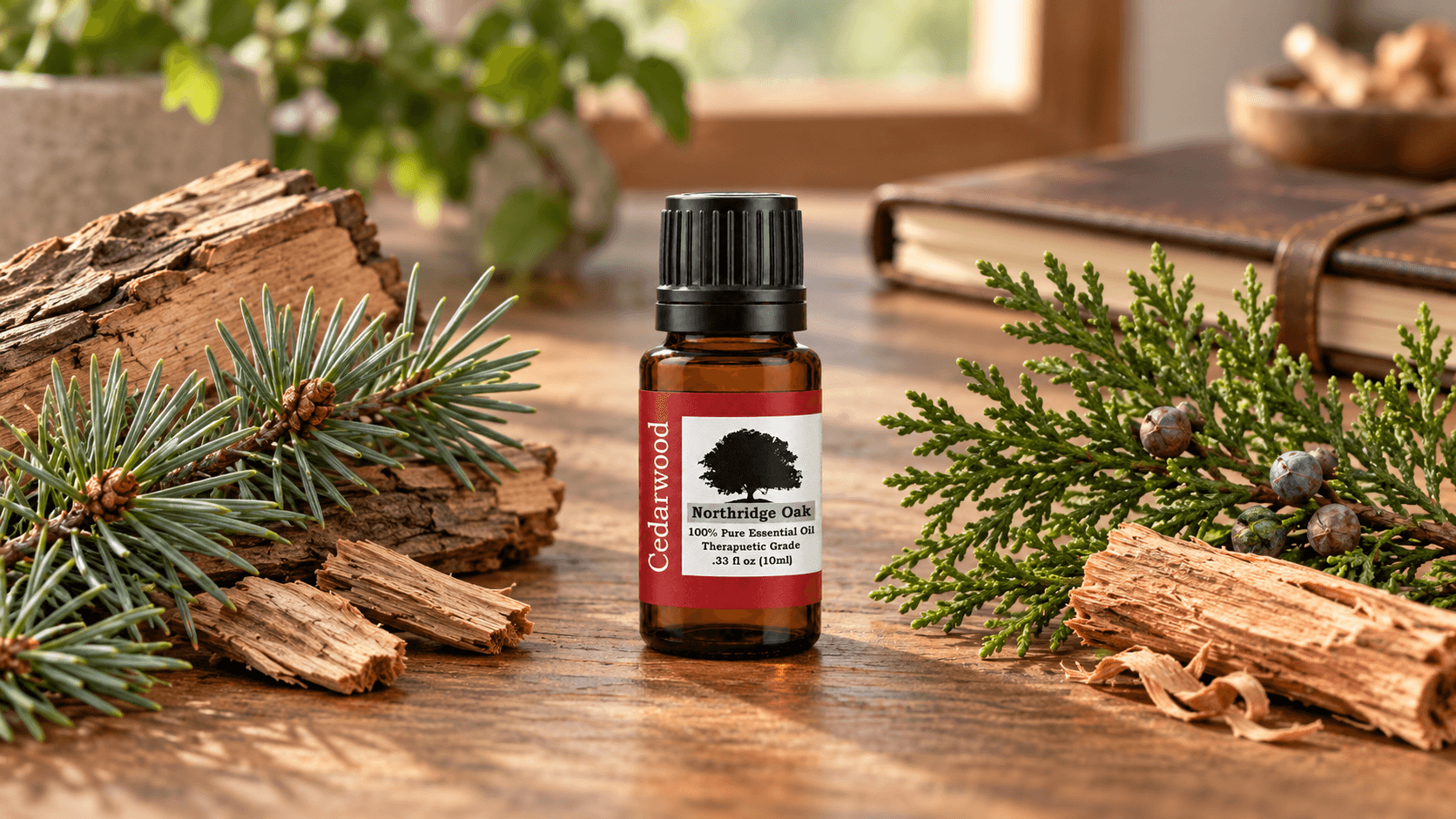
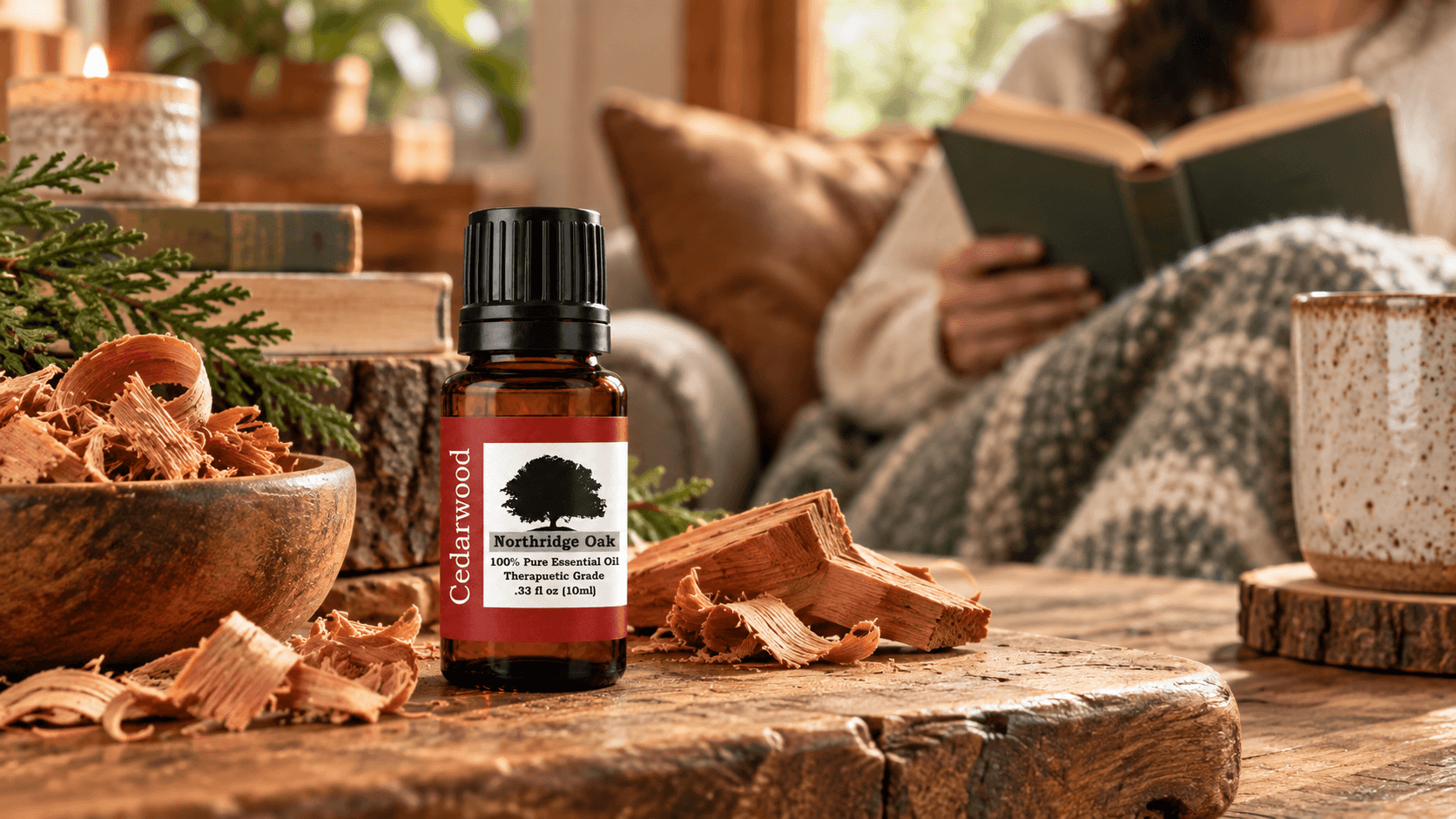
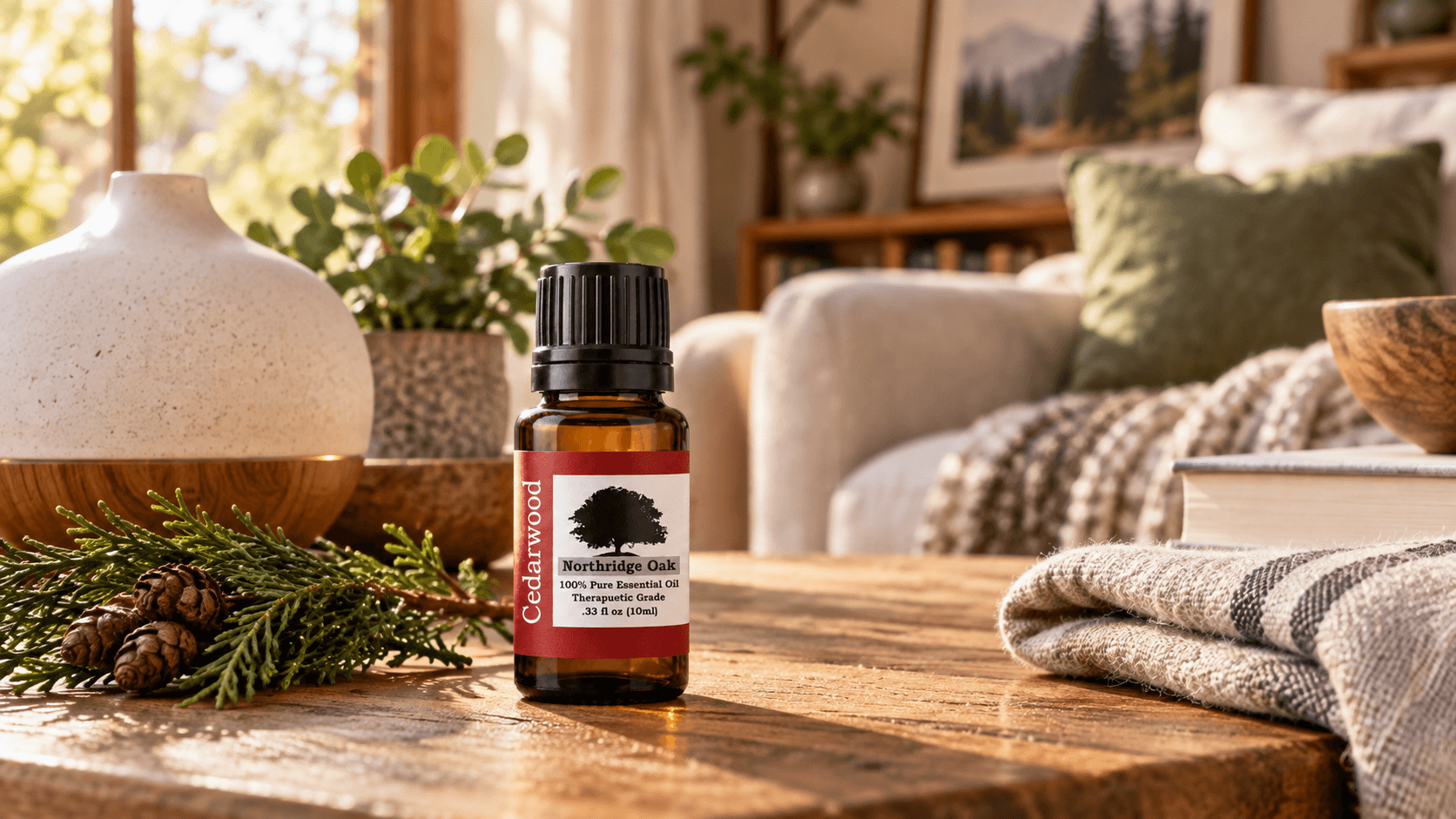
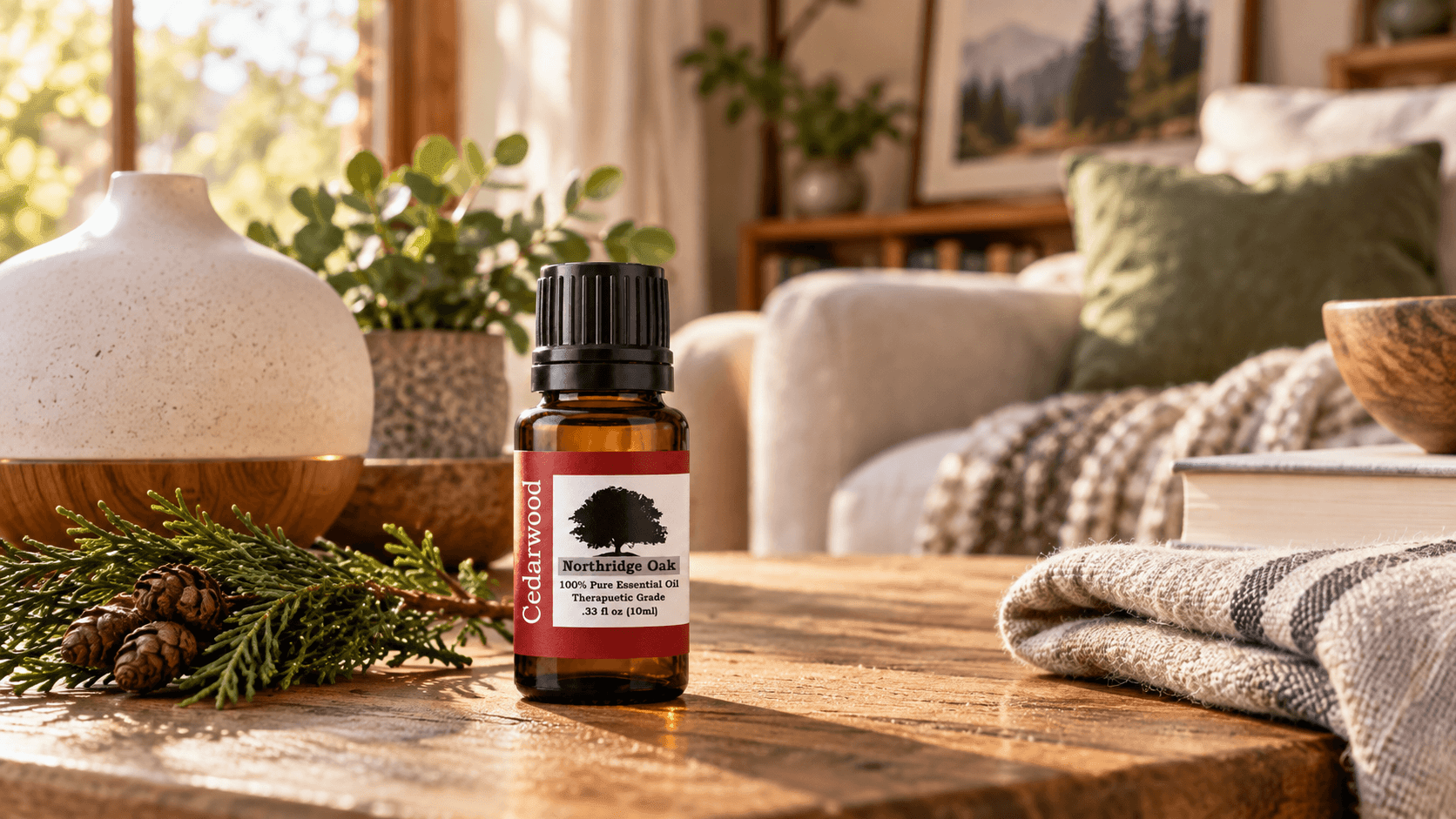
Northridge Oak Cedarwood Essential Oil is 100% pure, undiluted Cedrus atlantica from Morocco. It is bottled in small batches and third-party GC/MS tested, with no fillers or synthetic fragrance. Its dry wood, subtle smoke and soft balsamic finish make it a versatile choice for diffusion, grooming and carefully diluted topical recipes.
Try Northridge Oak Cedarwood Essential Oil
Atlas Cedarwood is most useful when you think of it as both an aroma and a piece of structure. Bright top notes usually make the first impression, while Cedarwood stays present through the drydown and gives the blend a warm center. That staying power is especially helpful when a citrus blend feels lively at first but disappears too quickly. Begin with one part Cedarwood to two or three parts brighter oil, let the blend rest, and smell it again before adjusting.
Its character can move in several directions. With Bergamot, Cedarwood feels polished and quietly elegant. With Lavender, it becomes soft and familiar. With Balsam Fir, it suggests a sun-warmed forest. With Frankincense, its balsamic side becomes more noticeable. This flexibility is one reason a single bottle can inspire so many different recipes.
A simple three-part blending method
Choose one bright note, one heart note and Cedarwood as the base. For a six-drop diffuser blend, try three drops of the bright note, two of the heart and one of Cedarwood. If you want a woodier result, move to a 2:2:2 balance. If Cedarwood becomes more prominent than you intended, add one bright drop and give the blend several minutes to open rather than trying to cover it with many new ingredients.
Essential oils are naturally complex mixtures of volatile aromatic compounds. Atlas Cedarwood is valued for a profile shaped largely by sesquiterpene-rich wood aromatics, which help explain its slower evaporation and lingering base-note presence. Chemistry can vary with growing conditions, wood selection, distillation and storage, so a responsible description focuses on the botanical identity and the tested batch rather than promising one fixed chemical percentage for every bottle.
This matters when reading research. A paper about cedrol, a constituent especially associated with some juniper-derived cedarwood oils, can help us understand scientific interest in woody aromas, but it is not automatically a clinical test of every product sold as Cedarwood. Likewise, the 1998 hair trial is directly relevant to Atlas Cedarwood because it names Cedrus atlantica, yet it studied that oil inside a four-oil formula. These distinctions make the positive findings more useful: you can see exactly why the evidence is encouraging and how closely it matches the bottle and method you are considering.
For a welcoming room
Add two drops Cedarwood, two drops Blood Orange and one drop Frankincense to a diffuser filled according to its directions. The orange creates the friendly opening, Cedarwood provides warmth and Frankincense connects the two. Diffuse during the early part of an evening at home and notice how the aroma develops rather than judging it only in the first minute.
For a personal woodland aroma
For an adult pulse-point oil, add one total drop of essential oil to one teaspoon of carrier for an approximately one-percent dilution. Make Cedarwood the main aromatic note or combine one drop Cedarwood with one drop Bergamot in two teaspoons of carrier. Patch test the finished formula, then use a small amount. The result is understated, warm and easy to wear.
For a scalp-massage ritual
Use the researched combination as inspiration while keeping the evidence in view. A simple home routine can feature properly diluted Cedarwood with Rosemary and Lavender in a carrier, massaged gently before shampooing. The published study’s positive result came from a specific multi-oil formula used consistently for seven months, so consistency, measurement and the complete formula are central parts of the story—not just one ingredient.
For a bedtime scent cue
Try two drops Cedarwood with two drops Lavender during a short, ventilated diffuser session before bed. Keep the rest of the routine simple: lower the lights, put away the day’s tasks and repeat the same aroma on several evenings. The appeal is not that fragrance forces sleep; it is that a pleasant, repeatable sensory cue can make winding down feel more inviting.
In spring, pair Cedarwood with Grapefruit and Lavender for an airy wood-and-petal character. In summer, combine it with Lemon and a trace of Rosemary for a clean patio-inspired aroma. Autumn welcomes Blood Orange, Frankincense and Cedarwood, while winter brings out its richest side beside Balsam Fir and Myrrh. The base note remains recognizable, but the surrounding oils let the same bottle feel fresh all year.
Seasonal blending also teaches economy. Cedarwood rarely needs to dominate. One or two drops can create continuity among oils that might otherwise feel disconnected, which makes it a practical choice for anyone building a small, versatile collection.
A useful label should identify Cedrus atlantica, the wood as the plant part, steam distillation and Morocco as the origin. Batch-specific third-party GC/MS testing adds another layer of identity and transparency. Once opened, protect the oil from light, heat, air and moisture; close the cap promptly and keep the reducer clean.
Smell is also a valuable learning tool. Fresh Atlas Cedarwood should unfold in layers rather than presenting as a flat fragrance: dry wood, warm earth, restrained smoke and a mellow balsamic finish. Evaluate it on a paper strip over an hour. A patient drydown reveals far more than smelling directly from the open bottle.
For people who enjoy one product that can move from home fragrance to grooming and body care, pure Atlas Cedarwood essential oil is an unusually rewarding starting point. Its character is distinctive on its own and generous in blends, so beginners can create satisfying results with only a few drops.
Place one drop on a paper scent strip. Smell it immediately, after fifteen minutes and again after an hour. Write down the changes. Then make two small comparisons: Cedarwood with Bergamot on one strip, and Cedarwood with Frankincense on another. The first reveals its brighter cologne side; the second reveals its quiet resinous depth.
This exercise shows why Cedarwood is more than “a wood smell.” It is a structure-building oil that changes how surrounding notes behave.
Start with one drop. Notice how it settles the blend, warms the room and turns a familiar routine into something you look forward to repeating.
A Simple Way to Experience Cedarwood
You do not need a complicated project to decide whether this oil is for you. Begin with the aroma itself. Place one drop on a paper scent strip or cotton pad, set it several inches away and notice the first impression. Return after 15 minutes, then again after an hour. Cedarwood often reveals more character as the sharpest opening settles, and this slower test makes it easier to notice the dry, woody and quietly balsamic details that disappear when you smell directly from the bottle.
For a first diffuser experience, let Cedarwood play a supporting role beside two familiar oils. Use the measured recipe in this guide that best matches the room you want to create, diffuse for 20 to 30 minutes with fresh airflow, and write down the proportions. The goal is not to “use” the oil as quickly as possible. It is to discover the version of it that makes you pause, breathe in and think, I want my home to smell like this again.
If that sounds like the kind of ritual you would enjoy, Northridge Oak Cedarwood Essential Oil is 100% pure and undiluted, bottled in small batches and third-party GC/MS tested. It gives you a clearly identified single oil and a dependable place to begin.
Continue Learning About Cedarwood Essential Oil
Make this article part of a complete Cedarwood routine:
- Cedarwood Essential Oil Diffuser Blends: 20 Woodsy Recipes
- What Blends Well With Cedarwood Essential Oil?
- What Does Cedarwood Essential Oil Smell Like?
- Cedarwood Essential Oil for Hair and Scalp: Study & Recipes
- Cedarwood Essential Oil for Skin, Body & Beard Care
These statements have not been evaluated by the Food and Drug Administration. Northridge Oak products are not intended to diagnose, treat, cure or prevent disease.