Table of Contents
Cedarwood is one of those aromas that naturally belongs near closets, patios and open windows. Its dry, woody scent feels clean and outdoorsy while pairing beautifully with citrus, mint and evergreen oils. This guide separates the pleasure of a cedar-scented space from exaggerated pest-control promises and gives you practical recipes that make the home more enjoyable.
What EPA Records Say About Cedarwood Oil
EPA records have included cedarwood oil as an active ingredient in registered pesticide products used to repel insects. A federal fact sheet described cedarwood oil products such as blocks for clothing storage and other labeled repellent uses. Read the EPA cedarwood oil fact sheet.
That regulatory history is a positive reason cedarwood remains closely associated with closets and repellent products. It also highlights the importance of the label: registered products contain specific cedarwood types, concentrations and directions. Northridge Oak’s oil is Atlas Cedarwood, Cedrus atlantica, so use it for the aromatic ideas below and select a currently labeled repellent whenever verified pest control is the goal.
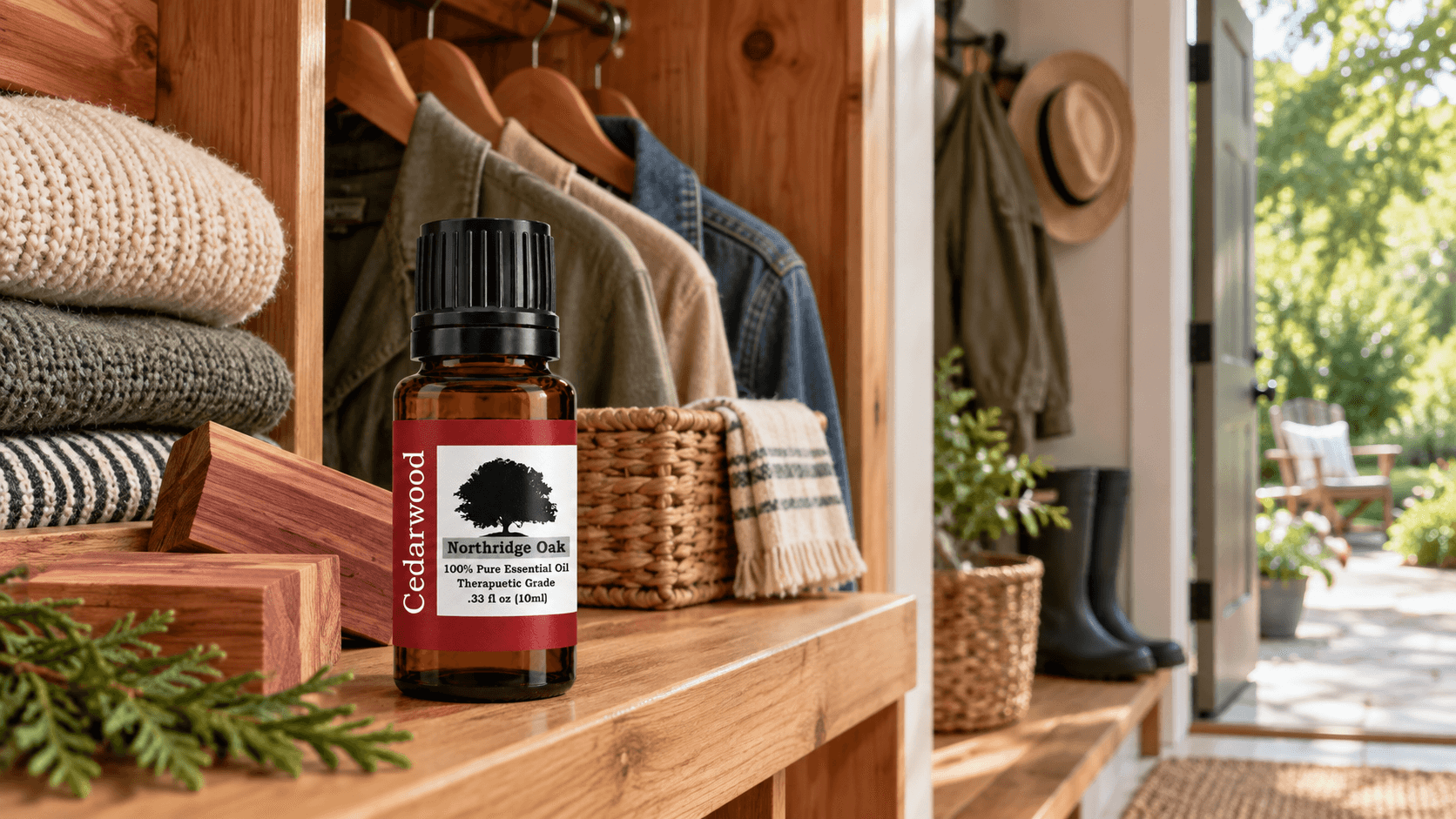
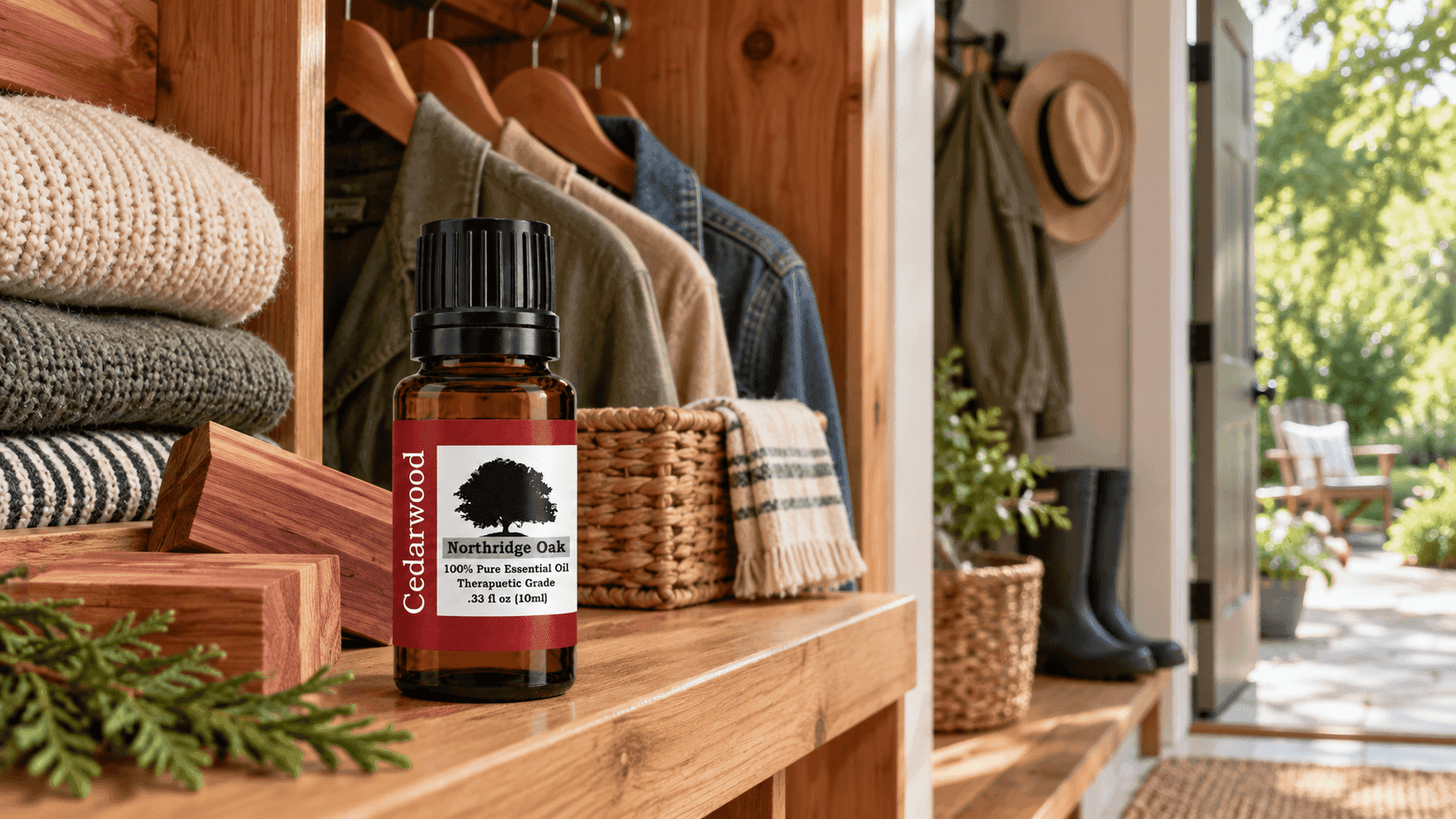
Cedarwood Closet Block
Place one drop on an unfinished wooden aroma block designed for essential oils. Let it absorb fully, then place the block where it has space from clothing and finished surfaces. Refresh when the wood aroma becomes faint.
This method is tidy, easy to monitor and lets the dry Cedarwood scent develop slowly.
Drawer Aroma Stone
Add one drop to a porous aroma stone and allow it to absorb before placing it in a drawer corner with space from fabric. Pair Cedarwood with Lavender for linens or Bergamot for a brighter wardrobe aroma.
Mudroom and Entryway Diffuser Blends
- Forest Entry: 2 Cedarwood, 2 Balsam Fir, 2 Lemon
- Clean Boots: 2 Cedarwood, 2 Pine, 1 Eucalyptus
- Porch Evening: 2 Cedarwood, 2 Bergamot, 1 Patchouli
- Fresh Gear: 2 Cedarwood, 2 Grapefruit, 1 Tea Tree
Outdoor-Inspired Patio Aromas
Cedarwood, Balsam Fir and Lemon create the feeling of a bright forest. Cedarwood, Frankincense and Blood Orange feel warmer and more relaxed. Use a diffuser rated for the space, follow its instructions and remember that open-air diffusion disperses faster than indoor diffusion.
Camping and Travel Aroma Ideas
A sealed personal inhaler or scent strip can bring a familiar Cedarwood aroma to travel without applying oil to gear. Label it clearly and store it in a secure place reserved for adults. Cedarwood with Spearmint feels fresh; Cedarwood with Lavender feels softer.
A passive block near—but not touching—stored shoes, reusable bags or seasonal décor can add a pleasant wood aroma. This works best in a dry, ventilated area. Clean the storage space first, then let Cedarwood be the finishing aromatic detail.
The oil is valuable even when repellent performance is not the goal. It can make a closet smell refined, turn an entryway into a forest-inspired welcome and bring cohesion to outdoor diffuser blends. Those everyday sensory uses are immediate, honest and easy to appreciate.
Northridge Oak Cedarwood Essential Oil is 100% pure, undiluted Cedrus atlantica from Morocco. It is bottled in small batches and third-party GC/MS tested, with no fillers or synthetic fragrance. Its dry wood, subtle smoke and soft balsamic finish make it a versatile choice for diffusion, grooming and carefully diluted topical recipes.
Try Northridge Oak Cedarwood Essential Oil
For a closet, add one drop to an unfinished aroma block designed for essential oils, let it absorb completely and place it where it will not touch clothing. The same method works in a linen cabinet or entryway drawer. Refresh when the scent becomes faint rather than following a fixed schedule.
In a garage or covered patio, diffuse Cedarwood with Lemon or Balsam Fir to create an outdoorsy atmosphere while you work or relax. Follow the diffuser directions, provide airflow and keep the unit protected from weather and moisture.
Historical EPA records make cedarwood’s relationship with insect-repellent products genuinely interesting. They also help clarify the best next step: use home aroma ideas when your goal is a pleasant cedar scent, and choose a currently registered, properly labeled repellent when you need verified pest protection. Product formulas, species and labeled directions matter.
This distinction lets Cedarwood’s positive qualities shine. Atlas Cedarwood brings a dry, warm, forest-like character to closets and gathering spaces, while purpose-made products can handle performance claims.
Pair Cedarwood with Lavender in spring, Lemon in summer, Blood Orange in autumn or Balsam Fir in winter. Apply only to an appropriate aroma block, allow full absorption and keep it separated from fabric and finished surfaces. A small amount produces an elegant aroma and makes refreshing the space easy.
“Cedarwood oil” on an old regulatory document, research paper or recipe may refer to several different botanicals. Write Cedrus atlantica on your recipe notes. When purchasing a registered repellent, follow that product’s label instead of transferring directions from one cedarwood type to another.
Keep essential oil from direct contact with clothing, plastic, painted surfaces and finished wood. Test aroma accessories in an inconspicuous location, let drops absorb fully and store bottles securely. Diffuse with ventilation and give people and animals a scent-free exit.
Assign Cedarwood a simple aromatic role in each space: one fully absorbed drop on an unfinished aroma block for the closet, a forest diffuser blend for the entryway, and a bright Cedarwood-citrus recipe for covered outdoor living areas.
Refresh passive aroma pieces when the scent becomes faint. This keeps the wood character pleasant and gives you a natural opportunity to inspect the block, shelf and surrounding fabrics before adding another drop.
For outdoor gatherings, pair Atlas Cedarwood with Lemon, Balsam Fir or Rosemary to create an appealing open-air atmosphere. When insect protection is the goal, select a registered repellent and enjoy Cedarwood separately as part of the setting.
A Simple Way to Experience Cedarwood
You do not need a complicated project to decide whether this oil is for you. Begin with the aroma itself. Place one drop on a paper scent strip or cotton pad, set it several inches away and notice the first impression. Return after 15 minutes, then again after an hour. Cedarwood often reveals more character as the sharpest opening settles, and this slower test makes it easier to notice the dry, woody and quietly balsamic details that disappear when you smell directly from the bottle.
Start with one closet sachet or one short patio diffuser session from the recipes below. Notice first whether you enjoy the atmosphere it creates. Cedarwood’s greatest everyday strength is how naturally it makes storage spaces and outdoor-adjacent rooms feel fresh, orderly and connected to the woods.
If that sounds like the kind of ritual you would enjoy, Northridge Oak Cedarwood Essential Oil is 100% pure and undiluted, bottled in small batches and third-party GC/MS tested. It gives you a clearly identified single oil and a dependable place to begin.
Continue Learning About Cedarwood Essential Oil
Make this article part of a complete Cedarwood routine:
- Cedarwood Essential Oil Diffuser Blends: 20 Woodsy Recipes
- Cedarwood Essential Oil Benefits, Uses & Safety Guide
- What Blends Well With Cedarwood Essential Oil?
- What Does Cedarwood Essential Oil Smell Like?
- Cedarwood Essential Oil for Hair and Scalp: Study & Recipes
These statements have not been evaluated by the Food and Drug Administration. Northridge Oak products are not intended to diagnose, treat, cure or prevent disease.
For closets and entry spaces, begin with one small scented item rather than fragrancing the entire area at once. Place it where air can circulate, then check the aroma after several hours. Cedarwood should feel like part of the space—dry, clean and naturally woodsy. This measured approach makes it easy to refresh the aroma when needed and helps the scent complement clothing, linens and outdoor gear instead of competing with them.