Table of Contents
A good diffuser blend should feel like a room you want to stay in, not a list of oils someone told you to combine. Cedarwood brings a dry, woody and quietly balsamic character that can make citrus feel fuller, florals feel more grounded and woods or resins feel beautifully finished. These 20 measured recipes are designed around real moods and moments, with enough explanation to help you choose the one that sounds like home.
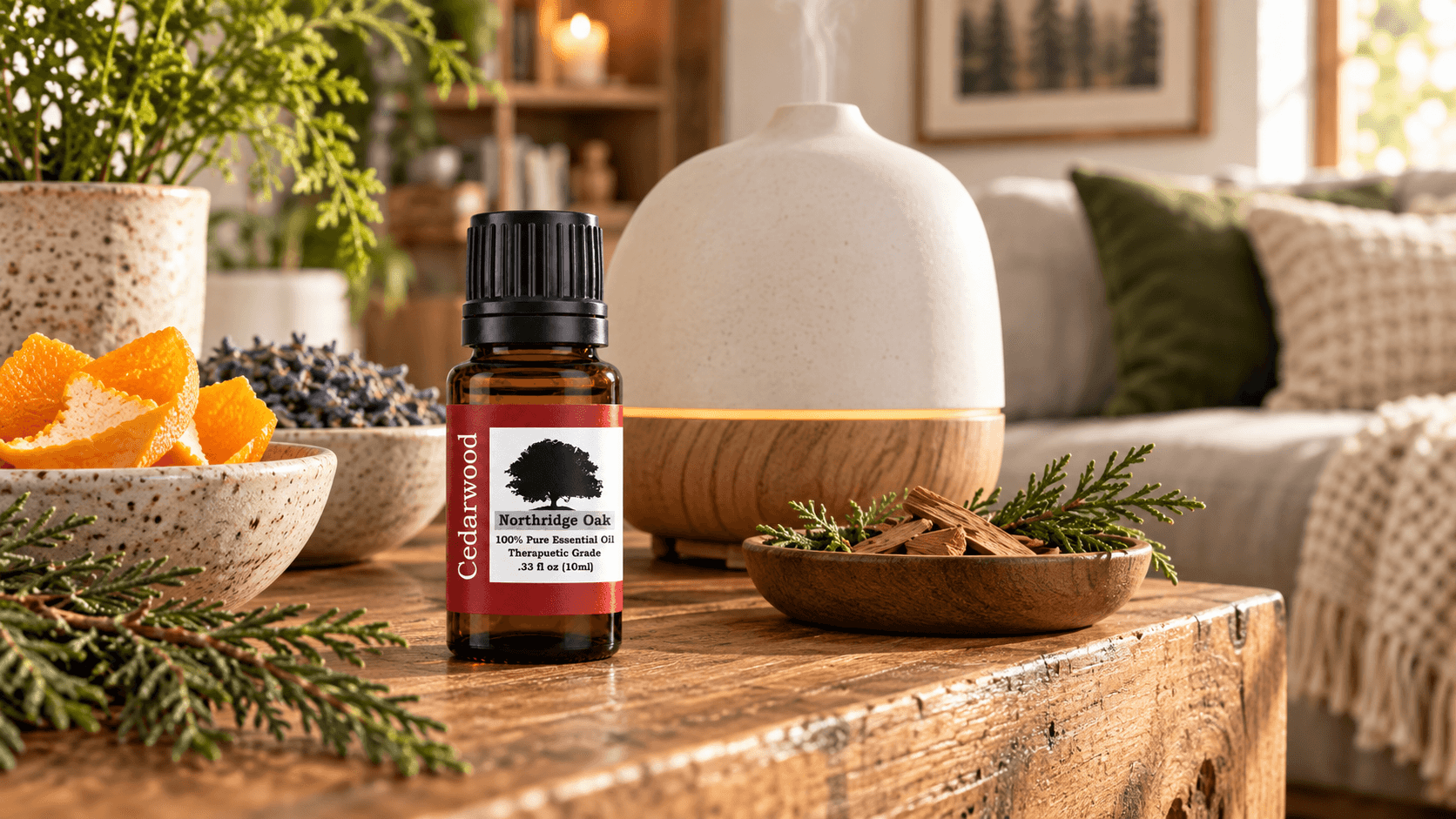
These recipes are written for a typical 100–200 mL ultrasonic diffuser. Add water to the fill line before adding the oils, then diffuse for approximately 30 minutes. Begin with fewer total drops in a small room and follow your diffuser manufacturer’s directions. Leaving the room for a few minutes and returning helps you notice the full aroma rather than only the first impression.
Cedarwood acts as the steady base of each formula. Citrus brightens it, herbs add clarity, florals soften the wood and evergreens make the blend feel forested. The aroma notes beneath each recipe will help you choose the right one for the room and occasion.
The twenty recipes below use four to six total drops as a starting point. Adjust for the diffuser’s instructions, room size and personal preference. Cedarwood is a base note, so let each blend diffuse for several minutes before deciding whether to change it.
Bright Morning Cedarwood Blends
- Forest Sunrise: 2 Cedarwood, 3 Lemon, 1 Balsam Fir.
Fresh citrus lifts the evergreen notes while Cedarwood supplies a warm, natural center. Add water first, add the measured oils and diffuse for about 30 minutes. - Golden Wood: 2 Cedarwood, 2 Bergamot, 2 Blood Orange.
Bergamot adds polished citrus softness, allowing Cedarwood to feel refined rather than heavy. Add water first, add the measured oils and diffuse for about 30 minutes. - Clear Trail: 2 Cedarwood, 2 Grapefruit, 1 Rosemary.
Grapefruit gives the blend a dry, sparkling opening that keeps Cedarwood bright and airy. Add water first, add the measured oils and diffuse for about 30 minutes. - Open Cabin: 2 Cedarwood, 2 Lemon, 1 Eucalyptus.
Cedarwood adds dry structure and staying power while letting the character of Cedarwood remain clear. Add water first, add the measured oils and diffuse for about 30 minutes.
Citrus lifts Cedarwood’s dry opening and helps the blend feel bright from the first few minutes. Lemon is crispest, Bergamot feels most polished and Blood Orange produces the warmest result.
Workspace and Focus Blends
- Quiet Desk: 2 Cedarwood, 2 Frankincense, 1 Rosemary.
Frankincense brings a smooth resinous finish that makes this a comfortable late-day choice. Add water first, add the measured oils and diffuse for about 30 minutes. - Woodland Focus: 2 Cedarwood, 2 Spearmint, 1 Lemon.
Cedarwood adds dry structure and staying power while letting the character of Cedarwood remain clear. Add water first, add the measured oils and diffuse for about 30 minutes. - Steady Momentum: 2 Cedarwood, 2 Bergamot, 1 Grapefruit.
Grapefruit gives the blend a dry, sparkling opening that keeps Cedarwood bright and airy. Add water first, add the measured oils and diffuse for about 30 minutes. - Library Air: 2 Cedarwood, 2 Frankincense, 1 Balsam Fir.
Frankincense brings a smooth resinous finish that makes this a comfortable late-day choice. Add water first, add the measured oils and diffuse for about 30 minutes.
These recipes feel clear and steady without making the room overly sharp. Cedarwood gives the blend structure while herbs, resins and citrus shape the mood.
Cozy Evening Blends
- Amber Cabin: 2 Cedarwood, 2 Blood Orange, 1 Patchouli.
Cedarwood adds dry structure and staying power while letting the character of Cedarwood remain clear. Add water first, add the measured oils and diffuse for about 30 minutes. - Soft Sweater: 2 Cedarwood, 3 Lavender, 1 Bergamot.
Soft and gently floral, this recipe rounds the Cedarwood aroma into an inviting evening blend. Add water first, add the measured oils and diffuse for about 30 minutes. - Fireside Resin: 2 Cedarwood, 2 Frankincense, 1 Myrrh.
Frankincense brings a smooth resinous finish that makes this a comfortable late-day choice. Add water first, add the measured oils and diffuse for about 30 minutes. - Autumn Woods: 2 Cedarwood, 2 Balsam Fir, 1 Cinnamon Leaf.
Cedarwood adds dry structure and staying power while letting the character of Cedarwood remain clear. Add water first, add the measured oils and diffuse for about 30 minutes.
Cedarwood creates the feeling of warmth even when the accompanying oils are fresh. Resins deepen it, citrus makes it glow and Lavender brings softness.
Bedtime Cedarwood Blends
- Woodland Rest: 2 Cedarwood, 3 Lavender, 1 Frankincense.
Soft and gently floral, this recipe rounds the Cedarwood aroma into an inviting evening blend. Add water first, add the measured oils and diffuse for about 30 minutes. - Quiet Roots: 2 Cedarwood, 2 Vetiver, 2 Bergamot.
Bergamot adds polished citrus softness, allowing Cedarwood to feel refined rather than heavy. Add water first, add the measured oils and diffuse for about 30 minutes. - Soft Night: 2 Cedarwood, 2 Marjoram, 2 Lavender.
Soft and gently floral, this recipe rounds the Cedarwood aroma into an inviting evening blend. Add water first, add the measured oils and diffuse for about 30 minutes. - Still Forest: 2 Cedarwood, 2 Frankincense, 1 Clary Sage.
Frankincense brings a smooth resinous finish that makes this a comfortable late-day choice. Add water first, add the measured oils and diffuse for about 30 minutes.
Begin diffusion while you are winding down, then let the aroma become part of a predictable evening routine. If Vetiver feels too deep, reduce it by one drop and add Lavender.
Fresh Forest and Home Blends
- Rainy Pine: 2 Cedarwood, 2 Pine, 2 Eucalyptus.
Cedarwood adds dry structure and staying power while letting the character of Cedarwood remain clear. Add water first, add the measured oils and diffuse for about 30 minutes. - Clean Entryway: 2 Cedarwood, 2 Lemon, 1 Tea Tree.
Cedarwood adds dry structure and staying power while letting the character of Cedarwood remain clear. Add water first, add the measured oils and diffuse for about 30 minutes. - Mountain Air: 2 Cedarwood, 2 Balsam Fir, 1 Spearmint.
Cedarwood adds dry structure and staying power while letting the character of Cedarwood remain clear. Add water first, add the measured oils and diffuse for about 30 minutes. - Wood Shop: 3 Cedarwood, 1 Patchouli, 2 Bergamot.
Bergamot adds polished citrus softness, allowing Cedarwood to feel refined rather than heavy. Add water first, add the measured oils and diffuse for about 30 minutes.
How to Adjust a Cedarwood Blend
When the blend feels too deep, add one drop of citrus. When it feels too bright, add one drop of Cedarwood or Frankincense. Lavender softens strong edges, while Balsam Fir makes the recipe feel more outdoorsy. Change one drop at a time and record the ratio you enjoy.
Cedarwood acts like an aromatic foundation. Its slow, woody base stays present while brighter oils unfold above it. That makes it especially helpful for connecting oils that might otherwise feel separate, such as Lemon and Patchouli or Lavender and Balsam Fir.
It also offers a sophisticated option for anyone who wants a comfortable home aroma without leaning heavily floral or sweet. The dry Atlas Cedarwood profile makes kitchens, offices, bedrooms and living spaces feel composed and natural.
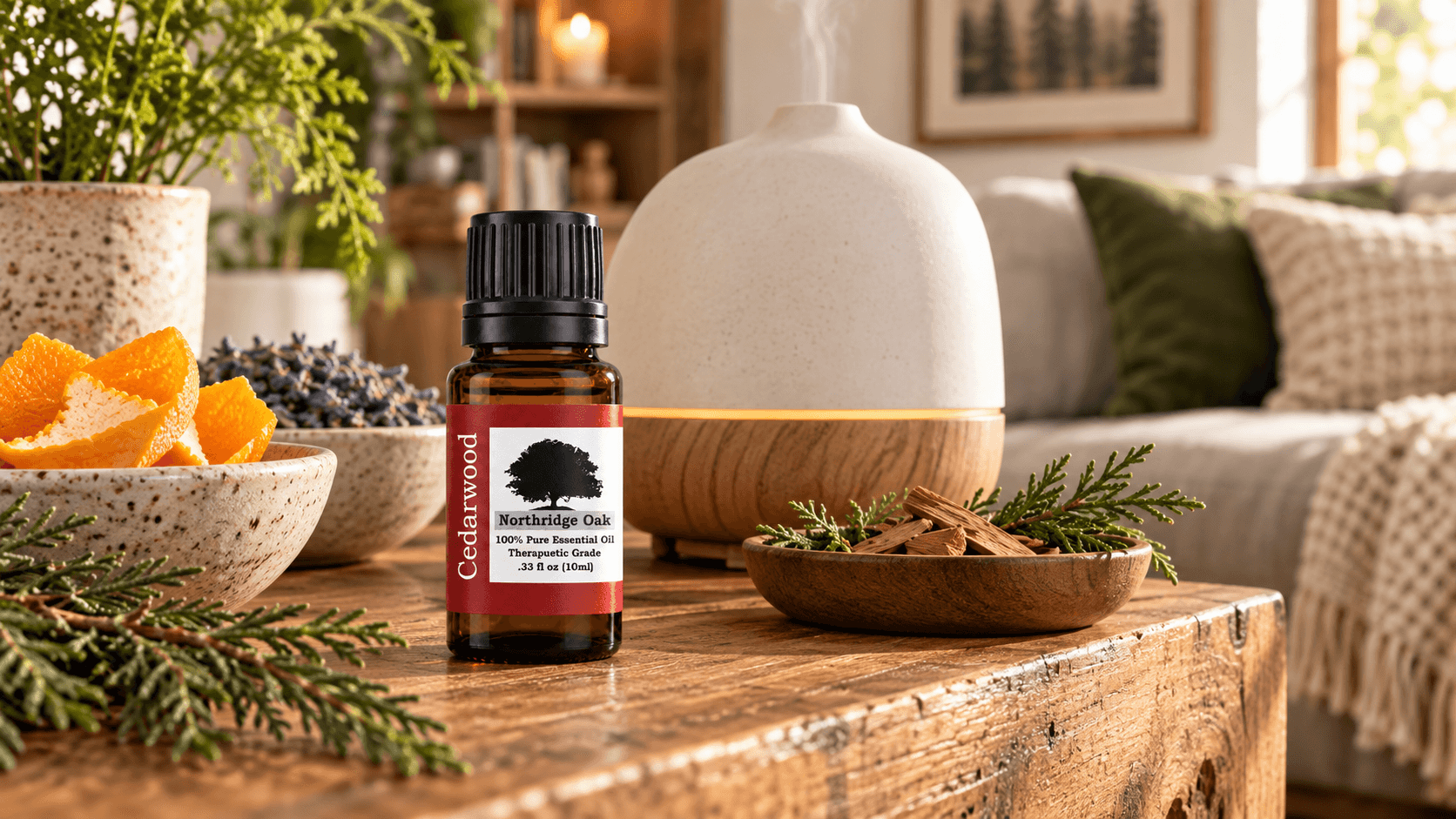
Northridge Oak Cedarwood Essential Oil is 100% pure, undiluted Cedrus atlantica from Morocco. It is bottled in small batches and third-party GC/MS tested, with no fillers or synthetic fragrance. Its dry wood, subtle smoke and soft balsamic finish make it a versatile choice for diffusion, grooming and carefully diluted topical recipes.
Try Northridge Oak Cedarwood Essential Oil
In a living room, pair Cedarwood with a bright citrus note so the first impression feels open and welcoming. A bedroom usually benefits from a simpler, softer recipe in which Cedarwood and Lavender share the focus. For a home office, one part Cedarwood beneath Lemon and Rosemary creates a clear, woodsy atmosphere without becoming overly sweet.
Room size matters. Begin with fewer drops in a small room and add only after the aroma has dispersed. Cedarwood is a base note, so it often becomes more noticeable after the brightest notes begin to soften. Let the diffuser run briefly, pause and return to the room before deciding whether the recipe needs more.
If a recipe feels too dark, add one drop of citrus. If it feels too sharp, add one drop Cedarwood or Frankincense. If it feels crowded, return to two oils and rebuild one drop at a time. Keeping notes about the diffuser size, water level and ratios turns a favorite experiment into a recipe you can repeat.
Try seasonal variations as well: Grapefruit and Lavender in spring, Lemon and Balsam Fir in summer, Blood Orange and Frankincense in autumn, or Balsam Fir and Myrrh in winter. Atlas Cedarwood supplies the warm thread that connects every version.
Diffuse the same blend for fifteen minutes, then leave the room briefly and return. Notice which notes greet you first and which remain in the background. Cedarwood may feel subtle at the beginning but become more noticeable as the citrus or mint settles. This is the behavior of a base note, and learning it will improve every blend you make.
Follow the diffuser manufacturer’s instructions, use shorter sessions in compact rooms and provide fresh airflow. Begin with fewer drops around children, pets and aroma-sensitive household members, and always provide a scent-free way to leave the room.
Choose one recipe for morning, one for work and one for evening. Diffuse each on a different day, using the same water level and diffuser, and note which ratio fits the room best. This turns the collection into a practical aroma wardrobe rather than a list you try only once.
For a brighter room, increase the linked Lemon, Bergamot or Grapefruit by one drop. For a warmer forest impression, increase Cedarwood or Balsam Fir by one drop. Small changes keep the original structure easy to recognize.
Clean the diffuser according to its manufacturer’s directions between contrasting recipes. A clean reservoir lets the soft balsamic side of Atlas Cedarwood come through clearly and makes each formula easier to evaluate.
A Simple Way to Experience Cedarwood
You do not need a complicated project to decide whether this oil is for you. Begin with the aroma itself. Place one drop on a paper scent strip or cotton pad, set it several inches away and notice the first impression. Return after 15 minutes, then again after an hour. Cedarwood often reveals more character as the sharpest opening settles, and this slower test makes it easier to notice the dry, woody and quietly balsamic details that disappear when you smell directly from the bottle.
Choose your first recipe by feeling rather than by season. If you want brightness, begin with citrus. If you want a quieter room, choose Lavender, Cedarwood or Frankincense. If you want an outdoor character, reach for fir or pine. Add the oils to water according to your diffuser instructions, run the blend for 20 to 30 minutes and then step out of the room briefly. When you return, you will notice the balance more clearly and can adjust one drop next time.
If that sounds like the kind of ritual you would enjoy, Northridge Oak Cedarwood Essential Oil is 100% pure and undiluted, bottled in small batches and third-party GC/MS tested. It gives you a clearly identified single oil and a dependable place to begin.
Continue Learning About Cedarwood Essential Oil
Make this article part of a complete Cedarwood routine:
- Cedarwood Essential Oil Benefits, Uses & Safety Guide
- What Blends Well With Cedarwood Essential Oil?
- What Does Cedarwood Essential Oil Smell Like?
- Cedarwood Essential Oil for Hair and Scalp: Study & Recipes
- Cedarwood Essential Oil for Skin, Body & Beard Care
These statements have not been evaluated by the Food and Drug Administration. Northridge Oak products are not intended to diagnose, treat, cure or prevent disease.