Table of Contents
The pleasure of blending Cedarwood begins when you stop asking only which oils “go with it” and start asking what you want the finished room to feel like. Its dry, woody and quietly balsamic character can be brightened, softened, deepened or made more spacious depending on the partner you choose. This guide explains why the best pairings work and gives you measured blends you can actually recreate.
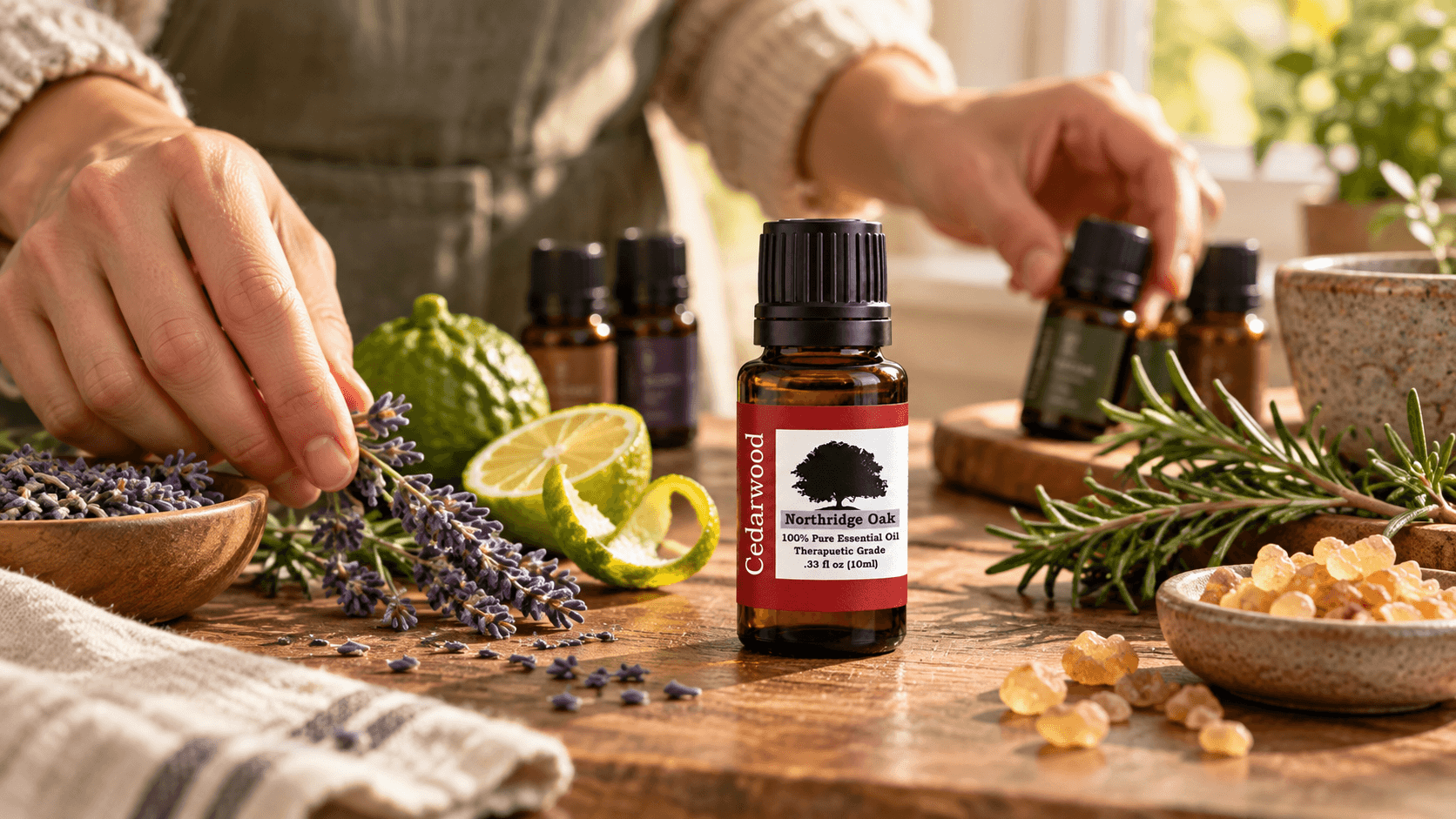
The easiest starting ratio is two parts of a brighter partner to one part Cedarwood. For deep resins or earthy oils, begin with equal parts or use Cedarwood as the larger share.
Citrus Oils That Blend With Cedarwood
Bergamot
Bergamot and Cedarwood create an elegant citrus-wood pairing that feels clean, confident and softly cologne-like. Try three Bergamot to two Cedarwood.
Lemon
Lemon turns on the lights in a Cedarwood blend. Its crisp peel aroma keeps dry wood feeling fresh. Try three Lemon to one Cedarwood.
Grapefruit and Blood Orange
Grapefruit produces a modern, tart effect; Blood Orange is warmer and rounder. Either can make Cedarwood feel welcoming in a kitchen or living room.
Floral Oils That Blend With Cedarwood
Lavender
Lavender is the easiest floral partner. Cedarwood steadies its sweetness, while Lavender softens the wood. This pairing works in bedtime, body-care and home blends.
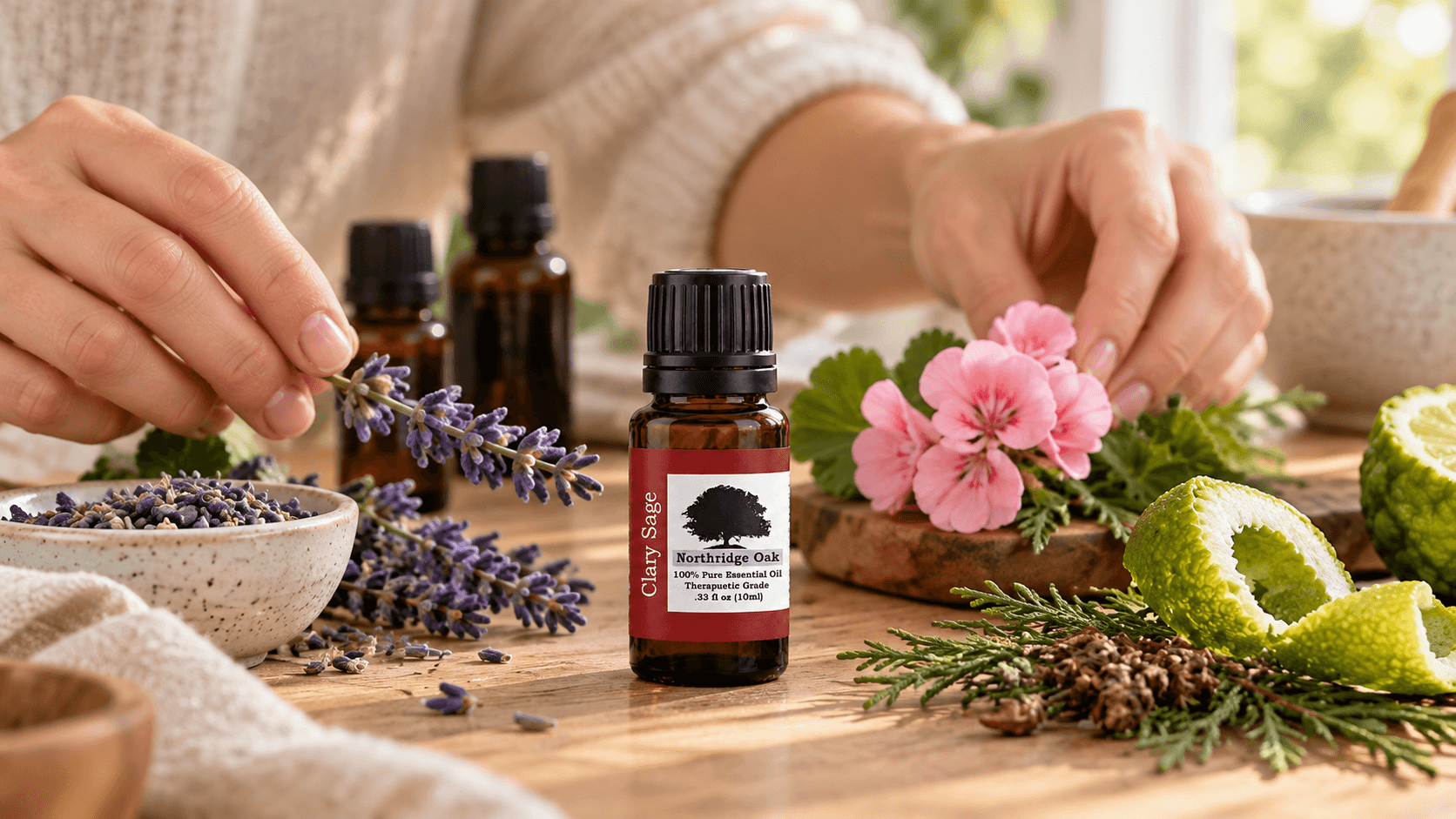
Clary Sage
Clary Sage adds an herbal-floral softness that makes Cedarwood feel smooth and quietly sophisticated.
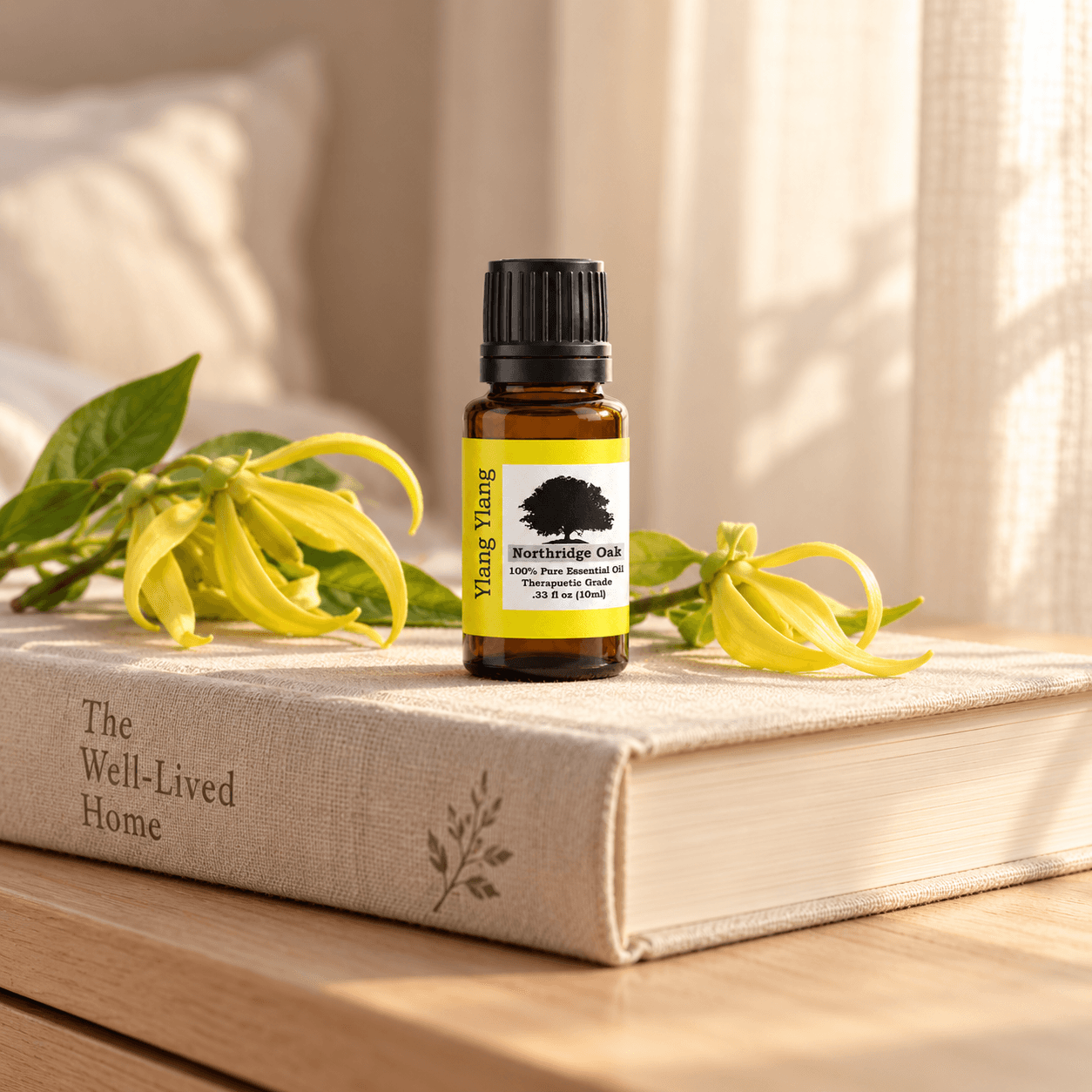
Ylang Ylang
Ylang Ylang is rich and sweet, so Cedarwood gives it welcome structure. Begin with three Cedarwood to one Ylang Ylang.
Herbs, Mints and Evergreens
Rosemary adds a clear herbal lift. Marjoram creates warmth. Spearmint adds a softer freshness than Peppermint. Balsam Fir and Pine emphasize the forest character while Cedarwood supplies the dry trunk-and-bark foundation.
Try two Cedarwood, two Balsam Fir and one Lemon for a realistic forest-air blend, or two Cedarwood, two Rosemary and one Bergamot for a clear workspace aroma.
Resins and Earthy Oils
Frankincense is an exceptional partner because it brings airy resin above Cedarwood’s dry wood. Myrrh deepens the blend, Patchouli makes it earthier, and Vetiver creates a powerful root-and-wood base. Use the deepest oils sparingly at first.
- Quiet Resin: 2 Cedarwood + 2 Frankincense + 1 Bergamot
- Deep Forest: 3 Cedarwood + 1 Patchouli + 2 Balsam Fir
- Rooted Evening: 2 Cedarwood + 1 Vetiver + 3 Lavender
- Warm Wood: 2 Cedarwood + 1 Myrrh + 2 Blood Orange
How Cedarwood Changes a Blend
Cedarwood gives short-lived top notes somewhere to land. With citrus, it adds longevity and warmth. With florals, it reduces sweetness and creates shape. With herbs, it provides calm structure. With resins and roots, it completes a rich base that can last on a scent strip for hours.
This makes Cedarwood ideal for fixing a blend that feels scattered. Add one drop, wait several minutes and smell again before changing anything else.
Five Dependable Starting Formulas
- 1 Cedarwood + 3 Lemon
- 2 Cedarwood + 3 Lavender + 1 Bergamot
- 2 Cedarwood + 2 Frankincense + 1 Grapefruit
- 2 Cedarwood + 2 Balsam Fir + 1 Rosemary
- 3 Cedarwood + 1 Patchouli + 2 Blood Orange
Choose one direction: bright, floral, forest, resinous or earthy. Pair Cedarwood with one lead oil, smell the combination, and then add a third oil only if the blend needs more brightness, softness or depth. Simple blends teach you more and are easier to reproduce.
Northridge Oak Cedarwood Essential Oil is 100% pure, undiluted Cedrus atlantica from Morocco. It is bottled in small batches and third-party GC/MS tested, with no fillers or synthetic fragrance. Its dry wood, subtle smoke and soft balsamic finish make it a versatile choice for diffusion, grooming and carefully diluted topical recipes.
Try Northridge Oak Cedarwood Essential Oil
A reliable starting ratio is three parts bright note, two parts heart note and one part Cedarwood. That gives the blend an inviting opening while allowing the wood note to appear gradually. For a richer personal fragrance, try equal parts and evaluate the blend on a scent strip after fifteen minutes and again after an hour.
Think in directions rather than rigid rules. Bergamot makes Cedarwood feel polished; Lavender makes it softer; Balsam Fir emphasizes the forest; and Frankincense brings forward its balsamic depth. Change one partner at a time and you will quickly learn which side of Cedarwood you enjoy most.
Add citrus when the composition needs lift, Cedarwood when it needs a foundation, and a gentle floral or herb when it needs a bridge between bright and deep notes. Because Cedarwood develops slowly, rest the blend before changing it. Pure Atlas Cedarwood is especially rewarding for this exercise because one drop can make the whole composition feel more connected.
Explore the full range of pairing notes with Lemon, Blood Orange, Grapefruit, Clary Sage and Ylang Ylang. Each one reveals a different bright, soft or floral side of Cedarwood.
Create one blend with one drop Cedarwood, two drops Bergamot and one drop Lavender. Create another with two drops Cedarwood, one drop Frankincense and one drop Patchouli. The first is a bright triangle; the second is a deep triangle. Smelling them side by side shows how Cedarwood adapts while still giving both blends a recognizable dry-wood backbone.
Use scent strips before committing to a larger formula. For topical perfume or body use, calculate the total essential-oil concentration, dilute in a suitable carrier and patch test the completed blend. Keep detailed notes, including botanical names, because Atlas Cedarwood and Virginia Cedarwood have different aromatic profiles.
Build a small blending set around three directions: Cedarwood plus citrus for brightness, Cedarwood plus floral or herb for softness, and Cedarwood plus resin or root for depth. Smell each pairing on a paper strip before combining all three families.
When a pairing becomes a favorite, give it a name and write down the exact ratio. Try it first as a diffuser blend, then recalculate the total essential-oil concentration before adapting it to a properly diluted personal aroma. This keeps the scent identity consistent across different uses.
A dependable place to begin is two drops Cedarwood, three drops Bergamot and one drop Lavender. It demonstrates all three roles at once: brightness, softness and a warm wood foundation.
A Simple Way to Experience Cedarwood
You do not need a complicated project to decide whether this oil is for you. Begin with the aroma itself. Place one drop on a paper scent strip or cotton pad, set it several inches away and notice the first impression. Return after 15 minutes, then again after an hour. Cedarwood often reveals more character as the sharpest opening settles, and this slower test makes it easier to notice the dry, woody and quietly balsamic details that disappear when you smell directly from the bottle.
Try a three-strip test before filling the diffuser: one strip with Cedarwood, one with your chosen partner and a third with both oils placed close together. Smell the trio at the beginning and again after 15 minutes. This quickly tells you whether the partner brightens, softens or grounds Cedarwood, and it gives you a reason for the ratio instead of leaving you to follow a list blindly.
If that sounds like the kind of ritual you would enjoy, Northridge Oak Cedarwood Essential Oil is 100% pure and undiluted, bottled in small batches and third-party GC/MS tested. It gives you a clearly identified single oil and a dependable place to begin.
Continue Learning About Cedarwood Essential Oil
Make this article part of a complete Cedarwood routine:
- Cedarwood Essential Oil Diffuser Blends: 20 Woodsy Recipes
- Cedarwood Essential Oil Benefits, Uses & Safety Guide
- What Does Cedarwood Essential Oil Smell Like?
- Cedarwood Essential Oil for Hair and Scalp: Study & Recipes
- Cedarwood Essential Oil for Skin, Body & Beard Care
These statements have not been evaluated by the Food and Drug Administration. Northridge Oak products are not intended to diagnose, treat, cure or prevent disease.