Table of Contents
- Why Scientists Study Pine and Insects
- What an Insect Study Can Tell Us
- Can Pine Essential Oil Be Part of an Outdoor Atmosphere?
- Three Forest-Fresh Patio Blends
- A Pine Patio Stone
- What About Fleas on Dogs and Cats?
- Create a Comfortable Pet-Aware Home
- A Positive, Research-Minded Way to Use Pine
- What You’ll Learn From Outdoor Pine Blends
- Continue Exploring Pine Essential Oil
- Frequently Asked Questions
Warm evenings outside are better when the setting feels intentional: comfortable chairs, soft light, good company, and an aroma that belongs naturally among the trees. Pine Essential Oil brings that final touch beautifully. Its crisp evergreen scent can make a patio or porch feel like a woodland retreat.
Because people often search for natural outdoor ideas, one question comes up frequently: does pine oil repel fleas or other insects? The most useful answer begins with what research is actually exploring, then turns that knowledge into enjoyable and responsible ways to use Pine Essential Oil around the home.
Why Scientists Study Pine and Insects
Plants produce aromatic compounds as part of the way they interact with their environment. Scots pine essential oil commonly contains alpha-pinene, beta-pinene, limonene, and other monoterpenes—molecules that scientists study for many biological and aromatic properties.
That makes pine chemistry a promising subject for insect research. Studies of essential oils often examine whether a particular oil or isolated constituent affects a particular insect under controlled conditions. The work is valuable because it helps researchers identify botanical compounds that may be useful in future formulations.
The positive takeaway is not that every laboratory result becomes an instant household formula. It is that the natural chemistry of pine is interesting enough to keep earning careful scientific attention.
What an Insect Study Can Tell Us
A strong study identifies the exact plant species, oil or isolated compound, insect species, concentration, exposure method, and observation period. Those details matter because “pine,” “insects,” and even “repellent” each describe very broad categories.
Scots pine, stone pine, and other conifers do not have identical chemical profiles. A result involving one mosquito species may not predict a result for fleas. A vapor test in a laboratory is different from applying a finished, registered product outdoors.
Reading those details does not diminish the research—it helps us appreciate what the researchers actually discovered and why the next study may be exciting.
Can Pine Essential Oil Be Part of an Outdoor Atmosphere?
Absolutely. Pine is an excellent choice when you want a porch, patio, or screened room to smell fresh, green, and naturally connected with the outdoors.
Diffuse 3 drops pine, 2 drops Cedarwood, and 1 drop Lemon in an outdoor-rated diffuser placed securely near the seating area. Pine creates the forest character, cedarwood adds dry warmth, and lemon keeps the blend bright.
Use the blend because it makes the space more inviting. When dependable insect protection is needed, pair that pleasant atmosphere with a product specifically labeled for the person, insect, and setting involved.
Three Forest-Fresh Patio Blends
Woodland Welcome
Diffuse 3 drops Pine, 2 drops cedarwood, and 1 drop Grapefruit. Grapefruit adds an easygoing brightness that feels perfect for late afternoon.
Garden Edge
Diffuse 3 drops pine, 2 drops lemon, and 1 drop Rosemary. The aroma is green, herbal, and lively beside a garden or outdoor table.
Evening Trees
Diffuse 3 drops pine, 2 drops Lavender, and 1 drop cedarwood. This softer blend suits the moment when the light begins to fade and the pace of the evening slows.
A Pine Patio Stone
An unglazed clay aroma stone offers a diffuser-free option. Add 2 drops pine and 1 drop cedarwood to the stone, place it on a small dish near the seating area, and let the aroma remain subtle.
The scent will stay closer to the stone than a diffuser mist, which can be ideal for a small table. Refresh it one drop at a time rather than saturating the surface.
What About Fleas on Dogs and Cats?
The best way to care for a pet is to use a flea-prevention plan created with a veterinarian. That approach can account for the animal’s species, size, age, health, and environment and offers dependable instructions for application.
Pure essential oils are concentrated, and animals experience and process aromatic compounds differently from people. Keep Pine Essential Oil for human aromatic enjoyment rather than putting it on fur, collars, bedding, food, or water.
This separation lets both goals succeed: the pet receives an appropriate prevention plan, and the household can still enjoy the fresh evergreen atmosphere of pine in a thoughtfully chosen human space.
Create a Comfortable Pet-Aware Home
Vacuum floors and upholstery regularly, wash pet bedding according to its care label, and check pets after outdoor time. Those simple habits support the veterinarian’s prevention plan.
If you diffuse in a home with animals, use a light amount in a ventilated room and allow the animal to leave freely. Place the diffuser securely away from food, water, beds, cages, and curious paws. Our Pine Essential Oil safety guide offers additional practical guidance.
A Positive, Research-Minded Way to Use Pine
Pine chemistry gives researchers fascinating questions to explore. At home, its most reliable gift is already a good one: the oil smells like fresh needles, open air, and a shaded trail through evergreens.
Use it to make outdoor time feel more welcoming. Add suitable clothing, physical barriers, and labeled protection when the situation calls for them. Let each part of the plan do the job it was designed to do.
What You’ll Learn From Outdoor Pine Blends
Outdoor air changes aroma quickly. A blend that feels strong indoors may become delicate on a porch. Begin with a modest amount, sit where you plan to spend time, and adjust only after the oils have had a few minutes to move through the space.
You may find that citrus feels best in daylight, lavender suits the evening, and cedarwood gives every blend a warm outdoor foundation. Write down the ratio you love, and it can become part of the season year after year.
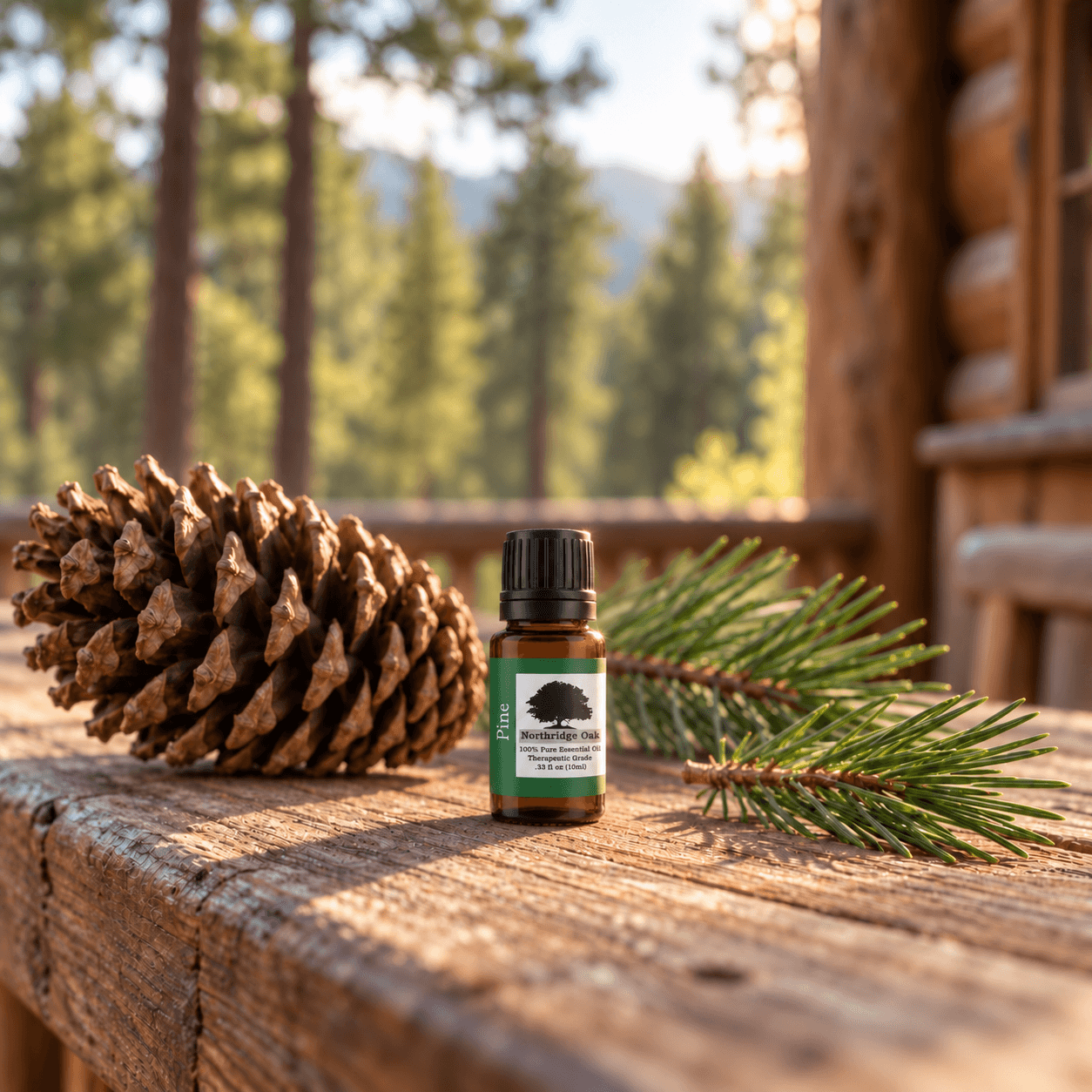
Northridge Oak Pine Essential Oil is 100% pure, undiluted, small-batch bottled, and third-party GC/MS tested. Explore more combinations in our guide to what blends well with pine.
Continue Exploring Pine Essential Oil
- Pine Essential Oil Benefits and Uses
- Pine Essential Oil Diffuser Blends
- Pine Essential Oil for Cleaning
- Pine Essential Oil Safety Guide
These statements have not been evaluated by the Food and Drug Administration. This information is educational and is not intended to diagnose, treat, cure, or prevent disease.