Table of Contents
Pine Essential Oil has a way of changing the feeling of a room before you have even decided what the scent reminds you of. It may be a sunlit trail, a real Christmas tree, a familiar cabin, or simply the clean green pleasure of bringing the outdoors in. Its aroma is crisp and bright at first, then settles into needles, dry wood, and soft resin.
That familiar scent is only the beginning. Pine Essential Oil is one of the most versatile oils to keep close at hand: beautiful in a diffuser, naturally at home in fresh-smelling household recipes, comforting in a properly diluted massage blend, and easy to pair with citrus, herbs, florals, woods, and resins.
This guide brings everything together in one place—what Scots pine smells like, what researchers have found interesting about its chemistry, how to blend it, and the simplest ways to begin enjoying it today.
Meet Scots Pine Essential Oil
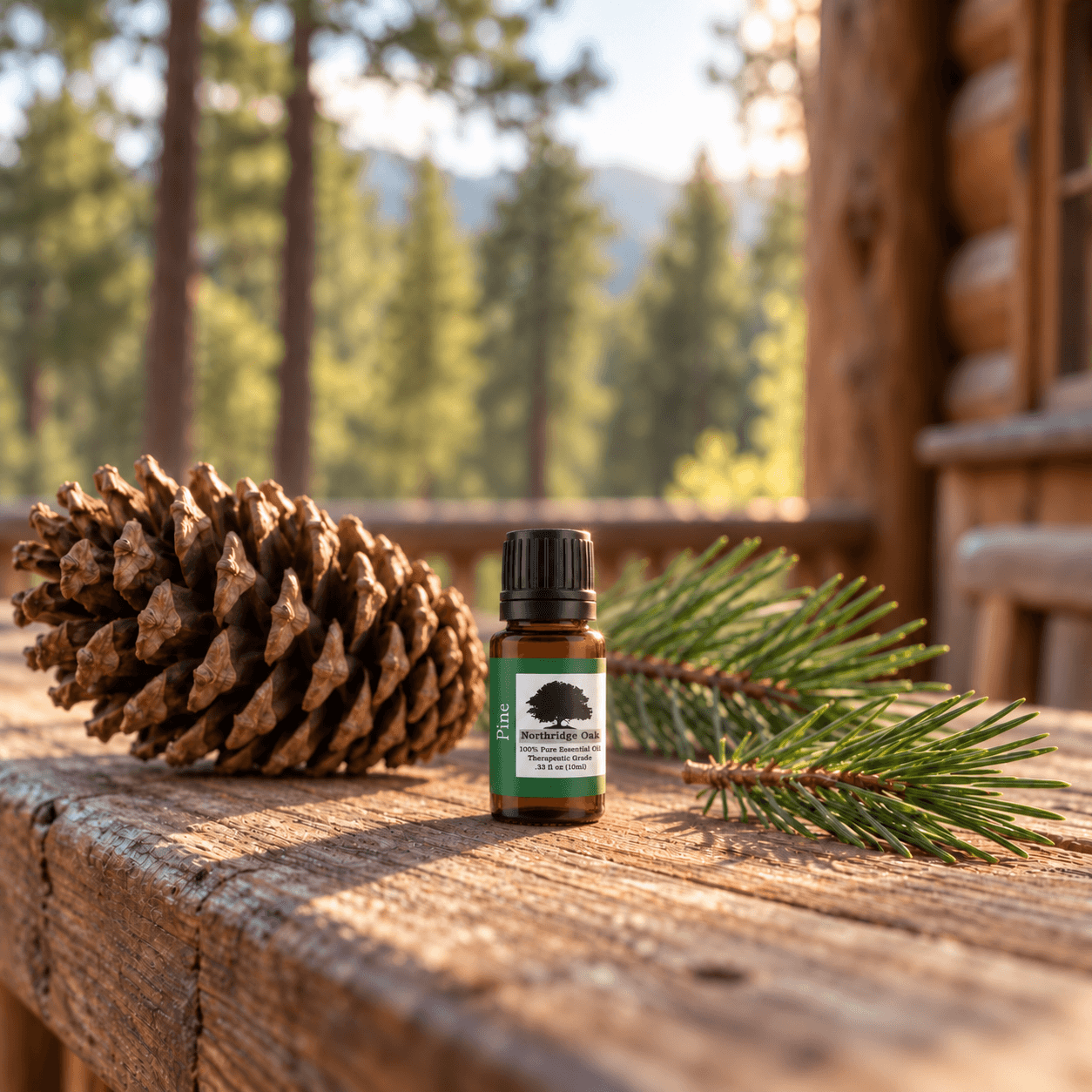
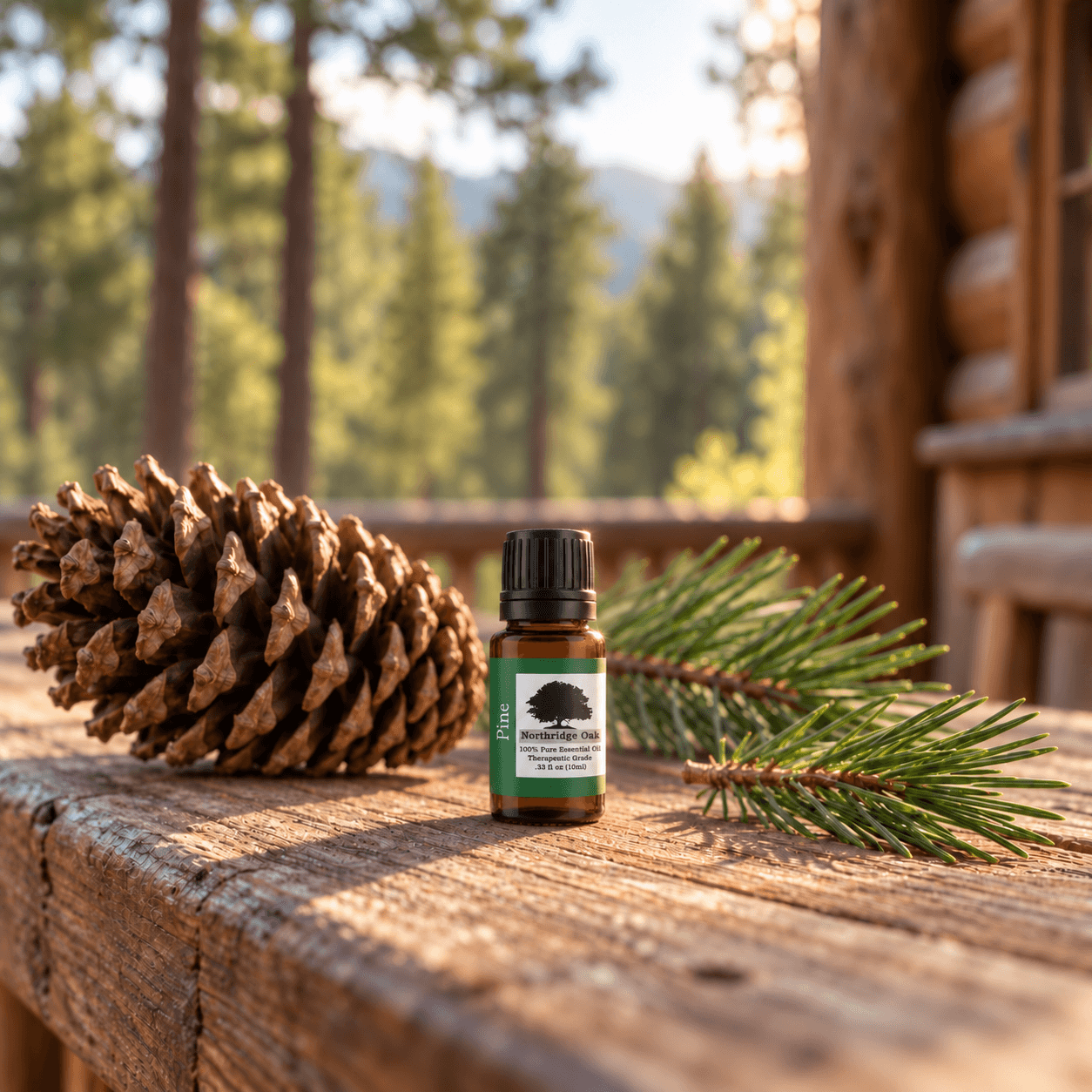
Northridge Oak Pine Essential Oil is steam-distilled from Pinus sylvestris, commonly called Scots pine. The botanical name matters because “pine oil” can refer to several pine species, synthetic pine fragrance, or industrial products that are very different from an essential oil intended for aromatic use.
Scots pine grows across Europe and parts of Asia, where its tall trunk and blue-green needles have made it one of the most recognizable trees in the landscape. Steam distillation captures the volatile aromatic compounds held in the needles and twigs, producing an oil that smells fresh, green, resinous, and gently woody.
The first impression is often sparkling and almost citrus-like. Give it a moment, and the scent becomes more distinctly evergreen. As it settles, a dry resinous warmth remains. That movement is one reason pure pine is so much more interesting than a one-note “pine-scented” fragrance.
What Is Pine Essential Oil Good For?
Pine is especially good at creating an atmosphere. In the morning, it can make a room feel brighter and more open. During an afternoon reset, it brings a freshly tidied feeling to kitchens and living spaces. In the evening, cedarwood or lavender can turn it into the aromatic equivalent of a quiet cabin.
Many people first choose pine because they want a clean forest scent. They continue using it because it adapts so easily. The same bottle can become part of a sunny diffuser blend, a winter room spray, a woodland massage oil, or a simple aromatic ritual enjoyed from a scent strip.
Pine for diffusing
For a welcoming first blend, add 3 drops Pine, 2 drops Lemon, and 1 drop Cedarwood to a 100–200 mL diffuser. Lemon brings sunlight to the needles, while cedarwood gives the blend a warm forest floor beneath them.
If you want more inspiration, explore 20 Pine Essential Oil diffuser blends, with recipes for bright mornings, peaceful evenings, and festive gatherings.
Pine for fresh home aromas
Pine naturally fits into home-care routines because people already associate evergreen aromas with freshness. Add it to a room spray with lemon, place a drop on a washable diffuser stone, or use it in a simple household recipe where the goal is to make the work—and the room afterward—feel more enjoyable.
The important distinction is that a pleasant-smelling homemade recipe is not the same as a registered disinfectant. Pine still gives you something genuinely useful: a fresh, recognizable aroma that can make everyday cleaning feel less like a chore and more like a reset.
Pine for massage
Diluted in a carrier oil, pine becomes warmer, softer, and woodier. A simple adult massage blend uses 3 total essential-oil drops per tablespoon of carrier oil, which is approximately a 1% dilution. Try 2 drops pine with 1 drop Lavender in jojoba or fractionated coconut oil, then massage it into shoulders, legs, or feet.
The slow rhythm of massage and the scent of a quiet evergreen trail belong beautifully together. Our Pine Essential Oil massage guide offers additional recipes and explains how to adjust them.
What Research Finds Interesting About Pine
Scots pine essential oil commonly contains aromatic compounds such as alpha-pinene, beta-pinene, limonene, and other monoterpenes. Their exact proportions shift with growing region, weather, harvest, and distillation, so every authentic batch has its own subtle fingerprint.
A study that examined 50 conifer essential-oil samples documented meaningful chemical variation across conifer species and samples. That is a positive and practical finding: it shows why botanical identity and batch testing matter, and why a natural essential oil can have a lively, dimensional aroma rather than smelling exactly the same in every harvest. Read the conifer chemistry study.
Laboratory researchers have also explored pine oils and their constituents for antioxidant, antimicrobial, and aromatic properties. These studies help scientists understand the plant and give formulators promising directions to investigate. For the person enjoying a bottle at home, the most direct invitation is wonderfully simple: smell the oil, notice the way it changes a space, and discover which blends make you want to use it again.
What Blends Well With Pine?
Pine is generous with other aromas. Citrus oils bring light into the forest. Lemon feels bright and familiar; Grapefruit makes pine lively; Bergamot gives it a softer polish; and Blood Orange creates warmth.
Other evergreens deepen the experience. Balsam Fir is fuller and slightly sweeter, while cedarwood makes the blend feel dry, grounded, and cabin-like. Frankincense adds smooth resinous depth.
Herbs and florals reveal still more possibilities. Rosemary emphasizes pine’s green character, Eucalyptus makes it feel airy, and lavender softens the sharper edges into a peaceful woodland aroma.
A dependable starting ratio is 3 parts pine, 2 parts supporting oil, and 1 part accent. The complete guide to what blends well with Pine Essential Oil will help you choose a direction by mood.
Four Easy Ways to Try Pine Today
Morning Forest: Diffuse 3 drops pine, 2 drops lemon, and 1 drop grapefruit. The aroma feels bright, green, and cheerful.
Quiet Cabin: Diffuse 3 drops pine, 2 drops cedarwood, and 1 drop frankincense. This blend is smooth, warm, and unhurried.
Woodland Massage: Combine 2 drops pine and 1 drop lavender with 1 tablespoon of carrier oil. The scent becomes soft, resinous, and close to the skin.
Fresh Forest Room Spray: Swirl 12 drops pine, 6 drops lemon, and 2 drops cedarwood into 1 tablespoon of high-proof alcohol in a 2-ounce glass spray bottle. Add distilled water, cap, and shake before each use. Mist into the open air and enjoy the feeling of freshly cut greenery.
How to Enjoy Pine With Confidence
Essential oils are concentrated, so a measured amount often creates the most beautiful experience. For a 100–200 mL diffuser, begin with 3–6 total drops and adjust for the room. Fresh airflow and occasional pauses keep the aroma light and enjoyable.
For adult body care, approximately 1%—about 3 total essential-oil drops per tablespoon of carrier—is a comfortable place to begin. Patch test the finished blend and keep it away from eyes and sensitive areas. Families with children or pets can make thoughtful choices about timing, ventilation, and placement with help from our complete Pine Essential Oil safety guide.
What You’ll Learn as You Use Pine
The best lesson pine teaches is that an essential oil does not have only one personality. Beside lemon, it is sunny. Beside lavender, it becomes gentle. Beside cedarwood, it feels like timber and warmth. Beside balsam fir, it becomes a full evergreen landscape.
Begin with one simple recipe and notice what you enjoy. Keep the ratio, change one companion oil, and smell again. That small experiment turns a bottle into an experience you understand—and a scent you can shape for your own home.
Northridge Oak Pine Essential Oil is 100% pure, undiluted, small-batch bottled, and third-party GC/MS tested. If you have ever wished you could open a window directly onto a pine forest, this is a beautiful place to begin.
Continue Exploring Pine Essential Oil
- What Does Pine Essential Oil Smell Like?
- What Blends Well With Pine Essential Oil?
- Pine Essential Oil Diffuser Blends
- Pine Essential Oil for Cleaning
- Pine Essential Oil for Breathing and Forest Aromatherapy
- Pine Essential Oil for Christmas and Winter
These statements have not been evaluated by the Food and Drug Administration. This information is educational and is not intended to diagnose, treat, cure, or prevent disease.