Table of Contents
- Begin With Less and Let the Aroma Open
- A Comfortable Adult Dilution Guide
- Diffusing Pine in a Shared Home
- Pine Essential Oil Around Children
- Pine Essential Oil Around Dogs
- Pine Essential Oil Around Cats
- Store Pine So It Stays Fresh
- Three Gentle Ways to Begin
- When Quick Guidance Is Helpful
- What You’ll Learn From Thoughtful Use
- Continue Exploring Pine Essential Oil
- Frequently Asked Questions
Pine Essential Oil can make a home feel bright, green, and connected with the outdoors. Enjoying it confidently does not require a complicated rulebook. A few thoughtful habits—counting the drops, diluting for skin, allowing fresh air, and considering everyone who shares the room—make the experience easy to understand and repeat.
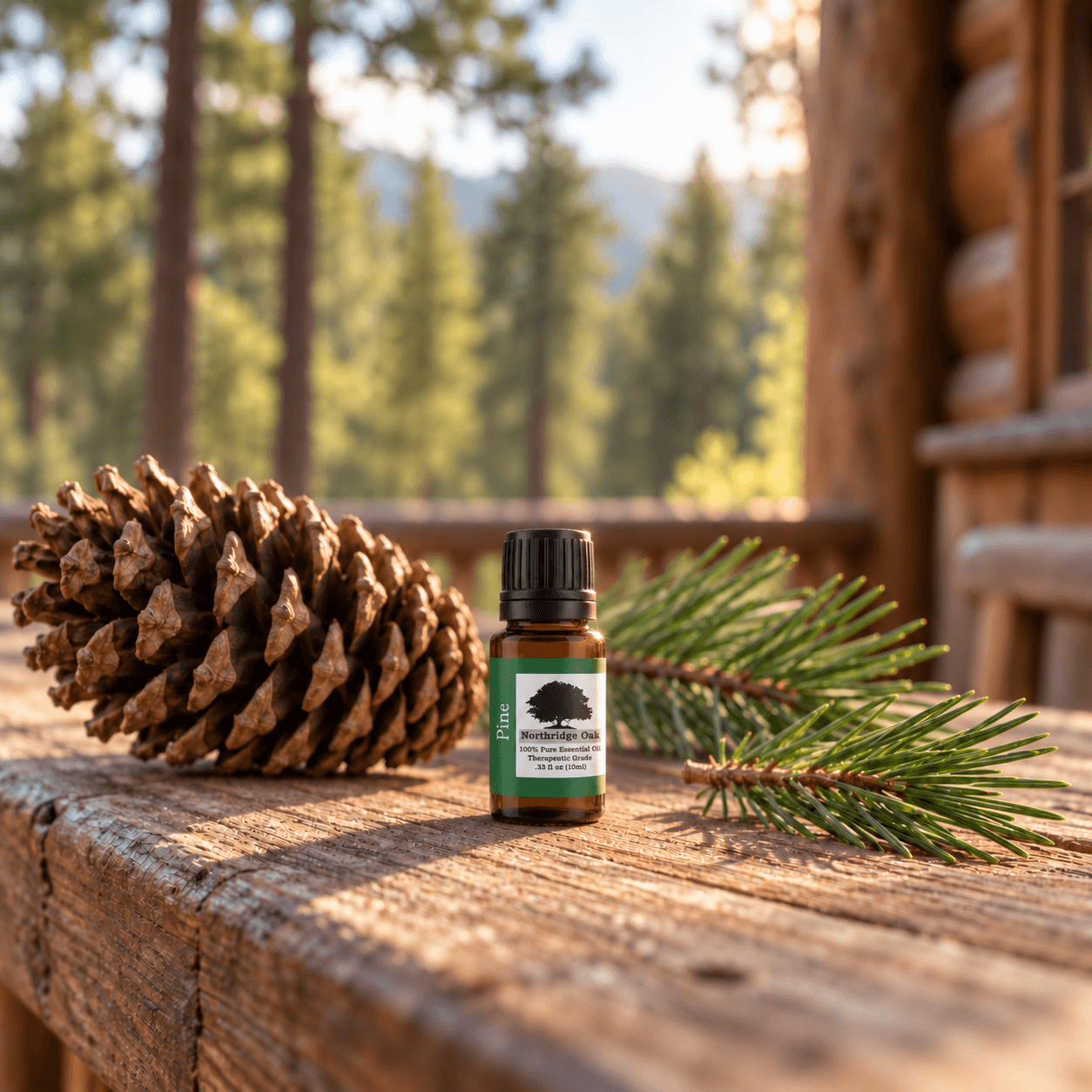
This guide focuses on pure Pinus sylvestris, or Scots pine, such as Northridge Oak Pine Essential Oil. The botanical name helps distinguish an essential oil intended for aromatherapy from generic pine fragrance or industrial pine-derived products.
Begin With Less and Let the Aroma Open
Pine is expressive. You do not need many drops to create the feeling of fresh needles and forest air. Beginning lightly gives the oil room to unfold and makes it easier to discover the amount that suits your home.
For a 100–200 mL ultrasonic diffuser, try 3–4 total drops for the first session. Let it run for a short period, walk out of the room, and return. Re-entry gives your nose a clearer impression than sitting directly beside the diffuser.
If the aroma feels just right, write down the diffuser size and drop count. You have found a repeatable recipe instead of guessing each time.
A Comfortable Adult Dilution Guide
For routine adult body care, a 1% dilution is a welcoming place to begin. Use approximately 3 total essential-oil drops per tablespoon (15 mL) of carrier oil.
For a lighter 0.5% blend, use 1–2 drops per tablespoon. For a 2% blend, use about 6 drops per tablespoon. Drop size varies, so professionally weighed formulas offer greater precision, but these numbers are practical for simple home recipes.
Try 2 drops pine and 1 drop Lavender in 1 tablespoon of jojoba or fractionated coconut oil. Patch test the finished blend, then enjoy it as a shoulder, leg, hand, or foot massage oil.
Diffusing Pine in a Shared Home
Place the diffuser where mist can circulate without blowing directly toward a face, bed, food surface, or favorite pet resting place. Fresh airflow and occasional pauses help the scent remain light and pleasant.
Ask the people sharing the room how the aroma feels to them. Scent is personal, and a comfortable shared amount is usually more enjoyable than the strongest possible blend.
Explore the 20 Pine diffuser recipes and begin each new blend at the lower end of the suggested range.
Pine Essential Oil Around Children
Children differ in age, size, health, and ability to describe what they are experiencing. In a family space, use fewer drops, choose brief sessions, and keep the room ventilated. Place bottles and diffuser equipment securely out of reach.
For an intentional topical recipe for a child, work with a qualified pediatric clinician or aromatherapy professional who can consider the individual child and the exact oil.
A paper scent strip can be a gentle way for an older child to explore aroma without filling the room. Add one drop, hold it several inches away, and let curiosity—not intensity—guide the experience.
Pine Essential Oil Around Dogs
Dogs have a much more powerful sense of smell than people. If pine is diffused in a shared home, use a light amount in a large, ventilated room and allow the dog to leave freely.
Keep essential oil off fur, collars, bedding, food, and water unless an appropriately qualified veterinarian has provided individual guidance. This keeps the aromatic experience separate from the animal’s care routine and lets the dog choose its own distance.
Pine Essential Oil Around Cats
Cats process concentrated aromatic compounds differently from people. A thoughtful home approach keeps Pine Essential Oil off the cat and away from food, litter, bedding, and enclosed spaces where the cat cannot leave.
Choose a human-use room with good airflow, use a small amount, and keep a fragrance-free area available. A veterinarian is the right person to guide any intentional use involving an individual cat.
Store Pine So It Stays Fresh
Essential oils remain at their best when the bottle is tightly closed, upright, and protected from heat and direct sunlight. Write the opening date on the label or in your oil notebook.
Fresh pine smells bright, green, and resinous. Oxygen and heat gradually change aromatic oils, so good storage protects both the scent you love and the comfort of topical blends. A cool cabinet is a far better home than a sunny windowsill or hot vehicle.
Three Gentle Ways to Begin
Scent strip: Add one drop to paper and smell from several inches away. Return after five and fifteen minutes to notice the aroma changing.
Light diffuser blend: Add 2 drops pine and 2 drops lavender to a 100–200 mL diffuser in a ventilated adult space.
One-percent body oil: Mix 2 drops pine and 1 drop cedarwood into 1 tablespoon of carrier oil, patch test, and use a small amount for massage.
These simple starting points make the oil easy to understand without overwhelming the senses.
When Quick Guidance Is Helpful
Keep the bottle label available if an unexpected exposure occurs. In the United States, Poison Control for people is available at 1-800-222-1222, and a veterinarian can guide pet-related concerns.
Knowing where to turn is part of a confident home routine, just like reading a product label or storing the bottle securely.
What You’ll Learn From Thoughtful Use
Safety and enjoyment support one another. A lighter aroma often reveals more of pine’s personality: bright needles first, then wood and resin. Measured topical dilution makes the oil feel softer and warmer. Good storage keeps those qualities intact.
The goal is not to become worried about every drop. It is to make a few clear choices so the bottle remains a pleasure to use. Once you know your favorite diffuser amount and dilution, the routine becomes wonderfully simple.
Northridge Oak Pine Essential Oil is 100% pure, undiluted, small-batch bottled, and third-party GC/MS tested. Our Pine Essential Oil benefits guide will help you choose the first use you would most enjoy.
Continue Exploring Pine Essential Oil
- What Does Pine Essential Oil Smell Like?
- What Blends Well With Pine Essential Oil?
- Pine Essential Oil for Massage
- Pine Essential Oil for Cleaning
These statements have not been evaluated by the Food and Drug Administration. This information is educational and is not intended to diagnose, treat, cure, or prevent disease.