Table of Contents
- The Botanical Difference
- How Clary Sage Smells
- How Common Sage Smells
- Chemistry Is Different
- Which Is Better for Relaxing Blends?
- Which Is Better for a Sharp Herbal Blend?
- Learning About Essential Oils: Let the Botanical Name Lead
- A Simple Way to Experience Clary Sage
- Continue Learning About Clary Sage Essential Oil
- Thoughtful Use
- Frequently Asked Questions
Two oils can share a familiar name and still create completely different experiences. This comparison is here to help you smell the difference before you buy: which one feels softer or bolder, which fits the blends you already love and which is easier to reach for in everyday routines. By the end, you should know not just how they differ, but which bottle you will be excited to use.
The Botanical Difference
Clary Sage is Salvia sclarea. Common Sage is Salvia officinalis. Both belong to the mint family, while their distinct species create meaningful differences in aroma, chemistry and use.
How Clary Sage Smells
Clary Sage feels soft, herbaceous, lightly floral, slightly sweet and tea-like. Its drydown has gentle earthy-musky warmth. It works beautifully as a heart note.
How Common Sage Smells
Common Sage usually feels greener, sharper, more culinary and more camphoraceous. It can bring assertive herbal clarity to a blend and often needs a lighter hand.
Chemistry Is Different
Clary Sage commonly features linalyl acetate and linalool prominently. Common Sage often has a different profile that may include thujone, camphor and 1,8-cineole in meaningful amounts. Natural variation exists, but the overall distinction is important for both aroma and safety interpretation.
Which Is Better for Relaxing Blends?
Clary Sage is usually the more approachable choice when the goal is a soft floral-herbal atmosphere. Its 2014 inhalation study also gives it a direct human research connection to cortisol and serotonin changes.
Which Is Better for a Sharp Herbal Blend?
Common Sage may suit a strongly culinary-herbal direction. Clary Sage suits a smoother garden, tea or natural-perfume direction. The best choice follows the desired aroma and the exact recipe.
Choose the botanical named in a study, formula or safety source. Substitution changes both scent and chemistry. If a diffuser recipe is purely aromatic, you can create a new version intentionally, beginning with fewer drops and evaluating it as a different formula.
Look for botanical name, plant part, origin, extraction method and purity statement. “Sage essential oil” alone leaves the most important identity question unanswered.
Place one drop of each oil on separate paper strips. Smell immediately and again after thirty minutes. Note sweetness, sharpness, floral character, camphor, tea warmth and staying power. The sensory contrast makes the botanical distinction memorable.
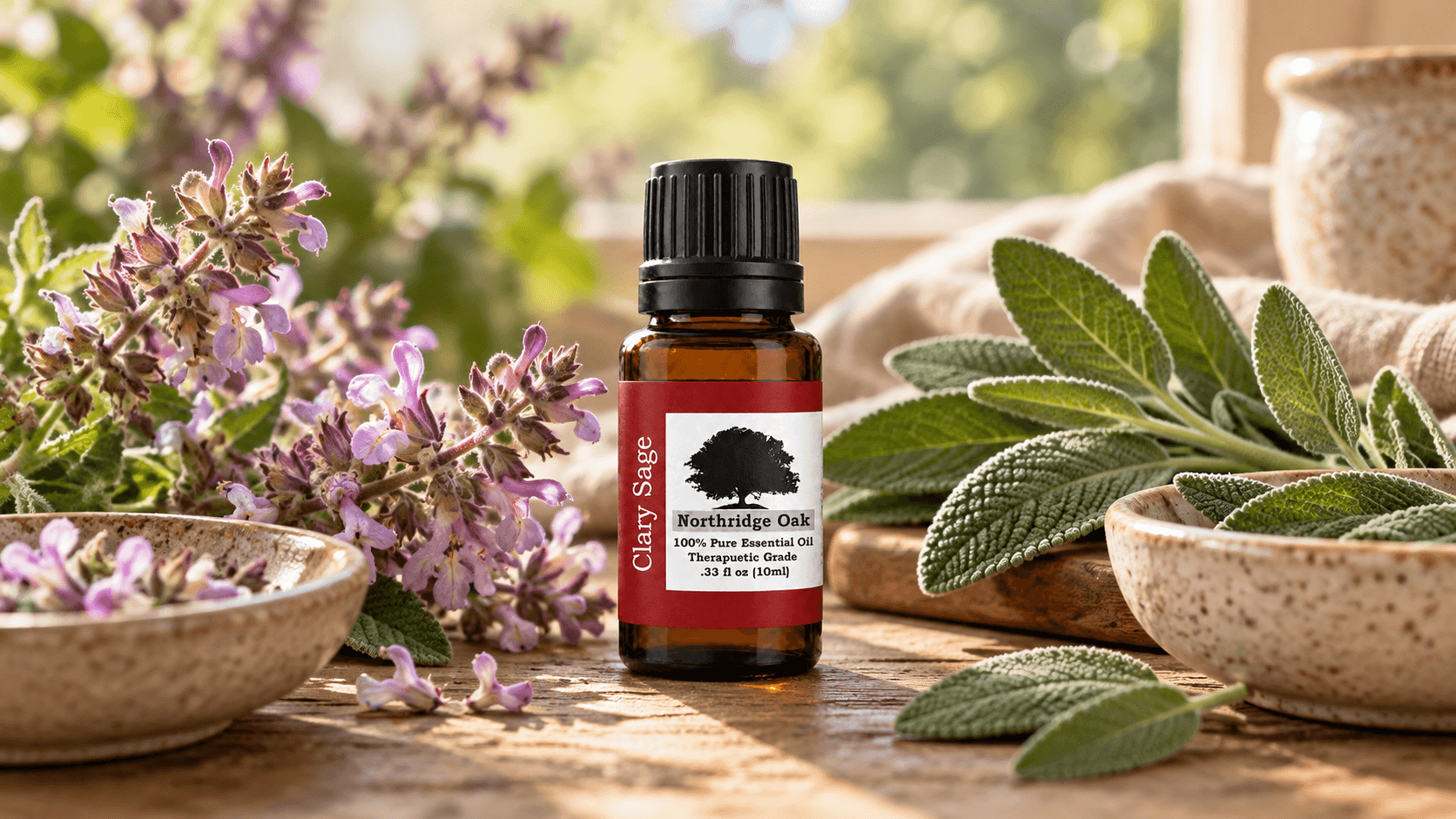
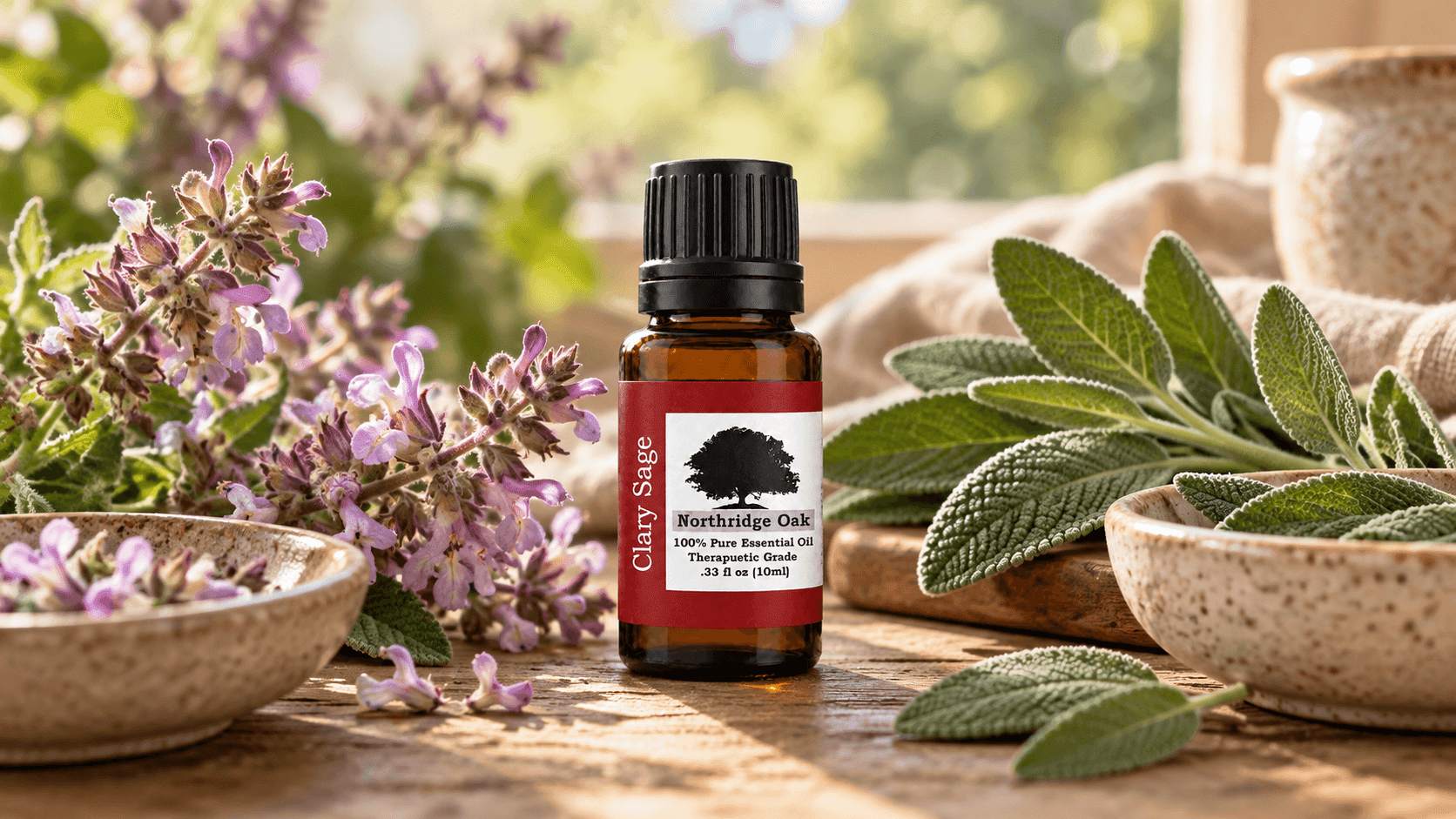
Northridge Oak Clary Sage is labeled Salvia sclarea, sourced from France and third-party GC/MS tested. Clear identity helps you connect the bottle to the appropriate research, recipes and safety information.
Pair each oil separately with Bergamot on scent strips. Clary Sage extends Bergamot’s floral side; common Sage emphasizes sharper herbal qualities. Repeat with Cedarwood to compare how each behaves in the drydown.
Common names are convenient, but botanical names connect a bottle to the right chemistry, study and safety source. The 2014 cortisol and serotonin paper used Salvia sclarea. Research on Salvia officinalis answers questions about a different oil.
Choose Salvia sclarea when you want soft herb, floral tea and a warm natural-perfume heart. Choose Salvia officinalis when a distinctly sharp culinary-green profile is the goal. The Latin name keeps recipes, research and aroma aligned.
Compare both with Bergamot and Cedarwood on scent strips. Clary Sage makes Bergamot more floral and Cedarwood softer; common Sage brings a firmer herbal edge.
Its smooth, versatile aroma works across diffusers, personal fragrance and properly diluted grooming oils. Clear French origin, small-batch bottling and third-party GC/MS testing make the identity as appealingly straightforward as the aroma.
Beside Lavender, Clary Sage creates a broad floral-herbal heart, while common Sage makes the blend greener and sharper. With Lemon, Clary Sage feels like citrus tea; common Sage feels more culinary. With Frankincense, Clary Sage becomes warm and perfumed, while common Sage retains a firmer herb character.
For most readers building relaxing diffusers, natural perfumes and personal-care aromas, Clary Sage offers the wider creative range. Its softness welcomes beginners, while its layered drydown gives experienced blenders plenty to explore.
For a softer and more welcoming introduction to the sage family, Clary Sage is the natural place to begin.
- Clary Sage: Salvia sclarea; soft, floral, tea-like and warm.
- Common Sage: Salvia officinalis; sharp, culinary, green and camphoraceous.
- Clary Sage shines in: relaxing blends, perfume hearts and personal care.
- Common Sage shines in: recipes designed for its assertive herbal character.
Clary Sage meets citrus, flowers, herbs, woods and resins with unusual ease. That makes it a forgiving introduction for beginners and a sophisticated bridge note for experienced blenders.
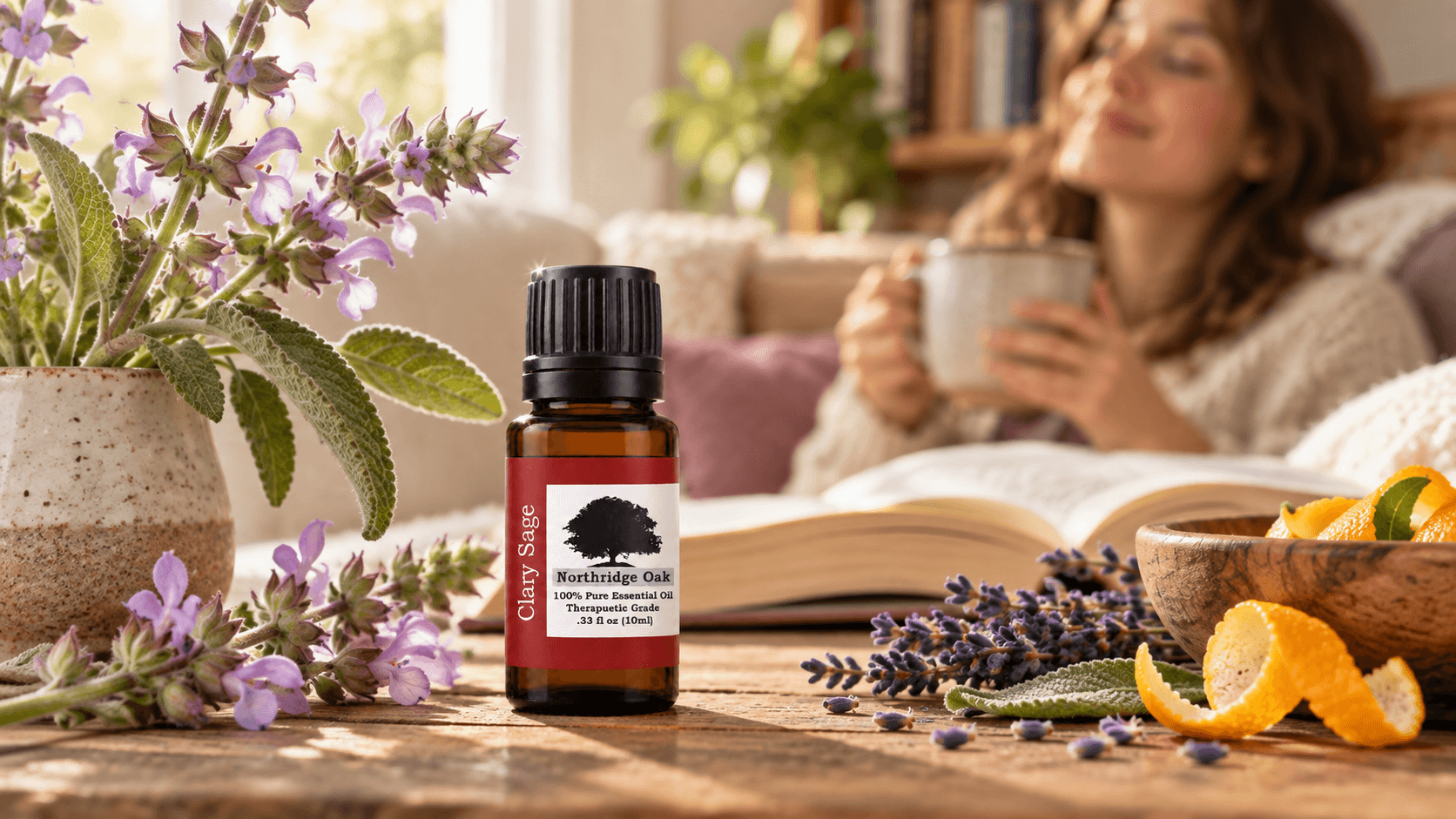
Northridge Oak Clary Sage Essential Oil is 100% pure, undiluted Salvia sclarea from France. It is bottled in small batches and third-party GC/MS tested, with no fillers or synthetic fragrance. Its soft herbaceous aroma, gentle floral sweetness and tea-like warmth make it especially rewarding in diffusion, natural perfumery and properly diluted personal-care recipes.
Choose pure Salvia sclarea when you want the softer, more floral and more versatile member of the sage family.
Try Northridge Oak Clary Sage Essential Oil
Learning About Essential Oils: Let the Botanical Name Lead
Write the botanical name, total drops, method, date and first impression in a blending notebook. Smell the formula immediately and again after fifteen minutes. Clary Sage often becomes rounder and more tea-like as the brightest notes settle. Recording that development teaches you more than judging the bottle from one quick sniff.
Change one element at a time. A one-drop adjustment can move Clary Sage toward citrus brightness, floral softness, herbal clarity or woody depth. This measured approach makes successful recipes repeatable and helps you recognize exactly what each oil contributes.
A Simple Way to Experience Clary Sage
You do not need a complicated project to decide whether this oil is for you. Begin with the aroma itself. Place one drop on a paper scent strip or cotton pad, set it several inches away and notice the first impression. Return after 15 minutes, then again after an hour. Clary Sage often reveals more character as the sharpest opening settles, and this slower test makes it easier to notice the softly herbal, slightly sweet and tea-like details that disappear when you smell directly from the bottle.
If both oils are available, place one drop of each on separate labeled scent strips. Smell from a comfortable distance at the beginning, after 15 minutes and after an hour. This reveals the difference far better than a comparison chart alone—and helps you choose the oil whose drydown you actually want in your home.
If that sounds like the kind of ritual you would enjoy, Northridge Oak Clary Sage Essential Oil is 100% pure and undiluted, bottled in small batches and third-party GC/MS tested. It gives you a clearly identified single oil and a dependable place to begin.
Continue Learning About Clary Sage Essential Oil
Make this article part of a complete Clary Sage routine:
- Clary Sage Essential Oil Benefits, Uses & Safety Guide
- Clary Sage Essential Oil for Relaxation: What Research Found
- What Blends Well With Clary Sage Essential Oil?
- Clary Sage Essential Oil for Sleep: Evening Blends & Rituals
- Clary Sage Essential Oil Diffuser Blends: 20 Recipes
Thoughtful Use
For topical recipes, calculate the total essential-oil concentration, dilute in a suitable carrier and patch test the completed blend. Diffuse intermittently with fresh airflow and allow everyone in the room a scent-free option. Seek individualized guidance during pregnancy or nursing, for young children, around pets, with medications or significant health considerations.
Read the complete essential-oil safety guide and beginner’s guide.
These statements have not been evaluated by the Food and Drug Administration. Northridge Oak products are not intended to diagnose, treat, cure or prevent disease.