Table of Contents
- Clary Sage Essential Oil at a Glance
- What Is Clary Sage?
- What Does Clary Sage Smell Like?
- History and Traditional Appreciation
- Why Try Clary Sage Essential Oil?
- What Human Research Found
- Learning About Essential Oils: Follow the Aroma From Green to Floral
- A Simple Way to Experience Clary Sage
- Continue Learning About Clary Sage Essential Oil
- Thoughtful Use
- Frequently Asked Questions
Some essential oils make sense the moment you open the bottle. Clary Sage is one of them—but not always for the reason people expect. Its softly herbal, slightly sweet and tea-like aroma can shift a room, soften the edges of a familiar blend and turn a simple routine into something you genuinely look forward to. This guide brings the aroma, practical uses, research, recipes and safety together so you can understand what makes Clary Sage distinctive and decide how it might fit naturally into your own home.
Clary Sage Essential Oil at a Glance
- Botanical name: Salvia sclarea
- Origin: France
- Plant part: Flowering tops and leaves
- Extraction: Steam distillation
- Aroma: Soft, herbaceous, lightly floral, slightly sweet and tea-like
- Popular uses: Diffusion, evening rituals, massage oils, natural perfume, skin and hair recipes
What Is Clary Sage?
Clary Sage is a flowering member of the mint family with broad textured leaves and tall pink, lavender or cream bracts. Steam distillation captures a fragrant oil often rich in linalyl acetate and linalool. Those constituents help shape its smooth floral-herbal personality, although every authentic botanical batch varies naturally.
The word “sage” can cause confusion. Common Sage is Salvia officinalis; Clary Sage is Salvia sclarea. They are related plants with different aromatic profiles and chemistry. The botanical name is the quickest way to select the intended bottle, recipe and research.
What Does Clary Sage Smell Like?
Clary Sage opens green and herbaceous, then reveals soft floral sweetness, warm tea and a faint earthy-musky base. It feels rounder and less culinary than common Sage. Explore the full Clary Sage aroma guide for scent-strip comparisons and blending exercises.
History and Traditional Appreciation
Clary Sage has been valued in European herbal and fragrance traditions for centuries. The name has been associated with “clear eye,” while the plant also earned a place in perfumery and flavor traditions because of its distinctive muscatel-like aroma. Today its most approachable role is aromatic: it brings softness, warmth and complexity to personal rituals.
Why Try Clary Sage Essential Oil?
- It softens sharper herbs and woods.
- It gives citrus blends a graceful floral heart.
- It creates a relaxing atmosphere without relying on a strongly sweet floral.
- It adds sophistication to natural perfume and body oils.
- It has human inhalation research that makes its aromatic story especially interesting.
What Human Research Found
A 2014 study examined inhalation of Clary Sage oil in 22 menopausal women. After inhalation, researchers reported a significant decrease in plasma cortisol and a significant increase in serotonin concentration. The authors also observed differences related to the participants’ depression-score groups. Read the study.
The study was small and measured short-term biological changes, yet its positive findings give readers a concrete reason to explore Clary Sage as part of a pleasant aromatic wind-down routine. It studied inhalation—the method many people already find easiest to enjoy at home.
Oxytocin inhalation research
A 2017 pilot study followed 38 full-term pregnant women after inhalation of Clary Sage. Salivary oxytocin rose significantly in the total group, while uterine-contraction scores did not change significantly during observation. Read the pilot study. This maternity research is best applied with the guidance of the professional directing pregnancy care, who can interpret its relevance for the individual and stage of pregnancy.
Laboratory chemistry and antimicrobial research
Laboratory studies have examined Clary Sage oil against microorganisms and have explored how it interacts with cell membranes. These results help scientists understand the oil’s chemistry and future formulation possibilities. For home diffusion, the most immediate and appropriate benefit remains Clary Sage’s beautiful aroma and the atmosphere it creates.
Diffusion
Begin with two drops Clary Sage, two Lavender and one Bergamot. The blend feels soft, bright and quietly floral. Find twenty recipes in the Clary Sage diffuser guide.
Relaxation rituals
Pair a short diffuser session with a repeatable transition: closing the laptop, lowering the lights or beginning a favorite evening activity. The aroma becomes part of a routine you can anticipate. Read the Clary Sage relaxation research guide.
Sleep and evening use
Clary Sage blends beautifully with Lavender, Cedarwood, Frankincense, Vetiver and Marjoram. See bedtime blends and evening rituals.
Skin, hair and natural perfume
Properly diluted Clary Sage can give body oils, scalp oils and personal fragrance a refined herbal-floral note. It pairs especially well with Geranium, Bergamot and Cedarwood. Explore skin, hair and perfume recipes.
Women’s wellness traditions
Clary Sage is widely associated with women’s wellness traditions. The most useful approach separates appealing aromatic routines from exaggerated “hormone balancing” promises. Our women’s wellness guide explains the research, history and practical choices.
Citrus oils add lift; florals emphasize softness; woods and resins add depth. Dependable partners include Bergamot, Lemon, Grapefruit, Lavender, Geranium, Ylang Ylang, Cedarwood, Frankincense, Patchouli and Vetiver. The complete pairing guide gives ratios and blending strategy.
Clary Sage is typically softer, sweeter and more floral, while common Sage often smells sharper, greener and more camphoraceous. Their chemistry and safety considerations differ, so they should not be treated as interchangeable simply because both names include “sage.” See the Clary Sage versus Sage guide.
Clary Sage is concentrated. Dilute it for topical use, patch test the finished formula and keep it for aromatic or properly formulated external use. Pregnancy—especially any plan involving late pregnancy or labor—requires guidance from the maternity professional managing care. Read the complete Clary Sage safety guide.
Look for Salvia sclarea, the origin, plant part, extraction method and clear purity information. Third-party GC/MS testing helps confirm identity and documents the natural chemical profile of the batch. Store the bottle upright, tightly closed and protected from heat and sunlight.
Clary Sage commonly contains abundant linalyl acetate and linalool, which help shape its smooth floral-herbal character. Sclareol, a less volatile constituent associated with the plant, also contributes to its importance in fragrance culture. Composition varies naturally with growing conditions, harvest and distillation, so third-party GC/MS testing provides a valuable batch-specific picture.
Clary Sage is a gifted bridge note. It connects sparkling Bergamot to dry Cedarwood, Lavender to earthy Patchouli and green Rosemary to resinous Frankincense. Begin on paper with three parts Bergamot, two Clary Sage and one Cedarwood. Compare that polished direction with two Clary Sage, two Lavender and one Frankincense.
Bright Garden
Two Clary Sage, three Bergamot and one Geranium create a lively floral-citrus diffuser blend.
Quiet Evening
Two Clary Sage, three Lavender and one Frankincense create a soft, warm atmosphere.
Tea and Timber
Two Clary Sage, two Cedarwood and two Blood Orange emphasize tea-like warmth.
Fresh Herb Garden
Two Clary Sage, three Lemon and one Rosemary create a clear daytime direction.
One-Percent Body Oil
Add one total drop Clary Sage to one teaspoon of carrier, mix thoroughly and patch test.
Natural-Perfume Study
Use a 3:2:1 Bergamot, Clary Sage and Cedarwood ratio on a paper strip before topical formulation.
Spring highlights its garden character with Grapefruit and Geranium. Summer feels airy with Lemon and Lavender. Autumn welcomes Blood Orange and Cedarwood, while winter brings out its warmest side beside Frankincense, Patchouli or Vetiver. Seasonal pairings keep one bottle useful throughout the year.
Ask whether the study used the whole oil, which botanical was named, whether the work involved people or a laboratory model and what outcome was measured. The menopause inhalation study measured cortisol and serotonin in people. The maternity pilot measured salivary oxytocin and observed contraction scores at full term. Antimicrobial studies used laboratory systems. Each is interesting for a different reason.
Precision strengthens the positive message. It lets readers understand exactly why a finding is encouraging and how closely it relates to the bottle and method they are considering.
New users can begin with diffusion: two Clary Sage and three Bergamot. Personal-care enthusiasts can start with one drop in a teaspoon of carrier. Natural-perfume enthusiasts can work first on scent strips. Repeat the same simple method several times so Clary Sage becomes recognizable before adding complexity.
Near the bottle, Clary Sage may feel concentrated and strongly herbal. On paper it reveals floral sweetness and tea warmth. In a diffuser it becomes softer and more spacious. Experiencing all three forms explains why an oil that seems unusual at first sniff can become a favorite blending ingredient.
A blend sometimes contains individually appealing oils that could feel more unified. One or two drops of Clary Sage can supply the missing heart. Let the formula rest before adjusting; its influence often becomes clearer after the most volatile notes settle.
Save one bright recipe, one floral recipe, one woody recipe and one personal-care formula. Label them with exact ratios and dates. This small working collection is more useful than dozens of untested ideas and gives you dependable choices for different rooms and routines.
A clearly identified, fresh oil should unfold in layers rather than smell like a flat fragrance. Botanical name, origin, steam distillation, purity information and testing all help connect the aroma in the bottle to the guidance you are reading.
Begin with the experience that sounds most inviting: a Bergamot garden diffuser during the day, a Lavender blend in the evening or a warm personal aroma built around Cedarwood. Using one recipe several times makes Clary Sage’s green opening, floral-tea heart and earthy finish familiar.
Keep Salvia sclarea with every saved formula and record the exact drops, method and date. That small habit connects the aroma to the correct research and makes favorite blends easy to recreate.
Fresh, well-kept Clary Sage should unfold in layers rather than present one flat fragrance. Northridge Oak bottles it in small batches and uses third-party GC/MS testing to confirm identity and document the natural batch profile.
People who love citrus can introduce Clary Sage through Bergamot or Grapefruit, allowing the green floral note to appear gradually. Lavender lovers can begin with equal parts Lavender and Clary Sage for a broad garden heart. Fans of woods and resins may prefer Cedarwood or Frankincense, which emphasize the oil’s warm, earthy finish.
This flexibility makes Clary Sage a useful collection-builder. It connects oils that already feel familiar while adding a new aroma with its own unmistakable identity.
During the first week, smell Clary Sage alone on paper and in a diffuser. In week two, explore citrus partners. In week three, compare Lavender and Geranium. In week four, introduce Cedarwood, Frankincense or Vetiver. Keep the total formula simple and record exact ratios.
By the end of the month, you will know which side of Clary Sage appeals most: bright garden, soft floral, warm tea or earthy perfume. That understanding makes future purchases and recipes more purposeful.
A light citrus blend can welcome guests without feeling like a conventional sweet fragrance. A Lavender formula softens a living room in the evening. Cedarwood gives a study or reading area a composed herbal-wood character. Begin gently and let the room reveal how much aroma feels right.
Close-wearing body oils and natural perfumes reveal details that diffusion spreads into the room. The tea note becomes warmer, the floral heart becomes smoother and base notes last longer. Proper dilution turns the same botanical into a distinctly personal experience.
- Do you want brightness, softness, green freshness or depth?
- Will the blend fill a room or stay close to the body?
- Which familiar oil will make Clary Sage easiest to appreciate?
- What exact ratio will you record and repeat?
These questions make experimentation focused and enjoyable. They also ensure that every added oil has a clear aromatic purpose.
Clary Sage offers something increasingly valuable: complexity without heaviness. It can smell botanical, elegant, relaxing and modern in the same formula. That combination explains why the plant has remained important in perfumery and why the essential oil continues to inspire new home and personal-care rituals.
Clary Sage can brighten a morning room with citrus, soften an evening with Lavender, deepen a personal fragrance with Cedarwood and add botanical character to properly diluted grooming oils. That range makes it more than a specialty oil. It becomes a practical connector across the collection—one bottle capable of helping familiar oils feel newly interesting.
Begin with the recipe that best matches your life today. Once the aroma becomes familiar, explore another direction and notice how Clary Sage remains recognizable while the mood changes around it.
- Bright room: pair it with Bergamot, Lemon or Grapefruit.
- Soft evening: combine it with Lavender and Frankincense.
- Natural perfume: place it between citrus and Cedarwood or Vetiver.
- Personal care: use it properly diluted in a suitable carrier.
Clary Sage is broad enough to fit many routines yet distinctive enough to make each one feel new. Its green opening, floral-tea heart and earthy finish reward readers who give the aroma time to unfold.
Human inhalation research provides a concrete reason for curiosity, perfumery history demonstrates lasting aromatic value and practical recipes make the oil immediately approachable. Few oils connect research, fragrance and everyday blending this naturally.
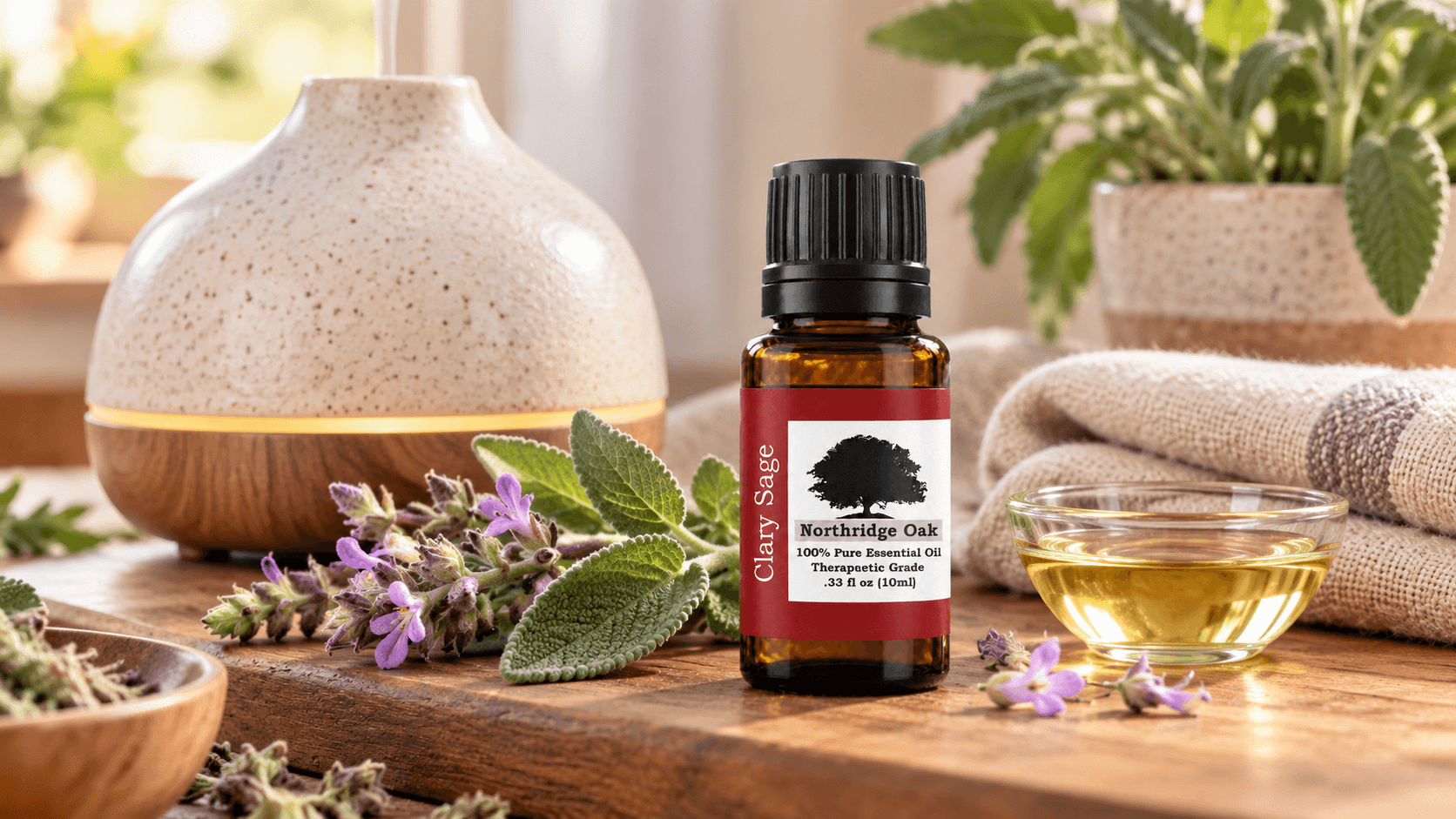
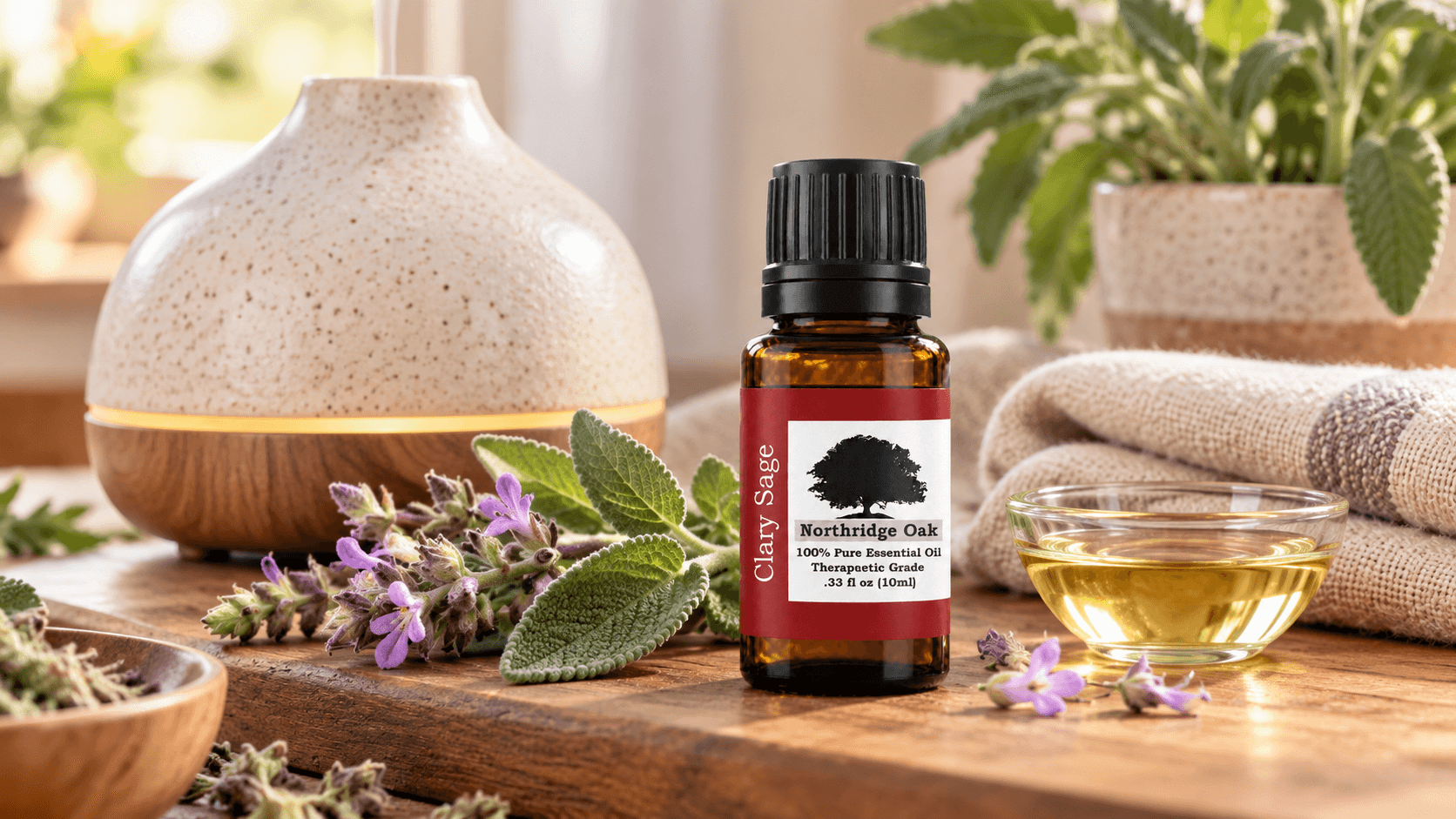
Northridge Oak Clary Sage Essential Oil is 100% pure, undiluted Salvia sclarea from France. It is bottled in small batches and third-party GC/MS tested, with no fillers or synthetic fragrance. Its soft herbaceous aroma, gentle floral sweetness and tea-like warmth make it especially rewarding in diffusion, natural perfumery and properly diluted personal-care recipes.
This versatile oil can anchor your first diffuser recipe, refine a personal aroma and open the door to an entire family of green-floral blends.
Try Northridge Oak Clary Sage Essential Oil
Learning About Essential Oils: Follow the Aroma From Green to Floral
Write the botanical name, total drops, method, date and first impression in a blending notebook. Smell the formula immediately and again after fifteen minutes. Clary Sage often becomes rounder and more tea-like as the brightest notes settle. Recording that development teaches you more than judging the bottle from one quick sniff.
Change one element at a time. A one-drop adjustment can move Clary Sage toward citrus brightness, floral softness, herbal clarity or woody depth. This measured approach makes successful recipes repeatable and helps you recognize exactly what each oil contributes.
A Simple Way to Experience Clary Sage
You do not need a complicated project to decide whether this oil is for you. Begin with the aroma itself. Place one drop on a paper scent strip or cotton pad, set it several inches away and notice the first impression. Return after 15 minutes, then again after an hour. Clary Sage often reveals more character as the sharpest opening settles, and this slower test makes it easier to notice the softly herbal, slightly sweet and tea-like details that disappear when you smell directly from the bottle.
For a first diffuser experience, let Clary Sage play a supporting role beside two familiar oils. Use the measured recipe in this guide that best matches the room you want to create, diffuse for 20 to 30 minutes with fresh airflow, and write down the proportions. The goal is not to “use” the oil as quickly as possible. It is to discover the version of it that makes you pause, breathe in and think, I want my home to smell like this again.
If that sounds like the kind of ritual you would enjoy, Northridge Oak Clary Sage Essential Oil is 100% pure and undiluted, bottled in small batches and third-party GC/MS tested. It gives you a clearly identified single oil and a dependable place to begin.
Continue Learning About Clary Sage Essential Oil
Make this article part of a complete Clary Sage routine:
- Clary Sage Essential Oil for Relaxation: What Research Found
- What Blends Well With Clary Sage Essential Oil?
- Clary Sage Essential Oil for Sleep: Evening Blends & Rituals
- Clary Sage Essential Oil Diffuser Blends: 20 Recipes
- What Does Clary Sage Essential Oil Smell Like?
Thoughtful Use
For topical recipes, calculate the total essential-oil concentration, dilute in a suitable carrier and patch test the completed blend. Diffuse intermittently with fresh airflow and allow everyone in the room a scent-free option. Seek individualized guidance during pregnancy or nursing, for young children, around pets, with medications or significant health considerations.
Read the complete essential-oil safety guide and beginner’s guide.
These statements have not been evaluated by the Food and Drug Administration. Northridge Oak products are not intended to diagnose, treat, cure or prevent disease.