Table of Contents
- The Opening: Green and Herbaceous
- The Heart: Floral Sweetness and Tea
- The Drydown: Earthy, Musky and Balsamic
- Clary Sage Compared With Other Oils
- Who Usually Enjoys Clary Sage?
- How It Behaves in a Blend
- Learning About Essential Oils: Describe the Opening, Heart and Drydown
- A Simple Way to Experience Clary Sage
- Continue Learning About Clary Sage Essential Oil
- Thoughtful Use
- Frequently Asked Questions
If you have never smelled Clary Sage, the name alone does not quite prepare you for it. Imagine a slow evening, soft light and the gentle herbal warmth of a garden after the sun goes down. That is the direction of the aroma: softly herbal, slightly sweet and tea-like, with small details that become more noticeable as it settles. Here is what to expect from the bottle, in the diffuser and in a finished blend—so you can decide whether it belongs in your collection.
The Opening: Green and Herbaceous
The first impression is leafy and aromatic. It suggests crushed green stems, a warm herb garden and fresh tea. Unlike a sharp culinary herb, the opening already carries softness.
The Heart: Floral Sweetness and Tea
As the oil rests, a gentle floral quality emerges. It is not as powdery as some flowers or as sweet as Ylang Ylang. The tea-like character keeps the aroma natural, warm and quietly sophisticated.
The Drydown: Earthy, Musky and Balsamic
On a scent strip, Clary Sage develops a faint earthy-musky depth. This is why it works so well as a heart note: it connects bright citrus to woods, resins and earthy base notes without losing its identity.
Clary Sage Compared With Other Oils
Clary Sage vs. Common Sage
Common Sage is usually sharper, more culinary and more camphoraceous. Clary Sage feels softer, sweeter and more floral. Read the full Clary Sage versus Sage comparison.
Clary Sage vs. Lavender
Lavender is more recognizably floral and clean. Clary Sage is greener, warmer and more tea-like. Together they create a broad, smooth aromatic heart.
Clary Sage vs. Geranium
Geranium brings rosy brightness, while Clary Sage contributes herbal warmth. The pairing feels like a garden rather than a single flower.
Clary Sage vs. Bergamot
Bergamot is sparkling floral citrus. Clary Sage extends its floral side and gives the drydown more body.
Who Usually Enjoys Clary Sage?
It often appeals to people who like herbal florals, natural tea aromas, green perfumes and relaxing blends that are not heavily sweet. Fans of Lavender, Bergamot, Geranium and Frankincense usually find an easy entry point.
How It Behaves in a Blend
With citrus it becomes brighter; with Lavender it becomes softer; with Cedarwood it feels drier and more structured; with Patchouli it reveals earthiness. Explore the complete pairing guide and 20 diffuser recipes.
Place one drop on a paper scent strip. Write three words immediately, then return after fifteen minutes and one hour. Compare it beside Lavender and common Sage if available. The exercise makes the green-to-floral progression easy to recognize.
Clary Sage brings complexity without demanding a complicated recipe. One or two drops can turn familiar citrus or Lavender into something warmer, more natural and more distinctive.
First smell near the capped bottle, then place one drop on a paper strip, and finally diffuse two drops with three drops Bergamot. The bottle presents a concentrated herbal impression, the strip reveals the floral-tea drydown and the diffuser shows how soft the aroma becomes in a room.
Build a vocabulary beyond “herbal”: leafy, floral, tea-like, musky, earthy, warm, sweet and dry. Your own precise notes make batch comparisons and future blending much easier.
Smell Clary Sage near the capped bottle, on a paper strip and in a simple Bergamot diffuser blend. The bottle emphasizes green herb, the strip reveals the floral-tea drydown and the diffuser shows how graceful the aroma becomes in a room.
Write specific words—leafy, warm, tea-like, floral, musky or earthy—and return after fifteen minutes. Your own vocabulary makes future blending more intuitive.
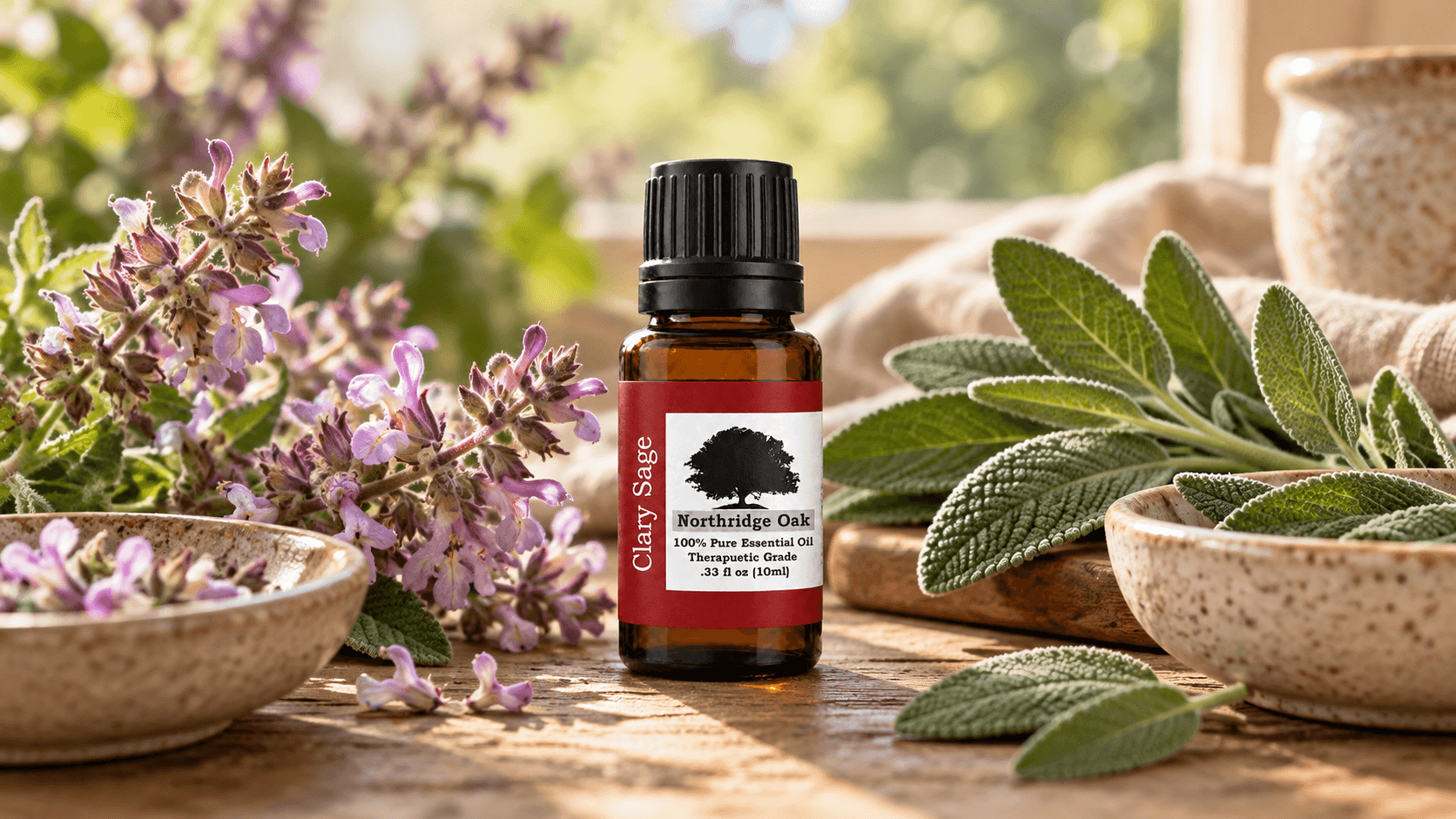
Northridge Oak Clary Sage is Salvia sclarea from France, bottled in small batches and third-party GC/MS tested. That clarity lets the layered aroma, rather than a vague “sage” label, guide your experience.
Clary Sage often appeals to people who enjoy green perfumes, herbal tea, garden florals and unisex fragrances. It offers floral softness while retaining an earthy botanical character. Someone who finds sweeter flowers overwhelming may appreciate this more balanced direction.
Once you recognize the green opening and warm drydown, choose a partner that highlights your favorite part. Lemon emphasizes freshness, Lavender broadens the floral heart and Cedarwood extends the earthy finish.
Give the scent enough time to unfold; its warm floral character is often most appealing after the first green notes begin to settle.
Its balance of flowers, herbs, tea and earth moves easily beyond conventional floral categories. Citrus makes it crisp, woods make it tailored and resins make it contemplative. This range gives Clary Sage broad appeal in shared rooms and personal fragrance.
Smell the strip close to the nose, at arm’s length and after leaving the room briefly. Up close, botanical detail is strongest. At a distance, floral warmth becomes smoother. Returning with a fresh nose reveals the note that defines the overall impression.
Northridge Oak Clary Sage Essential Oil is 100% pure, undiluted Salvia sclarea from France. It is bottled in small batches and third-party GC/MS tested, with no fillers or synthetic fragrance. Its soft herbaceous aroma, gentle floral sweetness and tea-like warmth make it especially rewarding in diffusion, natural perfumery and properly diluted personal-care recipes.
Try pure Clary Sage when you want an aroma that unfolds slowly—from green herb to floral tea and warm earth.
Try Northridge Oak Clary Sage Essential Oil
Learning About Essential Oils: Describe the Opening, Heart and Drydown
Write the botanical name, total drops, method, date and first impression in a blending notebook. Smell the formula immediately and again after fifteen minutes. Clary Sage often becomes rounder and more tea-like as the brightest notes settle. Recording that development teaches you more than judging the bottle from one quick sniff.
Change one element at a time. A one-drop adjustment can move Clary Sage toward citrus brightness, floral softness, herbal clarity or woody depth. This measured approach makes successful recipes repeatable and helps you recognize exactly what each oil contributes.
A Simple Way to Experience Clary Sage
You do not need a complicated project to decide whether this oil is for you. Begin with the aroma itself. Place one drop on a paper scent strip or cotton pad, set it several inches away and notice the first impression. Return after 15 minutes, then again after an hour. Clary Sage often reveals more character as the sharpest opening settles, and this slower test makes it easier to notice the softly herbal, slightly sweet and tea-like details that disappear when you smell directly from the bottle.
Then compare it with one familiar oil from the recipes below. Hold the strips side by side rather than mixing immediately. You will begin to hear the aroma almost like harmony: one oil carries the opening, one shapes the middle and one lingers. That small experiment is often the moment an unfamiliar oil becomes genuinely exciting.
If that sounds like the kind of ritual you would enjoy, Northridge Oak Clary Sage Essential Oil is 100% pure and undiluted, bottled in small batches and third-party GC/MS tested. It gives you a clearly identified single oil and a dependable place to begin.
Continue Learning About Clary Sage Essential Oil
Make this article part of a complete Clary Sage routine:
- Clary Sage Essential Oil Benefits, Uses & Safety Guide
- Clary Sage Essential Oil for Relaxation: What Research Found
- What Blends Well With Clary Sage Essential Oil?
- Clary Sage Essential Oil for Sleep: Evening Blends & Rituals
- Clary Sage Essential Oil Diffuser Blends: 20 Recipes
Thoughtful Use
For topical recipes, calculate the total essential-oil concentration, dilute in a suitable carrier and patch test the completed blend. Diffuse intermittently with fresh airflow and allow everyone in the room a scent-free option. Seek individualized guidance during pregnancy or nursing, for young children, around pets, with medications or significant health considerations.
Read the complete essential-oil safety guide and beginner’s guide.
These statements have not been evaluated by the Food and Drug Administration. Northridge Oak products are not intended to diagnose, treat, cure or prevent disease.