Table of Contents
- The aroma in plain language
- Why one Basil oil may smell different from another
- Basil compared with fresh basil leaves
- How Basil changes beside other oils
- Three ways to experience the aroma
- Where the scent works especially well
- How to tell when the aroma has changed
- Is Basil a top, middle or base note?
- Choosing Basil because you enjoy it
- Does Basil smell like licorice?
- Continue learning about Basil essential oil
- Frequently Asked Questions
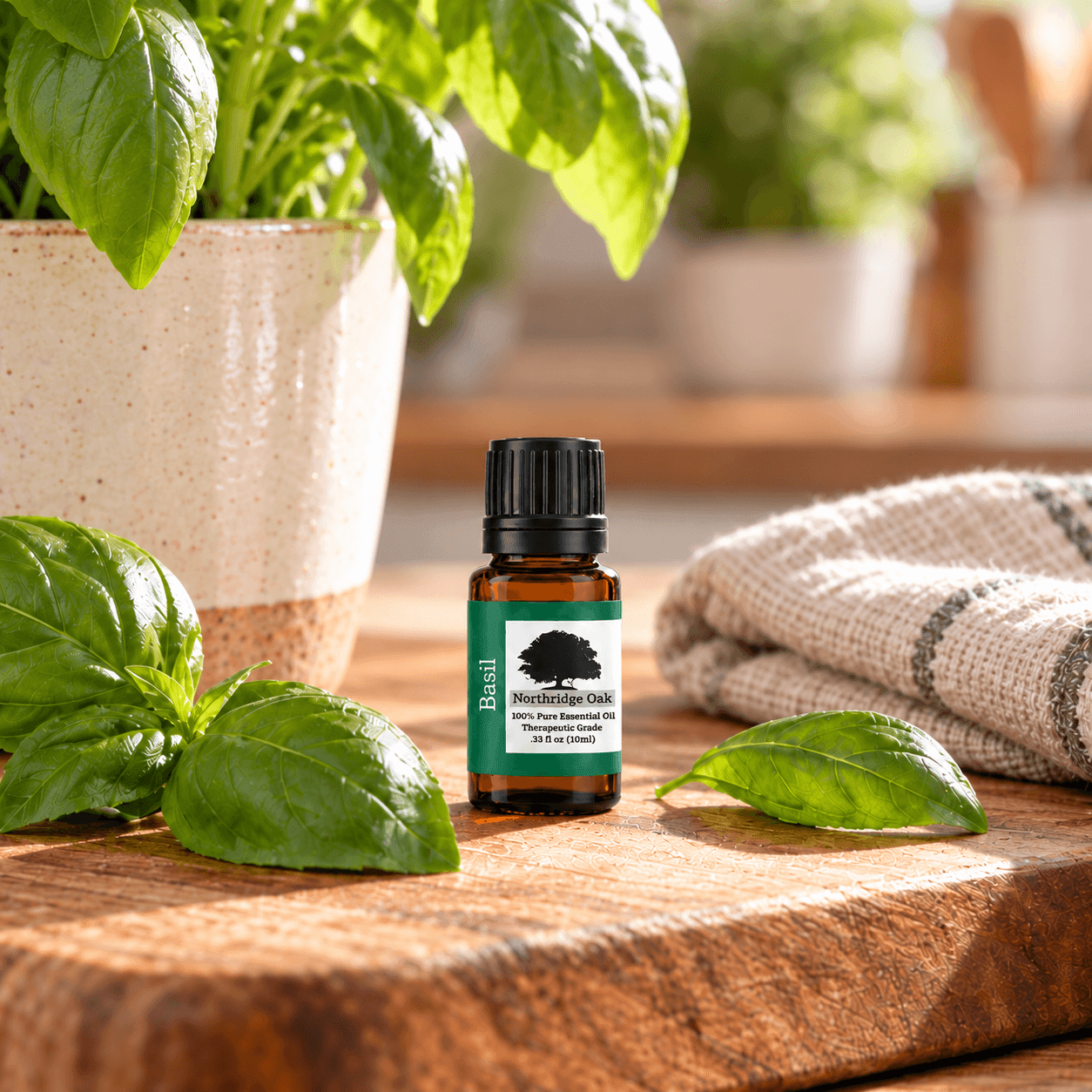
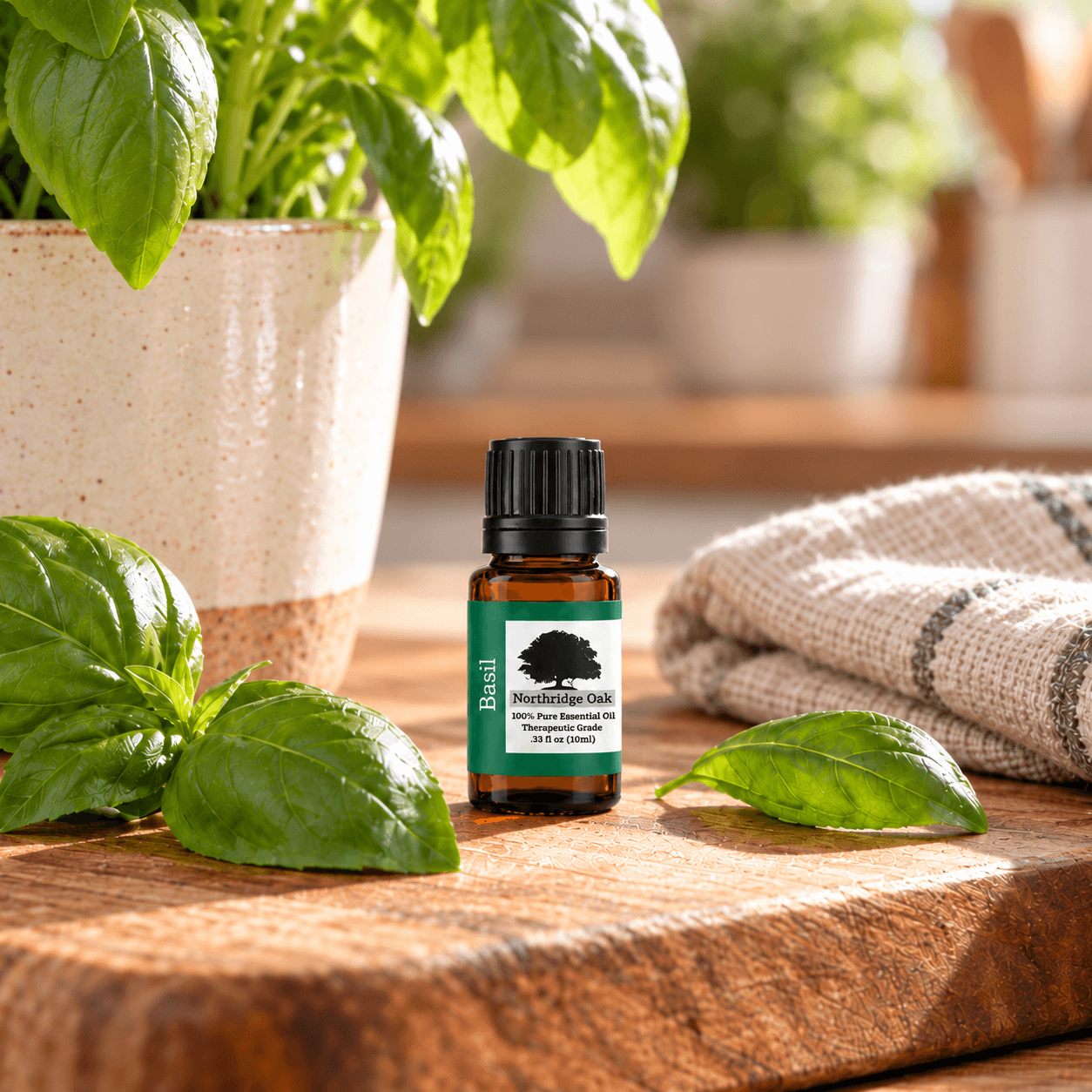
Open a bottle of Basil Essential Oil and the first impression is unmistakably green. It recalls fresh leaves crushed between your fingers, but the essential oil is more concentrated and complex than the herb on a plate: sweet at the edges, lightly spicy through the middle, and sometimes cool or faintly licorice-like depending on its chemistry.
The aroma in plain language
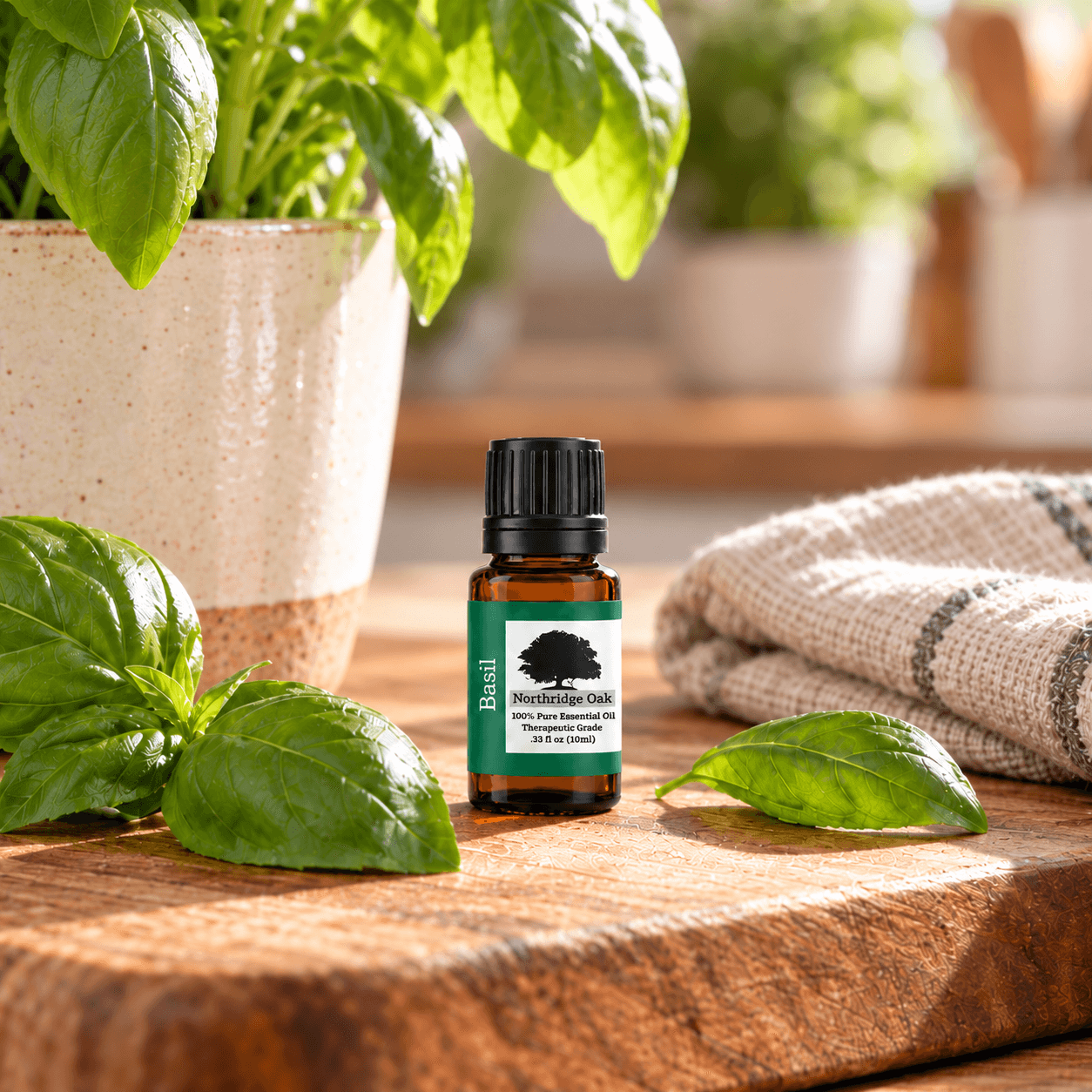
Northridge Oak Basil Essential Oil is fresh, green, sweet and lightly spicy. Imagine walking through a warm garden, brushing against basil leaves and releasing their aroma into the air. Now sharpen the green note, deepen the sweetness and add a subtle spice—that is closer to the essential oil.
It carries the recognizable green character of culinary basil in a more concentrated, perfumery-like form. Steam distillation selects volatile aromatic compounds rather than reproducing the complete smell and flavor of the plant. The result may seem cleaner, stronger and more perfumery-like than the herb you cook with.
Why one Basil oil may smell different from another
Ocimum basilicum can produce oils with meaningfully different chemical profiles. Some batches are rich in linalool and smell sweet, fresh and gently floral. Others contain more estragole, also called methyl chavicol, which can give a sweeter anise- or licorice-like nuance. Eugenol, 1,8-cineole and other constituents can add spice, coolness or clove-like depth.
That is why botanical identity, chemistry and the individual batch all help complete Basil’s sensory description. Growing conditions, cultivar, plant part, harvest stage and distillation all influence the bottle. Batch GC/MS testing helps identify the actual profile rather than relying on the name alone.
Basil compared with fresh basil leaves
Fresh leaves contain water, plant material and a broad aroma that changes when torn, warmed or cooked. Essential oil is a concentrated volatile fraction. One drop represents far more aromatic material than a single leaf, so it should be smelled from several inches away or diluted into a diffuser rather than judged at the bottle opening.
Try a simple comparison: place one drop on a paper scent strip and gently crush one fresh basil leaf on a second strip. Smell both immediately, then after ten and thirty minutes. You may notice the fresh leaf feels rounder and softer, while the oil is brighter and more persistent.
How Basil changes beside other oils
With Lemon Essential Oil, Basil becomes sparkling and clean. Blood Orange Essential Oil adds juicy sweetness. Lavender Essential Oil reveals Basil’s floral softness. Rosemary Essential Oil emphasizes the true herb-garden quality. Cedarwood Essential Oil adds warmth, and Frankincense Essential Oil gives the aroma a resinous, spacious finish.
Three ways to experience the aroma
Basil by itself
Add 2–3 drops Basil to a 100–200 mL diffuser and run for 15–20 minutes. Starting alone lets you learn the oil before another aroma reshapes it.
Bright Herb Garden
Diffuse 3 drops Lemon, 2 drops Basil and 1 drop Rosemary. The citrus creates lift while rosemary reinforces the green center.
Soft Basil
Diffuse 3 drops Lavender, 2 drops Basil and 1 drop Cedarwood. This pairing reveals Basil’s warm, relaxed side and softens its brisk herbal edges.
Where the scent works especially well
Basil is at home in kitchens, workspaces, studios, mudrooms and bright living areas. Its green character feels natural during spring cleaning, garden season and focused daytime routines. Paired with Lavender or Cedarwood, it can also suit a quiet evening reading corner.
In a shared home, keep the aroma light. Basil can feel invigorating to one person and intense to another. Use short diffusion intervals, ventilation and a personal aroma stone when scenting an entire room would be intrusive.
How to tell when the aroma has changed
Store the bottle tightly capped, cool and away from direct light. Heat and repeated air exposure can alter the profile. If the oil begins to smell markedly stale, harsh or unlike the fresh green aroma you remember, retire it from skin use.
Natural batch variation is part of the character of a genuine botanical product. A new bottle can legitimately differ from the last one. Documentation, opening date and side-by-side scent strips make it easier to tell natural character from age-related change.
Is Basil a top, middle or base note?
Basil is commonly treated as a top-to-middle note. Its fresh green opening appears quickly, while its sweet-herbal character can remain longer than a light citrus. Pair it with Lemon or Bergamot for extra lift, or Cedarwood and Frankincense for a longer finish.
That balance is part of Basil’s appeal: it can brighten a blend without disappearing immediately, and it can connect a citrus opening to a woody or resinous base.
Choosing Basil because you enjoy it
Aroma descriptions are useful, but the most important question is whether the scent invites you back. If you like fresh herbs, green fragrances and blends that feel clean without smelling like a conventional cleaner, Basil is well worth exploring. Start simply, keep notes and let your own nose decide where it belongs.
Does Basil smell like licorice?
Some Basil oils do have an anise- or licorice-like suggestion, particularly when estragole is prominent. Others lean more floral, peppery, cool or purely green. That variation is characteristic of the wonderfully diverse chemistry found within Ocimum basilicum. To soften a prominent licorice-like note, blend one part Basil with two parts Lemon or Lavender and experience the finished aroma in use.
Continue learning about Basil essential oil
Choose the guide that matches what you would like to make or understand next:
- Basil Essential Oil: Benefits, Uses, DIY Recipes & Diffuser Blends
- Basil Essential Oil Diffuser Blends: 20 Fresh Recipes
- What Blends Well With Basil Essential Oil?
- Basil Essential Oil for Focus, Work & Study
- Basil Essential Oil for Sore Muscles & Massage
- Basil Essential Oil for Hair & Scalp Care
- Basil Essential Oil for Cleaning & Home Aromas
- Basil Essential Oil Research: Linalool, Estragole & Chemistry
These statements have not been evaluated by the Food and Drug Administration. Northridge Oak products are not intended to diagnose, treat, cure or prevent disease.