Table of Contents
- What is Basil essential oil?
- What does Basil essential oil smell like?
- Why people enjoy Basil in everyday routines
- How to diffuse Basil essential oil
- What blends well with Basil?
- Basil for focus, work and study
- Basil for massage and body care
- Basil for hair and scalp routines
- Basil for cleaning and home aromas
- What the research says about Basil chemistry
- Basil versus Holy Basil
- Basil essential oil safety
- Choose your first Basil routine
- Why choose Northridge Oak Basil Essential Oil?
- How to keep Basil fresh
- Continue learning about Basil essential oil
- Frequently Asked Questions
Fresh, green, lightly sweet and touched with spice, Basil Essential Oil feels like opening a garden gate on a warm morning. The aroma is familiar enough to recognize immediately, yet concentrated and complex enough to surprise you. Beside lemon it becomes bright and sparkling; lavender reveals its softer side; cedarwood and frankincense turn it warm, smooth and quietly sophisticated.
100% Pure Basil Essential Oil – 10 mL
$7.50
Fresh, Green Basil Essential Oil for Bright, Purposeful Routines Open a bottle of Northridge Oak Basil Essential Oil and the aroma feels instantly alive—fresh garden herbs, gentle sweetness and a softly spicy finish. Steam-distilled from Ocimum basilicum grown in India,… read more

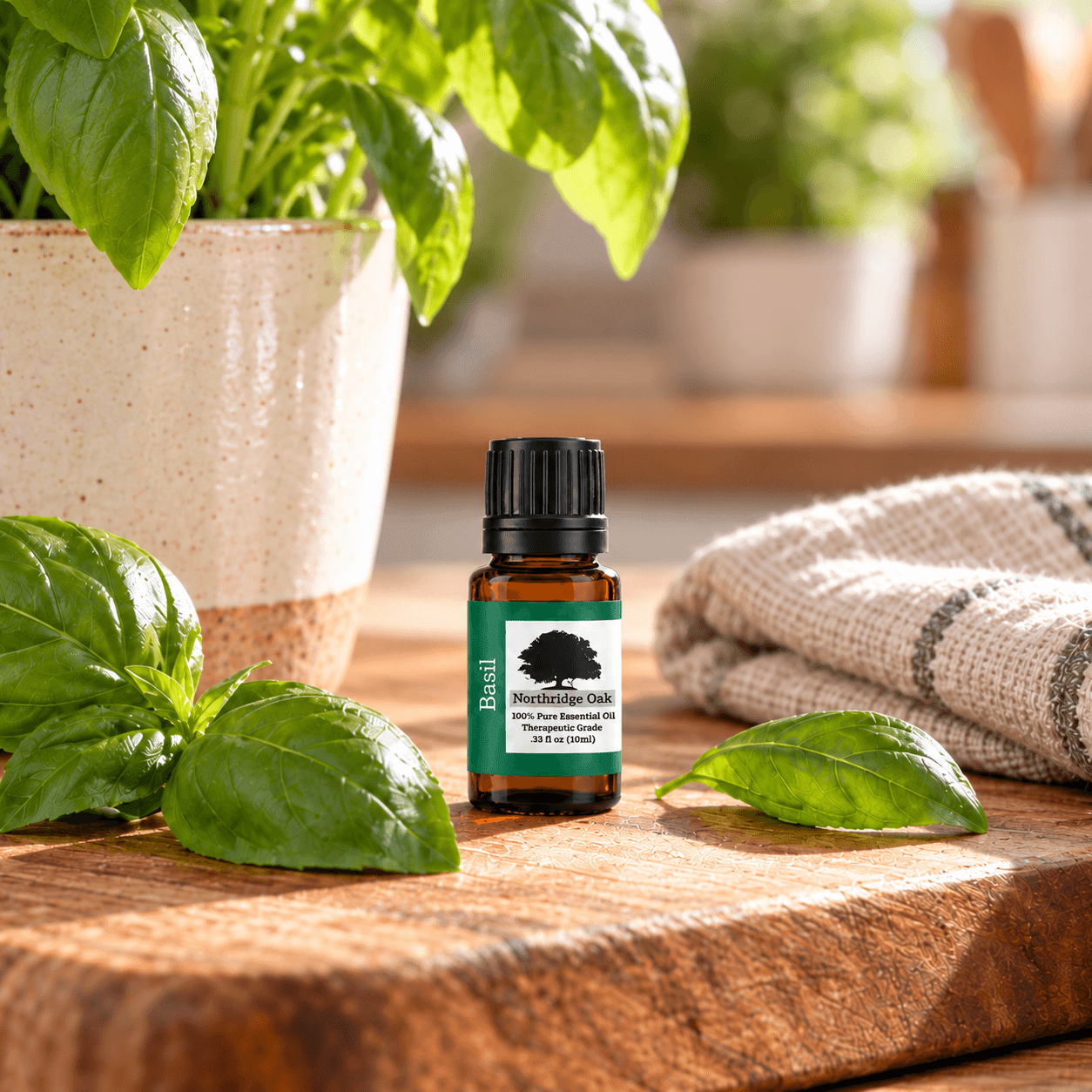
This guide brings the entire bottle into focus: what Basil smells like, why its chemistry varies, how to diffuse and blend it, measured massage and scalp recipes, realistic research context, and the safety details that make it easier to use with confidence. You will come away knowing exactly what Basil does beautifully and why this versatile herbal oil can become one of the most interesting bottles in your collection.
What is Basil essential oil?
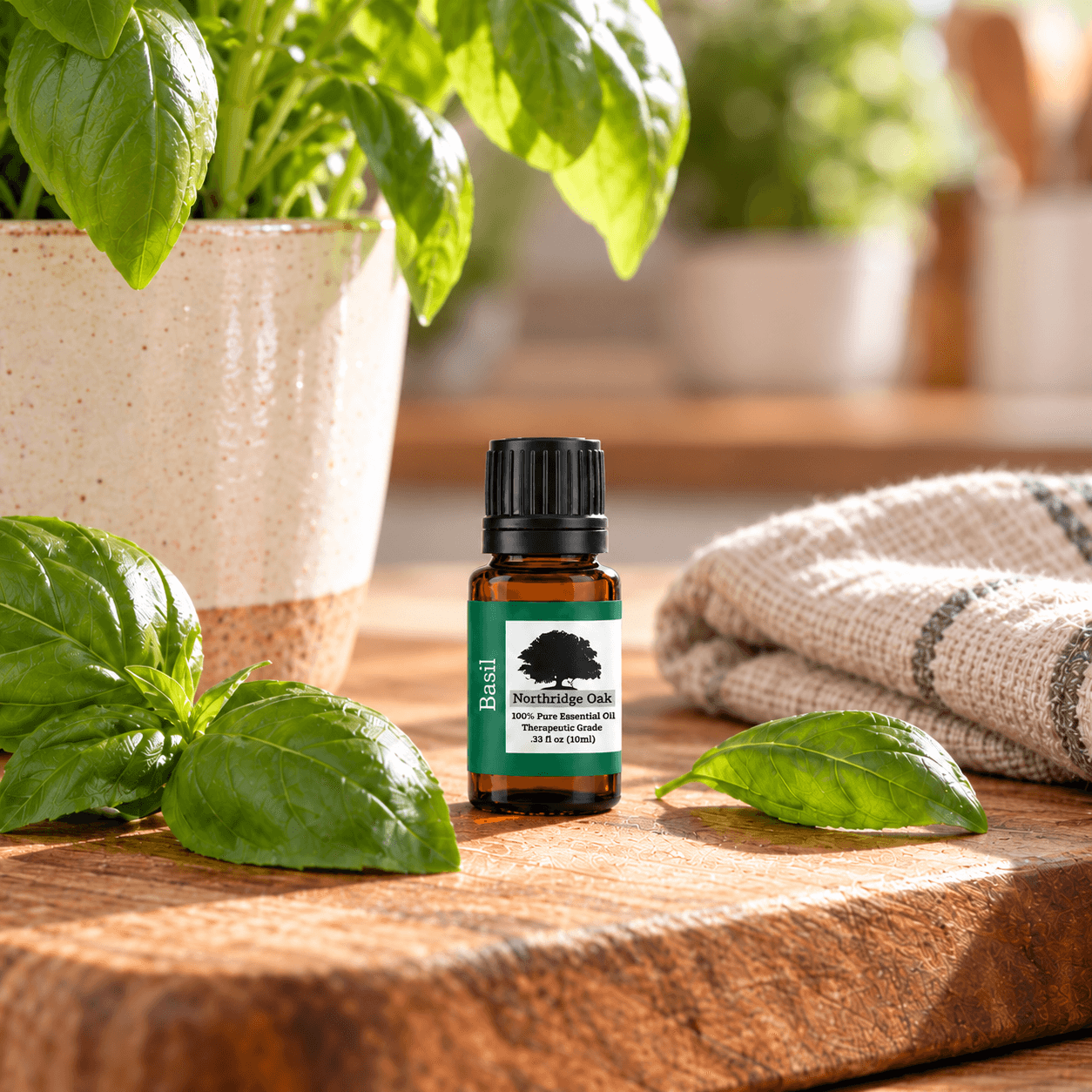
Northridge Oak Basil Essential Oil is steam-distilled Ocimum basilicum, sourced from India. Basil belongs to the mint family and has been cultivated in many regions for food, fragrance and tradition. Steam distillation captures volatile aromatic compounds from the plant material, producing an oil far more concentrated than a handful of fresh leaves.
That distinction matters. The essential oil captures the plant’s volatile aroma in concentrated form and is best enjoyed through thoughtful diffusion and appropriately diluted topical use. It is an aromatic material intended for thoughtful diffusion and appropriately diluted topical use.
Northridge Oak Basil is 100% pure, undiluted, bottled in small batches and third-party GC/MS tested. Batch testing is especially valuable for Basil because the species can produce noticeably different chemical profiles.
What does Basil essential oil smell like?
The easiest description is fresh, green, sweet and lightly spicy. Imagine brushing your fingers across warm basil leaves, then making the aroma clearer, stronger and more perfumery-like. Some oils lean gently floral. Others carry cool, peppery, clove-like or anise-like nuances.
Those differences reflect real variations in the oil’s chemistry. Ocimum basilicum has multiple chemotypes. A linalool-rich profile often smells sweet, fresh and softly floral. A profile with more estragole—also called methyl chavicol—may have a distinct anise or licorice suggestion. Eugenol can add warm spice, while 1,8-cineole can add a cool, airy quality.
Growing conditions, cultivar, harvest stage, plant part and distillation all influence the finished oil. Our guide to Basil’s aroma and scent notes helps you learn the oil through simple comparisons.
Why people enjoy Basil in everyday routines
Basil’s aroma feels purposeful. It can mark the beginning of a work block, bring the feeling of an herb garden into a kitchen, or add fresh character to a massage oil. The most reliable benefit is experiential: it makes a routine smell inviting and helps create a recognizable atmosphere.
Research on Basil species and individual constituents includes laboratory, animal and limited human work. The current evidence makes Basil a fascinating subject for continued study. At home, its most dependable role is as a sensory cue within habits that already support the moment—opening the curtains, clearing the desk, stretching, washing the kitchen or slowing down for massage.
How to diffuse Basil essential oil
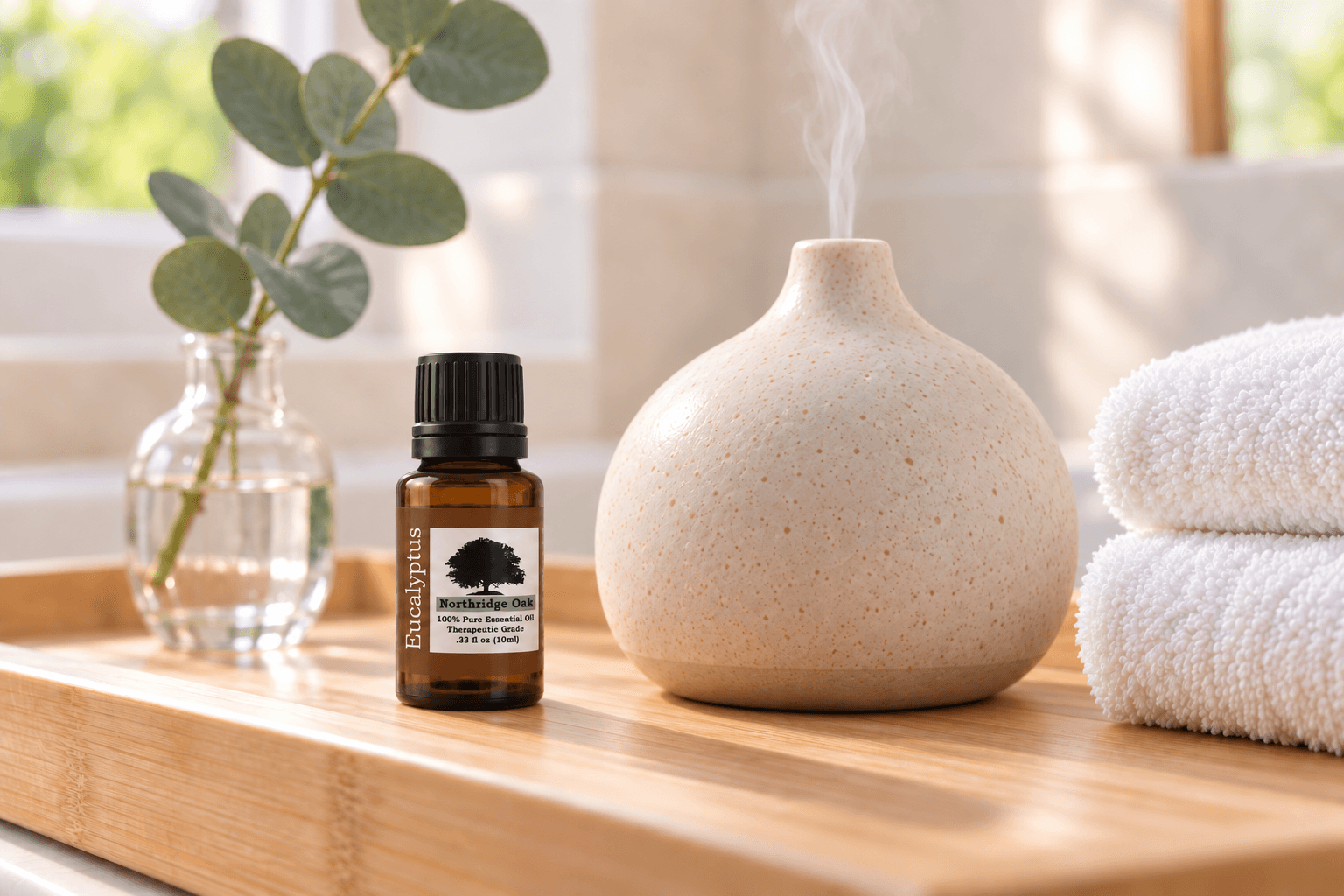
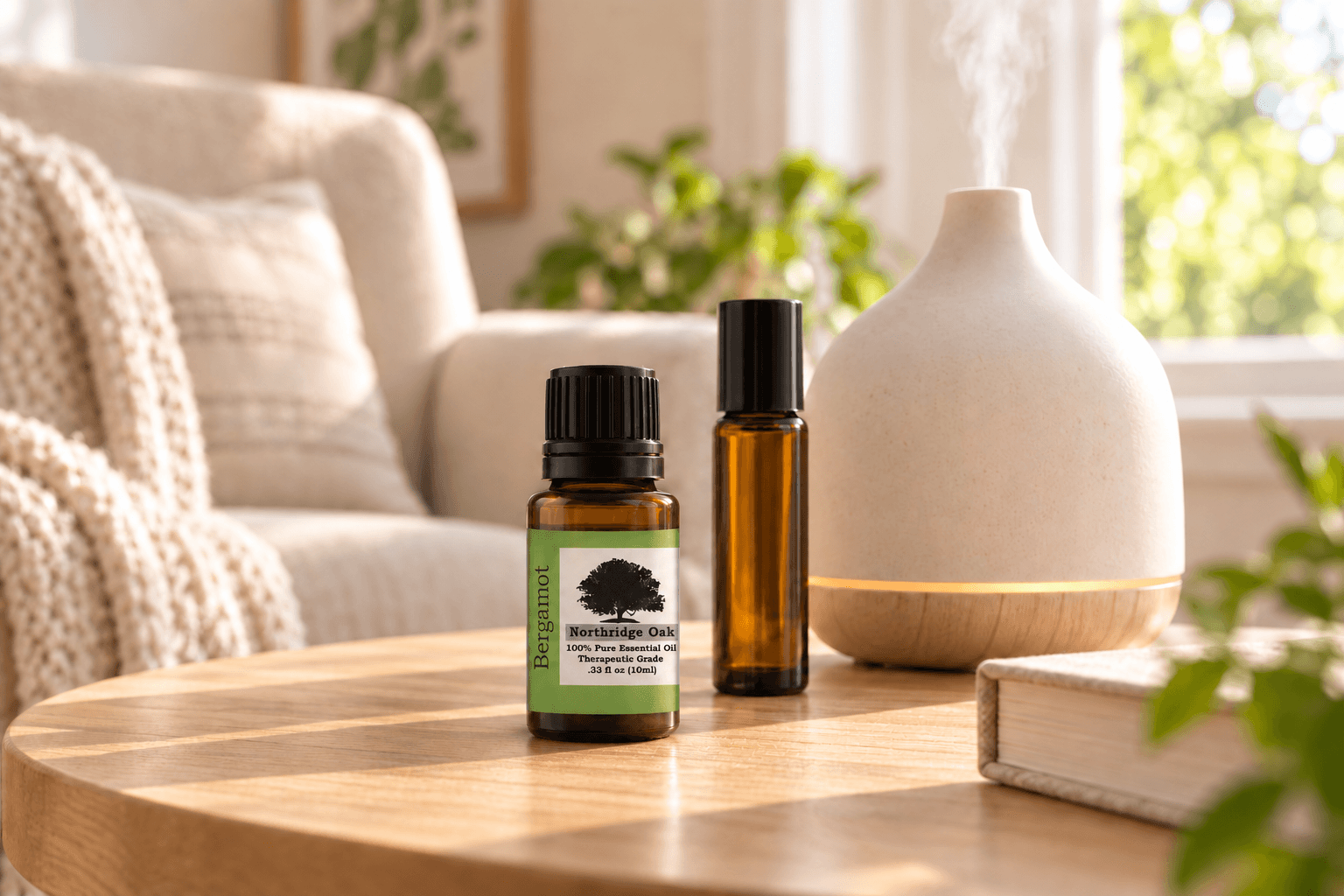
For a typical 100–200 mL ultrasonic diffuser, begin with 1–3 drops Basil as part of 3–6 total drops. Add water to the manufacturer’s fill line, add the oils and diffuse for 15–20 minutes. Pause and ventilate before repeating. Basil can be expressive, so a restrained amount often smells more polished than a Basil-heavy formula.
Bright Morning
You will need: 3 drops Lemon Essential Oil, 2 drops Basil and 1 drop Rosemary Essential Oil.
Directions: Add to a water-filled diffuser and run for 20 minutes. Lemon opens the blend while the herbs create a clean garden character.
Garden Calm
You will need: 3 drops Lavender Essential Oil, 2 drops Basil and 1 drop Frankincense Essential Oil.
Directions: Diffuse for 15–20 minutes in a ventilated room. Lavender draws out Basil’s sweetness and frankincense gives the aroma a longer, warmer finish.
Sunlit Herb
You will need: 3 drops Blood Orange Essential Oil, 2 drops Basil and 1 drop Cedarwood Essential Oil.
Directions: Diffuse for 20 minutes. Sweet citrus makes Basil feel immediately friendly, while cedarwood keeps the blend from disappearing too quickly.
Afternoon Reset
You will need: 3 drops Bergamot Essential Oil, 2 drops Basil and 1 drop Peppermint Essential Oil.
Directions: Diffuse briefly in a well-ventilated adult workspace. Peppermint is powerful; one drop is enough to add a cool edge.
Woodland Herb
You will need: 2 drops Basil, 2 drops Cedarwood, 1 drop Frankincense and 1 drop Patchouli Essential Oil.
Directions: Diffuse for 15–20 minutes. Patchouli adds earthiness, while the wood and resin give Basil a deeper personality. Find more measured ideas in 20 Basil Essential Oil diffuser blends.
What blends well with Basil?
Citrus is the easiest starting point. Lemon makes Basil bright and clean; Blood Orange adds juicy sweetness; Bergamot makes it softer and more polished. Lavender reveals a floral side. Rosemary emphasizes the herb garden, while Peppermint and Eucalyptus make the profile cooler and crisper. Cedarwood, Frankincense and Patchouli provide depth and staying power.
A dependable formula begins with 3 drops of a friendly lead oil—Lemon, Blood Orange, Bergamot or Lavender—followed by 2 drops Basil. Smell it after several minutes. Add 1 drop Cedarwood or Frankincense for depth, or 1 drop Rosemary for more herbal clarity. Change only one drop at a time.
For the truest impression, place the formula on scent strips or experience it gently in the diffuser instead of evaluating concentrated vapor at the bottle opening. The complete Basil blending guide explains what every aromatic family contributes.
Basil for focus, work and study
Basil’s fresh character fits daytime work beautifully, but aroma should be presented as a cue rather than a cognitive treatment. Pair the scent with a practical beginning ritual: clear one small area, silence unnecessary alerts, write the one outcome you want from the next block and set a timer.
Diffuse the Bright Morning recipe for the first 15–20 minutes, then turn the diffuser off during the break. If you stop noticing it, take time away instead of adding more drops. Olfactory adaptation is normal.
For a personal adult inhaler, add 8 drops Basil, 6 drops Lemon and 2 drops Rosemary to the cotton wick, insert it, cap and label it. Hold it near the nose for one or two gentle breaths; never place it inside the nostril or apply this undiluted formula to skin. Read Basil Essential Oil for Focus, Work & Study for a complete seven-day scent-cue routine.
Basil for massage and body care
In massage, Basil provides a fresh herbal aroma. Carrier oil provides glide, while gentle pressure, warmth and time create the practical experience. A homemade Basil blend offers an aromatic complement to the warmth, glide and gentle pressure of massage.
For many healthy adults using a small area, begin around 0.5–1% total essential oil, provided batch-specific guidance supports it. That is approximately 3–6 total drops per 1 ounce (30 mL) of finished product. Patch test before broader use.
Garden Ease Massage Oil
You will need: 3 drops Basil, 2 drops Lavender, 1 drop Frankincense, 1 ounce jojoba or fractionated coconut oil and a clean bottle.
Directions: Add the essential oils, fill with carrier, cap and roll gently. Label with ingredients and date. Apply a teaspoon or less to shoulders, forearms or calves and massage with comfortable pressure for three to five minutes. Keep away from the face, eyes, broken skin and sensitive areas.
Warm Herb and Wood Massage Oil
You will need: 3 drops Basil, 2 drops Cedarwood, 1 drop Lavender and 1 ounce carrier oil.
Directions: Combine, label and patch test. Use a small amount after bathing or during a quiet evening. Seek qualified care for severe or persistent pain, significant swelling, weakness, numbness or symptoms following a major injury. More detail is available in Basil Essential Oil for Sore Muscles & Massage.
Basil for hair and scalp routines
A pre-shampoo scalp oil can provide lubrication during massage and turn wash day into a more intentional ritual. Current Basil research is still building, so this routine focuses on the tangible pleasures of scalp massage, light lubrication and an herb-fresh wash-day ritual. Persistent scale, pain, sores, sudden shedding or patchy loss deserves professional assessment.
Fresh Herb Pre-Shampoo Oil
You will need: 3 drops Basil, 3 drops Rosemary and 1 ounce jojoba oil.
Directions: Combine in a clean applicator bottle and label. Part dry hair, apply a few drops of the finished oil to the scalp and massage gently with finger pads for two to three minutes. Leave for 15–30 minutes, then shampoo thoroughly. Begin once weekly and stop for burning, itching or redness.
Keep the formula gentle and evenly dispersed by preparing the measured pre-shampoo blend rather than adding undiluted Basil to a shampoo bottle. Read Basil Essential Oil for Hair & Scalp Care for carrier choices and another gentle formula.
Basil for cleaning and home aromas
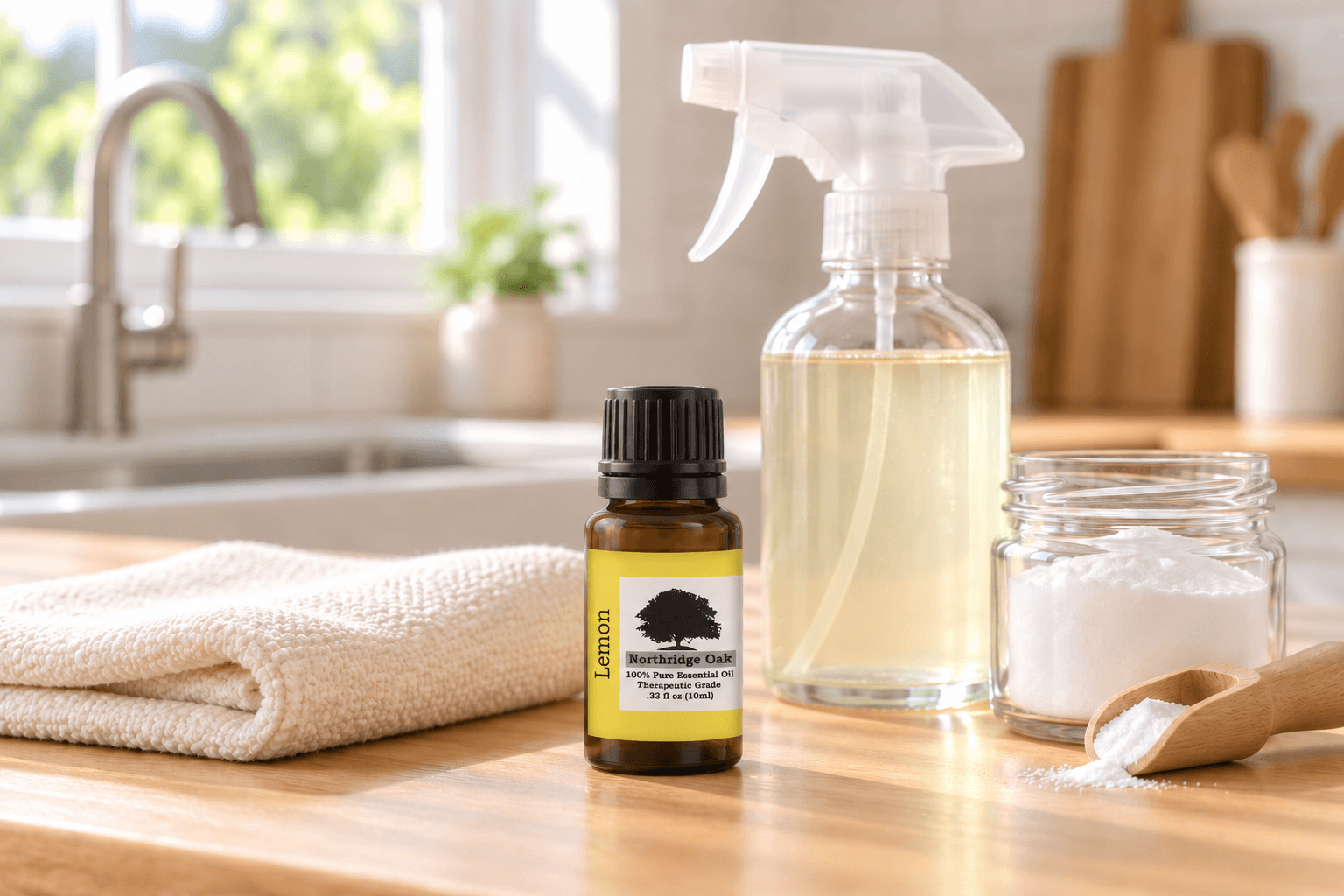
Basil can make a kitchen, entryway or workspace smell fresh after ordinary cleaning. Keep the jobs clear: soap, water and friction clean; an appropriate registered product disinfects; essential oil provides aroma. Laboratory antimicrobial findings make Basil scientifically interesting, while home recipes are best enjoyed for their fresh aroma alongside proven cleaning methods.
Fresh Herb Surface Spray
You will need: 1 cup distilled water, 1 teaspoon unscented liquid soap, 8 drops Basil, 8 drops Lemon, 4 drops Lavender and a labeled bottle.
Directions: Combine and shake before each use. Mist a cloth, wipe a sealed water-safe surface and dry. Test a hidden area. Avoid natural stone, unfinished wood, waxed finishes, electronics, acrylic and manufacturer-prohibited materials. Rinse food-contact surfaces with clean water. Make small batches and discard for changes in appearance or aroma.
Sink-Freshening Paste
You will need: 2 tablespoons baking soda, 1 teaspoon dish soap, 1 drop Basil and 1 drop Lemon.
Directions: Mix, apply to wet stainless steel or porcelain with a nonabrasive sponge, scrub gently, rinse and dry. Do not use on natural stone or combine with bleach, ammonia or another cleaner. More ideas appear in Basil Essential Oil for Cleaning & Home Aromas.
What the research says about Basil chemistry
Linalool, estragole, eugenol and 1,8-cineole are among the constituents that may appear in Basil oil. Researchers have examined Basil materials and isolated compounds in laboratory, animal and human contexts. Laboratory studies have explored antimicrobial, antioxidant and inflammatory activity, creating valuable directions for future research on real-world aromatic and topical use.
Dose, route and tested material matter. Cells or microbes in a dish can be exposed directly to concentrations unlike household use. An isolated constituent may behave differently from the complete oil. A study on Holy Basil extract or tea speaks to that exact preparation, while Sweet Basil essential oil benefits from research tailored to its own species, chemistry and route.
Estragole is especially relevant to safety interpretation. Its presence is a practical reason to identify the batch, reserve the oil for aromatic and appropriately diluted topical use, and choose conservative exposure tailored to the product. Our Basil research and chemistry guide explains how to read these studies.
Three Basil studies in plain English
A 2024 human inhalation study found that chemically analyzed Ocimum basilicum oil produced measurable short-term changes in EEG activity, with blood pressure and pulse trending downward during inhalation. That makes Basil an interesting aroma for a work or reset ritual and gives future focus and perceived-stress research a promising starting point. Read the human inhalation study.
Preclinical research adds two more pieces. A 2016 mouse study reported anti-inflammatory activity from an estragole-rich Basil oil and estragole at the tested oral doses. A 2014 laboratory study found that an Indian sweet Basil oil inhibited tested bacteria and fungi under controlled conditions. These findings give Basil genuine scientific interest. Because the studies used specialized animal doses and laboratory concentrations, everyday massage, diffusion and home-aroma recipes are presented for the enjoyable experiences they reliably provide. The research guide below explains each result—and its practical limits—in detail.
Basil versus Holy Basil
Northridge Oak Basil is Ocimum basilicum, often called Sweet Basil. Holy Basil or tulsi is usually Ocimum tenuiflorum or its synonym Ocimum sanctum. Holy Basil may smell warmer, more pungent or clove-like, while Sweet Basil often feels fresh, green and sweet. Both vary.
Adapt topical recipes only after checking the Latin name, batch chemistry and oil-specific guidance. Traditional tulsi tea and culinary basil are distinct preparations; concentrated essential oil is best reserved for aromatic and appropriately diluted topical use. See Basil vs. Holy Basil Essential Oil for the full comparison.
Basil essential oil safety
Do not ingest Basil essential oil or add it to food, drinks, capsules, toothpaste or mouth care. Dilute before skin use and keep away from eyes, ears, mucous membranes, broken skin and sensitive areas. Use product-specific guidance because Basil chemistry varies.
Pregnancy and breastfeeding require individualized advice, especially because chemotype matters. Treat concentrated Basil as its own aromatic product and follow guidance matched to its species and batch. Babies and young children require special caution; seek pediatric and qualified aromatherapy guidance rather than using Basil casually.
Never apply essential oil to a pet or add it to food, water, treats, collars, litter, bedding or grooming products. If diffusing in an animal household, use a very small amount briefly in a large ventilated room and allow the animal to leave. Keep diffusers away from cages, aquariums, food and water.
Store tightly capped, cool and dark, record the opening date and keep every bottle behind a child-resistant barrier. For first aid and detailed household guidance, read Basil Essential Oil Safety: Dilution, Kids, Pets & Pregnancy and the complete essential-oil safety guide.
Choose your first Basil routine
If you are new to Basil, begin with the Bright Morning diffuser blend. If you enjoy the aroma and want a topical ritual, make the 1% Garden Ease massage oil and patch test it. If home care appeals to you, use the surface spray only on an approved material after testing a hidden spot.
One simple routine you genuinely enjoy is more valuable than a shelf full of complicated projects. Basil earns its place by being fresh, flexible and surprisingly good at bringing citrus, herbs, florals and woods into the same aromatic story.
Why choose Northridge Oak Basil Essential Oil?
A chemically variable oil deserves clear identity and dependable documentation. Northridge Oak Basil Essential Oil is labeled with its botanical name, Ocimum basilicum, sourced from India, bottled undiluted in a 10 mL amber glass bottle and third-party GC/MS tested. No fillers or synthetic fragrance are added.
Northridge Oak is a family-owned company in Pea Ridge, Arkansas. Since 2016, our goal has been to make essential oils easier to understand and more useful in real homes. Small-batch bottling, controlled dispensing and practical education matter because a beautiful oil is most valuable when you know what it is and how to use it.
How to keep Basil fresh
Write the opening date on the bottle, close it promptly and store it cool and dark. Do not leave the bottle on a sunny windowsill or in a hot vehicle. A nearly empty bottle contains more air relative to oil, so use it while the aroma remains fresh rather than saving the last few drops indefinitely.
If the scent becomes markedly stale, harsh or unlike its original green character, retire it from skin use. Clean diffuser residue according to the manufacturer’s directions and avoid returning unused blends to the original bottle. Simple storage habits protect both the aroma and the comfort of topical routines.
Continue learning about Basil essential oil
Choose the guide that matches what you want to make or understand next:
- Basil Essential Oil Diffuser Blends: 20 Fresh Recipes
- What Blends Well With Basil Essential Oil?
- What Does Basil Essential Oil Smell Like?
- Basil Essential Oil for Focus, Work & Study
- Basil Essential Oil for Sore Muscles & Massage
- Basil Essential Oil for Hair & Scalp Care
- Basil Essential Oil for Cleaning & Home Aromas
- Basil Essential Oil Research: Linalool, Estragole & Chemistry
- Basil Essential Oil Safety: Dilution, Kids, Pets & Pregnancy
- Basil vs. Holy Basil Essential Oil
These statements have not been evaluated by the Food and Drug Administration. Northridge Oak products are not intended to diagnose, treat, cure or prevent disease.