Table of Contents
- Why Essential Oil Safety Matters
- Essential Oil Quality and Safety
- Diluting Essential Oils for Topical Use
- Never Put Essential Oils in Your Eyes
- Essential Oil Diffuser Safety
- Essential Oil Safety for Children
- Accidental Essential Oil Ingestion
- Essential Oils During Pregnancy and Nursing
- Essential Oils Around Dogs and Cats
- Photosensitivity and Phototoxic Essential Oils
- Essential Oils and Medications or Health Conditions
- Should You Ingest Essential Oils?
- Essential Oil Storage
- A Simple Approach to Essential Oil Safety
- FAQs
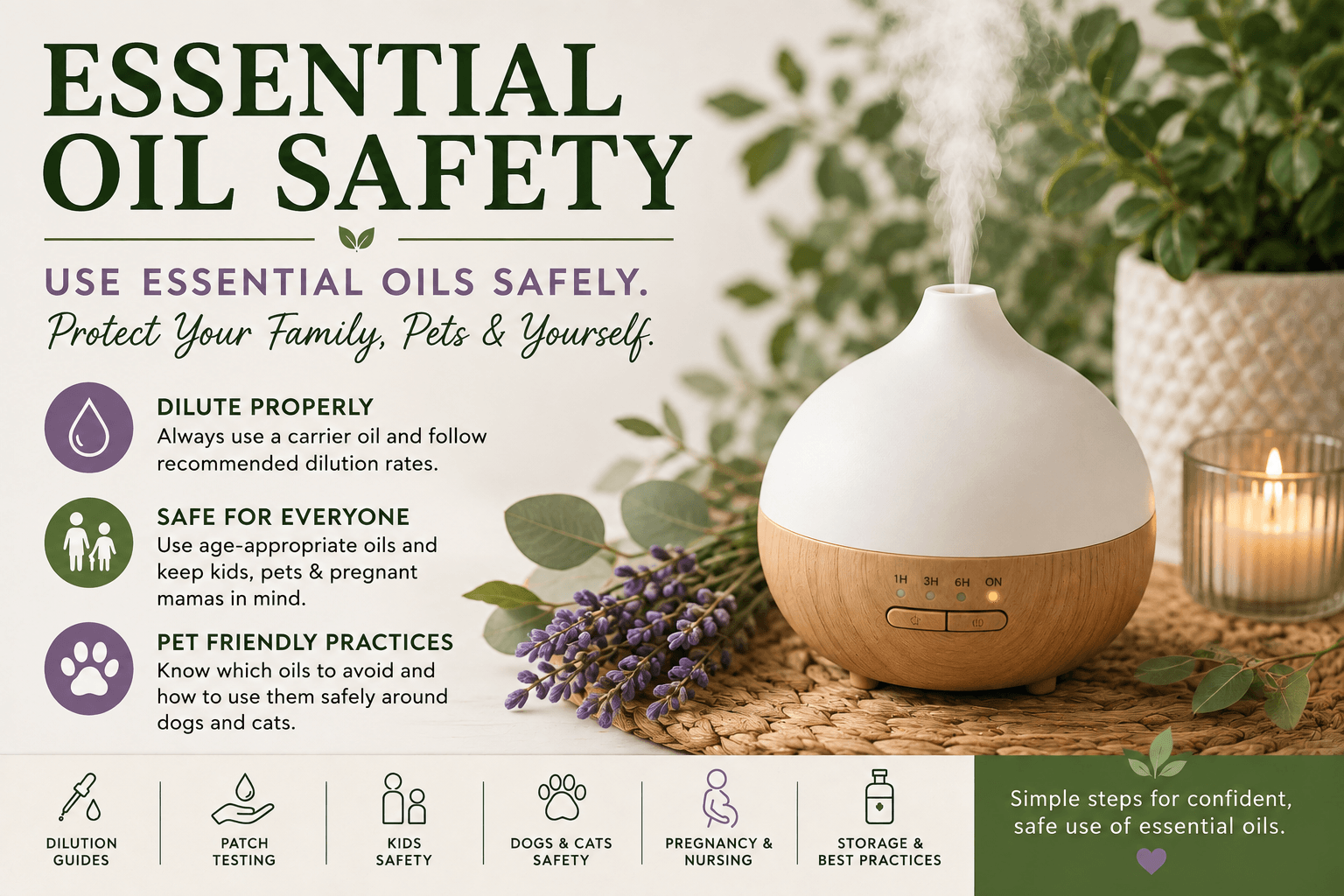
Essential oils are highly concentrated plant extracts. Their concentrated nature is part of what makes them useful and versatile, but it also means they should be handled thoughtfully.
Whether you're new to essential oils or have been using them for years, understanding proper dilution, topical use, diffusion, storage, and other basic precautions can help you use essential oils more confidently.
This guide covers essential oil safety for everyday use, including dilution guidelines, skin application, children, pregnancy, pets, diffusion, photosensitivity, storage, and more.
Why Essential Oil Safety Matters
Essential oils are much more concentrated than the plants from which they are derived. Using more essential oil does not necessarily produce a better result, and inappropriate use can increase the risk of skin irritation, sensitization, accidental ingestion, or other adverse reactions.
A few basic habits can make a significant difference:
- Dilute essential oils appropriately before topical use.
- Follow oil-specific safety precautions.
- Avoid contact with the eyes and other sensitive areas.
- Keep essential oils out of reach of children and pets.
- Use extra caution around children, during pregnancy, and around animals.
- Store essential oils properly and discard oils that have significantly oxidized or deteriorated.
Essential Oil Quality and Safety
Quality is an important part of responsible essential oil use.
Essential oils can vary based on botanical species, growing conditions, harvest, distillation, storage, and other factors. Knowing exactly which oil you're using is important because oils with similar common names can have different chemical compositions and safety considerations.
Look for essential oils that clearly identify the botanical name and provide information about sourcing and testing.
Understanding GC/MS Testing
Gas Chromatography/Mass Spectrometry, commonly called GC/MS testing, is an analytical method used to identify and measure many of the volatile chemical constituents present in an essential oil.
A GC/MS report can help evaluate whether an oil's chemical profile is consistent with what is expected for that botanical species and can help identify some abnormalities or possible adulteration.
GC/MS testing is an important quality-control tool, but it should be considered as part of an overall quality program rather than an absolute guarantee of purity or safety.
Northridge Oak uses third-party GC/MS testing as part of our commitment to essential oil quality.
Diluting Essential Oils for Topical Use
Essential oils should generally be diluted in an appropriate carrier before being applied to the skin.
Dilution reduces the concentration of essential oil contacting the skin and can lower the risk of irritation and sensitization.
Common carrier oils include:
- Jojoba oil
- Fractionated coconut oil
- Sweet almond oil
- Grapeseed oil
- Avocado oil
- Olive oil
Essential Oil Dilution Chart
Essential oils are highly concentrated and should generally be diluted in a carrier oil before applying them to the skin. Dilution helps reduce the risk of skin irritation, sensitization, and other unwanted reactions.
Use the chart below as a general reference for creating topical essential oil blends.
| Dilution | 10 mL carrier | 20 mL / ~4 tsp carrier | 30 mL/ 1 oz carrier |
|---|---|---|---|
| 0.5% | 1 drop | 3 drops | 4 drops |
| 1% | 3 drops | 6 drops | 9 drops |
| 2% | 6 drops | 12 drops | 18 drops |
| 3% | 9 drops | 18 drops | 27 drops |
| 4% | 12 drops | 24 drops | 36 drops |
| 5% | 15 drops | 30 drops | 45 drops |
Choosing a Dilution
There isn't one dilution percentage that's appropriate for every person, essential oil, or application.
As a general starting point:
- 0.5–1%: Lower-concentration applications, including facial products, sensitive skin, or situations where a more conservative dilution is appropriate.
- 1–3%: A common range for adult body oils, lotions, massage oils, and other everyday topical applications.
- Higher concentrations: May sometimes be used for limited or specialized applications, but a higher concentration isn't automatically more effective and can increase the risk of an adverse skin reaction.
When you're unsure, start with a lower dilution.
How to Read the Chart
The number shown is the total number of essential oil drops to add to the listed amount of carrier oil.
For example, to make a 2% dilution in a 1 oz (30 mL) bottle, use:
18 total drops of essential oil + 1 oz of carrier oil
If you're making a blend with three essential oils, those 18 drops are divided among the three oils—they are not 18 drops of each oil.
Important Dilution Notes
Drop measurements are approximate because the size of an essential oil drop can vary depending on the oil, bottle, and dropper.
A general dilution chart also does not mean that every essential oil is appropriate at every concentration. Individual oils can have their own maximum recommended dermal concentrations because of factors such as skin sensitization, irritation, or phototoxicity.
For example, some essential oils require substantially lower concentrations than the general chart might suggest. Always review the safety information for the specific essential oil you're using.
Dilution recommendations may also need to be adjusted for children, pregnancy or nursing, older adults, sensitive or compromised skin, medications, and certain health conditions. When appropriate, consult a qualified healthcare professional or trained aromatherapy professional before use.
Patch Testing and Skin Sensitivity
Even properly diluted essential oils can cause irritation or an allergic reaction in some people.
If you're using a new topical product or essential oil blend and have concerns about skin sensitivity, testing a small amount on a limited area of skin before broader use may help identify an obvious reaction.
However, a home patch test cannot guarantee that an essential oil will never cause irritation or sensitization.
Stop using a product if you experience persistent redness, burning, itching, swelling, blistering, or another unexpected reaction.
Never Put Essential Oils in Your Eyes
Avoid getting essential oils in or directly around the eyes.
If essential oil accidentally gets into an eye, don't add more essential oil or intentionally rub the eye. Seek appropriate medical or poison-control guidance if significant irritation occurs.
Essential oils should also not be placed directly into the ear canal.
Essential Oil Diffuser Safety
Diffusing is one of the most popular ways to enjoy essential oils.
You don't need to run a diffuser continuously to enjoy the aroma.
When diffusing:
- Follow your diffuser manufacturer's instructions.
- Start with a small amount of essential oil.
- Provide reasonable ventilation.
- Consider intermittent rather than continuous diffusion.
- Keep the diffuser where children and pets cannot knock it over or access the water.
- Stop diffusing if anyone in the room experiences respiratory irritation, headache, nausea, dizziness, or another unwanted reaction.
People with asthma, respiratory sensitivities, or other medical concerns should use additional caution.
Essential Oil Safety for Children
Children aren't simply smaller adults. Age, body size, route of exposure, essential oil chemistry, concentration, and the amount being used can all affect safety.
Some essential oils require additional restrictions or lower concentrations for young children.
For households with children:
- Keep essential oil bottles securely stored and out of reach.
- Don't allow young children to handle essential oil bottles unsupervised.
- Never allow children to ingest essential oils.
- Avoid applying essential oils near the eyes, nose, mouth, or other sensitive areas.
- Use age-appropriate dilution guidance.
- Check the specific safety information for each essential oil rather than assuming all essential oils have the same age recommendations.
- When you're uncertain whether an essential oil is appropriate for a child, consult a qualified healthcare professional.
Accidental Essential Oil Ingestion
Essential oil bottles should always be kept out of children's reach.
Because essential oils are highly concentrated, even relatively small accidental exposures can be significant, particularly for young children.
If a child swallows essential oil, don't induce vomiting unless specifically instructed by a medical professional or poison-control specialist.
Contact Poison Control or seek appropriate medical care for guidance.
Essential Oils During Pregnancy and Nursing
Pregnancy and nursing deserve additional consideration because safety information varies among individual essential oils and circumstances.
Rather than relying on a universal list of oils labeled simply “safe” or “unsafe,” evaluate the specific essential oil, concentration, route of use, stage of pregnancy, and individual health circumstances.
General precautions include:
- Avoid using essential oils undiluted on the skin.
- Use conservative topical concentrations.
- Avoid ingesting essential oils unless specifically directed by an appropriately qualified healthcare professional.
- Review oil-specific pregnancy precautions before use.
- Discuss essential oil use with your healthcare professional when pregnant or nursing, particularly if you have medical conditions, take medications, or plan frequent topical use.
Essential Oils Around Dogs and Cats
Animals can respond differently to essential oils than humans do.
The risk depends on several factors, including the species, specific oil, concentration, route of exposure, amount, ventilation, and the animal's health.
As a general rule, don't apply concentrated essential oils directly to a dog or cat unless specifically directed by a veterinarian who is familiar with the animal and the product being used.
Also:
- Don't add essential oils to a pet's food or drinking water.
- Store bottles where pets cannot reach them.
- Prevent pets from licking spilled essential oil or recently treated surfaces.
- Keep diffusers where animals cannot knock them over.
- Provide ventilation when diffusing.
- Allow pets to leave the room rather than confining them with a diffuser.
- Use additional caution with animals that have respiratory problems.
- Stop diffusing if an animal appears uncomfortable or develops unusual symptoms.
If you believe your pet has swallowed essential oil, had significant skin exposure, or is showing unusual symptoms after exposure, contact your veterinarian or an animal poison-control service promptly.
What About Birds?
Birds have particularly sensitive respiratory systems.
Because airborne substances can pose greater risks to birds, using essential oil diffusers in homes with birds warrants much greater caution. Veterinary toxicology guidance generally recommends avoiding essential oil diffusion around birds.
Photosensitivity and Phototoxic Essential Oils
Some essential oils—particularly certain cold-pressed citrus oils—can increase the skin's sensitivity to ultraviolet light when applied topically.
This is known as phototoxicity.
The risk depends on the particular essential oil, how it was produced, and its concentration.
If you're using a potentially phototoxic essential oil topically, check the oil-specific safety guidance before exposing the treated skin to sunlight or tanning equipment.
Not every citrus essential oil presents the same phototoxicity risk, so avoid relying on a blanket rule that all citrus oils are either phototoxic or non-phototoxic.
Essential Oils and Medications or Health Conditions
Certain essential oils or their constituents may not be appropriate for everyone.
If you take prescription medications or have epilepsy, asthma, a significant skin condition, or another medical condition, consult an appropriate healthcare professional when you're unsure whether a particular essential oil or method of use is suitable for you.
Should You Ingest Essential Oils?
Using an essential oil as a food flavoring under appropriate manufacturing and food-use conditions is not the same thing as casually swallowing concentrated essential oil at home.
We don't recommend routine self-directed ingestion of essential oils for therapeutic purposes.
Oral use involves additional considerations including dose, interactions, gastrointestinal irritation, and oil-specific toxicity.
If therapeutic oral use is being considered, seek guidance from an appropriately qualified healthcare professional with specific training in this area.
Essential Oil Storage
Proper storage helps maintain essential oil quality.
Store essential oils:
- In tightly closed bottles
- Away from direct sunlight
- Away from excessive heat
- Out of reach of children and pets
- Away from open flames and ignition sources
Oxidation can change an essential oil's chemistry over time and may increase the likelihood of skin reactions with some oils.
If an oil has changed significantly in aroma, appearance, or consistency, consider whether it should still be used topically.
A Simple Approach to Essential Oil Safety
Essential oil safety doesn't have to be complicated.
Start with a few basic principles:
Know which oil you're using. Dilute appropriately. Use less rather than more. Check oil-specific precautions. Keep oils away from eyes and sensitive areas. Store them securely. And use additional caution with children, pregnancy, pets, medications, and medical conditions.
Learning how to use essential oils responsibly allows you to enjoy their aromas and incorporate them into everyday routines while minimizing unnecessary risk.
Continue Learning
New to essential oils? Start with our Essential Oils for Beginners guide for an introduction to choosing, using, and enjoying essential oils.
You can also explore our individual Essential Oil Guides for oil-specific uses, blending ideas, DIY recipes, and safety considerations.
Essential oils are highly concentrated. Dilute appropriately for topical use and follow oil-specific safety guidance. Keep essential oils out of reach of children and pets. Avoid contact with eyes and other sensitive areas. If pregnant, nursing, taking medication, managing a medical condition, or using essential oils with children, consult an appropriate healthcare professional when needed.
These statements have not been evaluated by the Food and Drug Administration. Northridge Oak products are not intended to diagnose, treat, cure, or prevent any disease.
Essential Oil Starter Set
$153.84
Unlock Wellness with Our Essential Oil Set Collection of Therapeutic Essential Oils This curated collection of therapeutic essential oils is designed for beginners. Or, make it the perfect gift to those new to aromatherapy. This comprehensive kit includes a quiet ultrasonic diffuser… read more

Frequently Asked Questions
Can I apply essential oils directly to my skin?
Most essential oils should always be diluted before topical application.
What is the best carrier oil?
Jojoba, fractionated coconut, sweet almond, grapeseed, olive, and argan oils are all excellent choices.
Are essential oils safe for babies?
Essential oils should never be used on infants younger than six months, and older children require much lower dilution rates.
Can I diffuse essential oils around pets?
Many oils can be safely diffused around dogs with proper ventilation. Cats require much greater caution because they metabolize essential oils differently.
Do essential oils need to be diluted?
For routine topical use, essential oils should generally be appropriately diluted. Some oils also have specific maximum dermal concentrations that may be lower than a general dilution chart suggests.
Is a stronger essential oil blend better?
Not necessarily. Increasing the concentration increases exposure and can increase the risk of irritation or sensitization. Use the lowest concentration appropriate for your intended application.